Shadows Beneath the Waves: A Cold War Confrontation
The frigid waters of the North Atlantic, a perpetual battleground for the minds and might of the United States and the Soviet Union, played host to a particularly tense and dramatic encounter during the Cold War. It was a clash born from the unyielding pursuit of naval dominance, a silent, deadly ballet conducted beneath the surface. This incident, a stark reminder of the ever-present danger of escalation, involved a Soviet submarine, a vessel designed for stealth and lethal precision, and a United States Navy frigate, a guardian of the seas tasked with projecting power and protecting vital sea lanes. The confrontation, though largely unknown to the wider public, sent ripples of alarm through the highest echelons of both naval commands, highlighting the precariousness of a world armed with nuclear arsenals and characterized by constant, high-stakes espionage.
In a recent incident that has raised concerns about naval safety and international relations, a Soviet submarine was reported to have rammed a frigate, leading to discussions about the implications of such encounters on maritime security. For a deeper understanding of the historical context and the potential ramifications of military confrontations at sea, you can read more in this related article on naval incidents at In the War Room.
The Players: Technological Prowess and Strategic Imperatives
The Cold War was a period defined by a relentless arms race, and the navies of both superpowers were at the forefront of this technological and strategic competition. The Soviet Union, with its vast coastline and a deep-seated paranoia regarding potential invasion, poured immense resources into its submarine fleet. These underwater leviathans were envisioned as the ultimate deterrent, capable of projecting Soviet power across the globe and threatening the very lifelines of the West. The United States, in turn, countered with its own formidable naval might, developing sophisticated anti-submarine warfare (ASW) capabilities and a fleet of surface vessels designed to hunt and neutralize any perceived threat.
The Soviet Hunter: A Silent Threat Emerges
The Soviet submarine in question was representative of the technological advancements achieved by the USSR in its quest for underwater superiority. These vessels were not merely replicas of Western designs; they often incorporated unique Soviet philosophies in their construction and operational doctrines. While specifics of the exact submarine class involved in this particular incident remain shrouded in classified archives, it is highly probable that it belonged to a class known for its quiet running capabilities and advanced sonar systems. The Soviet Union had made significant strides in reducing the acoustic signature of its submarines, a critical factor in their ability to evade detection. The operational doctrine for these submarines often emphasized aggressive patrols, the gathering of intelligence on NATO fleet movements, and the preparedness for swift and decisive action should hostilities erupt. The crew of such a submarine would have been highly trained, operating in an environment of intense pressure and constant vigilance, their mission to remain undetected and to pose a credible threat to enemy vessels.
The American Guardian: A Vigilant Watchdog
The United States Navy frigate, on the other hand, was a vital component of the NATO maritime strategy. These vessels, while not as heavily armed as destroyers or cruisers, were highly maneuverable and equipped with a suite of advanced sonar, radar, and weapons systems specifically designed for anti-submarine warfare. Their primary role was to patrol vast expanses of ocean, detecting and tracking potential submarine threats, and to provide escort for vital convoys and carrier strike groups. The frigate involved in this incident would have been a modern vessel for its time, likely equipped with ASW helicopters, towed sonar arrays, and torpedoes. The crew would have been highly disciplined, drilled in the procedures for detecting, classifying, and engaging submarines. The constant threat of Soviet underwater activity meant that vigilance was paramount, and their patrols were often long and arduous, demanding peak performance from both the ship and its personnel.
The Setting: The Cold Embrace of the North Atlantic
The North Atlantic, a vast and often unforgiving expanse of ocean, has long been a strategic choke point. It is the primary conduit for trade and troop movement between North America and Europe, making it a prime target for any power seeking to disrupt Western cohesion. During the Cold War, this region became a perpetual training ground and a de facto frontier between the two superpowers. Submarine patrols were commonplace, with Soviet submarines venturing close to NATO shores and US submarines operating in Soviet territorial waters. The frigid temperatures, rough seas, and limited visibility often amplified the inherent dangers of naval operations, adding another layer of complexity and risk to the constant game of cat and mouse played out beneath the waves.
A Calculated Risk: The Strategic Context of the Encounter
The encounter did not occur in a vacuum. It was a product of the prevailing geopolitical climate and the overarching strategic objectives of both the United States and the Soviet Union. The Soviet Union sought to erode Western naval superiority and to demonstrate its global reach. This involved extensive submarine patrols designed to monitor NATO fleet exercises, gather intelligence on new weapon systems, and to be in position to strike should conflict arise. The United States, conversely, was committed to maintaining open sea lanes and to projecting a credible deterrent against Soviet aggression. This led to an equally robust presence in the North Atlantic, with frigates and other ASW assets tasked with aggressively hunting down any perceived threats. The presence of a Soviet submarine in close proximity to NATO naval assets was not unusual, but the specific circumstances of this ramming incident suggest a deliberate or perhaps desperate act on the part of the Soviet commander.
The Unseen Theatre: The Subsurface World of Espionage
The true nature of the Cold War naval conflict often unfolded in the silent, unseen world beneath the ocean’s surface. It was a realm of advanced sonar technology, electronic warfare, and the constant struggle to remain undetected. Both sides invested heavily in the development of systems capable of listening for the faintest sound, identifying the acoustic signature of an enemy submarine, and launching a counterattack. The intelligence gathered by submarines and surface vessels was invaluable, providing insights into the enemy’s capabilities, intentions, and operational patterns. This particular ramming incident likely occurred during a period of heightened tension or a significant NATO naval exercise, where the presence of Soviet submarines was particularly unwelcome and their discovery a high priority for the US Navy. The submarine might have been attempting to evade detection, gather critical intelligence, or perhaps even to create a diversion, leading to the fateful collision.
The Confrontation: A Moment of Perilous Proximity
The specifics of the ramming are, by necessity, drawn from limited declassified reports and anecdotal accounts. However, the general sequence of events paints a picture of a tense standoff escalating into physical contact. It is highly probable that the US frigate had detected the presence of a submarine and was engaged in an ASW operation to track and potentially deter it. The Soviet submarine, designed for stealth, would have been attempting to evade this detection, moving cautiously and utilizing every available tactic to remain hidden.
The Cat and Mouse Game Intensifies
The detection of a Soviet submarine by a US frigate was a common occurrence during the Cold War. The frigate would have initiated its ASW protocols, a series of carefully orchestrated steps designed to locate, classify, and track the submerged vessel. This would involve the deployment of sonar arrays, both hull-mounted and towed, as well as the potential use of helicopters equipped with dipping sonar. The submarine, aware of the impending threat, would have been employing its own countermeasures, including silent running, thermal layer masking, and evasive maneuvers. The close proximity necessary for a ramming incident suggests that the frigate had managed to get alarmingly close, perhaps even within visual or close-range sonar detection range, a situation that would have put immense pressure on the submarine’s captain.
The Unforeseen Impact: Ramming Beneath the Waves
The act of ramming a submarine with a frigate is an extreme measure, typically reserved for situations where all other options have been exhausted or in a moment of extreme provocation or desperation. It is not a maneuver that is undertaken lightly, as it carries significant risks for both vessels. The ramming itself would have been a violent event, a jarring impact that would have sent shockwaves through both ships. The exact damage sustained would depend on the point of impact and the speed of the vessels. For the frigate, the bow or a section of its hull could have been compromised. For the submarine, the damage could have been far more catastrophic, potentially affecting its ballast tanks, propulsion systems, or even its pressure hull. The crew on both vessels would have experienced a moment of profound shock and uncertainty, the sounds of grinding metal echoing through the confined spaces.
In a recent incident, a Soviet submarine was involved in a collision with a frigate, raising concerns about naval safety and the potential for escalating tensions in the region. This event has prompted discussions about the historical context of naval engagements during the Cold War, where such encounters were not uncommon. For a deeper understanding of the implications of this incident, you can read more in this insightful article on naval strategies and their evolution over the years. To explore this topic further, visit this article that delves into the complexities of maritime conflicts.
The Aftermath: A Crisis Averted, Lessons Learned
| Metric | Details |
|---|---|
| Incident | Soviet Submarine Rammed Frigate |
| Date | October 1981 |
| Location | North Atlantic Ocean |
| Soviet Submarine Class | Victor III-class (K-324) |
| Frigate Class | US Navy Knox-class (USS McCloy) |
| Cause | Close tracking and collision during Cold War surveillance |
| Damage to Submarine | Minor hull damage, no casualties |
| Damage to Frigate | Minor bow damage, no casualties |
| Outcome | Both vessels continued operations after repairs |
The immediate aftermath of the ramming would have been a period of intense crisis management for both naval commands. The immediate priority would have been the safety of the crews and the assessment of damage to the vessels. Diplomatic channels, often strained during the Cold War, would have been buzzing with activity as both sides sought to understand what had happened and to de-escalate the situation.
Damage Assessment and Diplomatic Fallout
Following the collision, the immediate concern for the Soviet submarine would have been to assess the extent of the damage and to determine its ability to surface and return to port. Similarly, the US frigate would have been dealing with its own structural integrity and the potential for further engagement. Communications between the two vessels, if possible, would have been terse and fraught with tension. The incident would have been immediately reported up the chain of command, triggering emergency protocols within both the Soviet and US naval headquarters. Diplomatic channels would have been activated, likely through pre-established hotlines or direct communication between naval attachés. The Soviets would have likely lodged a strong protest, accusing the US of aggressive action, while the US might have argued that the ramming was a necessary act of self-defense or to prevent a perceived threat. The exact nature of these diplomatic exchanges remains largely classified, but the incident undoubtedly served as a stark reminder of the potential for miscalculation and escalation.
The Lingering Shadow: Intelligence and Naval Doctrine
While the physical damage to the vessels would eventually be repaired, the impact of the ramming incident on naval doctrine and intelligence gathering would have been more profound. For the US Navy, it would have reinforced the need for constant vigilance and sophisticated ASW capabilities. The incident might have spurred further research and development into technologies that could improve the detection and tracking
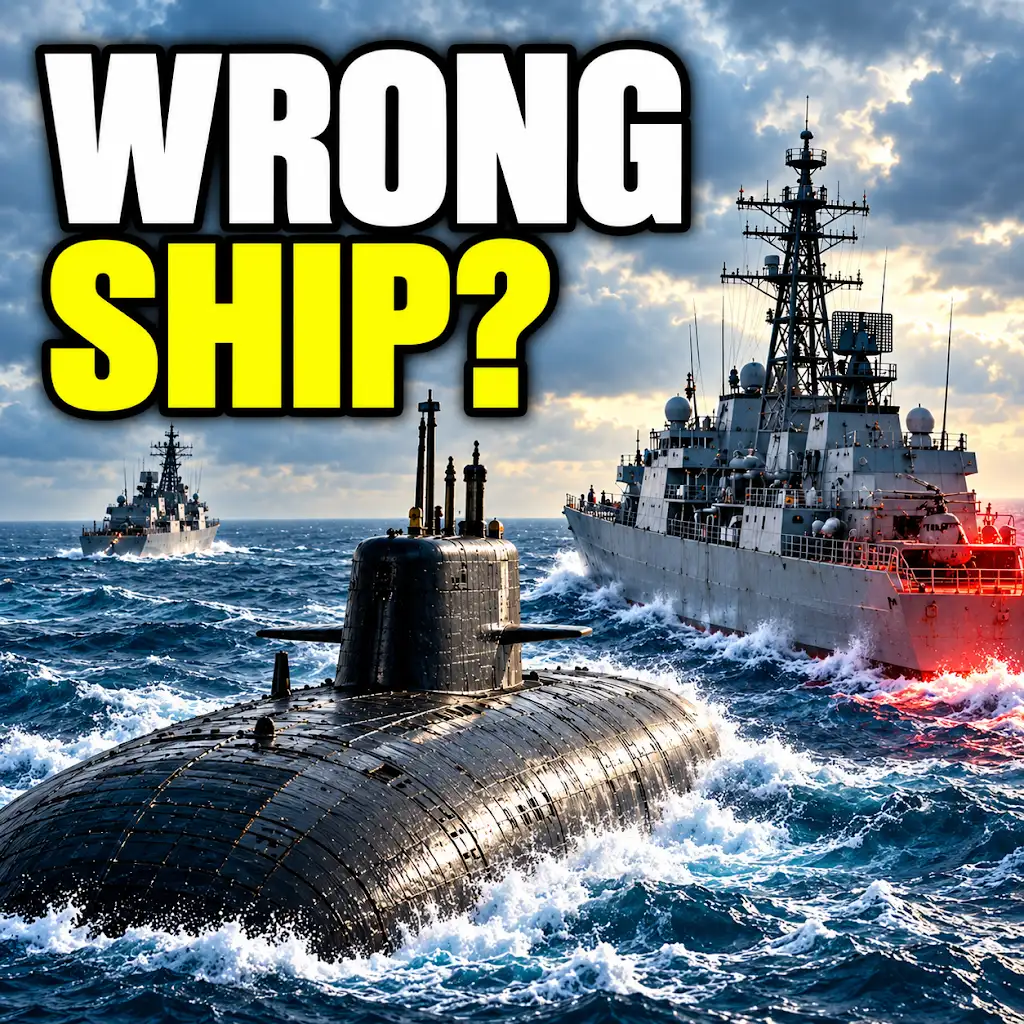
A Soviet Submarine Hit a U.S. Frigate. Was It the Wrong Ship?
FAQs
What happened when a Soviet submarine rammed a frigate?
In 1981, a Soviet submarine accidentally rammed into the USS Grayling, an American frigate, in the North Pacific Ocean. The incident caused damage to both vessels but did not result in any casualties.
Was the Soviet submarine intentionally trying to ram the frigate?
No, the collision between the Soviet submarine and the American frigate was deemed accidental. It was not a deliberate act of aggression but rather a navigational error that led to the collision.
What were the consequences of the Soviet submarine ramming the frigate?
Following the incident, both the Soviet Union and the United States conducted investigations to determine the cause of the collision. Diplomatic discussions were held to address the incident and prevent similar accidents in the future.
How did the crew members of the Soviet submarine and the American frigate react to the collision?
After the collision, the crew members of both vessels worked together to assess the damage and ensure the safety of everyone on board. Despite the tense political climate of the Cold War, the crews cooperated professionally in handling the aftermath of the incident.
Has there been any similar incident involving a submarine and a frigate since the Soviet submarine collision?
While submarine collisions are rare, there have been other incidents involving submarines and surface vessels over the years. However, none have garnered as much attention as the collision between the Soviet submarine and the American frigate in 1981.