The whispers began in neutral Spain, a nation caught in the vise of global conflict. They spoke of a man, a civilian with no military rank, who possessed a singular talent for espionage. This was Juan Pujol Garcia, a Spaniard with a flamboyant personality and an even more flamboyant imagination, a man who would become known to the world as Agent Garbo. His story is inextricably linked with Operation Fortitude, a monumental deception that played a pivotal role in the Allied victory of World War II, a testament to the power of a single individual to shape the course of history through the art of illusion.
The Unlikely Agent
Juan Pujol Garcia was not born a spy. He was a dreamer, an entrepreneur whose ventures often faltered. Before the war, he ran a poultry farm, a cinema, and even a hotel, each endeavor falling short of his grand ambitions. The outbreak of World War II, however, provided him with a new canvas for his ingenuity. He initially sought to join the British intelligence services, offering his services as a double agent. His initial overtures were met with polite but firm rejections. The British, wary of unqualified applicants, saw little in the unpolished Spaniard. Undeterred, Pujol decided to take matters into his own hands, forging his own path to deception.
A Catalan Chameleon’s Genesis
Born in Barcelona in 1912, Juan Pujol Garcia possessed a restless spirit and a keen intellect. His early life was marked by a series of failed business ventures, a pattern that would surprisingly serve him well in his later clandestine career. It was this very frustration with mediocrity that fueled his desire for something grander. He believed he could be more than just another cog in the war machine. His initial attempts to offer his services to the British were dismissed, leading him to a radical decision: to prove his worth through independent action. He reasoned that if the British wouldn’t recruit him, he would make them come to him, creating a fictional persona and feeding them information he fabricated himself.
The Birth of Garbo
Pujol, using his innate theatrical flair, began crafting his persona. He imagined himself as a fervent Spanish nationalist, working for the German Abwehr (military intelligence) and feeding them information about British troop movements and intentions. His first attempts to gain credibility involved concocting elaborate stories of his exploits, often involving perilous journeys and daring escapes, all designed to impress his supposed German handlers. He even went so far as to create a fictitious network of sub-agents, complete with backstories and elaborate operational details. The Germans, hungry for any intelligence from Britain, were intrigued. Pujol, now operating under the codename “Garbo” (a nod to the famous actress Greta Garbo, perhaps reflecting his own flair for the dramatic), was beginning to weave his intricate web.
Juan Pujol Garcia, also known as “Garbo,” played a crucial role in Operation Fortitude, the Allied deception strategy during World War II that aimed to mislead the Germans about the location of the D-Day invasion. His efforts in creating a network of fictitious spies and feeding false intelligence were instrumental in ensuring the success of the Normandy landings. For more insights into the intricacies of this operation and its impact on the war, you can read a related article at this link.
Infiltration and the Dual Game

Pujol’s true genius lay in his ability to play both sides, to be simultaneously a trusted asset to the Germans and a valuable informant for the British. His initial contact with the Abwehr was through a German tourist in Portugal, a seemingly innocuous encounter that quickly blossomed into a full-fledged intelligence operation. He convinced the Germans he had access to significant information, carefully feeding them carefully curated intelligence that was either outdated, misleading, or entirely fabricated. This dual role was incredibly dangerous, requiring constant vigilance, immense creativity, and a remarkable capacity for improvisation.
The Spanish Connection
Pujol’s initial foray into espionage was driven by a complex mix of anti-fascist sentiment and a desire for adventure. He despised Franco’s regime in Spain and saw the Nazi regime as an extension of that oppression. However, his entry into the intelligence world was not through a grand ideological awakening but rather a more pragmatic approach. He first approached German intelligence in Lisbon, Portugal, posing as a disgruntled Spanish official disillusioned with the Allied cause. His elaborate stories, filled with details about British military planning (which he mostly invented), soon captivated his German handlers. He skillfully portrayed himself as a disillusioned supporter of the Axis, eager to betray his former allies.
Securing British Trust
The turning point for Pujol came when the British finally recognized the potential of this unorthodox agent. After a period of careful observation and verification (often through controlled leaks to the Germans that the British could monitor), MI5, the British domestic security service, decided to take him under their wing. They saw in Garbo not just an informant, but a potential weapon. The risks were immense. If discovered by the Germans, he would face certain execution. If his British handlers mishandled him, the entire operation could unravel. Pujol, now codenamed Garbo by the British, was meticulously debriefed and equipped. The British provided him with a steady stream of “intelligence” to feed to the Germans, ensuring that his reports aligned with their strategic objectives.
Operation Fortitude: The Masterstroke of Deception

Operation Fortitude was arguably the most ambitious deception campaign of World War II, and Juan Pujol Garcia, Agent Garbo, was its undisputed star. The operation’s objective was simple yet audacious: to convince the German high command that the Allied invasion of Europe would occur at the Pas-de-Calais, the shortest sea crossing from Britain to France, rather than at Normandy. This colossal bluff was crucial for the success of D-Day. By drawing German reserves and attention to the Pas-de-Calais, the Allies aimed to reduce resistance in Normandy and secure a vital foothold on the continent.
The Ghost Army and Dummy Divisions
The success of Fortitude relied on creating the illusion of a massive Allied force poised to attack the Pas-de-Calais. This involved a multi-pronged approach. The British employed a vast array of deceptive tactics, including the construction of fake military camps, inflatable tanks and landing craft, and simulated radio traffic. The American counterpart, under General George S. Patton, created the First U.S. Army Group (FUSAG), a phantom army that appeared to be amassing in southeastern England, directly across from the Pas-de-Calais. This “ghost army” was a masterpiece of misdirection, complete with fake encampments, troop movements that were meticulously orchestrated to be seen by reconnaissance, and a constant stream of fake radio chatter.
Garbo’s Crucial Role in Misdirection
Within this grand theater of deception, Agent Garbo played a role of unparalleled importance. He was the direct pipeline of information to the German high command, the credible voice that confirmed their pre-existing suspicions about an attack on the Pas-de-Calais. Pujol meticulously crafted reports that corroborated the illusion of a massive force poised for invasion. He fabricated stories about troop deployments, supply movements, and even purported conversations with high-ranking Allied officers, all designed to reinforce the German belief in a Pas-de-Calais landing. His “intelligence” was so convincing that it directly influenced German strategic decisions.
The Strategic Impact of Fortitude
The impact of Operation Fortitude on the D-Day landings was profound. The German high command, heavily influenced by Garbo’s disinformation, committed substantial forces to defend the Pas-de-Calais. This included key armored divisions that could have been deployed to bolster defenses in Normandy. When the actual landings commenced on June 6, 1944, the German response in Normandy was considerably weaker than it would have been without Fortitude. Pujol’s deception effectively divided German attention and resources, making the Allied assault significantly more achievable. The success of D-Day, the turning point of the war in Europe, owes a considerable debt to the masterful deception orchestrated by Operation Fortitude and the invaluable contribution of Agent Garbo.
Post-War Recognition and the Lingering Shadow
After the war, Juan Pujol Garcia’s extraordinary contributions remained largely unknown to the public. The clandestine nature of espionage meant that his heroism was shrouded in secrecy. He was awarded the Order of the British Empire by the British government and the Iron Cross by the Germans, a testament to his unique position as a successful double agent. However, the psychological toll of his double life, the constant deception, and the close calls with discovery, left their mark. He lived for many years in relative obscurity, a secret hero who had played a pivotal role in a global conflict.
A Humble Hero’s Accolades
The recognition for Pujol’s extraordinary service came gradually, and often quietly. The British government, recognizing the immense value of his work, awarded him the Most Excellent Order of the British Empire (MBE) in 1945. This was a public acknowledgment of his dedication and the risks he had undertaken. Ironically, the German government, completely unaware of his true allegiances, also awarded him the Iron Cross for his supposed services to the Reich. This dual recognition perfectly encapsulated the bewildering success of his double agency. He had managed to earn accolades from both sides of the conflict, a feat almost unheard of in the annals of espionage.
The Scars of Deception
Despite the official accolades, the life of a double agent came at a significant personal cost. Pujol himself admitted to the immense psychological strain of maintaining his elaborate charade for years. The constant need to be vigilant, the fear of discovery, and the moral complexities of deceiving both sides undoubtedly took their toll. After the war, he struggled to reintegrate into civilian life. He sought a quiet existence, but the shadow of his wartime activities often lingered. He even attempted to resume his entrepreneurial ventures, but the allure of the mundane often felt pale compared to the high-stakes world he had inhabited.
A Legend in the Shadows
For many years, Juan Pujol Garcia remained a legend in the shadows of intelligence history. His story was pieced together through declassified documents, memoirs of intelligence officers, and his own eventual accounts. His ability to manipulate entire armies and influence the course of a global war through sheer ingenuity and daring cemented his place as one of history’s most remarkable spies. The story of Agent Garbo is a powerful reminder that sometimes, the most impactful victories are won not with brute force, but with the subtlest of manipulations, with the art of deception, and with the courage of a single, extraordinary individual.
Juan Pujol Garcia, also known as “Garbo,” played a crucial role in Operation Fortitude, the Allied deception strategy during World War II that misled the Germans about the location of the D-Day invasion. His efforts in creating a fictitious network of spies and feeding false information were instrumental in ensuring the success of the Normandy landings. For a deeper understanding of the intricate strategies employed during this pivotal moment in history, you can read more about it in this insightful article on In The War Room.
The Enduring Legacy of Agent Garbo
| Metric | Details |
|---|---|
| Agent Name | Juan Pujol Garcia (Codename: Garbo) |
| Operation | Operation Fortitude |
| Role | Double Agent |
| Country | Spain / United Kingdom (MI5) |
| Fake Network | Created a network of 27 fictitious agents |
| Impact | Misled German High Command about the location of the D-Day invasion |
| Key Contribution | Convincing false reports that the invasion would occur at Pas de Calais |
| Duration of Operation | 1942 – 1944 |
| Recognition | Received awards from both British and American governments |
Juan Pujol Garcia’s story is far more than a mere anecdote from World War II; it is a profound exploration of the nature of truth, deception, and the human capacity for extraordinary courage. His exploits as Agent Garbo serve as a powerful testament to the fact that in the complex tapestry of war, even a seemingly ordinary individual, armed with wit and audacity, can wield immense influence and shape the destiny of nations. His legacy continues to inspire and intrigue, a reminder that the most potent weapons are not always made of steel, but sometimes forged in the crucible of imagination and the unwavering pursuit of a goal.
The Art of Psychological Warfare
Garbo’s success was not solely based on delivering information, but on understanding the psychology of his adversaries. He knew that the Germans, desperate for confirmation of their suspicions, were susceptible to narratives that aligned with their preconceived notions. By carefully feeding them information that corroborated their belief in a Pas-de-Calais invasion, he played on their biases and their anxieties. This mastery of psychological warfare, of manipulating perception on a grand scale, is what elevated him from a simple informant to a strategic asset of incalculable value. His story highlights the enduring importance of understanding human motivation and cognitive biases in conflict.
A Cautionary Tale and a Source of Inspiration
The life of Juan Pujol Garcia is both a cautionary tale and a source of profound inspiration. It warns of the inherent dangers and moral ambiguities of espionage, the constant tightrope walk between loyalty and betrayal. Yet, it also inspires with its demonstration of what one individual, driven by a unique blend of cunning, courage, and a touch of theatrical flair, can achieve. His story is a powerful reminder that history is not solely shaped by generals and politicians, but often by the unsung heroes who operate in the shadows, their deeds only fully appreciated long after the battles are won. Agent Garbo remains a singular figure, a testament to the enduring power of a well-executed deception.
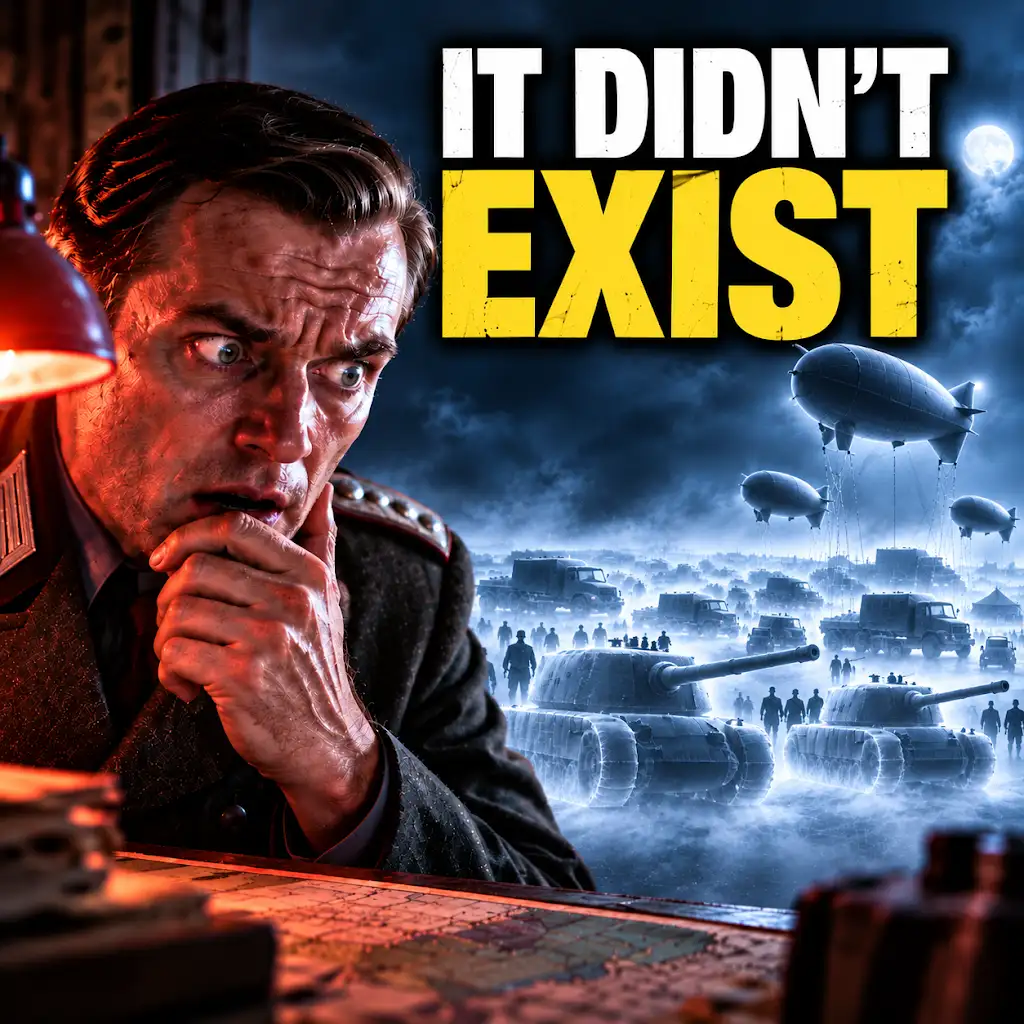
How the Allies Built an Army for Germany to Discover
FAQs
What was Operation Fortitude?
Operation Fortitude was a World War II military deception operation conducted by the Allies to mislead the German military about the location and timing of the D-Day invasion.
Who was Juan Pujol Garcia?
Juan Pujol Garcia, also known by his code name “Garbo,” was a Spanish double agent who played a crucial role in Operation Fortitude by feeding false information to the Germans.
How did Juan Pujol Garcia contribute to Operation Fortitude?
Juan Pujol Garcia created a fictional network of sub-agents and provided the Germans with misleading information about Allied troop movements and plans, helping to convince the Germans that the main invasion would take place at Pas-de-Calais rather than Normandy.
What was the significance of Operation Fortitude?
Operation Fortitude was instrumental in deceiving the German high command and diverting their attention away from the actual location of the D-Day invasion, contributing to the success of the Allied landings on June 6, 1944.
How did Operation Fortitude impact the outcome of World War II?
Operation Fortitude played a crucial role in the success of the D-Day invasion by creating confusion and uncertainty among the German forces, ultimately helping the Allies establish a foothold in Normandy and turn the tide of the war in their favor.