The Shadow of the Deep: Cold War Submarine Warfare and the Constant Threat
The Cold War, a prolonged period of geopolitical tension between the United States and the Soviet Union and their respective allies, was not solely defined by proxy wars and ideological struggles waged on land. Beneath the waves, a silent, yet equally perilous, conflict unfolded. Submarines, the stealthy predators of the ocean, played a crucial role in this adversarial dance. Their ability to elude detection, carry devastating payloads, and project power unseen made them both a vital strategic asset and a constant source of anxiety for both superpowers. The Soviet Union, in particular, invested heavily in its submarine fleet, driven by a combination of defensive necessity and offensive ambition. This relentless pursuit of naval superiority, however, also sowed the seeds of potential miscalculation, where a single error in judgment or a technical malfunction could have escalated into catastrophic consequences. Understanding the dynamics of Soviet submarine operations and the anxieties they engendered is key to comprehending the delicate balance of power that characterized the Cold War naval tensions.
The Soviet Union’s submarine doctrine was shaped by its geographical realities and strategic objectives. Unlike the United States, with its global network of bases and open access to major oceans, the Soviet Union’s access to the open sea was significantly restricted by choke points controlled by NATO. This made its submarine force a critical tool for both defending its coastline and projecting power into the Atlantic and Pacific to threaten Western sea lanes and carrier strike groups. The sheer scale of Soviet submarine construction, from diesel-electric patrol craft to massive nuclear-powered ballistic missile submarines (SSBNs) and attack submarines (SSNs), underscored their strategic importance. The constant patrols, the intricate cat-and-mouse games with NATO anti-submarine warfare (ASW) forces, and the inherent risks associated with operating in hostile waters created a high-stakes environment where the possibility of a catastrophic misstep loomed large.
The Soviet submarine miscalculation theory highlights the potential for catastrophic misunderstandings during the Cold War, particularly regarding the actions of military forces under high-stress conditions. For a deeper exploration of this topic, you can refer to a related article that discusses the implications of such miscalculations on international relations and military strategy. To read more, visit this article.
The Strategic Imperative: Why the Soviets Focused on Submarines

The Soviet Union’s emphasis on its submarine fleet was not an arbitrary choice but a calculated response to its geopolitical position and military doctrine. The USSR’s long land borders and its limited access to warm-water ports meant that naval power, particularly a potent submarine force, was essential for projecting power and deterring potential aggressors.
Balancing the Scales: The Strategic Underpinning of Soviet Submarine Development
From the outset of the Cold War, the Soviet Union faced a significant naval disadvantage compared to the United States. The US Navy possessed a formidable fleet of aircraft carriers, surface warships, and a growing submarine force. To counter this, Soviet strategists recognized the unique advantages offered by submarines. Their stealth capabilities allowed them to operate with a degree of impunity that surface vessels could not match. This was particularly crucial for the Soviet Union, which aimed to disrupt Western supply lines, particularly those vital for reinforcing Europe in the event of a conflict. The “bastion strategy,” a key element of Soviet naval thinking, envisioned submarines operating within heavily defended sea areas, creating a protected environment from which to launch strikes against NATO forces. This strategy was a direct response to the perceived threat of a large-scale amphibious assault and the need to deny the US the ability to project power effectively in a conflict.
The Nuclear Deterrent: SSBNs and the Second-Strike Capability
Perhaps the most critical role of the Soviet submarine force was in providing a credible nuclear deterrent. The development of Submersible Ballistic Missile Submarines (SSBNs) was a cornerstone of Soviet nuclear strategy. These vessels, often referred to as “boomers,” carried intercontinental ballistic missiles (ICBMs) capable of reaching targets in the United States. The primary objective of SSBNs was to provide a “second-strike capability.” This meant that even if the Soviet Union were to suffer a devastating first strike from the United States, its submarines, dispersed and hidden in the vastness of the oceans, would survive to retaliate. This survivability was a crucial element of mutual assured destruction (MAD), the doctrine that underpinned nuclear deterrence. The immense destructive power carried by these silent giants, combined with their inherent stealth, made them a terrifying and effective deterrent. The constant patrols of SSBNs, often within tightly controlled “bastions” in northern seas, were a constant reminder to the West of the devastating retaliatory power that lay beneath the waves.
Conventional Prowess: SSNs and the Threat to Sea Lanes
Beyond nuclear deterrence, the Soviet Union also maintained a large and capable fleet of nuclear-powered attack submarines (SSNs). These submarines were designed to hunt and destroy other submarines and surface ships. Their primary mission was to interdict Western shipping, targeting the vital sea lanes that supplied NATO forces in Europe. The sheer number of Soviet SSNs, coupled with their increasing technological sophistication, posed a significant threat to the free flow of commerce and military reinforcement across the Atlantic. The US and its allies invested heavily in anti-submarine warfare (ASW) capabilities to counter this threat, leading to a continuous arms race in sonar technology, torpedoes, and detection methods. The close encounters between Soviet SSNs and NATO ASW forces, often occurring in tense and unforgiving environments, highlight the constant risk of escalation and miscalculation inherent in this naval standoff.
The Fog of War: Misunderstandings and Close Calls

The operational environment for submarines during the Cold War was characterized by extreme secrecy, limited communication, and the inherent difficulties of detecting and tracking submerged vessels. This created fertile ground for misunderstandings, technical malfunctions, and human errors, all of which could have led to disastrous outcomes.
The Perils of Stealth: Detection and Identification Challenges
Submarine warfare is inherently a game of hide-and-seek played out in three dimensions. The ocean depths, with their complex sound propagation and acoustic clutter, make
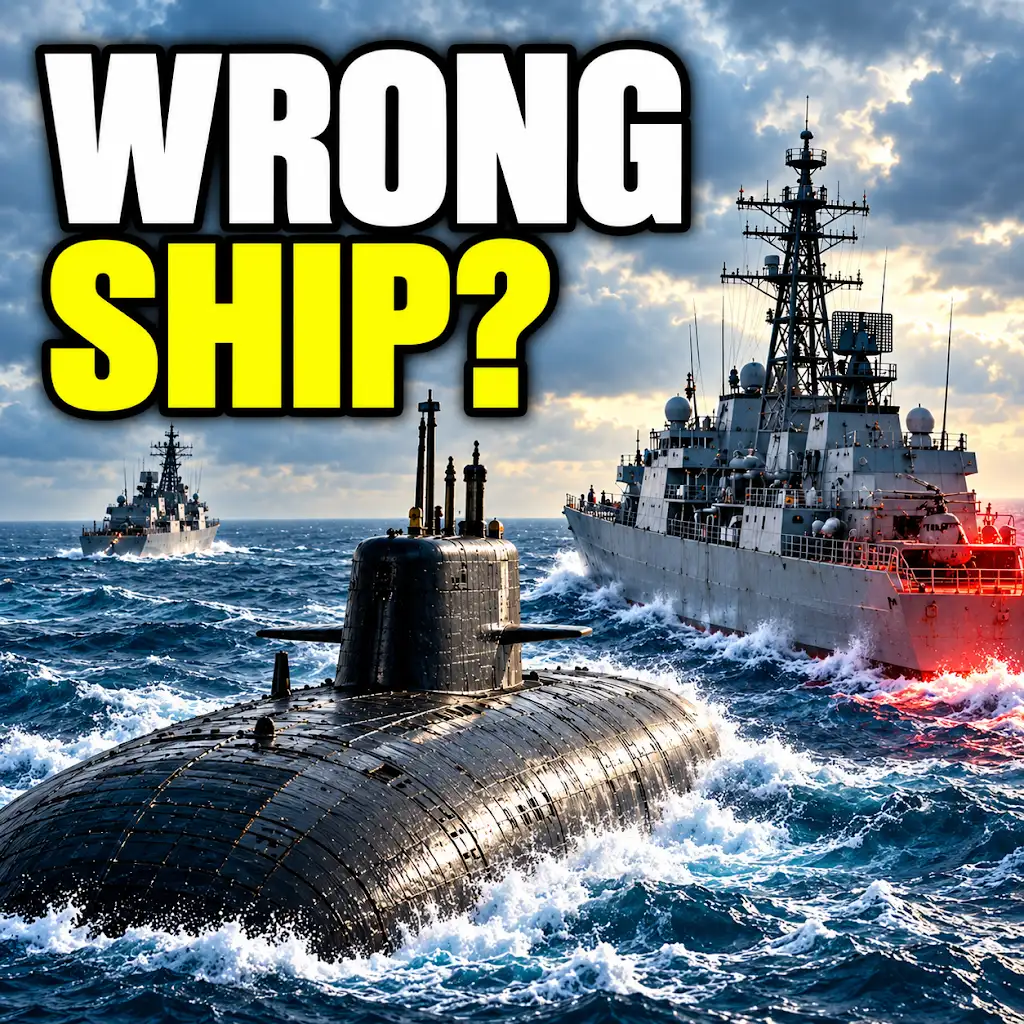
A Soviet Submarine Hit a U.S. Frigate. Was It the Wrong Ship?
FAQs
What is the Soviet submarine miscalculation theory?
The Soviet submarine miscalculation theory suggests that during the Cold War, Soviet submarines may have mistakenly believed they were under attack by enemy forces, leading to potentially dangerous or provocative actions.
How did the Soviet submarine miscalculation theory impact international relations?
The theory raised concerns about the potential for misunderstandings and miscalculations between the Soviet Union and Western powers, heightening tensions and the risk of accidental conflict during the Cold War.
Are there any documented incidents that support the Soviet submarine miscalculation theory?
While there is no concrete evidence to definitively prove the theory, there have been instances of close calls and misunderstandings involving Soviet submarines that lend some credibility to the idea of miscalculations.
What factors may have contributed to Soviet submarines making miscalculations?
Factors such as communication errors, technical malfunctions, lack of information, and heightened paranoia during the Cold War could have all played a role in Soviet submarines potentially misinterpreting situations and reacting inappropriately.
How has the Soviet submarine miscalculation theory influenced modern naval strategies?
The theory has underscored the importance of clear communication, accurate intelligence, and de-escalation protocols in naval operations to prevent misunderstandings and reduce the risk of accidental conflicts between submarines and naval forces.