The Austro-Prussian War of 1866, a conflict of immense consequence for the German Confederation and the future of Europe, was a testament to the power of strategic innovation and meticulous planning. While often overshadowed by the larger Franco-Prussian War of 1870, this “Seven Weeks’ War” laid the groundwork for Prussian dominance and dramatically altered the balance of power on the continent. At its heart, the war was a clash of military doctrines, with Prussia, under the brilliant direction of Helmuth von Moltke the Elder, showcasing a more modern and adaptable approach compared to Austria’s more traditional, yet still formidable, military machine.
The Austro-Prussian War was not a sudden eruption of violence but rather the culmination of decades of simmering rivalry between the two great German powers. For Prussia, the paramount strategic objective was the unification of Germany under its leadership, excluding Austria. This ambition was fueled by a growing sense of nationalistic fervor and a desire to liberate German states from perceived Austrian hegemony. Prussia believed that only through a decisive military victory could it achieve this political aim.
Prussian Ambitions for Hegemony
Prussia’s strategic planning was deeply intertwined with its long-term goal of German unification. Moltke and his staff understood that a successful war against Austria would not only cripple Vienna’s influence but also pave the way for Prussian leadership in the proposed North German Confederation. This required a swift and decisive campaign that would demoralize Austria and its allies, forcing a political settlement favorable to Berlin.
Austrian Defense of its Southern German Position
Austria, conversely, viewed its position within the German Confederation as a cornerstone of its imperial power. Vienna sought to maintain its influence over the southern German states and preserve the existing federal structure, which it largely controlled. Austria’s strategic objective was therefore defensive: to repel Prussian aggression and reassert its traditional dominance. However, Austria’s military planning was hampered by its multi-ethnic empire, which presented logistical challenges and a diverse range of potential threats.
The Role of Italian Unification
The war also had a crucial second front in Italy, where Austria was engaged in conflict with the Kingdom of Sardinia-Piedmont, supported by Prussia. This alliance, though militarily somewhat unequal, served a critical strategic purpose for both Prussia and Italy. Austria was forced to divide its forces, diverting valuable troops and resources away from the Bohemian front. This placed an enormous strain on Austria’s military capacity and provided Prussia with a crucial advantage.
The Austro-Prussian War of 1866 is a fascinating study in military strategy, particularly in how Prussia leveraged its superior organization and technology to achieve decisive victories. For a deeper understanding of the strategic maneuvers and innovations that characterized this conflict, you can explore the article titled “Military Strategy in the Austro-Prussian War” available at In the War Room. This article delves into the tactics employed by Prussian forces and the implications of their success on future military engagements in Europe.
Prussian Military Reforms: The Engine of Victory
The outcome of the Austro-Prussian War was largely dictated by Prussia’s superior military organization, training, and technological advancements. Years of dedicated reform, spearheaded by figures like Albrecht von Roon and Moltke, had transformed the Prussian army into a highly efficient and adaptable fighting force.
The Importance of the General Staff
Central to Prussia’s military success was the development of a professional and highly capable General Staff. This institution, under Moltke’s leadership, was responsible for meticulous planning, intelligence gathering, and the formulation of operational strategies. Unlike many other European general staffs, the Prussian model emphasized innovation, flexibility, and the ability to adapt plans to evolving battlefield conditions. They were not simply executors of royal will but strategic thinkers who understood the complexities of modern warfare.
The Needle Gun and its Tactical Impact
The Prussian adoption of the Dreyse needle gun, a breech-loading rifle, was a significant technological advantage. This weapon allowed Prussian soldiers to reload significantly faster than their Austrian counterparts, who were still primarily armed with muzzle-loading rifles. This superior firepower had a profound impact on battlefield tactics, enabling Prussian infantry to deliver a devastating rate of fire, suppress enemy advances, and gain a crucial advantage in infantry engagements.
The Advantages of Breech-Loading Technology
The needle gun’s breech-loading mechanism allowed soldiers to reload from a prone position, offering better protection from enemy fire. This contrasted sharply with muzzle-loading rifles, which required soldiers to stand to reload, making them vulnerable targets. The rate of fire was also dramatically increased, allowing Prussian units to lay down suppressive fire that could break enemy formations before they could effectively engage.
The Psychological Effect of Superior Firepower
Beyond the purely tactical advantages, the needle gun also had a significant psychological impact on the Austrian troops. Facing a foe who could unleash volleys of fire with such rapidity and ease instilled a sense of demoralization and fear, contributing to the effectiveness of Prussian attacks and the wavering resolve of Austrian defense.
Logistics and Mobilization: The Art of Speed
Prussia’s mastery of logistics and rapid mobilization was another critical strategic element. The extensive railway network in Prussia, combined with a well-organized system for troop and supply movement, allowed for the swift concentration of forces on the front lines. This contrasted sharply with Austria’s less developed infrastructure and more cumbersome mobilization process, which often resulted in delayed deployments and a piecemeal engagement of its forces.
The Prussian Railway Network as a Strategic Asset
The Prussian railway system was not merely a means of transportation but a strategic weapon in itself. Moltke and his staff meticulously planned the deployment of troops and materiel along various railway lines, ensuring that the army could be brought to bear with unprecedented speed. This allowed Prussia to dictate the pace of the war and seize the initiative.
Austrian Logistical Challenges
Austria’s vast and geographically diverse empire, coupled with a less advanced railway infrastructure, presented significant logistical hurdles. Mobilizing and supplying troops across such a large territory was a complex and time-consuming undertaking, often leaving Austrian forces at a disadvantage in terms of readiness and concentration compared to their Prussian adversaries.
Moltke’s Grand Strategy: Maneuver and Decisive Battles
Helmuth von Moltke the Elder’s strategic brilliance lay in his understanding of how to leverage Prussian strengths to exploit Austrian weaknesses. His grand strategy focused on rapid maneuver, the concentration of overwhelming force at decisive points, and the avoidance of prolonged attrition.
The Principle of Concentration of Force
Moltke’s core strategic principle was the concentration of overwhelming force at a decisive point to achieve a swift and annihilating victory. He believed in identifying the enemy’s main body and massing Prussian forces to engage and defeat it decisively. This approach aimed to avoid costly frontal assaults and instead focus on outmaneuvering and encircling the enemy.
The ‘Concentration on the Battlefield’ Doctrine
This doctrine emphasized the importance of bringing superior numbers to bear on a specific battlefield, overwhelming the enemy before they could bring their full strength to bear. Moltke was adept at using intelligence to anticipate enemy movements and then rapidly redeploying his own forces to intercept and engage.
The Importance of Maneuver Warfare
Moltke placed a premium on maneuver warfare, seeking to outflank and envelop Austrian forces rather than engage them in direct frontal assaults. This strategy aimed to disrupt enemy formations, sever their supply lines, and force them into disadvantageous positions where they could be more easily defeated.
Outflanking and Envelopment as Key Tactics
Prussian forces, particularly the First and Second Armies under Prince Frederick Charles and Crown Prince Frederick William respectively, were expertly maneuvered to outflank the Austrian army in Bohemia. This strategic movement aimed to trap the Austrian Northern Army and force it into a decisive engagement.
The Decisive Battle of Königgrätz
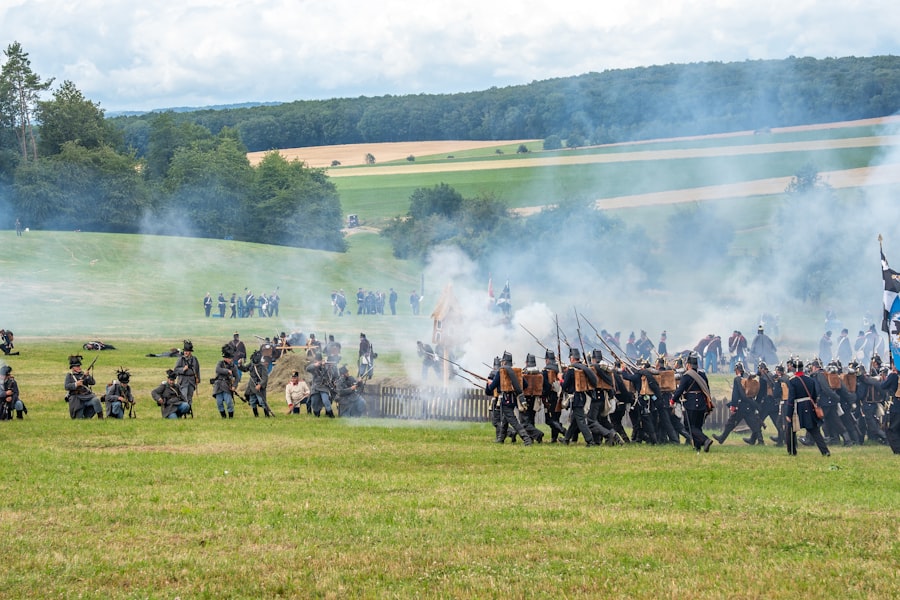
The Battle of Königgrätz (Sadowa), fought on July 3, 1866, was the pivotal engagement of the war. Moltke’s strategic masterpiece involved the coordination of three Prussian armies, converging on the Austrian forces under Ludwig von Benedek. The timely arrival of the Crown Prince’s Second Army, after a gruelling forced march, turned the tide of the battle and secured a crushing Prussian victory.
The Role of Coordination and Timing
The success at Königgrätz was a direct result of Moltke’s masterful coordination and precise timing. The First and Elbe Armies engaged the Austrians, pinning them down, while the Second Army, after covering an impressive distance, arrived on the Austrian flank at the critical moment, delivering a decisive blow.
The Impact of Benedek’s Tactical Errors
Austrian Commander Benedek, despite his considerable experience, made several tactical errors at Königgrätz. He failed to adequately scout Prussian movements, underestimated the speed of Prussian deployments, and misjudged the critical moment to commit his reserves, ultimately contributing to his army’s catastrophic defeat.
Austrian Military Weaknesses: The Burden of a Declining Empire
While Austria possessed a large and traditionally well-respected army, it was plagued by inherent weaknesses that proved to be insurmountable against the more modern and dynamic Prussian war machine.
The Problem of Multi-Ethnicity and Command Structure
Austria’s multi-ethnic nature, while a source of manpower, also created significant linguistic and cultural barriers within its army. This complicated communication, training, and the development of a cohesive fighting spirit. Furthermore, the Austrian command structure was often characterized by infighting and a lack of clear, decisive leadership, hindering effective strategic decision-making.
Language Barriers and Unit Cohesion
The diverse linguistic landscape of the Austro-Hungarian Empire meant that many units were comprised of soldiers who spoke different languages. This posed significant challenges for effective command and control, as orders might not be fully understood, impacting unit cohesion and battlefield responsiveness.
Political Interference in Military Appointments
The Austrian military, like many aspects of the Habsburg Empire, was not immune to political interference. Promotions and appointments were not always based on merit alone, leading to a command structure that sometimes lacked the most competent individuals, further exacerbating strategic and tactical shortcomings.
Outdated Tactical Doctrines and Equipment
In contrast to Prussia’s embrace of new technologies and flexible tactics, the Austrian army largely adhered to more traditional, rigid doctrines. This often meant favoring massed formations and bayonet charges, which proved vulnerable to Prussian rifle fire and artillery.
The Reliance on Bayonet Charges
Despite the growing effectiveness of rifle fire, Austrian tactics still heavily emphasized the bayonet charge. While courageous, these assaults often met a hail of bullets from the Prussian needle guns, resulting in heavy casualties and a failure to achieve their objectives.
Inferior Artillery and Firepower
While Austria possessed a formidable artillery arm, its deployment and effectiveness were often hampered by less advanced firing techniques and slower reloading times compared to Prussian artillery. This meant that even when Austrian artillery was present, it struggled to counter the superior rate of fire from Prussian guns.
The Italian Front: A Drain on Resources
The commitment of substantial Austrian forces to the Italian theater, battling against Italian and French-supported forces, was a significant strategic miscalculation. This diversion of manpower and resources weakened Austria’s position on the crucial Bohemian front, allowing Prussia to concentrate its efforts more effectively.
The War of the Third Italian War of Independence
The Italian front, while less decisive for the overall outcome of the war in terms of territorial gains, was a crucial strategic consideration for Austria. The need to defend its territories in Venetia and Lombardy forced Vienna to deploy a significant portion of its military, thereby diluting its strength against Prussia.
The Role of French Support for Italy
The implicit or explicit support of France for Italian unification provided an additional strategic pressure on Austria. While France did not directly intervene militarily against Austria in 1866, its alignment with Italy meant that Austria could not afford to be completely disengaged from its Italian holdings, as this could invite further French involvement.
The Austro-Prussian War of 1866 showcased innovative military strategies that significantly influenced modern warfare. One notable aspect was the Prussian emphasis on rapid mobilization and the effective use of railways to transport troops swiftly to the front lines. This strategic advantage allowed the Prussians to outmaneuver their opponents and achieve decisive victories. For a deeper understanding of the military tactics employed during this conflict, you can explore a related article that delves into the intricacies of these strategies at this link.
The Strategic Consequences: Reshaping the German Landscape
| Aspect | Details |
|---|---|
| Duration | July 14 – August 23, 1866 |
| Location | Central Europe |
| Belligerents | Prussia and Italy vs. Austria and other German states |
| Prussian Strategy | Quick mobilization and use of railroads for rapid troop movement |
| Austrian Strategy | Defensive posture and reliance on traditional military tactics |
| Outcome | Prussian victory, leading to the formation of the North German Confederation |
The Austro-Prussian War had profound and far-reaching strategic consequences, fundamentally reshaping the political and military landscape of Central Europe. Prussia emerged as the dominant power in Germany, paving the way for eventual unification, while Austria’s influence in the region was irrevocably diminished.
The Dissolution of the German Confederation
The war led directly to the dissolution of the German Confederation, an organization that had served as a loose association of German states dominated by Austria since 1815. Prussia, having defeated its rival, was free to establish its own sphere of influence.
The End of Austrian Hegemony
Austria’s defeat marked the end of its long-standing hegemony over the German states. The war effectively removed Vienna from the equation of German power politics, allowing Prussia to consolidate its leadership.
The Rise of the North German Confederation
In the aftermath of the war, Prussia established the North German Confederation, a federal state that excluded Austria and brought most of the northern German states under Prussian control. This was a crucial step towards full German unification.
The Emergence of Prussian Military Supremacy
The Prussian military, through its decisive victory, demonstrated its superiority to other European powers. The war served as a powerful advertisement for Prussian military efficiency, strategic planning, and technological prowess, influencing military thought and development across the continent.
A Model for Future Warfare
The Prussian model of a professional General Staff, rapid mobilization, and technologically superior weaponry became a benchmark for other armies. The lessons learned from Königgrätz and the overall Prussian campaign influenced military strategies for decades to come.
The Path to German Unification
The Austro-Prussian War was a critical precursor to the Franco-Prussian War of 1870, which would ultimately lead to the full unification of Germany under Prussian leadership. By eliminating Austrian opposition, Prussia had cleared the path for its ultimate goal.
The Shifting Balance of Power in Europe
The war significantly altered the balance of power in Europe. Austria, once a dominant force, was reduced to a secondary power, its focus shifting towards its own internal affairs and its position within the dual monarchy with Hungary. Prussia, on the other hand, was on an ascendant trajectory, poised to become a major European power. This shift had long-term implications for international relations, contributing to the complex web of alliances and rivalries that would eventually lead to World War I.

The Military Machine That Didn’t Need a Napoleon
FAQs
What was the Austro-Prussian War?
The Austro-Prussian War, also known as the Seven Weeks’ War, was fought in 1866 between the Austrian Empire and the Kingdom of Prussia, along with its allies. The war was a result of the struggle for dominance within the German Confederation.
What were the military strategies employed during the Austro-Prussian War?
The Prussian military strategy during the Austro-Prussian War focused on the use of rapid mobilization, combined arms tactics, and the utilization of the railway system for quick troop movements. This allowed the Prussian forces to concentrate their strength against the Austrian army and achieve decisive victories.
How did the use of railways impact the military strategy in the Austro-Prussian War?
The use of railways played a crucial role in the military strategy of the Austro-Prussian War. It allowed the Prussian forces to quickly mobilize and concentrate their troops, enabling them to outmaneuver the Austrian army and achieve strategic advantages on the battlefield.
What were the key battles of the Austro-Prussian War?
The key battles of the Austro-Prussian War included the Battle of Königgrätz, also known as the Battle of Sadowa, which was the decisive battle of the war. The Prussian victory at Königgrätz led to the collapse of the Austrian position and ultimately to the end of the conflict.
What were the outcomes of the Austro-Prussian War?
The outcomes of the Austro-Prussian War included the defeat of the Austrian Empire and its allies, the dissolution of the German Confederation, and the establishment of the North German Confederation under Prussian leadership. This laid the groundwork for the eventual unification of Germany under Prussian dominance.