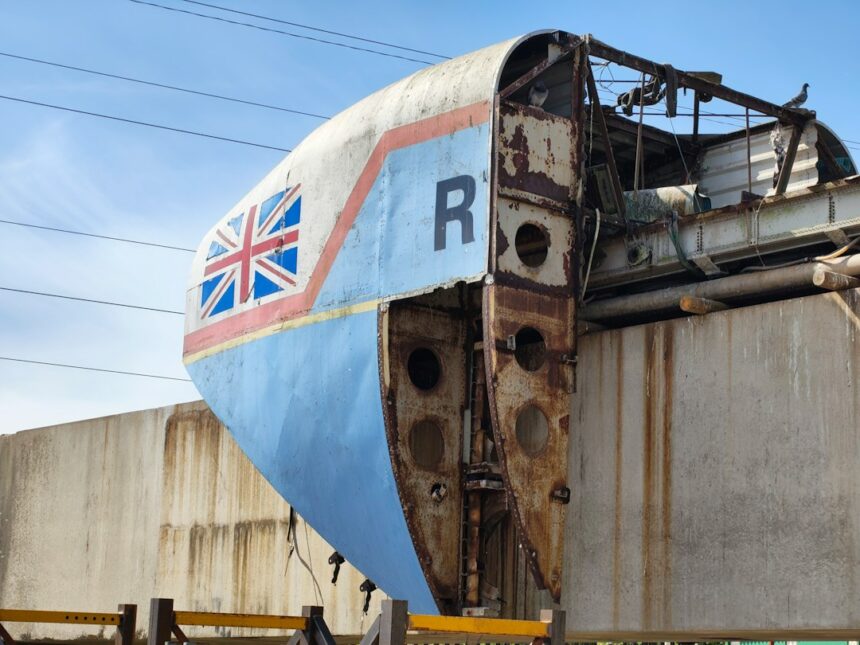
The silent, hulking behemoths of the Soviet Navy, the submarines, were often shrouded in an aura of technological prowess and formidable military might. Yet, beneath the veneer of impressive engineering and national pride, a persistent and dangerous issue plagued these underwater vessels: the cracking of their hulls. This was not a superficial problem, but one that struck at the very core of their structural integrity, leading to a series of catastrophic failures and casting a long shadow over Soviet submarine construction. The roots of this issue lay deeply embedded within the complex and often opaque world of Soviet industrial practices, material science, and the relentless pressure to meet production quotas.
The Material Foundation of Submarine Strength
The hull of a submarine is its lifeline, its skin against the crushing embrace of the ocean depths. The materials used in its construction are therefore of paramount importance, dictating its ability to withstand immense pressure, resist corrosion, and maintain its structural integrity over extended operational periods. In the Soviet Union, the choice and application of these materials were often dictated by factors that extended beyond purely technical considerations, leading to inherent vulnerabilities.
Steel Grades and Their Temperament
The primary material for Soviet submarine hulls was high-strength steel. While capable of immense tensile strength, the specific alloys and their heat treatment were critical. Soviet metallurgists worked with various steel grades, often designated by numbers and chemical compositions. The intent was to achieve a balance between strength, weldability, and cost-effectiveness. However, inconsistencies in the alloying process, variations in the purity of raw materials, and deficiencies in the heat treatment procedures could introduce microscopic flaws and internal stresses within the steel. These imperfections acted as nucleation sites for cracks, especially when subjected to the cyclical stresses of deep dives, rapid ascents, and the constant vibrations of operational life.
The Soviet approach to steel production, often characterized by large-scale, centrally planned foundries, could sometimes prioritize quantity over the meticulous quality control required for such critical components. Contamination with impurities like sulfur and phosphorus, even in small amounts, could significantly reduce the ductility and toughness of the steel, making it more prone to brittle fracture rather than ductile yielding. This brittleness meant that under stress, instead of deforming gradually, the material could fail catastrophically.
The Shadow of the Cold War: Material Shortages and Compromises
The geopolitical landscape of the Cold War exerted a profound influence on Soviet industrial output, including submarine construction. Persistent demands for military hardware, coupled with occasional disruptions in the supply chain and economic sanctions, could lead to the use of less-than-ideal materials or substitutions when specific grades of steel were unavailable or too costly. This pressure to deliver on ambitious production targets often trumped the pursuit of optimal material properties. Engineers and workers might have found themselves compelled to use steel that was not fully certified for deep-sea applications or to compromise on the rigorous testing and annealing processes that would ensure the material’s robustness.
Furthermore, the Soviet emphasis on autarky, while intended to ensure self-sufficiency, could also limit access to cutting-edge material science research and development that was occurring in other parts of the world. This meant that advancements in naval steel alloys and their application might have been slower to be adopted or implemented within the Soviet Union. The cumulative effect of these material-related challenges created a foundational weakness in the very fabric of the submarine hulls, setting the stage for future problems.
In recent discussions about the challenges faced by the Soviet submarine fleet, one particularly intriguing topic is the issue of hull cracking during construction. This phenomenon not only affected the structural integrity of the submarines but also raised concerns about the overall safety and effectiveness of these vessels. For a deeper dive into this subject, you can read the related article that explores the implications of these construction flaws and their impact on naval operations at this link.
The Art and Science of Welding: A Source of Subsurface Stress

Welding is an indispensable process in submarine construction, joining together vast sections of thick steel to form a watertight and pressure-resistant hull. For Soviet submarines, the quality and integrity of these welds were a recurring Achilles’ heel, often leading to the very cracks that would compromise the vessels. The complexities of welding large, thick-walled structures under pressure and in often challenging industrial environments contributed significantly to the problem.
Welder Skill and Procedural Adherence
The skill and training of the welders themselves played a crucial role. While many Soviet welders were undoubtedly highly skilled, the sheer scale of submarine production meant that a large workforce was involved. Ensuring consistent proficiency across all personnel, especially when dealing with intricate and high-pressure welding techniques, was a significant undertaking. Deviations from prescribed welding procedures, such as incorrect amperage, travel speed, or electrode selection, could introduce defects into the weld itself. These defects could manifest as porosity (trapped gas bubbles), inclusions (foreign material trapped within the weld), lack of fusion (where the base metal and the filler metal did not properly meld), or cracks.
The Soviet Union’s emphasis on standardized procedures and blueprints was intended to ensure uniformity. However, the reality on the factory floor could be different. Production pressures could lead to shortcuts, and rigorous supervision and quality control might not always be present or consistently applied. The environment in which welding took place – often in large, cavernous workshops with limited visibility and access – could also present challenges to achieving perfect welds.
The Intricacies of Hull Welding and Stress Concentration
Welding thick steel plates, especially in the curved sections of a submarine hull, introduces significant residual stresses. These stresses are locked into the metal as it cools after being heated by the welding process. If these residual stresses are not properly managed through post-weld heat treatment (annealing), they can become a considerable factor in the hull’s susceptibility to cracking. In essence, the hull is already under internal tension before it even experiences the external pressures of the ocean.
Moreover, the geometry of the welded joints themselves can create areas of stress concentration. Sharp corners, abrupt changes in thickness, or the presence of internal defects within the weld can act as focal points where stress is amplified. When these stressed areas are combined with inherent material weaknesses and the cyclic loading of submarine operations, the stage is set for fatigue crack initiation and propagation. The meticulous attention to detail required to design and execute welds that minimize stress concentration was a constant challenge for Soviet engineers and fabricators.
Design and Operational Factors: The Double-Edged Sword of Depth

While the inherent material and construction issues were significant, the very design philosophy and operational requirements of Soviet submarines also contributed to their hull integrity problems. The relentless pursuit of greater depth capabilities and the demanding operational tempo of the Soviet Navy placed immense strain on these vessels.
The Quest for Deeper Dives: Pushing the Envelope
A defining characteristic of the Soviet submarine program, particularly in later eras, was the drive to achieve unprecedented diving depths. This was motivated by a desire to gain tactical advantages, making their submarines harder to detect and more capable of operating in hostile waters. However, each meter of increased depth translates to a substantial increase in hydrostatic pressure. To withstand these immense forces, hulls had to be made thicker and stronger. This, in turn, amplified the challenges associated with welding and material quality.
The design of deeper-diving submarines often involved the use of specialized, high-yield strength steels. While offering the potential for greater depth, these steels could also be less forgiving of manufacturing defects. The margin for error was significantly reduced. Furthermore, the pursuit of deeper dives sometimes led to designs that were less efficient in terms of structural redundancy. If a flaw existed in a critical area, the consequences could be far more severe than in a less-stressed design. The strategic imperative to outperform their Western counterparts in this regard may have inadvertently led to the construction of vessels that were inherently more vulnerable to structural failure.
The Demands of the Cold War Patrols: Fatigue and Neglect
Soviet submarines were engaged in continuous, high-tempo operations throughout the Cold War. These patrols were often long, arduous, and conducted in challenging environments. The constant cycling of pressure – from the immense pressures of deep dives to the relatively lower pressures of shallower depths or surfacing – subjected the hull to repeated stress cycles. This fatigue effect is a cumulative process. Microscopic cracks, perhaps initiated by welding defects or material imperfections, would gradually grow larger with each cycle, eventually reaching a critical length where catastrophic failure could occur.
Moreover, the Soviet Navy, like any military organization, faced resource constraints. Maintenance schedules, while theoretically rigorous, could sometimes be strained by operational demands or budgetary limitations. A lack of timely and thorough inspections, coupled with insufficient repair of minor hull defects, could allow small problems to fester and grow into major structural weaknesses. The pressure to keep submarines operational and deployed meant that sometimes, vessels might have been pushed beyond their optimal service life or allowed to continue operating with known, albeit minor, structural issues.
The Legacy of Failure: Tragic Incidents and Their Lessons
The construction issues plaguing Soviet submarine hulls were not merely theoretical concerns; they manifested in a series of tragic incidents that sent shockwaves through the Soviet Union and the global maritime community. These disasters served as stark, undeniable evidence of the systemic problems and provided critical, albeit painful, lessons.
The K-19 Catastrophe: A Welding Folly
The sinking of the Soviet submarine K-19 in 1961, while primarily attributed to a reactor accident during a missile launch, was preceded by and exacerbated by significant hull integrity concerns, with welding flaws being a central issue. Reports indicate that the submarine suffered from numerous welding defects during its construction, some of which were known to the crew. The incident highlighted the precarious balance between ambitious naval design and the often-fallible execution of its construction. The subsequent investigation and the human cost underscored the critical importance of flawless welding in submarine engineering.
The K-8 Tragedy: Material and Design Vulnerabilities
The loss of the November-class submarine K-8 in 1970, following a fire and subsequent flooding, also pointed to underlying structural weaknesses. While the initial cause was a fire, the ability of the hull to withstand the damage and maintain buoyancy was compromised by pre-existing issues, including concerns about the quality of the steel and the integrity of welded joints. The K-8 incident further reinforced the understanding that a submarine’s survival depended not just on its operational systems but on the fundamental soundness of its pressure hull.
The Kursk Disaster: A Modern Echo of Old Problems
Perhaps the most infamous and devastating incident was the loss of the Oscar-II class submarine Kursk in August 2000. While the official explanation centered on a faulty practice torpedo detonating and triggering a chain reaction, subsequent investigations and analyses have continued to point to the potential role of structural weaknesses in the hull’s ability to withstand the explosions. The Kursk’s advanced design, intended for deep-sea operations and carrying formidable weaponry, was built with materials and welding techniques that, while perhaps improved over earlier generations, still carried the echoes of past construction challenges. The sheer scale of the destruction and the loss of all 118 crew members served as a grim reminder that despite technological advancements, the fundamental principles of structural integrity remained paramount, and that even a modern vessel could be susceptible to catastrophic failure if those principles were not flawlessly implemented.
Recent discussions about the challenges faced by Soviet submarine construction have highlighted the issue of hull cracking, a significant concern that impacted the durability and performance of these vessels. For a deeper understanding of this topic, you can explore an insightful article that delves into the engineering flaws and the subsequent implications for naval operations. This article provides a comprehensive overview of the factors contributing to hull integrity issues, which can be found at this link.
The Path Forward: Acknowledgment and Evolving Practices
| Metric | Value | Unit | Notes |
|---|---|---|---|
| Number of reported hull cracks during construction | 15 | incidents | Between 1960-1980 on various classes |
| Average crack length | 0.5 – 2.0 | meters | Varied by hull section and pressure conditions |
| Hull thickness at cracking points | 40 – 60 | millimeters | Steel alloy used in construction |
| Construction phase with highest cracking incidence | Welding and assembly | – | Stress concentration during welding |
| Material fatigue threshold exceeded | Yes | – | Due to improper heat treatment |
| Average repair time per crack | 3 – 5 | days | Included re-welding and inspection |
| Impact on construction schedule | +10% | time delay | Due to additional inspections and repairs |
The persistent problem of hull cracking in Soviet submarines, culminating in devastating losses, eventually forced a reckoning within the Soviet and later Russian naval establishment. While information about internal investigations and corrective measures is often classified, the pattern of incidents suggests a gradual evolution of understanding and practice.
Reassessment of Material Standards and Quality Control
The repeated failures undoubtedly led to a renewed emphasis on material science and stricter quality control measures. This likely involved a more rigorous selection of steel grades, enhanced testing protocols for raw materials, and improved heat treatment processes. The adoption of more advanced diagnostic techniques for identifying micro-fractures and internal stresses in welds before and during construction would have become increasingly important. The learning curve, though steep and paid for in human lives, pushed for greater precision and accountability in the manufacturing process.
Improved Welding Technologies and Training
Recognizing welding as a critical vulnerability, efforts would have been made to introduce more advanced welding technologies and to enhance the training and certification of welders. This might have included the adoption of automated welding systems, improved non-destructive testing methods (such as ultrasonic and radiographic inspection), and more stringent oversight of welding procedures. The goal would have been to minimize the introduction of defects and to ensure the complete fusion and integrity of every weld.
A Global Perspective on Submarine Safety
The tragic experiences of the Soviet and Russian navies also contributed to a broader, global understanding of submarine structural safety. The lessons learned from their failures have informed design practices and safety regulations across the international maritime community. The open exchange of information, though often limited in the Cold War era, has, in the post-Soviet period, allowed for a more comprehensive study of these complex engineering challenges. The legacy of Soviet submarine hull cracking serves as a somber testament to the unforgiving nature of the underwater environment and the absolute necessity of impeccable engineering and construction in ensuring the safety and survivability of these vital defense assets.

The Soviet Submarine That Broke a Speed Record—and Its Own Stealth
FAQs
What is the issue of Soviet submarine hull cracking during construction?
The issue of Soviet submarine hull cracking during construction refers to the structural defects found in the hulls of Soviet submarines during the manufacturing process, specifically the cracking that occurred in the metal hulls.
What caused the hull cracking in Soviet submarines during construction?
The hull cracking in Soviet submarines during construction was primarily caused by poor welding techniques and inadequate quality control measures during the manufacturing process.
How did the hull cracking affect the performance and safety of Soviet submarines?
The hull cracking in Soviet submarines compromised the structural integrity of the vessels, leading to potential leaks, reduced buoyancy, and increased risk of catastrophic failure, which could endanger the crew and the submarine itself.
What measures were taken to address the issue of hull cracking in Soviet submarines?
To address the issue of hull cracking in Soviet submarines, improvements were made in welding techniques, quality control procedures were enhanced, and stricter regulations were implemented to ensure the structural integrity of the submarines during construction.
Did the hull cracking issue in Soviet submarines have any long-term impacts on the Soviet Navy?
The hull cracking issue in Soviet submarines had long-term impacts on the Soviet Navy, as it highlighted the importance of quality control in submarine construction and led to improvements in manufacturing processes to prevent similar structural defects in future vessels.