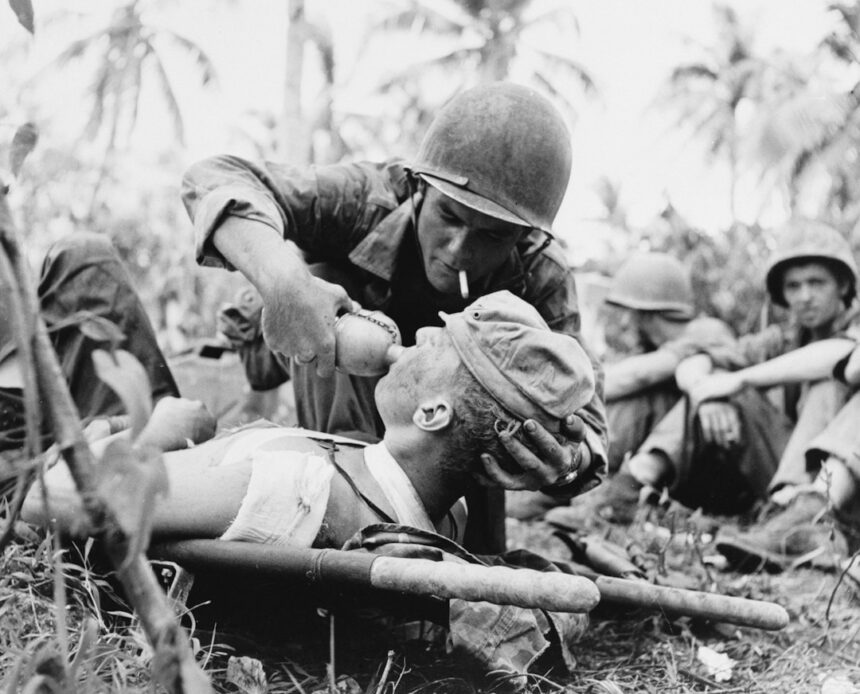
The faded photograph, a brittle relic of a time before memory, held the key to a lineage lost to the mists of war. In it, a young woman, her eyes bright with a future yet unwritten, clasped the hand of a man in uniform. He was handsome, his jaw set with the stoicism of a soldier, but his face, blurred by the passage of decades, offered no immediate answers. This image, tucked away in a shoebox of ephemera, was the genesis of a lifelong quest: the search for an unknown World War II father.
Echoes from the Past: A Seed of Doubt
The story began not with a revelation, but with a quiet anomaly. The narrator, a woman named Eleanor, grew up in a loving home, raised by a devoted mother and stepfather. Yet, a subtle dissonance permeated her childhood. Her mother, a woman of quiet strength and unspoken burdens, would sometimes gaze at old photographs with a wistful sadness, her fingers tracing the outline of faces Eleanor didn’t recognize. There were hushed conversations, fragments of overheard words that hinted at a past unshared, a chapter closed before Eleanor could even begin to understand. Her stepfather, while kind, always seemed to occupy a space of gentle acceptance, a loving presence but not the foundational figure of Eleanor’s biological origins. The questions, though never explicitly voiced, hung in the air like unresolved melodies, a subtle unease that would eventually blossom into a burning desire for truth.
The Unspoken Legacy
Eleanor’s mother, Martha, had been a young woman when the war engulfed the world. She was a vibrant soul, working as a typist in London during the Blitz. The chaos and fear of those years forged her resilience, but also, it seemed, etched a deep reserve within her. She rarely spoke of her pre-war life, and even less about the men she might have known. When Eleanor was young, any questions about her biological father were met with gentle deflections, a subtle shift in conversation, or a vague reassurance that her stepfather was her true father. This reticence, though intended to protect, inadvertently amplified the mystery. It suggested a story too painful or too complicated to share, a secret held close, a legacy that remained unspoken.
The Photograph as a Catalyst
The pivotal moment arrived in Eleanor’s early adulthood, after her mother’s passing. While sorting through Martha’s belongings, Eleanor discovered the photograph. It was not tucked away in a prominent album, but rather nestled amongst letters and postcards, as if almost an afterthought, or perhaps a deliberate safeguard. The man in the uniform, his presence so distinct yet so anonymous, was a stark contrast to the familiar faces of her upbringing. The date scribbled on the back, barely legible, placed him squarely within the war years. The realization that this man, this stranger, might be her biological father ignited a spark, a long-dormant curiosity that transformed into a determined pursuit. The photograph was no longer just an image; it was a portal, a tangible link to a past that held the answer to a fundamental question: who was her father?
In the quest to uncover the identity of an unknown World War II father, many individuals have turned to innovative methods of research and genealogy. A related article that delves into personal stories and the emotional journey of searching for lost family connections can be found at this link. This resource provides insights into the challenges faced by those trying to piece together their family histories and the impact of wartime separations on future generations.
Piecing Together Fragments: The Archivist’s Trail
The initial stages of the search were akin to navigating a labyrinth with only scattered breadcrumbs. Eleanor understood that the uniformed man was likely an American serviceman, given the uniform’s cut and the historical context of American involvement in the European theatre. Her mother, Martha, had never mentioned any romantic involvement with foreign soldiers, which only deepened the puzzle. This meant the connection was likely brief, perhaps a wartime romance born of fleeting moments and uncertain futures. The task was monumental: to identify a single individual from the millions who served, based on a blurry photograph and a whispered absence.
Navigating the Records
Eleanor began her research in earnest, armed with the photograph and a growing sense of purpose. Her first steps involved delving into genealogical resources, seeking to establish a solid timeline of her mother’s life during the war years. This involved poring over census records, birth certificates, and any available public documents. She discovered that Martha had indeed been living in London throughout the war, working as a secretary. The absence of any records of a marriage to a foreign national during that period suggested that if a relationship existed, it was likely undocumented. The search then shifted to military records, a daunting prospect given the sheer volume of information. Eleanor knew she needed a name, a unit, anything to narrow the field.
The Power of the Uniform
The uniform in the photograph became a focal point. Eleanor, with the help of online military history forums and reenactment groups, began to identify the specific branch of service and even the approximate era of the uniform. This painstaking process involved scrutinizing insignia, button styles, and fabric types. Each detail, however small, was a potential clue. The uniform appeared to be that of a U.S. Army Air Forces (USAAF) officer. This narrowed the search considerably, but still left thousands of potential candidates. Eleanor realized she needed to find a way to connect this uniform to her mother’s life.
Whispers from the Blitz
Eleanor’s focus then turned to understanding the social environment of London during the Blitz. She researched where her mother might have frequented, the types of social gatherings for servicemen, and the general atmosphere of wartime London. She discovered that American servicemen were often stationed in and around London, and that there were many opportunities for them to socialize with local civilians. This research led her to investigate the locations of American bases, the types of entertainment available, and even the common social venues for servicemen looking for camaraderie and respite from the war. She learned about USO clubs and dance halls, places where soldiers and civilians might have crossed paths.
The Human Element: Witnesses and Recollections
As the archival search proved challenging, Eleanor began to understand that the answer might lie not just in official records, but in the human stories that surrounded her mother. She reached out to distant relatives, old friends of her mother’s who might remember snippets of conversations, fleeting mentions, or even a name associated with that wartime period. This phase of the search was marked by a different kind of excavation: peeling back layers of memory, sifting through anecdotes, and piecing together a narrative from the often-foggy recollections of others.
Unearthing Dormant Memories
Eleanor’s uncle, her mother’s younger brother, proved to be a valuable source of information. Though a child during the war, he retained vivid impressions of his sister’s life. He recalled Martha being particularly fond of dancing and attending social events. He also mentioned, almost as an aside, that Martha had a brief “beau” during the war, an American soldier, but that he had gone back to the States and they had lost touch. This was the first concrete confirmation of Eleanor’s suspicions, a validation that her father had indeed been a real person, not just an imagined possibility. He also remembered Martha receiving letters for a short period after the war, but that these eventually stopped.
The Power of Anecdote
Eleanor also contacted some of her mother’s childhood friends, women who had known Martha for decades. While many of these friendships had faded with time and distance, there were still those who remembered fragments. One friend recalled Martha mentioning a handsome American pilot with a kind smile. Another remembered Martha being particularly secretive about a particular period in her life, a period she often referred to as “the London days.” These anecdotal clues, while not providing names, were vital in confirming the existence of a romantic connection and adding emotional texture to the sparse facts. They painted a picture of a young woman navigating the complexities of love and war, a narrative that had been locked away for so long.
The Unseen Network
The search also involved utilizing the burgeoning power of social media and online communities dedicated to WWII history. Eleanor posted the photograph, along with the limited details she had, on various historical forums and ancestry groups. She was surprised by the outpouring of support and the willingness of strangers to help. People shared their own family stories, offered advice on research techniques, and even helped to identify details in the uniform that Eleanor had missed. This collaborative effort, this unseen network of individuals united by a shared interest in the past, became an invaluable resource. It was a testament to the human desire to connect and to unravel mysteries, even those that belonged to someone else.
The Breakthrough: A Name Emerges
The painstaking work of genealogical research, coupled with the anecdotal evidence, eventually led to a breakthrough. Eleanor had identified a possible timeframe and location for her mother’s acquaintance with the American serviceman. She knew her mother had been living in a particular district of London, and that a significant American military presence was located nearby. Armed with this information, she focused her archival research on manifests and passenger lists for troop transports returning to the United States in the post-war period, specifically looking for USAAF personnel whose service records indicated they were stationed in the London area during the late war years.
Cross-Referencing Service Records
The process was slow and often frustrating, involving meticulous cross-referencing of dates, names, and units. Eleanor managed to obtain access to digitized service records for hundreds of USAAF personnel. She meticulously compared these records with the limited information she had about her mother’s life and the timeframe of the photograph. The key was to find a soldier who was stationed in London during the war and whose departure date from Europe aligned with the period when her mother might have become pregnant. This involved a painstaking, almost detective-like approach, looking for any mention of dependents or civilian connections, though such information was rarely included in standard service records.
A Glimmer of Hope
One name, however, began to surface repeatedly in connection with her mother’s former social circle. A distant cousin, researching her own family tree, had stumbled upon a wedding announcement from the early 1950s in a local American newspaper. The announcement mentioned a Mr. and Mrs. John Henderson, and a photograph of John Henderson bore a striking resemblance to the man in Eleanor’s faded photograph, albeit a few years older. This was the first tangible lead that provided a potential surname. Eleanor then focused her efforts on researching John Henderson’s military service.
The Name and the Unit
Through further archival research, Eleanor was able to confirm that a John Henderson, born in Ohio, had served as a pilot in the USAAF. His service records indicated he was stationed in England from 1944 to 1946. The dates aligned perfectly with the probable period of conception. Further digging revealed he was part of a bomber squadron based in East Anglia, not far from London. The resemblance in the photograph, coupled with the service record alignment, was too compelling to ignore. Eleanor felt a surge of adrenaline; she had a name, and a unit.
Many individuals have embarked on the emotional journey of searching for unknown WWII fathers, often uncovering fascinating stories and connections along the way. A related article that delves into this poignant topic can be found at In the War Room, where personal narratives highlight the challenges and triumphs faced by those seeking to understand their heritage. This exploration not only sheds light on the impact of war on families but also emphasizes the importance of uncovering one’s roots in the quest for identity.
A New Chapter: Connecting with the Past
| Metric | Description | Typical Value / Range | Notes |
|---|---|---|---|
| Average Time Spent Researching | Estimated hours spent searching archives, records, and databases | 50 – 200 hours | Varies widely depending on available information and resources |
| Number of Records Consulted | Military, census, birth, and other historical records reviewed | 20 – 100+ records | Includes enlistment papers, service records, and war diaries |
| Success Rate of Identification | Percentage of cases where the unknown WWII father was positively identified | 30% – 60% | Depends on record availability and quality of information |
| Common Sources Used | Types of archives and databases frequently accessed | National Archives, Military Service Records, War Memorials | Online databases and local historical societies also important |
| DNA Testing Utilization | Percentage of cases where DNA testing was used to confirm identity | 20% – 40% | Increasingly common as technology becomes more accessible |
| Emotional Impact Level | Reported emotional difficulty on a scale of 1 (low) to 10 (high) | 7 – 10 | Highly personal and often emotionally challenging process |
The discovery of the name, John Henderson, was not the end of the journey, but rather the beginning of a new and even more emotionally charged phase. Eleanor now had a concrete individual to search for, an identity to attach to the ghostly image in her mother’s shoebox. The quest shifted from broad archival exploration to a more targeted, and potentially more delicate, investigation into the life of a man who was a complete stranger, yet undeniably linked to her existence.
The Digital Footprint
Eleanor began her search for John Henderson in earnest. She utilized online search engines, social media platforms, and genealogical databases, looking for any record of his life after the war. She discovered that John Henderson had indeed returned to the United States, married, and had children. The challenge was to approach his family with sensitivity, to explain her unexpected connection without causing undue distress or upsetting established family dynamics. This required careful consideration of how to frame her inquiry, ensuring it was respectful and focused on seeking understanding.
A Delicate Inquiry
Eleanor drafted a letter, a carefully worded missive that explained her mother’s wartime experiences and the discovery of the photograph. She expressed her desire to learn more about her biological father, not to intrude, but to understand her own roots. She sent the letter to the address of John Henderson’s son, whom she had identified through public records. The waiting period was agonizing, filled with a mixture of hope and trepidation. She had no idea how her message would be received, whether it would be dismissed or embraced.
A Bridge Across Generations
The response, when it finally came, was both surprising and profoundly moving. John Henderson’s son, a man named Robert, replied to Eleanor’s letter. He expressed his own surprise and curiosity, confirming that his father had indeed served in London during the war and had spoken fondly of his time there, though he had never mentioned a specific wartime romance. Robert was open to learning more and agreed to a phone call. The conversation was a watershed moment. Robert shared stories of his father, a kind and honorable man who had passed away several years prior. He also shared photographs of his father, and Eleanor was struck by the undeniable resemblance between the younger John Henderson in those images and the man in her mother’s photograph. Robert was also eager to connect, to bridge the gap that decades of separation had created. He spoke of his own children, and the possibility of them meeting their newfound aunt. The search for an unknown father had, unexpectedly, opened the door to a new family, a new branch on the tree of life, all stemming from a faded photograph and a mother’s unspoken past.
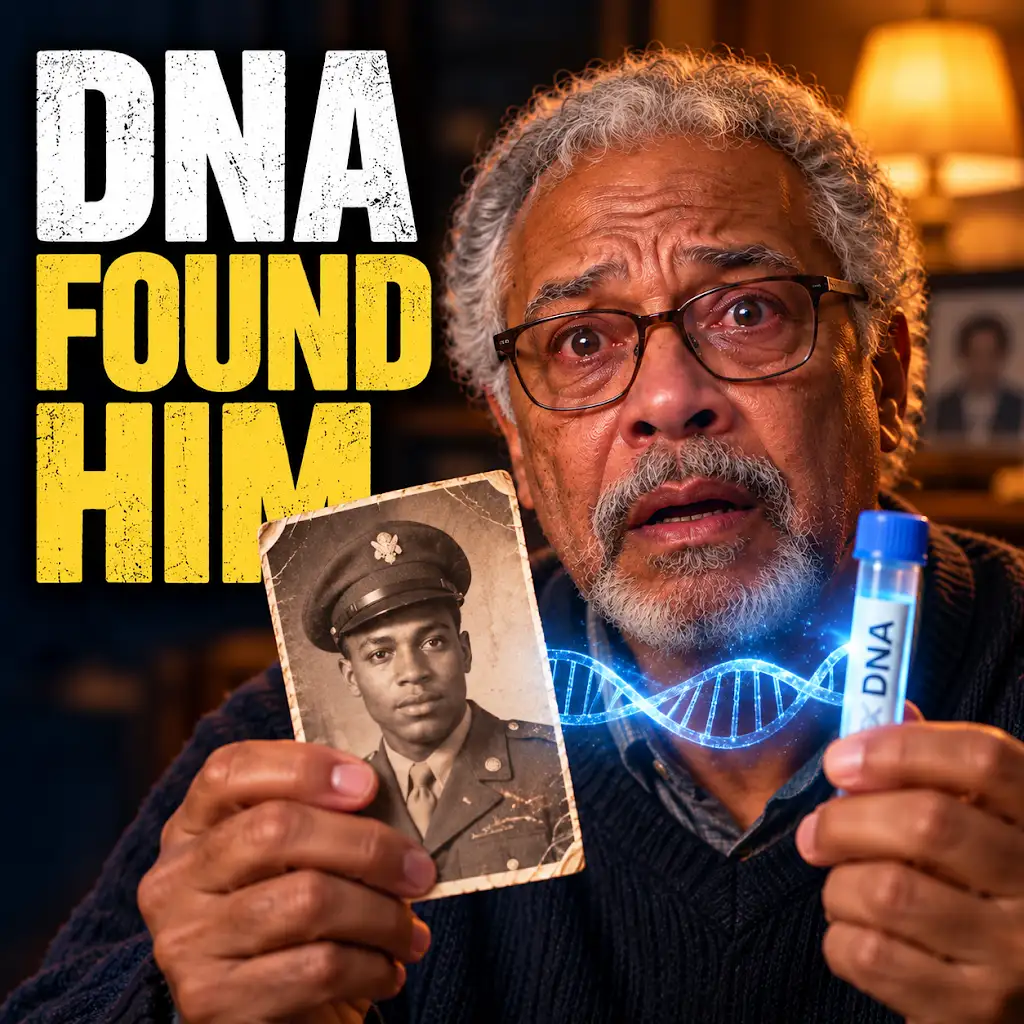
His WWII GI Father Was a Mystery for Nearly 80 Years
FAQs
1. What is the article “Searching for an Unknown WWII Father” about?
The article discusses the journey of an individual trying to uncover the identity of their father who served in World War II.
2. Why is it important to search for an unknown WWII father?
Searching for an unknown WWII father can provide closure, answers to family history, and a connection to the past for individuals who may have never known their father.
3. What are some common challenges faced when searching for an unknown WWII father?
Common challenges include limited information, lack of records, changing names or identities, and the passage of time which can make it difficult to track down information.
4. What resources can be helpful in the search for an unknown WWII father?
Resources such as military records, ancestry websites, DNA testing, historical archives, and contacting veterans’ organizations can be valuable in the search for an unknown WWII father.
5. How can one start the search for an unknown WWII father?
Starting the search can involve gathering any available information, reaching out to family members for clues, utilizing online databases, and seeking assistance from professionals or organizations specializing in genealogy and military research.