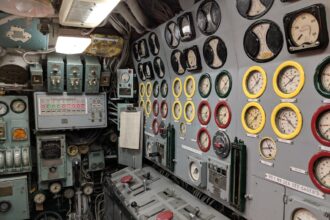
The icy depths of the Cold War ocean were a silent, unforgiving theater of escalating tensions. Beneath the waves, two superpowers engaged in a perpetual, clandestine dance of surveillance and deterrence, a ballet of metal leviathans armed with the ultimate destructive power. While grand pronouncements and headline-grabbing crises often defined the global standoff, it was the unseen, unacknowledged skirmishes that truly underscored the precariousness of this era. Among these hushed confrontations, the collision of Soviet submarines stands as a chilling testament to the inherent dangers of a world teetering on the brink, a hidden naval clash that, had circumstances differed, could have ignited a far greater conflagration. These incidents, often shrouded in secrecy and only later pieced together through declassified documents and naval historian research, reveal a profound aspect of the Cold War: the constant threat of accidental escalation born from the very nature of silent, invisible warfare beneath the sea.
The Silent Race Beneath the Waves
The Cold War, more than any other period in modern history, saw a dramatic acceleration in submarine technology and doctrine. Both the United States and the Soviet Union poured immense resources into developing increasingly sophisticated underwater vessels, driven by the strategic imperative of nuclear deterrence. For the Soviets, submarines represented a crucial asymmetric advantage. Their vast coastline and long-distance naval deployments meant that a potent submarine force could project power and threaten vital Western sea lanes, while simultaneously providing a survivable second-strike nuclear capability. The United States, conversely, focused on its carrier battle groups and a globally dispersed submarine force designed to hunt Soviet submarines and enforce maritime control. This created a constant, cat-and-mouse game played out in the silent, crushing pressure of the deep.
The Dawn of Submarine Warfare in the Cold War
The early years of the Cold War saw a rapid evolution of submarine designs. The Soviets, initially lagging behind the West in sonar technology and hull construction, began a determined effort to close the gap. They focused on building large numbers of diesel-electric submarines, which were quieter than early American nuclear-powered vessels for extended periods, especially when operating on batteries submerged. These submarines were designed for specific roles: some for reconnaissance and intelligence gathering, others for missile launches, and a significant portion for anti-ship warfare. The American response was a relentless pursuit of quieter, faster, and more capable nuclear-powered submarines, equipped with advanced sonar systems and a growing arsenal of torpedoes and ballistic missiles. This technological arms race fueled a continuous cycle of innovation and counter-innovation, pushing the boundaries of naval engineering and operational capabilities.
Operational Imperatives and Evolving Tactics
The strategic doctrines of both nations dictated the operational tempo of their submarine forces. The Soviet Navy was tasked with defending its own waters, disrupting Western supply lines, and providing a deterrent against potential amphibious invasions. Their submarines were often operated in challenging environments, such as the Arctic and the North Atlantic, where they could intercept NATO forces. The U.S. Navy, in parallel, was engaged in “attack submarine” missions, aimed at tracking and neutralizing Soviet submarines, and “ballistic missile submarine” patrols, designed to maintain a constant and undetectable nuclear deterrent. The constant need to maintain situational awareness in this clandestine environment led to increasingly complex and dangerous operational patterns. Submarines would often operate in close proximity to enemy vessels, relying on passive sonar to detect and track them, a method that inherently increased the risk of accidental encounters. The pressure to remain undetected often meant operating at very shallow depths, or maneuvering in congested areas, further amplifying the potential for collision.
The Cold War era was marked by numerous tense encounters, including the infamous Soviet submarine collision that highlighted the dangers of military miscalculations. For a deeper understanding of the geopolitical implications and the events surrounding this incident, you can read a related article on the topic at In the War Room. This article provides valuable insights into the strategies employed by both superpowers and the lasting effects of such confrontations on international relations.
The Shadow of the Deep: Incidents and Near Misses
The vastness of the world’s oceans provides ample space, yet the strategic importance of certain choke points and patrol areas meant that submarines frequently found themselves in close proximity. The secrecy surrounding these underwater operations meant that many close calls and actual collisions went unreported, or were only acknowledged years later through leaked information or official retrospectives. These incidents, though often dismissed as isolated accidents, represent a systemic risk inherent in the constant, high-stakes game of naval cat-and-mouse. The potential for misidentification, equipment failure, or simple human error in the disorienting and pressurized environment of a submarine’s interior loomed large.
Documented Collisions: A Grim Tally
While the exact number of Soviet submarine collisions during the Cold War remains classified and likely higher than publicly acknowledged, several notable incidents have come to light. One of the most well-known occurred on April 21, 1970, when the Soviet Foxtrot-class submarine K-8 collided with the U.S. Navy’s Tamaruga (SSN-605), a Skipjack-class attack submarine, in the Barents Sea. While both submarines sustained damage, neither was lost. Another significant event took place on August 11, 1984, when the Soviet Victor-class submarine K-219 collided with the U.S. Navy’s Ticonderoga (CG-47), a guided-missile cruiser, in the Atlantic Ocean. This incident also resulted in damage to both vessels but no casualties. The Soviet submarine K-133, a November-class submarine, collided with a U.S. destroyer in 1968. These documented events, though not all involving collisions with other submarines, highlight the hazardous nature of operating in close proximity to opposing naval forces. The absence of widespread, official acknowledgment from either side underscores the desire to avoid escalating diplomatic tensions and to maintain an aura of strategic dominance and invincibility.
Near Misses and the Brink of Disaster
Beyond actual collisions, a far greater number of near misses occurred, instances where two submarines passed within meters of each other, their hulls groaning under the immense pressure, their sonar operators desperately trying to discern the identity and intentions of the unseen intruder. These encounters, often lasting mere minutes but feeling like an eternity to the crews, were moments of extreme tension. A single misstep, a misinterpreted sound, or a sudden, unexpected maneuver could have irrevocably altered the course of history. These near misses, though often unrecorded by official logs meant for public consumption, were seared into the memories of the submariners who lived through them. They represent the frayed edges of the Cold War, the constant, silent fear of a spark igniting a global inferno in the crushing darkness of the deep. The psychological toll on these crews, operating under constant stress and the knowledge of the catastrophic potential of their environment, must have been immense.
The Perils of Silent Warfare
The very nature of submarine warfare—its reliance on stealth, silence, and sophisticated sensor technology—created an environment ripe for accidents. The immense pressures of the deep, the limited visibility, and the constant need for absolute quiet amplified the risks associated with operating such complex machinery in close proximity to other, equally stealthy, vessels. The operational tempo, driven by strategic imperatives, often pushed crews and equipment to their limits, increasing the likelihood of error.
The Cold War era was marked by numerous incidents that heightened tensions between superpowers, one of which was the infamous collision of Soviet submarines. This event not only underscored the dangers of underwater warfare but also highlighted the precarious balance of power during that time. For a deeper understanding of the implications of such incidents, you can read more in this insightful article about Cold War naval confrontations at In the War Room.
Navigational Challenges and Sonar Limitations
Submarine navigation is a complex art, especially when operating at depth and relying on passive sonar. Unlike surface vessels that can use radar and visual cues, submarines are largely blind unless they raise a periscope or active sonar, both of which reveal their presence. Navigating in known shipping lanes, known transit areas, or even in the vicinity of underwater mountains and trenches presented significant challenges. Sonar, while advanced, was not perfect. It could be hampered by oceanographic conditions like thermoclines, which could refract sound waves, creating “dead zones” or false echoes. Identifying the type, speed, and course of another vessel based solely on acoustic signatures was a highly skilled but inherently imperfect endeavor. The constant pursuit of silence meant that submarines often operated with minimal
A Soviet Submarine Hit a U.S. Frigate. Was It the Wrong Ship?
FAQs
What was the Soviet submarine collision during the Cold War?
The Soviet submarine collision during the Cold War refers to an incident that occurred on February 11, 1992, when a Russian submarine, the K-219, collided with another Soviet submarine, the K-525, in the Atlantic Ocean.
What caused the Soviet submarine collision during the Cold War?
The Soviet submarine collision during the Cold War was caused by a combination of factors, including poor visibility due to rough seas, miscommunication between the submarines, and a lack of proper coordination during a training exercise.
Were there any casualties as a result of the Soviet submarine collision during the Cold War?
Fortunately, there were no casualties as a result of the Soviet submarine collision during the Cold War. However, both submarines suffered significant damage, with the K-219 eventually sinking after the collision.
How did the Soviet government respond to the submarine collision during the Cold War?
Following the Soviet submarine collision during the Cold War, the Soviet government initially tried to downplay the incident and keep it secret. However, as details began to emerge, they were forced to acknowledge the collision and the damage it caused.
What impact did the Soviet submarine collision during the Cold War have on international relations?
The Soviet submarine collision during the Cold War highlighted the risks and dangers of military exercises at sea and raised concerns about the safety of Soviet submarines. It also served as a reminder of the tensions and potential for accidents during the Cold War era.