The icy waters of the North Atlantic, a silent stage for a high-stakes drama, once teetered on the brink of unimaginable conflict. At its heart lay the misguided judgment of a Soviet submarine captain, an act that, though born of perceived necessity, rippled through the fragile fabric of Cold War diplomacy, raising global tensions to near-breaking point. The year was 1984, a period of heightened animosity between the United States and the Soviet Union, where every maneuver, every perceived transgression, carried the weight of nuclear annihilation. This is the story of how a single decision, made miles beneath the waves by Captain Gennady Pavlov, nearly ignited a conflagration that could have reshaped the world.
The Silent Hunter and its Shadowy Mission
The Soviet Union’s submarine fleet was the pride of its navy, a formidable force designed to project power and deter any aggression from the West. Among these silent hunters was the K-219, a Delta-class ballistic missile submarine, a vessel bristling with nuclear weapons, capable of delivering devastating strikes from the ocean’s depths. Its mission, like many during the Cold War, was shrouded in secrecy. Operating in international waters, it shadowed American naval movements, gathering intelligence and maintaining a constant, albeit hidden, presence.
The K-219: A Technological Marvel of its Time
The K-219, a behemoth of Soviet engineering, was a product of the era’s technological arms race. Launched in the late 1970s, it represented the cutting edge of Soviet submarine design. Its imposing hull, designed to withstand immense pressure, housed a complex array of systems, from advanced sonar and navigation equipment to the terrifying payload of its ballistic missiles. The Delta-class submarines were a key component of the Soviet Union’s nuclear triad, providing a survivable second-strike capability. The crew, hand-picked and highly trained, operated in a confined, high-pressure environment, their lives intertwined with the pulsing heart of their formidable vessel. The psychological toll of extended patrols, the constant threat of detection, and the ever-present awareness of the destructive power they carried were inherent aspects of their existence.
The Strategic Landscape of 1984
The geopolitical climate of 1984 was particularly volatile. The Reagan administration had adopted a more assertive stance against the Soviet Union, characterized by initiatives like the Strategic Defense Initiative (SDI), which Moscow perceived as a direct threat to its strategic balance. The intermediate-range nuclear forces (INF) negotiations were stalled, and proxy conflicts raged in various parts of the world. In this atmosphere of deep mistrust and suspicion, any incident involving military assets, especially nuclear-armed submarines, was prone to be misinterpreted and escalate rapidly. The concept of “escalation dominance” was a constant concern for military strategists on both sides, where the fear of being outmaneuvered in a crisis could lead to preemptive, and potentially catastrophic, actions. The presence of Soviet submarines operating near American shores was not just a matter of intelligence gathering; it was a potent symbol of Soviet power and a constant reminder of the existential threat posed by nuclear weapons.
In examining the complexities of military decision-making, the article on Soviet submarine captain misjudgment highlights the critical errors that can arise in high-pressure situations. This incident serves as a reminder of the importance of clear communication and situational awareness in naval operations. For further insights into this topic and related military strategies, you can read more in the article available at In the War Room.
A Critical Miscalculation Beneath the Waves

The fateful incident occurred during a routine patrol in the North Atlantic. Captain Pavlov, a veteran submariner, was faced with a critical decision that would inadvertently push the world closer to the precipice of war. The details of the perceived threat remain partially classified, fueling speculation and contributing to the enduring mystique surrounding the event. However, accounts from former Soviet naval personnel and declassified intelligence suggest a scenario where Pavlov believed his submarine was in imminent danger of detection and potential engagement by a superior NATO force.
The Fog of War and Misinterpreted Signals
On the night of September 26, 1984, the K-219 was operating at a significant depth, a common tactic for avoiding detection by surface ships and aircraft. According to some accounts, the submarine’s sonar detected what Pavlov interpreted as the sounds of an approaching anti-submarine warfare (ASW) group. The precise nature of these sounds is a subject of ongoing debate. It could have been a combination of hydroacoustic signals that, under the stressful conditions of a patrol, were misinterpreted. The psychological pressure on a submarine captain is immense; every sound, every flicker on a radar screen, can be magnified into a perceived threat. The vastness of the ocean, coupled with the inherent limitations of sonar technology in certain conditions, could easily lead to a misreading of the acoustic environment. In the context of the Cold War, where the slightest deviation from standard operating procedures could be interpreted as aggression, Pavlov’s perceived threat was amplified by the prevailing paranoia.
The Decision to Deploy Countermeasures
Driven by the conviction that his vessel was about to be discovered and potentially attacked, Captain Pavlov made a decision that would have far-reaching consequences. Instead of attempting to evade or break contact silently, he ordered the deployment of a specific type of countermeasure. This countermeasure, while designed for defensive purposes, was also capable of mimicking the acoustic signature of an incoming missile launch. The intention was likely to create a diversion, to confuse the pursuers and buy time for the K-219 to escape. However, the ambiguity of this action, especially in the tense geopolitical climate, was a significant contributing factor to the ensuing crisis. The specific countermeasure employed is believed to have been a type of acoustic decoys, designed to emit signals that could mislead ASW systems. The critical error was not necessarily in deploying a countermeasure, but in the type of countermeasure and its potential for misinterpretation.
Global Alarm Bells Ring Out

The deployment of these decoys, intended as a defensive maneuver, was interpreted by the United States and its NATO allies as something far more sinister. The intelligence community, already on high alert, scrambled to understand the implications of this sudden and aggressive action by a Soviet nuclear submarine. The potential for misinterpretation was immense, and the consequences of such a misunderstanding could have been catastrophic.
The American Reaction: From Alert to Apprehension
Upon receiving the intelligence, American naval forces in the vicinity were immediately placed on high alert. The ambiguous signals emanating from the K-219 were analyzed by intelligence analysts, and the most alarming interpretation began to take hold: the Soviet submarine was preparing to launch a missile. The Strategic Air Command (SAC) was put on a heightened state of readiness, a clear indication of how seriously the threat was being taken. This meant that bomber crews were on standby, ready to take to the skies with their nuclear payloads, and intercontinental ballistic missile (ICBM) crews were at their launch stations. The very machinery of nuclear war was being put into motion. The fear was not just of a single missile launch, but of a coordinated, preemptive strike.
NATO’s Unified Response and the Brink of Conflict
The alarm spread rapidly through the North Atlantic Treaty Organization (NATO). Allied forces in the region were alerted, and communication channels between Washington and other NATO capitals buzzed with urgent dispatches. The fear was that this could be the opening move in a Soviet offensive, a calculated step to achieve strategic surprise. The possibility of a “decapitation strike” against NATO’s command and control structures was a grim reality that loomed large. This widespread apprehension led to a significant increase in military readiness across the Western alliance, a demonstration of unity and a signal to Moscow that any aggression would be met with a determined response. The very foundations of global security were being tested.
The Slow De-escalation and Lingering Questions
Fortunately, the crisis did not escalate to the point of no return. Diplomatic channels, though strained, were activated. Intelligence agencies worked feverishly to piece together the true nature of the events unfolding beneath the waves. The tension, however, remained palpable for a significant period, a stark reminder of the fragility of peace during the Cold War.
The Role of Diplomacy and Intelligence Gathering
Behind the scenes, intense diplomatic efforts were underway. The United States, through its embassy in Moscow and direct lines of communication, sought clarification from the Soviet government. Simultaneously, intelligence agencies continued to monitor the situation closely, employing every available asset to determine the K-219’s true intentions. It is believed that through a combination of signals intelligence (SIGINT) and human intelligence (HUMINT), the true nature of the K-219’s actions began to emerge. The ambiguity of the deployed countermeasure, coupled with the lack of any subsequent missile launch, slowly led to a reassessment of the initial, most alarming interpretation. The careful and measured response by both sides, while tense, ultimately prevented a catastrophic overreaction.
The Aftermath: Lessons Learned and Unanswered Questions
The incident with the K-219 served as a chilling reminder of how easily a misunderstanding could spiral into global conflict. While the immediate crisis was averted, the event left a lasting legacy. It underscored the critical importance of clear communication, robust intelligence analysis, and cautious decision-making in an era of nuclear proliferation. The event also highlighted the inherent risks associated with the constant cat-and-mouse game played by submarines in international waters. For Captain Pavlov, the consequences of his misjudgment, if any, remain largely unknown in the public domain. Whether he was reprimanded, commended for his perceived defensive actions, or simply endured the immense pressure of the situation, is a matter of speculation. The incident also fueled ongoing debates within military circles about the effectiveness and potential misinterpretations of various countermeasures. The question of what truly happened that night, and the precise sequence of events that led to the global alarm, continues to be a subject of interest for historians and Cold War scholars, a testament to the enduring impact of this near-disaster.
The story of the Soviet submarine captain’s misjudgment serves as a stark reminder of the high-stakes decisions made during the Cold War. This incident highlights the critical importance of communication and situational awareness in military operations. For a deeper understanding of the complexities surrounding naval warfare during this era, you can explore a related article that delves into the strategic challenges faced by submarine commanders. To read more about these fascinating dynamics, visit this article.
The Enduring Echo of a Submarine’s Shadow
| Metric | Details |
|---|---|
| Incident | Soviet submarine captain misjudgment during Cold War |
| Date | October 27, 1962 |
| Submarine | B-59 (Foxtrot-class) |
| Location | Near Cuba, Caribbean Sea |
| Situation | Submarine was being depth-charged by US Navy ships |
| Captain’s Decision | Considered launching a nuclear torpedo |
| Outcome | Launch was averted after second officer Vasili Arkhipov refused consent |
| Potential Consequence | Escalation to nuclear war |
| Significance | Example of Cold War nuclear brinkmanship and importance of command checks |
The story of Captain Pavlov’s misjudgment is more than just a historical footnote; it is a potent parable about the inherent dangers of the Cold War. It illustrates how, in a world armed with weapons of mass destruction, the smallest misstep, the slightest misinterpretation, could have led to a global catastrophe. The silence of the ocean depths, which served as the K-219’s sanctuary, almost became the tomb of international peace.
A Close Call in the Grand Chessboard of Superpowers
The incident serves as a powerful case study in the high-stakes game of nuclear deterrence. The constant tension, the pervasive fear of surprise attack, and the intricate ballet of military posturing created an environment where a single captain’s decision, however unintentional, could trigger a chain reaction. The K-219’s silent journey through the North Atlantic became a symbol of this precarious balance, a reminder that the threat of nuclear war was never far away. The strategic imperative for both sides was to maintain a credible deterrent, but this imperative also created the conditions for extreme vigilance and, consequently, the potential for overreaction.
The Legacy of Misjudgment: A Cold War Cautionary Tale
In the years that followed, the K-219 incident was likely reviewed and analyzed extensively within military and intelligence circles. It highlighted the critical need for improved communication protocols, more sophisticated intelligence analysis capabilities, and a deeper understanding of the psychological pressures faced by those on the front lines of the Cold War. The event serves as a enduring cautionary tale, a reminder that the fate of millions can hinge on the decisions made by individuals under immense pressure, and that in the nuclear age, even the most carefully constructed strategies can be undone by a single, critical miscalculation. The silent depths of the ocean, which once concealed a Soviet submarine and its potential for destruction, now hold the echo of a moment when the world held its breath, a moment narrowly averted, a testament to the fragile peace that defined the latter half of the 20th century.
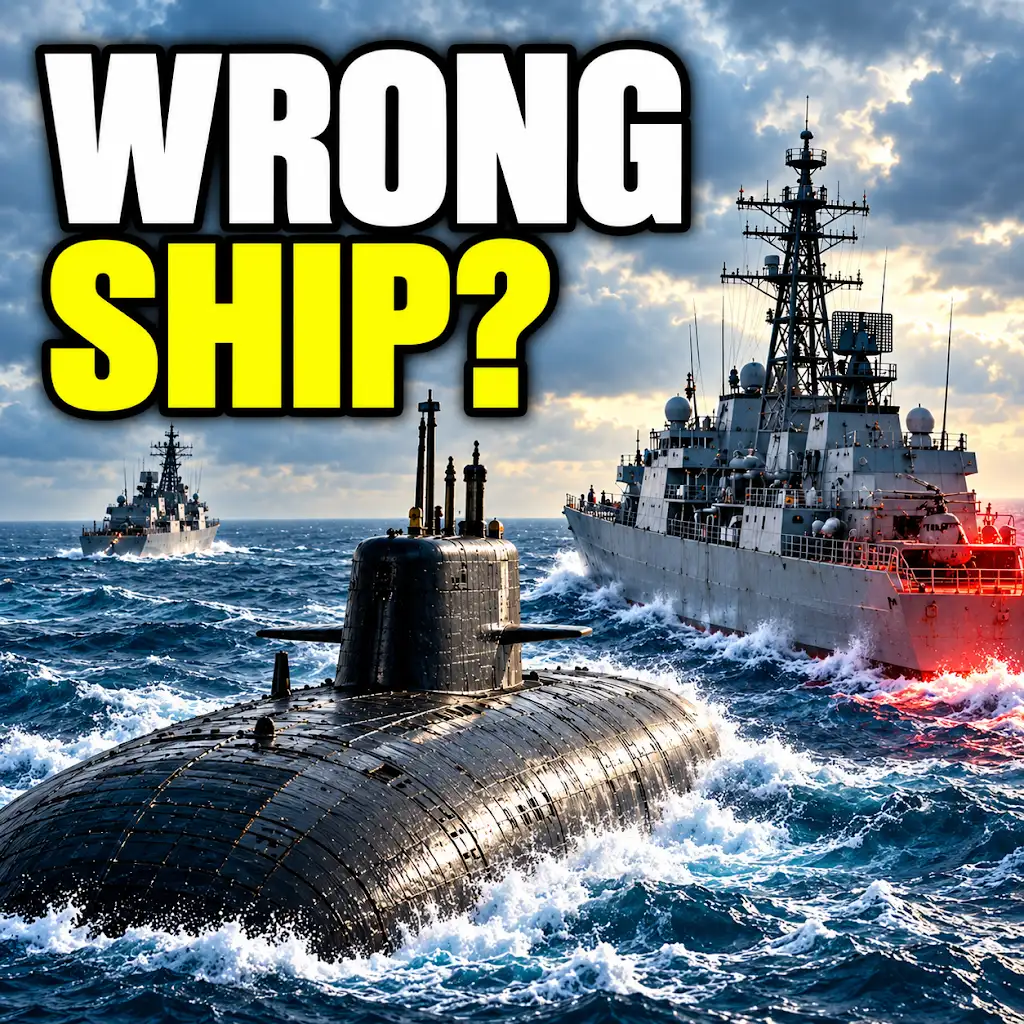
A Soviet Submarine Hit a U.S. Frigate. Was It the Wrong Ship?
FAQs
What misjudgment did the Soviet submarine captain make?
The Soviet submarine captain misjudged the depth of the waters, causing the submarine to hit an underwater ridge.
What were the consequences of the Soviet submarine captain’s misjudgment?
The misjudgment led to significant damage to the submarine, resulting in a breach in the hull and subsequent flooding of the compartments.
How did the crew react to the misjudgment by the Soviet submarine captain?
The crew remained calm and followed emergency procedures to contain the flooding and prevent further damage to the submarine.
Was there any loss of life as a result of the Soviet submarine captain’s misjudgment?
Fortunately, there were no casualties reported among the crew members despite the severity of the situation caused by the misjudgment.
What measures were taken to rescue the crew and salvage the damaged Soviet submarine?
Rescue teams were dispatched to the location of the submarine to assist in evacuating the crew, while efforts were made to salvage the damaged submarine and prevent any environmental impact from the incident.