The Dawn of the Ekranoplan: A Soviet Dream Takes Flight
The vast, often inhospitable, coastlines of the Soviet Union presented unique logistical challenges. Connecting remote settlements, transporting military personnel and equipment, and facilitating trade across these geographically dispersed areas demanded innovative solutions. Traditional maritime vessels, while essential, were limited by shallow waters, ice conditions, and the inherent slowness of conventional hull displacement. Air transport, while faster, was often prohibitively expensive and lacked the cargo capacity needed for widespread logistical operations. It was within this context that the Soviet Union embarked on a radical and ambitious endeavor: the development of ground effect vehicles, or ekranoplans. These revolutionary craft, often described as “flying ships” or “wing-in-ground-effect” (WIG) vehicles, promised the speed of aircraft with the cargo-carrying capabilities of ships, operating just meters above the water’s surface.
The concept of ground effect, where an aircraft flying very close to a surface experiences a significant increase in lift and a reduction in drag, had been understood for decades. However, it was the Soviet Union, driven by a combination of military necessity and a culture of audacious engineering, that truly committed to harnessing this phenomenon for practical application. The vision was not merely to build a novel vehicle, but to fundamentally revolutionize coastal transport, creating a new class of transportation that could operate where conventional aircraft and ships struggled. This article will delve into the genesis of Soviet ekranoplan development, explore the technological breakthroughs that made them possible, examine their diverse applications, assess their operational realities, and reflect on their enduring legacy.
The Soviet ground effect vehicle, often referred to as the Ekranoplan, represents a fascinating intersection of aviation and maritime technology, showcasing the innovative engineering of the Cold War era. For those interested in exploring more about this unique vehicle and its implications on military strategy, you can read a related article that delves into its design and operational history at In The War Room. This resource provides valuable insights into how such vehicles were envisioned to enhance naval capabilities during a time of intense geopolitical rivalry.
## Engineering the Impossible: The Science Behind Ground Effect
The fundamental principle behind an ekranoplan’s operation lies in the physics of ground effect. As an aircraft flies close to a surface, the air trapped between its wings and the ground is compressed. This compression leads to an increase in air pressure beneath the wings, generating more lift. Simultaneously, the wingspan is effectively “shortened” by the proximity to the ground, reducing the formation of wingtip vortices, which are a primary source of induced drag. This synergistic effect allows the ekranoplan to achieve high speeds with significantly less power than a conventional aircraft operating at higher altitudes.
### The Aerodynamic Foundation
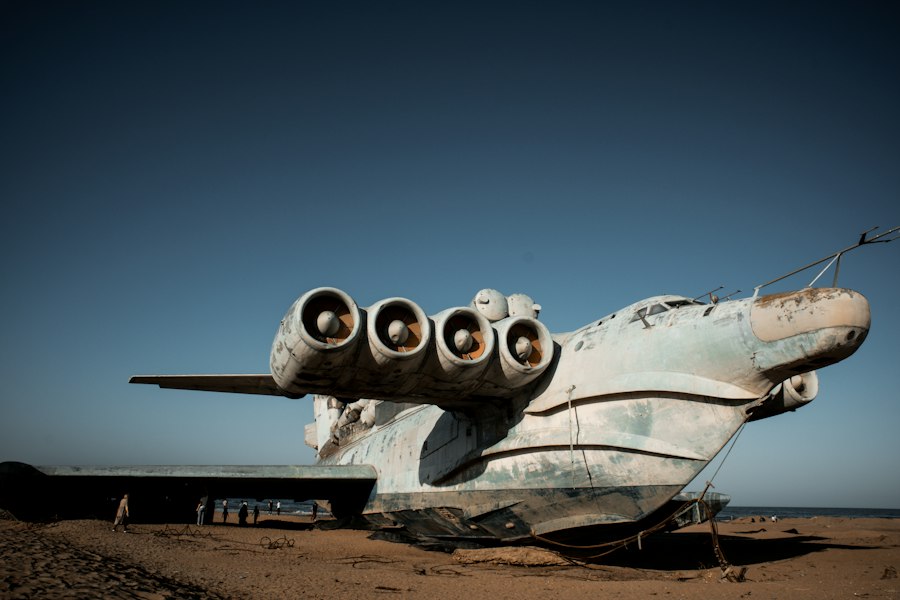
The design of an ekranoplan is a delicate balancing act between aerodynamic efficiency and stability. Early Soviet designs, like those pioneered by Rostislav Alexeyev, often featured large, delta-shaped wings with a significant anhedral (downward angle) to enhance stability in ground effect. The undersides of the wings were frequently designed with a “plank” or “ramps” to further capture and direct the air, maximizing the ground effect cushion. The fuselage was typically integrated into the wing structure, creating a unified lifting surface. The engines, often powerful turboprops or turbojets, were strategically placed to provide thrust and to influence airflow over the wings. Maintaining a consistent and precise altitude above the water was paramount. This required sophisticated control systems that could react to the subtle variations in the water’s surface and the vehicle’s own dynamic responses. The concept of a “super-cushion” effect, where the air trapped between the wings and the surface becomes highly compressed, was a key area of research and development, allowing for higher lift generation and greater stability.
### Propulsion and Control Systems
The propulsion systems for Soviet ekranoplans were as varied as the vehicles themselves, reflecting the evolving technological landscape and operational requirements. Early prototypes often utilized powerful turboprop engines, offering a good balance of thrust and fuel efficiency for sustained operation. As the technology matured, turbojet engines became increasingly common, particularly for military applications where higher speeds and greater thrust were desired. The placement of these engines was critical. Many designs featured engines mounted above the wing, often in a pusher configuration, to direct their exhaust downwards and contribute to the lift-generating air cushion. Engine control systems were integrated with flight controls, allowing pilots to modulate thrust to maintain altitude and speed.
The control systems for ekranoplans were a unique challenge, distinct from both traditional aircraft and naval vessels. While they possessed wings and ailerons, their operation in ground effect meant that traditional aerodynamic control surfaces behaved differently. Soviet engineers developed complex fly-by-wire or hydro-mechanical systems that allowed for precise adjustments to pitch, roll, and yaw, all while maintaining a low altitude. This often involved a combination of aerodynamic control surfaces, differential engine thrust, and sometimes even directional water jets or control surfaces that could engage with the water for low-speed maneuvering. The goal was to provide the pilot with intuitive and responsive control, essential for safe operation over water.
## A Fleet for a Nation: Diverse Applications of Soviet Ekranoplans
The Soviet Union envisioned ekranoplans as a versatile tool, capable of fulfilling a wide range of roles, from civilian transport to formidable military assets. Their unique operational characteristics—speed, range, and ability to operate in challenging environments—made them attractive for numerous applications that would have been difficult or impossible for conventional vehicles.
### Military Might: The Caspian Sea Monster and Beyond
Perhaps the most iconic Soviet ekranoplan was the Lun-class project 904, famously nicknamed the “Caspian Sea Monster” by Western intelligence. This colossal military ekranoplan, weighing over 400 tons, was designed for amphibious assault and anti-ship warfare. Its primary armament included surface-to-surface missiles, making it a potent threat to naval fleets. The “Caspian Sea Monster” was a testament to the Soviet military’s ambition to create a new dimension of naval power projection, capable of rapidly deploying troops and firepower across vast bodies of water with relative impunity. Beyond the Lun, other military ekranoplans were developed for reconnaissance, troop transport, and mine-laying. The ability to approach shorelines undetected at high speeds and deploy forces directly onto beaches or into shallow waters offered a significant tactical advantage.
### Civilian Logistics: Bridging the Aral Sea and Arctic Coasts
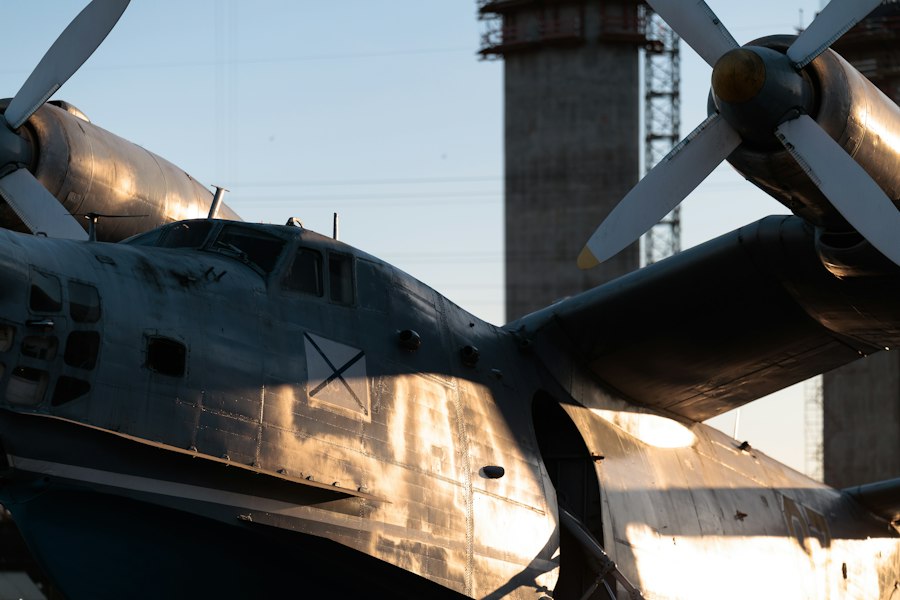
While military applications often garnered the most attention, the Soviet Union also recognized the immense potential of ekranoplans for civilian logistics. The vast distances and challenging terrain of Siberia and the Arctic necessitated a more efficient mode of transport for goods and people. Ekranoplans offered the prospect of year-round service across frozen rivers and shallow coastal waters, areas where conventional ships would be immobilized by ice for much of the year. Projects like the A-90 Orlyonok, a smaller military transport ekranoplan that could also be adapted for civilian roles, and the projected larger civilian variants, were intended to connect remote communities, deliver vital supplies, and facilitate resource extraction in these hard-to-reach regions. The ability to operate from unprepared shorelines, without the need for extensive port infrastructure, was a significant advantage for sparsely populated areas.
### Specialized Roles: Search and Rescue and Scientific Exploration
The speed and range of ekranoplans also made them ideal candidates for specialized roles such as search and rescue operations and scientific exploration. In the event of maritime disasters, an ekranoplan could quickly reach a wide search area, covering more ground than a conventional ship in the same timeframe. Their ability to operate in rough seas that might deter helicopters also offered an advantage. Similarly, for scientific expeditions to remote polar regions or vast inland seas, ekranoplans could provide a swift and stable platform for observation, data collection, and transport of personnel and equipment. Their low-altitude flight also allowed for unique opportunities for environmental monitoring and survey work.
## Operational Realities: The Challenges and Triumphs
Despite their revolutionary design and ambitious goals, Soviet ekranoplans faced a number of significant operational challenges. These included technical hurdles, economic constraints, and the sheer novelty of operating a vehicle that blurred the lines between aircraft and ship.
### Navigating the Unpredictable: Weather and Surface Conditions
Operating an ekranoplan is inherently dependent on the surface it flies over. While they could traverse relatively calm water at high speeds, rough seas presented a significant challenge. High waves could disrupt the ground effect cushion, leading to loss of lift, increased drag, and potentially violent pitching and rolling motions. Maintaining a consistent altitude of just a few meters above a turbulent sea required exceptional piloting skills and advanced stabilization systems. Icing conditions in colder climates also posed a threat, as ice accumulation on the wings could alter their aerodynamic profile and compromise lift. The Soviet Union’s vast coastlines, experiencing a wide range of weather conditions, meant that ekranoplans were not always the ideal solution for all environments.
### Maintenance and Infrastructure Demands
The complex nature of ekranoplans, blending aeronautical and maritime engineering, presented unique maintenance requirements. Specialized training was needed for mechanics and technicians who understood both the intricacies of jet engines and the corrosive effects of saltwater on airframes. The large size of many ekranoplan designs also demanded significant hangar and maintenance facilities, often located at specialized bases. While they could operate from unprepared shorelines, their routine maintenance and servicing still required substantial infrastructure. This was a considerable undertaking for a nation facing broad economic challenges. The need for specialized parts and expertise also contributed to the logistical complexities of maintaining a fleet.
### The Human Factor: Piloting and Crew Training
Operating an ekranoplan required a highly skilled and specialized crew. Pilots needed to master the nuances of flying in ground effect, understanding how to manage altitude, speed, and the vehicle’s response to water surface variations. This was a skill set not readily found in traditional aviation or naval academies. Extensive training programs were developed, often involving simulators and extensive on-the-job experience with early prototypes. The psychological aspect of flying so close to the water at high speeds was also a factor, requiring a unique blend of confidence and caution. Crews also had to be adept at managing the integrated systems that controlled both propulsion and flight surfaces, often in demanding operational environments.
The Soviet ground effect vehicle, known for its unique ability to glide just above the water’s surface, has intrigued many aviation enthusiasts and military historians alike. This innovative technology, which allows for high speeds with reduced drag, has been the subject of various studies and articles. For those interested in exploring more about the implications and history of such vehicles, you can read a related article that delves into their development and potential applications in modern warfare. Check it out here.
## Legacy and Lasting Impact: Beyond the Iron Curtain
| Metric | Value | Notes |
|---|---|---|
| Type | Ground Effect Vehicle (Ekranoplan) | Also known as “Caspian Sea Monster” |
| Country of Origin | Soviet Union | Developed during the Cold War era |
| Length | 92 meters | Approximately 302 feet |
| Wingspan | 37.6 meters | Approximately 123 feet |
| Maximum Takeoff Weight | 544,000 kg | About 1,200,000 pounds |
| Maximum Speed | 500 km/h | Approximately 310 mph |
| Range | 1,000 km | About 620 miles |
| Payload Capacity | 100,000 kg | About 220,000 pounds |
| Engines | 8 × Kuznetsov NK-87 turbofans | Mounted at the front for ground effect lift |
| Operational Altitude | 1-5 meters above water surface | Utilizes ground effect for lift |
| Primary Use | Military transport and missile platform | Designed for rapid deployment over water |
The Soviet ekranoplan program, despite its eventual decline, left an indelible mark on aviation and transportation history. The technological innovations and operational experience gained during its development continue to influence modern design and inspire future possibilities.
### Technological Footprints: Innovations for the Future
The extensive research and development undertaken for Soviet ekranoplans yielded significant advancements in aerodynamics, control systems, and materials science. The understanding of ground effect physics was significantly deepened, providing valuable data for future designs. The sophisticated control systems developed to manage ekranoplan flight, often employing early forms of fly-by-wire technology, laid groundwork for modern aircraft control. Furthermore, the challenges of operating in corrosive marine environments spurred innovation in corrosion-resistant materials and coatings. These technological legacies, though not always directly traceable, have undoubtedly contributed to the broader progress in aerospace engineering.
### The Ghost of Projects Past: Echoes in Modern Design
While the large-scale ekranoplan programs of the Soviet era largely ceased, the concept of ground effect vehicles has not disappeared. Today, smaller, more specialized WIG craft are being developed and utilized for various applications, including cargo transport, passenger ferries, and even recreational watercraft. These modern designs often build upon the foundational principles established by the Soviet engineers, incorporating lessons learned about stability, efficiency, and operational limitations. The dream of a high-speed, low-altitude transport solution continues to resonate, with engineers exploring new ways to harness the power of ground effect in a more accessible and cost-effective manner. The spirit of Soviet ambition, even if its practical manifestation was fleeting, continues to inspire exploration in this unique field.
### A Vision Unfulfilled: The Unrealized Potential
The full potential of the Soviet ekranoplan program was never entirely realized. The economic downturn that plagued the Soviet Union in its later years, coupled with the immense cost of developing and maintaining such a unique fleet, ultimately led to the program’s scaling back. However, the vision of a revolutionary form of transportation, one that could bridge the gap between air and sea, remained a powerful one. The ekranoplan represented a bold leap forward, a testament to the Soviet Union’s capacity for grand engineering projects and its relentless pursuit of solutions to complex logistical challenges. While the “flying ships” of the Soviet era may have receded into history, their legacy as pioneers of ground effect technology and as a symbol of audacious engineering ambition endures. The quiet hum of their engines, once a sound of the future along Soviet coastlines, can still be heard in the whispers of innovation that continue to shape the world of transportation.

The Soviet Warship That Learned to Fly
FAQs
What is a Soviet ground effect vehicle?
A Soviet ground effect vehicle, also known as an ekranoplan, is a type of aircraft that uses ground effect to fly a few meters above the surface of the water.
How does a Soviet ground effect vehicle work?
These vehicles take advantage of the aerodynamic phenomenon known as ground effect, where the lift produced by the wings is significantly increased when flying close to the ground or water surface.
What was the purpose of Soviet ground effect vehicles?
Soviet ground effect vehicles were designed for military purposes, such as fast troop transport, anti-submarine warfare, and coastal defense. They were intended to operate in the gap between traditional aircraft and boats.
Can Soviet ground effect vehicles fly over land?
While these vehicles are designed to fly over water, they can also fly over flat land or ice, as long as the surface is smooth and obstacle-free to maintain the ground effect necessary for lift.
Why did the Soviet Union develop ground effect vehicles?
The Soviet Union developed ground effect vehicles as a way to create fast and efficient military transport and surveillance capabilities that could operate in a cost-effective manner over large bodies of water and along coastlines.