So, you’re curious about what actually happens behind the scenes at an airport, beyond the check-in desks and security lines? It’s a fascinating ballet of movement, a constant flow of people and goods orchestrated to keep the world connected. Airport logistics is the bedrock of air travel, ensuring everything from your suitcase to a jumbo jet’s fuel arrives and departs exactly when and where it should. Think of it as the hidden engine room of aviation, a complex system that rarely makes headlines but is absolutely crucial to the smooth running of pretty much every flight you’ve ever taken. If you’ve ever wondered how airports manage such massive operations without constant chaos, you’re in the right place.
When your plane touches down, the real work for the ground crew begins. It’s not just about parking the plane; it’s the start of a carefully choreographed process to get passengers and their belongings off efficiently and safely.
Deplaning and Passenger Flow
The moment the seatbelt sign is switched off, there’s a natural rush to exit. Airports have systems in place to manage this, from clear signage directing passengers to immigration and baggage claim, to the gate agents who guide the flow. The speed of deplaning is often influenced by the aircraft type and the airport’s gate infrastructure. Larger planes mean more people, and managing that exit requires experienced crews and well-designed terminal layouts.
The Luggage Journey: From Belly to Belt
This is where the magic – and often the stress – happens for travelers. Your checked baggage doesn’t just vanish once it’s handed over at check-in. It embarks on its own intricate journey through the airport.
The High-Speed Conveyor System
Most modern airports utilize sophisticated baggage handling systems (BHS) that resemble a complex underground highway for suitcases. Think miles of conveyor belts, sorting machines, and scanners. When you check your bag, it’s tagged with a barcode that communicates its destination to the BHS.
Automated Sorting and Routing
The BHS uses a combination of technologies, including:
- Barcode Scanners: These read the destination tag on your bag.
- Linear Sortation Systems: These are like automated arms that push bags onto the correct conveyor lines.
- Automated Guided Vehicles (AGVs): In some newer systems, small robotic carts transport bags between different areas.
- Manual Interventions: Despite the automation, there are still human operators who monitor the system, handle misrouted bags, and perform quality checks.
Connecting Flights: The Race Against Time
For passengers with connecting flights, the BHS has to be incredibly efficient. Bags need to be swiftly identified, re-routed, and loaded onto the next aircraft, often with very tight turnaround times. A delay in the BHS can mean a missed connection for both the passenger and their luggage.
Baggage Handling Personnel: The Unsung Heroes
While automation is key, a considerable human workforce is dedicated to baggage handling. This includes:
- Baggage Handlers (Ramp Agents): They are the ones physically loading and unloading bags from the aircraft’s cargo hold. This is a physically demanding job, often done in all weather conditions.
- Baggage System Technicians: They maintain and repair the complex machinery that makes the BHS run.
- Security Screening Staff: Bags are scanned for both security and to identify any hazardous materials.
For those interested in the intricacies of airport logistics, the documentary “Airports: The Lifeline of Global Trade” provides an in-depth look at how airports manage the flow of goods and passengers. This film explores the challenges and innovations in airport operations, making it a must-watch for anyone fascinated by the complexities of air travel. To learn more about related topics in logistics and transportation, you can visit this insightful article at In the War Room.
The Departure: Fueling Up and Loading Out
Before any aircraft can take off, a multitude of tasks need to be completed, often simultaneously, to ensure the plane is ready and on schedule.
Refueling Operations: Keeping the Skies Open
Fuel is the lifeblood of aviation, and its delivery and management at airports are highly regulated and precisely timed.
Bulk Fuel Storage and Delivery
Major airports have vast underground fuel farms where jet fuel is stored. It’s delivered to the airport via pipelines or by specialized fuel trucks. The sheer volume of fuel needed means constant monitoring of supply levels is crucial.
Hydrant Systems and Fuel Trucks
Many modern airports use a hydrant system, where fuel is pumped directly from the storage facility to the aircraft through a network of underground pipes and dispensing points at the gates. For aircraft parked at remote stands or when the hydrant system isn’t available, specialized fuel trucks are used to deliver the necessary fuel.
Safety Protocols: A Top Priority
Refueling is considered a high-risk operation, and stringent safety protocols are in place. This includes:
- Grounding Aircraft: To prevent static electricity discharge.
- Ventilation: Ensuring proper airflow to dissipate any fuel vapors.
- Fire Suppression Equipment: Readily available emergency response teams and equipment.
- Certified Personnel: Refueling is performed by highly trained and certified technicians.
Loading and Unloading Cargo: More Than Just Luggage
Airports are major hubs for cargo, and the logistics involved in moving goods are as complex as passenger baggage, if not more so.
Cargo Terminals: Mini-Warehouses
Dedicated cargo terminals are essentially large warehouses where goods are received, sorted, and prepared for loading onto aircraft. These facilities are equipped with advanced machinery for handling pallets, containers, and irregular-shaped items.
Types of Cargo Handled
Air cargo can range from everyday goods like electronics and clothing to highly specialized items such as:
- Perishables: Fresh food, flowers, and pharmaceuticals requiring temperature-controlled environments.
- Live Animals: Requiring specialized handling and transport conditions.
- Dangerous Goods: Including hazardous chemicals, volatile materials, and explosives, all subject to incredibly strict regulations.
- High-Value Goods: Gold, jewelry, and sensitive electronic equipment often travel by air.
The ULD System: Standardizing Cargo
Unit Load Devices (ULDs) are standardized containers and pallets that are used to efficiently load cargo onto aircraft. They come in various shapes and sizes, designed to fit specific aircraft cargo holds. This standardization speeds up the loading and unloading process significantly.
Ground Power and Air Conditioning: Making Passengers Comfortable
Even before passengers board, the aircraft needs power and climate control.
Pre-Conditioned Air (PCA)
While the aircraft’s engines are off, passengers need to be comfortable. PCA units provide conditioned air, bringing either cool or warm air into the cabin, preventing a sweltering or freezing experience on the tarmac.
Ground Power Units (GPUs)
These units provide electrical power to the aircraft when its engines are not running. This powers the aircraft’s internal systems, including lights, cabin crew announcements, and entertainment systems. Using GPUs reduces engine wear and noise pollution around the gates.
Aircraft Maintenance: Ensuring Safety and Reliability

Aviation safety is paramount, and this relies heavily on the meticulous and continuous maintenance of every aircraft. This isn’t just about fixing what’s broken; it’s about proactive inspections and preventative measures.
Routine Checks: The Daily Scrutiny
Every day, and often before each flight, aircraft undergo a series of checks.
Walk-Around Inspections
Pilots and ground crew perform visual inspections of the aircraft’s exterior, looking for any obvious damage, leaks, or issues with tires, wings, or fuselage.
Logbook Entries
Every maintenance action, no matter how small, is meticulously recorded in the aircraft’s logbook. This creates a historical record of its condition and any work performed.
Scheduled Maintenance: Deep Dives and Overhauls
Beyond daily checks, aircraft are subject to scheduled maintenance intervals based on flight hours, calendar time, or cycles (takeoffs and landings).
‘A’ Checks
These are relatively minor checks performed every few hundred flight hours. They involve more in-depth inspections of critical systems and components.
‘B’ Checks
More comprehensive than ‘A’ checks, these are performed every thousand or so flight hours and involve greater dismantling and inspection of systems.
‘C’ Checks
These are major maintenance checks, typically performed every two to three years, involving significant dismantling of larger parts of the aircraft and detailed inspections.
‘D’ Checks (Heavy Maintenance/Overhaul)
These are the most extensive checks, performed every six to ten years. The entire aircraft is essentially taken apart, inspected, repaired, and reassembled. This is a massive undertaking, often taking weeks or even months to complete, and involves thousands of man-hours.
Specialised Maintenance: When Things Go Wrong
Even with preventative measures, unexpected issues can arise.
Line Maintenance
This refers to maintenance performed at the gate or on the ramp between flights. It’s for minor repairs or troubleshooting that don’t require the aircraft to be taken out of service for extended periods.
Unscheduled Maintenance
When a problem is detected during a flight or a check, technicians are called in to diagnose and fix the issue. This can range from replacing a faulty sensor to resolving a more complex mechanical problem.
The Role of Engineers and Technicians
A massive team of highly skilled aviation mechanics, engineers, and technicians work around the clock to ensure aircraft are airworthy. Their expertise in various aircraft systems – engines, hydraulics, avionics, electrical systems – is critical.
Airport Operations: The Central Nervous System
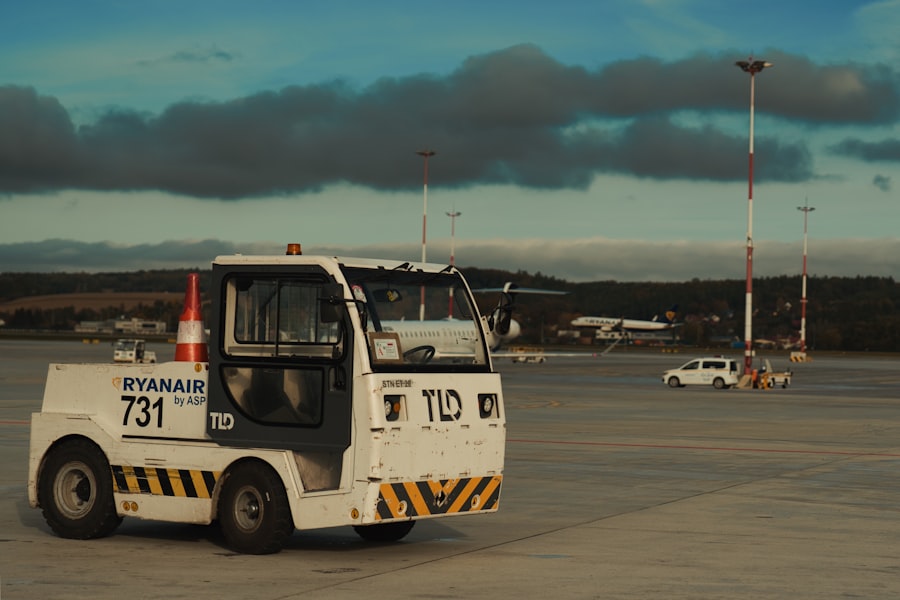
Beyond the physical movement of planes and bags, there’s a constant stream of communication, decision-making, and coordination that keeps everything running.
Air Traffic Control (ATC): Directing the Skyways
This is perhaps one of the most visible, and vital, aspects of airport operations. ATC is responsible for the safe and efficient flow of aircraft in the air and on the ground.
Tower Control
This is what most people imagine when they think of ATC. Tower controllers manage aircraft in the immediate vicinity of the airport, guiding them for takeoff and landing, and directing them on the taxiways.
Ground Control
These controllers manage aircraft movement on the taxiways and aprons, ensuring safe separation between planes as they move to and from the gates.
Approach and Departure Control
These controllers manage aircraft at higher altitudes as they approach the airport or depart from it, guiding them through their flight paths and handing them off to or from the tower.
Flight Operations and Dispatch: The Planning Hub
Before any flight departs, a huge amount of planning and coordination goes into it.
Flight Planning
This involves calculating the most efficient route, considering factors like weather, air traffic, and aircraft performance.
Fuel Management
Determining the exact amount of fuel needed for a flight, including reserves for potential diversions.
Crew Briefing
Ensuring pilots and cabin crew are fully briefed on the flight plan, weather conditions, and any operational considerations.
Gate Management: The Last Frontier Before Boarding
The gate is where passengers transition from the terminal to the aircraft.
Gate Assignments
Air traffic control and airport operations teams work together to assign gates to arriving and departing aircraft, optimizing flow and minimizing taxi times.
Boarding Process
Gate agents manage the boarding process, ensuring passengers are called in the correct order, their boarding passes are scanned, and they are directed to the aircraft.
Turnaround Management
Efficiently managing the time an aircraft spends at the gate between flights, ensuring all tasks like boarding, deplaning, cleaning, and catering are completed within the tight schedule.
In exploring the complexities of airport logistics, the documentary sheds light on the intricate systems that ensure smooth operations at one of the busiest airports in the world. For those interested in a deeper understanding of the challenges faced by airport authorities, a related article provides valuable insights into the latest advancements in logistics technology. You can read more about it in this informative piece on airport management. The combination of cutting-edge technology and strategic planning is essential for maintaining efficiency and safety in air travel.
Security and Safety: The Unseen Guardians
| Metrics | Data |
|---|---|
| Number of airports featured | 10 |
| Length of documentary | 90 minutes |
| Release year | 2020 |
| Viewership | 5 million |
While not always directly visible as “logistics,” security and safety are fundamental pillars that underpin all airport operations. Without them, nothing else could function.
Passenger and Baggage Screening
This is the most visible aspect of airport security.
X-ray Scanners
Checked baggage and carry-on luggage are screened using advanced X-ray technology to detect prohibited items.
Metal Detectors and Body Scanners
Passengers are screened to detect metallic objects and other items that could pose a security risk.
Canine Units
Trained dogs are used to detect explosives and other threats.
Cargo Security
Ensuring the security of air cargo is just as crucial as passenger screening.
Pre-Loading Screening
Cargo is screened before being loaded onto aircraft to identify any potential threats.
Secure Supply Chains
Airports work with airlines and cargo handlers to maintain secure supply chains for goods, from origin to destination.
Emergency Response
Airports are equipped with comprehensive emergency response plans and teams.
Fire and Rescue Services
Highly trained fire crews and specialized aircraft rescue and firefighting equipment are on standby.
Medical Services
On-site medical teams and facilities are available to respond to passenger or crew medical emergencies.
Evacuation Procedures
Well-rehearsed evacuation plans are in place for various scenarios to ensure the safety of everyone within the airport.
Access Control and Perimeter Security
Maintaining secure access to restricted areas and protecting the airport perimeter is essential.
Biometric Access
Some airports utilize biometric systems for access control to sensitive areas.
Surveillance Systems
Extensive CCTV networks monitor airport grounds and facilities to detect and deter unauthorized activity.
The Interconnectedness of It All
It’s important to remember that all these elements – baggage handling, refueling, maintenance, air traffic control, security – are not independent silos. They are deeply interconnected. A delay in baggage sorting can impact the flight schedule. A mechanical issue requiring unscheduled maintenance can disrupt gate assignments. A security alert can bring the entire operation to a standstill. Airport logistics is a testament to how well a vast, complex system can function when every part works in harmony, a constant, often-invisible, dance that keeps the world moving.

Why Modern Medicine Can’t Store Tomorrow
FAQs
What is an airport logistics documentary?
An airport logistics documentary is a film or video that explores the behind-the-scenes operations of an airport, focusing on the logistics and processes involved in managing air travel, including aspects such as baggage handling, security procedures, and air traffic control.
What are the key aspects covered in an airport logistics documentary?
An airport logistics documentary typically covers a wide range of aspects related to airport operations, including aircraft maintenance, ground handling, passenger services, cargo operations, airport security, and air traffic management.
What are the benefits of watching an airport logistics documentary?
Watching an airport logistics documentary can provide viewers with a better understanding of the complex and intricate processes involved in running an airport. It can also offer insights into the challenges and innovations in the aviation industry, as well as the various roles and responsibilities of airport personnel.
Where can one watch an airport logistics documentary?
Airport logistics documentaries may be available for viewing on streaming platforms, such as Netflix, Amazon Prime, or YouTube. They may also be broadcast on television channels dedicated to travel, aviation, or documentary programming.
Are airport logistics documentaries educational?
Yes, airport logistics documentaries are often educational in nature, providing viewers with valuable insights into the inner workings of airports and the aviation industry. They can be particularly informative for individuals interested in logistics, transportation, and travel.