The Cold War, a protracted ideological struggle between the United States and the Soviet Union, was characterized by a constant, albeit often indirect, confrontation. While the world nervously watched the skies for nuclear annihilation, a silent, deadly game was unfolding beneath the waves. Undersea warfare during this era was a vital, often unheralded, theater of operations, shaping global power dynamics and technological advancements in ways that continue to resonate today. The oceans, vast and enigmatic, became the ultimate high ground, a place where espionage, deterrence, and the threat of devastating retaliation played out in the quiet darkness.
The Dawn of the Silent Fleet
The post-World War II landscape saw a significant shift in naval strategy. The lessons learned from the devastating effectiveness of German U-boats in the Atlantic War spurred both superpowers to invest heavily in submarine technology. The advent of nuclear power revolutionized submarine capabilities, granting them unprecedented endurance and the ability to remain submerged for extended periods, effectively erasing the operational limitations of their diesel-electric predecessors. This technological leap fundamentally altered the nature of undersea warfare, transforming submarines from relatively short-ranged hunter-killers into persistent, globe-spanning deterrents and offensive platforms.
Nuclear Propulsion: A Paradigm Shift
The development of nuclear propulsion was the single most transformative technological advancement in submarine design during the Cold War. Unlike diesel-electric submarines, which were constrained by the need to surface or snorkel for air to recharge their batteries, nuclear-powered submarines could operate underwater indefinitely, limited only by food supplies for their crews. This meant they could stay on station for months, patrol vast ocean areas undetected, and launch ballistic missiles or torpedoes without the tell-tale signs of surfacing. The United States’ USS Nautilus, commissioned in 1954, was the first nuclear-powered submarine, marking a new era in naval power. The Soviets, initially lagging, soon caught up, launching their first nuclear-powered submarine, the K-3 Leninsky Komsomolets, in 1958.
The Rise of the Ballistic Missile Submarine (SSBN)
The strategic implications of nuclear propulsion were most profoundly realized with the development of the Ballistic Missile Submarine (SSBN), also known as a “boomer.” These submarines, equipped with intercontinental ballistic missiles (ICBMs) capable of carrying nuclear warheads, represented a crucial component of the nuclear triad – the land-based ICBMs, strategic bombers, and submarine-launched ballistic missiles (SLBMs). SSBNs offered a survivable second-strike capability, meaning that even after a devastating first strike against their land-based forces, a nation could still retaliate with nuclear weapons from submarines hidden deep beneath the ocean’s surface. This credible threat of retaliation acted as a powerful deterrent, a cornerstone of the doctrine of Mutually Assured Destruction (MAD). Both the US and the USSR poured immense resources into building and maintaining these silent, deadly arsenals.
Diesel-Electric Legacy and Hybrid Designs
Despite the ascendant power of nuclear submarines, diesel-electric submarines continued to play a significant role throughout the Cold War, particularly for navies with less extensive resources or specific operational needs. These boats were often quieter than their nuclear counterparts, making them excellent for stealthy operations, coastal patrols, and anti-surface warfare. Furthermore, the Soviets developed a range of sophisticated diesel-electric designs, some of which incorporated air-independent propulsion (AIP) technologies in later years, blurring the lines between diesel and nuclear capabilities and ensuring their continued relevance.
Undersea warfare played a crucial role during the Cold War, as both the United States and the Soviet Union invested heavily in submarine technology and anti-submarine warfare strategies. For a deeper understanding of this fascinating aspect of military history, you can explore the article titled “The Silent Service: Undersea Warfare During the Cold War,” which delves into the tactics, technologies, and significant events that shaped naval engagements beneath the waves. To read more, visit this article.
The Silent Hunt: Anti-Submarine Warfare (ASW)
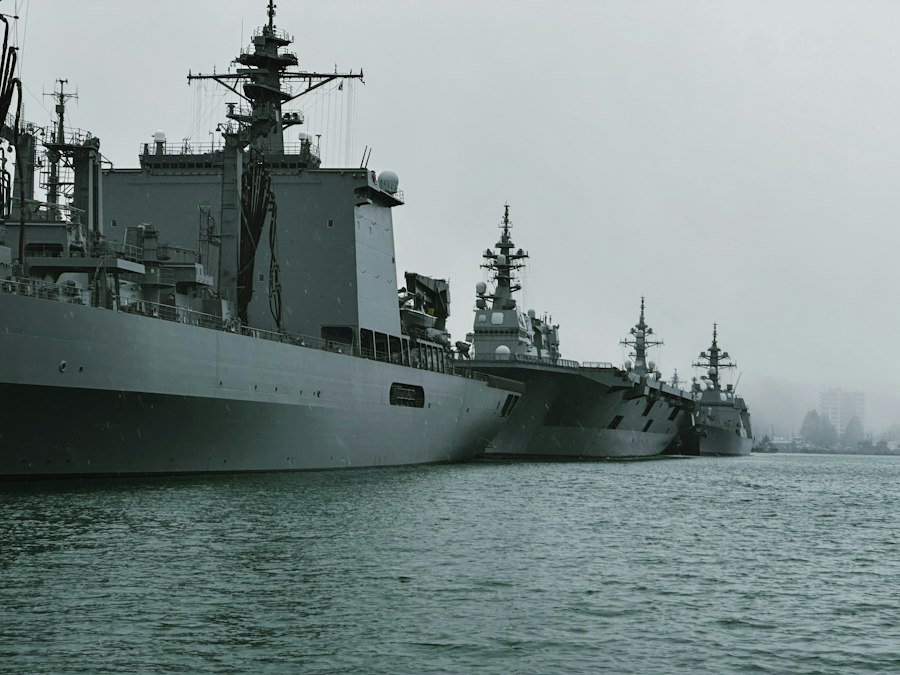
The proliferation of submarines on both sides of the Iron Curtain necessitated a robust and ever-evolving Anti-Submarine Warfare (ASW) capability. The goal of ASW was to detect, track, and neutralize enemy submarines, whether to protect friendly shipping, prevent missile launches, or engage in offensive operations. This complex interplay of detection, classification, localization, and attack involved a vast array of technologies and tactics, creating a constant cat-and-mouse game in the ocean depths.
Sonar: The Ears of the Ocean
Sonar (Sound Navigation and Ranging) was the primary tool for detecting submarines. Active sonar emits sound pulses and listens for echoes, while passive sonar listens for sounds produced by the submarine itself. The Cold War saw an enormous investment in sonar technology, with both sides developing increasingly sophisticated systems. This included large sonar arrays on surface ships, towed sonar arrays that could be extended far behind a vessel to increase detection range, and specialized sonar systems deployed on aircraft and helicopters. The challenge for ASW forces was the sheer complexity of the underwater acoustic environment, with layers of varying temperature and salinity affecting sound propagation, and the increasing stealth of submarines designed to minimize their acoustic signatures.
The Role of Maritime Patrol Aircraft
Maritime Patrol Aircraft (MPAs) played a crucial role in ASW operations. Equipped with advanced radar, magnetic anomaly detectors (MADs), sonobuoys, and the ability to deploy torpedoes and depth charges, these aircraft could cover vast areas of the ocean quickly. Sonobuoys, small acoustic sensors dropped into the water, acted as an extension of the aircraft’s listening capabilities, transmitting acoustic data back to the plane. The integration of aircraft and surface ships in coordinated ASW efforts was a key development, allowing for a more comprehensive and persistent search for enemy submarines.
Surface Escorts and Hunter-Killer Submarines
Surface escorts, such as destroyers and frigates, were equipped with their own sonar systems and often carried ASW helicopters. They formed vital screens around convoys and naval task forces, providing a defensive umbrella against submarine threats. Alongside these escorts, specialized “hunter-killer” submarines – typically nuclear-powered attack submarines (SSNs) – were tasked with actively hunting down and engaging enemy submarines. These submarines were designed for speed, maneuverability, and stealth, armed with a variety of torpedoes and missiles. The cat-and-mouse game between hunter and hunted was a defining feature of Cold War naval operations.
Espionage and the Shadow Wars Below

Beyond the direct military confrontation, the silent depths of the ocean became a stage for covert operations and intelligence gathering. Submarines, with their inherent stealth, were ideal platforms for espionage, reconnaissance, and the clandestine deployment of special forces. Both superpowers sought to exploit the underwater domain for intelligence advantage, leading to daring and often perilous missions.
Reconnaissance and Electronic Intelligence Gathering
Submarines were frequently used for intelligence gathering missions, often operating close to enemy coastlines or naval bases. Equipped with sophisticated electronic intelligence (ELINT) systems, they could intercept enemy communications, monitor radar emissions, and gather valuable data on naval deployments and capabilities. These “special operations” submarines, often designated as SSNs or specialized intelligence-gathering vessels, were designed for extended endurance and minimal detectability, allowing them to operate in highly sensitive areas undetected. The risk of detection and capture was immense, as any captured submarine or its crew could reveal invaluable secrets.
Cable Tapping and Other Covert Operations
Perhaps one of the most audacious forms of undersea espionage involved tapping into underwater communication cables. These cables, laid across the ocean floor, carried vast amounts of telecommunications traffic between nations. The US Navy’s Project Azorian, a highly classified operation to recover a Soviet submarine from the seabed, also involved the clandestine installation of tapping devices on Soviet communication cables. These operations were technologically demanding, requiring specialized submarines and remotely operated vehicles (ROVs) to operate at extreme depths and under constant threat of detection by Soviet anti-submarine forces.
The Role of Special Forces
Special forces also found a vital role in undersea operations during the Cold War. Submarines could be used to covertly insert and extract special operations teams for reconnaissance, sabotage, or other clandestine missions. These operations required meticulous planning and execution, with the submarine acting as a submerged base and transport. The training for these forces often included specialized diving and underwater survival techniques, preparing them for the harsh realities of operating in the deep ocean.
Technological Arms Race Beneath the Waves
The Cold War fueled an intense technological arms race, and the undersea domain was no exception. Both the United States and the Soviet Union poured vast resources into research and development, constantly seeking an edge in submarine design, weaponry, and detection systems. This relentless pursuit of technological superiority led to rapid advancements that continue to influence naval warfare today.
Advancements in Submarine Design and Stealth
The quest for stealth was a paramount concern for submarine designers. This involved not only quieter propulsion systems but also the development of hull designs that minimized sonar reflections. The Soviets, in particular, explored unconventional hull shapes and materials, some of which proved remarkably difficult for Western sonar to detect. The development of anechoic tiles, sound-absorbing materials applied to the submarine’s hull, also played a significant role in reducing its acoustic signature. The continuous evolution of hull materials, propeller designs, and internal noise reduction techniques became a constant battle of innovation.
The Evolution of Underwater Weapons
The arsenals of submarines also underwent significant evolution. Torpedoes became faster, more accurate, and more sophisticated, with advanced guidance systems and warheads. The development of anti-ship missiles, capable of being launched from submerged submarines, dramatically increased their offensive reach. Furthermore, the Cold War saw the development and deployment of tactical nuclear weapons for submarines, adding another layer of strategic complexity and danger to the undersea environment. The arms race extended to the countermeasures as well, with the development of torpedo decoys and jamming systems to defend against enemy ordnance.
Countermeasures and Deception
In response to the ever-improving ASW capabilities, submarines developed a range of countermeasures and deception tactics. These included the use of decoys, electronic warfare systems to jam enemy sonar, and sophisticated maneuvering techniques to break contact. The ability to operate in challenging acoustic environments, such as shallow waters or areas with complex thermal layers, was also a key tactic for evading detection. The constant innovation in these areas underscored the dynamic nature of the undersea arms race.
The history of undersea warfare during the Cold War is a fascinating topic that reveals the strategic complexities of naval power. As tensions escalated between superpowers, submarines became crucial assets in the balance of power, leading to advancements in technology and tactics. For a deeper understanding of this intricate subject, you can explore a related article that delves into the evolution of submarine warfare and its impact on global security. To read more about this captivating aspect of military history, visit this article.
Legacy and the Enduring Importance of the Silent Service
| Year | Event/Development | Country | Significance | Technology/Metric |
|---|---|---|---|---|
| 1954 | Launch of USS Nautilus (SSN-571) | USA | First operational nuclear-powered submarine | Nuclear propulsion, submerged endurance unlimited by air |
| 1958 | Introduction of Soviet Whiskey-class submarines | USSR | Mass-produced diesel-electric attack submarines | Diesel-electric propulsion, improved sonar |
| 1960 | USS Triton completes first submerged circumnavigation | USA | Demonstrated endurance and strategic reach of nuclear subs | Dual nuclear reactors, 41,000 nautical miles submerged |
| 1961 | Deployment of Polaris missile submarines | USA | First submarine-launched ballistic missile (SLBM) system | Polaris A1 missile, range ~1,200 nautical miles |
| 1967 | USS Thresher (SSN-593) lost in accident | USA | Led to SUBSAFE program to improve submarine safety | Focus on hull integrity and emergency systems |
| 1970 | Introduction of Soviet Typhoon-class submarines | USSR | Largest ballistic missile submarines ever built | 20 missile tubes, nuclear propulsion, displacement ~48,000 tons |
| 1972 | US and USSR sign Incidents at Sea Agreement | USA/USSR | Reduced risk of naval incidents including submarine encounters | Rules for naval operations and communications |
| 1982 | Loss of Soviet submarine K-219 | USSR | Accidental missile silo explosion, highlighted risks of SLBMs | R-27U ballistic missiles onboard |
| 1985 | Introduction of US Los Angeles-class attack submarines | USA | Fast, quiet nuclear attack subs with advanced sonar | Speed >30 knots, improved acoustic stealth |
| 1989 | Fall of Berlin Wall and easing of Cold War tensions | Global | Marked decline in undersea warfare confrontations | Shift towards arms reduction and submarine arms control |
The Cold War’s undersea conflict may have ended with the collapse of the Soviet Union, but its legacy is profound and enduring. The technologies developed, the operational doctrines honed, and the strategic lessons learned continue to shape naval power and international security. The “silent service” of submarines, once the unseen guardians of deterrence, remains a critical component of modern naval forces.
The Enduring Role of Submarines in Modern Navies
Today, submarines continue to be vital assets for navies worldwide. Their stealth, endurance, and offensive capabilities make them indispensable for a wide range of missions, from strategic deterrence and power projection to intelligence gathering and special operations. The advancements made during the Cold War have laid the foundation for the sophisticated submarines of the 21st century, which are even quieter, more technologically advanced, and capable of operating in a wider range of environments. The strategic importance of submarines as a deterrent and a tool for maintaining global stability remains undiminished.
Lessons Learned and the Future of Undersea Warfare
The intense competition of the Cold War provided invaluable lessons about the importance of understanding the underwater environment, the critical role of stealth, and the perpetual need for technological innovation. The ongoing development of autonomous underwater vehicles (AUVs) and unmanned underwater vehicles (UUVs) represents the next frontier in undersea warfare, building upon the foundations laid during the Cold War. These unmanned systems offer new possibilities for reconnaissance, mine countermeasures, and even offensive operations, promising to further transform the silent depths into an even more complex and contested domain. The ongoing evolution of undersea warfare ensures that the silent service will remain a crucial, albeit often unseen, element of global security for the foreseeable future.
The Soviet Submarine Britain Lost—Then Found Again
FAQs
What was the role of undersea warfare during the Cold War?
Undersea warfare played a crucial role during the Cold War as submarines were used for intelligence gathering, deterrence, and potential nuclear strikes. Both the United States and the Soviet Union heavily invested in submarine technology to gain a strategic advantage.
How did advancements in technology impact undersea warfare during the Cold War?
Advancements in technology, such as the development of nuclear-powered submarines and ballistic missiles, revolutionized undersea warfare during the Cold War. These technological innovations allowed for greater stealth, longer endurance, and increased firepower.
What were some key submarine incidents that occurred during the Cold War?
Some key submarine incidents during the Cold War include the Cuban Missile Crisis, where a Soviet submarine nearly launched a nuclear torpedo, and the collision between the USS Tusk and a Soviet submarine in 1959. These incidents highlighted the tensions and risks involved in undersea warfare.
How did undersea warfare contribute to the concept of mutually assured destruction (MAD) during the Cold War?
Undersea warfare contributed to the concept of mutually assured destruction (MAD) during the Cold War by providing both the United States and the Soviet Union with a second-strike capability. Submarines armed with nuclear missiles ensured that even in the event of a devastating first strike, the other side would still be able to retaliate.
What role did espionage play in undersea warfare during the Cold War?
Espionage played a significant role in undersea warfare during the Cold War, with both the US and the Soviet Union engaging in covert operations to gather intelligence on each other’s submarine capabilities. This intelligence was crucial for maintaining strategic advantage and preventing surprise attacks.