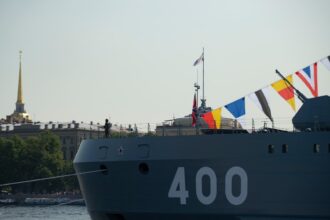
The Western security architecture centered on the Atlantic has evolved significantly since its inception, driven by a complex interplay of geopolitical realities, technological advancements, and shifting threat landscapes. This framework, broadly encompassing the North Atlantic Treaty Organization (NATO) and its associated bilateral and multilateral security arrangements, aims to provide a collective defense and promote stability across Europe and North America. Its efficacy and adaptability are constantly under scrutiny as it navigates an increasingly multipolar and contested international environment.
The post-World War II era witnessed the emergence of a bipolar world order, characterized by the ideological and geopolitical rivalry between the United States and the Soviet Union. The devastation of the war and the looming threat of Soviet expansionism created a pressing need for a formalized security alliance among Western nations.
The Pervasive Shadow of Soviet Influence
The Need for Collective Defense
The Unites States’ Pivotal Role
The establishment of NATO in 1949 was a cornerstone of this evolving architecture. It was founded on the principle of collective defense, enshrined in Article 5 of the North Atlantic Treaty, which states that an attack against one member shall be considered an attack against all. This commitment provided a crucial deterrent against Soviet aggression and fostered a sense of shared security among its original signatories. Beyond NATO, bilateral security agreements and intelligence-sharing pacts further solidified the Western security posture, creating a layered and interconnected system.
The concept of the Atlantic corridor plays a crucial role in shaping Western security architecture, particularly in the context of transatlantic relations and defense strategies. For a deeper understanding of the implications and developments surrounding this topic, you can refer to a related article that explores various aspects of security cooperation and geopolitical dynamics. To read more, visit this article.
NATO: The Central Pillar of the Atlantic Framework
NATO remains the most prominent and comprehensive institution within the Western security architecture. Its enduring relevance lies in its ability to adapt its doctrine, force structures, and political engagement to address evolving challenges, even as its foundational purpose—collective defense—remains paramount.
Strategic Adaptation and Evolution
Over decades, NATO has undergone significant strategic shifts. From its initial focus on deterring a large-scale conventional invasion of Western Europe, its mandate broadened in the post-Cold War era to encompass crisis management, peacekeeping operations, and cooperative security initiatives. The alliance has grappled with defining its role and responsibilities in an era of asymmetric threats, terrorism, and cyber warfare. This adaptability has been crucial for maintaining its political cohesion and operational relevance.
From Collective Defense to Crisis Management
The Post-Cold War Expansion and its Implications
Addressing Contemporary Threats: Terrorism and Cyber Warfare
The Importance of Interoperability and Burden-Sharing
A key element of NATO’s effectiveness has been its emphasis on interoperability – the ability of allied forces to operate together seamlessly. This involves standardizing equipment, doctrines, and training. Equally important has been the ongoing debate and efforts towards burden-sharing, ensuring that all members contribute equitably to the collective security effort, both in terms of financial contributions and military capabilities. This remains a persistent challenge, with disparities in defense spending and force readiness often being a source of tension.
Standardizing Procedures and Equipment
Financial Contributions and Defense Spending Goals
Military Capabilities and Readiness
The Role of Bilateral and Multilateral Partnerships

While NATO serves as the primary collective defense organization, the Western security architecture is also underpinned by a network of bilateral defense agreements, intelligence-sharing arrangements, and other multilateral security forums. These often complement NATO’s efforts and provide flexibility in addressing specific regional or thematic security challenges that may not fall directly under the alliance’s purview.
Agreements Beyond NATO Membership
Intelligence Sharing and Cooperation
Joint Military Exercises and Training
The United States, in particular, maintains a vast network of bilateral defense treaties and security partnerships across Europe and beyond. These agreements facilitate forward deployment of U.S. forces, intelligence exchange, and joint military operations, often serving as a critical bridge between NATO commitments and broader U.S. foreign policy objectives. These relationships allow for tailored responses to specific regional security dynamics.
The U.S. European Reassurance Initiative and its Successors
Security Cooperation with Non-NATO European Partners
The Five Eyes Intelligence Alliance
Emerging Challenges and Future Directions

The Western security architecture faces a complex and evolving threat environment that necessitates continuous adaptation and strategic foresight. The resurgence of great power competition, the pervasive influence of disinformation, the increasing sophistication of cyberattacks, and the impact of climate change on security all present significant challenges.
The Resurgence of Great Power Competition
The Information Warfare Landscape
The Impact of Technological Advancement
The rise of non-state actors, the proliferation of advanced weaponry, and the interconnectedness of global systems mean that threats are increasingly diffuse and potentially more destabilizing. This requires a nuanced approach that goes beyond traditional military deterrence and encompasses diplomatic, economic, and informational tools.
The Evolving Nature of Warfare
The Strategic Implications of Emerging Technologies
The Interconnectedness of Global Security and Climate Change
The Need for Strategic Agility and Resilience
To navigate these challenges effectively, the Western security architecture must prioritize strategic agility, the ability to rapidly adapt to unforeseen circumstances. This includes fostering domestic and transatlantic resilience against hybrid threats, strengthening early warning mechanisms, and developing more robust responses to cyber and information warfare. The capacity to anticipate and effectively counter novel threats will be as crucial as the ability to respond to established ones.
Enhancing Resilience Against Hybrid Threats
Strengthening Early Warning and Intelligence Capabilities
Fostering Defense Innovation
The evolving dynamics of the Atlantic corridor have significant implications for Western security architecture, as highlighted in a recent article that explores the strategic importance of transatlantic cooperation. This piece delves into the challenges and opportunities faced by NATO and its allies in adapting to new security threats. For a deeper understanding of these issues, you can read the full article here. The insights provided shed light on how the Atlantic corridor can enhance collective defense and foster stronger partnerships among nations committed to maintaining regional stability.
The Political Dimension of Security
| Country | Defense Budget (USD) | Military Personnel | Number of Military Bases |
|---|---|---|---|
| United States | 732 billion | 1.3 million | 800 |
| Canada | 22.2 billion | 68,000 | 27 |
| United Kingdom | 59.2 billion | 150,000 | 145 |
| France | 50.9 billion | 202,000 | 7 |
The effectiveness of any security architecture is fundamentally intertwined with its political foundation. In the case of the Atlantic security framework, unity of purpose, shared values, and robust political consultation among member states are paramount. Disagreements on strategic priorities, burden-sharing, or foreign policy approaches can undermine collective resolve and operational effectiveness.
Maintaining Political Cohesion and Consensus
The Importance of Diplomatic Engagement
Democratic Values as a Foundation
The challenges to the Western security architecture are not solely military or technological; they are also political and ideological. Maintaining a united front, engaging in robust diplomatic consultations, and reinforcing the underlying democratic values that bind the alliance are essential for its long-term viability. The ability to effectively communicate a clear and consistent message to adversaries and allies alike is critical in shaping the global security environment.
Addressing Internal Dissensions and Divergent Interests
The Role of Transatlantic Diplomacy in Conflict Resolution
Promoting Democratic Norms and Human Rights
In conclusion, the securing of the Atlantic Corridor through its Western security architecture is an ongoing and dynamic process. It is a testament to the enduring understanding that shared security is more robust than isolated defense. While the specific challenges and operational modalities have evolved significantly since its inception, the core principles of collective defense, cooperation, and a commitment to a stable and secure transatlantic space remain central to its purpose. Its future efficacy will depend on its continued capacity for adaptation, its ability to foster political unity, and its responsiveness to the increasingly complex and interconnected global security landscape.
FAQs
What is the Western security architecture Atlantic corridor?
The Western security architecture Atlantic corridor refers to the strategic framework for security cooperation and coordination among Western countries that border the Atlantic Ocean. It encompasses defense, intelligence, and diplomatic efforts to address common security challenges in the region.
What countries are involved in the Western security architecture Atlantic corridor?
The countries involved in the Western security architecture Atlantic corridor include the United States, Canada, the United Kingdom, France, Spain, Portugal, and other NATO member states that have a stake in the security of the Atlantic region.
What are the main security challenges addressed by the Western security architecture Atlantic corridor?
The main security challenges addressed by the Western security architecture Atlantic corridor include maritime security threats, such as piracy, illegal fishing, and trafficking; strategic competition in the North Atlantic and Arctic regions; and potential military threats from state and non-state actors.
What are the key components of the Western security architecture Atlantic corridor?
The key components of the Western security architecture Atlantic corridor include joint military exercises and operations, intelligence sharing and cooperation, diplomatic initiatives to strengthen alliances and partnerships, and investments in maritime surveillance and defense capabilities.
How does the Western security architecture Atlantic corridor contribute to global security?
The Western security architecture Atlantic corridor contributes to global security by enhancing the ability of Western countries to deter and respond to security threats in the Atlantic region, which in turn contributes to the overall stability and security of the international system.