The dawn of the Cold War, a period of intense geopolitical tension between the United States and the Soviet Union and their respective allies, was marked by numerous flashpoints. Among the most critical and dramatic of these early confrontations was the Berlin Blockade and the subsequent Allied response, the Berlin Airlift. This protracted crisis, lasting from June 1948 to May 1949, did more than just highlight the burgeoning ideological divide; it fundamentally reshaped the global political landscape, solidified alliances, and underscored the immense technological and logistical capabilities of the Western powers. The events in Berlin were not merely a localized spat; they were a pivotal moment that signaled the definitive end of the post-war peace and the beginning of a prolonged era of proxy conflicts and ideological struggle.
The Seeds of Division: Post-War Germany and the Fate of Berlin
Following the unconditional surrender of Nazi Germany in May 1945, the victorious Allied powers – the United States, Great Britain, France, and the Soviet Union – divided the defeated nation into four occupation zones. The capital city of Berlin, situated deep within the Soviet zone, was also similarly divided into four sectors. This arrangement, initially intended as a temporary measure, soon became a stark physical manifestation of the growing ideological chasm between the Soviet Union and the Western Allies.
The Potsdam Conference and the Fragile Agreement
The Potsdam Conference in July and August 1945 was an attempt by the Allied leaders to establish a framework for governing post-war Germany and Europe. While agreements were reached on issues like denazification and reparations, the fundamental disagreements regarding Germany’s long-term future, particularly its political and economic orientation, remained unresolved. The Soviet Union, having suffered immense losses during the war, sought to ensure a buffer zone of friendly states and to extract significant reparations from Germany, thereby preventing its resurgence as a military threat. The Western Allies, conversely, aimed to foster democratic institutions and a stable, economically viable Germany that could act as a bulwark against Soviet expansionism.
The Four Sectors: An Island of Western Influence
Berlin, as the former capital, held immense symbolic importance. Its division into four sectors – American, British, French, and Soviet – created an anomaly. West Berlin, comprising the sectors controlled by the Western Allies, became an island of democratic capitalism surrounded by the Soviet-controlled East German territory. This geographical reality, combined with the ideological differences between the occupying powers, laid the groundwork for future conflict. The relative freedoms and economic prosperity of West Berlin, contrasted with the Soviet system in the East, began to draw increasing attention and emigration from the East, a trend that the Soviets viewed with alarm.
Growing Tensions and the Currency Reform
As the Cold War intensified, the differences in economic and political policies between the Soviet Union and the Western Allies became more pronounced. The Soviet Union sought to impose its communist ideology and economic model on its zone, while the Western Allies worked to rebuild democratic institutions and promote market economies. The situation in Berlin became increasingly untenable. The primary catalyst for the crisis was the decision by the Western Allies to introduce a new currency, the Deutsche Mark, into their zones of occupation in West Germany and West Berlin in June 1948.
The Deutsche Mark: A Catalyst for Conflict
The introduction of the Deutsche Mark was a necessary step to stabilize the ravaged German economy and combat rampant inflation. However, the Soviet Union viewed this as a violation of the Potsdam agreements and an attempt by the Western powers to consolidate their control over their zones and to create a separate West German state. They feared that the new currency would further undermine the Soviet-controlled economy in East Germany and make it more difficult to integrate Berlin into their sphere of influence.
The Berlin Blockade and Airlift was a pivotal moment in Cold War history, showcasing the tensions between the Soviet Union and the Western Allies. For a deeper understanding of the geopolitical implications and the human stories behind this event, you can read a related article on the topic at In the War Room. This resource provides valuable insights into the strategies employed during the airlift and the impact it had on Berlin’s residents and international relations.
The Soviet Gambit: The Blockade of West Berlin
In response to the currency reform and the perceived Western consolidation of power, the Soviet Union launched its audacious and unprecedented blockade of West Berlin on June 24, 1948. All land and water routes – rail, road, and canal – leading into West Berlin from the Western occupation zones were severed. This meant that the over two million inhabitants of West Berlin were cut off from vital supplies of food, fuel, medicine, and other essential goods.
The Strategic Calculation of the Soviets
The Soviet Union’s gamble was calculated. They believed that by isolating West Berlin, they could force the Western Allies to abandon the city or to concede to Soviet demands regarding Germany’s future. The Soviets likely reasoned that the Western powers, facing the prospect of starvation and hardship for the West Berlin population, would ultimately be unwilling to risk a military confrontation. They also hoped to demonstrate the weakness of Western resolve and to further their own influence in post-war Europe.
The Isolation of West Berlin
The blockade effectively paralyzed West Berlin. Without access to the outside world, the city’s economy ground to a halt. Stocks of food and fuel dwindled rapidly, and the specter of mass starvation and a humanitarian catastrophe loomed large. The Soviet move was a direct challenge to the legitimacy of the Western presence in Berlin and a clear attempt to test the commitment of the Western powers to their democratic allies.
The Dilemma for the Western Allies
The blockade presented the Western Allies with a grave dilemma. They had a moral and political obligation to protect the inhabitants of West Berlin, but any direct military intervention to break the blockade carried the immense risk of igniting a full-scale war with the Soviet Union, a nuclear-armed power. The question was not whether to respond, but how.
The Options on the Table
The options were stark and fraught with peril. One option was to capitulate and withdraw from Berlin, a move that would have been a devastating blow to Western prestige and a significant victory for Soviet expansionism. Another was to attempt to force the blockade by military means, a highly risky endeavor that could have escalated into World War III. A third option, though seemingly improbable at the outset, was to find a way to sustain West Berlin without physically breaking the blockade.
The “Rosinenbomber”: The Genesis of the Berlin Airlift
Faced with the stark choices and unwilling to abandon the beleaguered city, the Western Allies, primarily the United States and Great Britain, conceived of an audacious and unprecedented solution: the Berlin Airlift, codenamed “Operation Vittles” by the Americans and “Operation Plainfare” by the British. The idea was to supply West Berlin entirely by air, a feat that had never before been attempted on such a massive scale.
The Logistical Challenge: A Monumental Undertaking
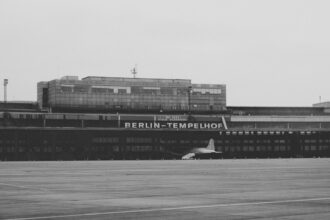
The scale of the undertaking was staggering. West Berlin required thousands of tons of food, coal for heating and power, and other essential supplies on a daily basis. The existing airfields in Berlin, Tempelhof, Gatow, and Tegel, were quickly upgraded and expanded to handle the immense volume of air traffic. The logistical challenges were immense, requiring the coordination of hundreds of aircraft, thousands of personnel, and a constant flow of supplies from bases in West Germany.
The Mobilization of Resources
The United States Air Force and the Royal Air Force marshaled their resources with remarkable speed and efficiency. Aircraft from various squadrons were redirected to the airlift. Cargo planes, from massive C-54 Skymasters to smaller C-47 Dakotas, were pressed into service. Pilots, ground crews, and logistics experts worked tirelessly in a constant rhythm of takeoffs and landings. The sound of aircraft engines became a constant, reassuring hum for the people of West Berlin.
The Human Element: Resilience and Hope
The Berlin Airlift was not just a military operation; it was a profound display of human resilience and international solidarity. The West Berliners, facing immense hardship and uncertainty, endured with remarkable stoicism. They understood that the airlift was their lifeline, and they actively supported the pilots and crews, often assisting with unloading cargo and providing encouragement. The pilots, flying in often treacherous weather conditions and under the constant threat of Soviet interference, became heroes to the people of Berlin.
The “Candy Bombers” and the Symbolism of Hope
One of the most poignant aspects of the airlift was the initiative taken by some American pilots to drop candy and small gifts for the children of Berlin. These “Rosinenbomber” (raisin bombers), as they came to be known, became a powerful symbol of hope and a tangible demonstration of the Western Allies’ commitment to the well-being of the Berlin population. The image of these planes dropping treats resonated deeply, transforming a complex geopolitical struggle into a deeply human narrative of compassion and support.
The Impact and Significance: A Turning Point in the Cold War
The Berlin Blockade and Airlift had profound and far-reaching consequences, marking a significant turning point in the early years of the Cold War. It solidified the resolve of the Western powers, demonstrated the limitations of Soviet power projection, and fundamentally reshaped the geopolitical landscape of Europe.
The Failure of the Blockade and Soviet Concessions
After nearly a year of sustained effort, the Soviet Union, realizing the futility of the blockade and the unwavering commitment of the Western Allies, finally lifted it on May 12, 1949. The blockade had failed to achieve its objectives and had instead served to expose Soviet intransigence and to rally international support for the Western cause. The lifting of the blockade was a clear diplomatic and strategic victory for the West.
The Reaffirmation of Western Resolve
The success of the Berlin Airlift demonstrated that the Western Allies were willing and able to meet Soviet challenges without resorting to direct military conflict. It boosted morale and confidence in the West and sent a clear message to Moscow that aggression would not be tolerated. The airlift became a powerful symbol of Western resolve and the commitment to defending democratic values.
The Formation of NATO and the Division of Germany
The Berlin Blockade and Airlift were a critical catalyst for the formalization of Western alliances. The perceived threat posed by Soviet aggression led directly to the signing of the North Atlantic Treaty Organization (NATO) treaty in April 1949. NATO provided a collective security framework for the Western nations, a direct response to the growing Soviet threat. Furthermore, the crisis accelerated the division of Germany. In May 1949, the Federal Republic of Germany (West Germany) was established, followed by the German Democratic Republic (East Germany) in October of the same year, cementing the division of the country for decades to come.
The Solidification of Blocs
The events in Berlin solidified the division of Europe into two opposing blocs: the Soviet-aligned Eastern bloc and the Western-aligned NATO bloc. This division would persist for the remainder of the Cold War, with Berlin itself remaining a flashpoint and a stark symbol of the ideological divide.
The Legacy of the Airlift: A Symbol of Freedom
The Berlin Airlift left an indelible mark on history. It is remembered as a remarkable feat of logistics, a testament to human ingenuity and courage, and a powerful symbol of freedom and resistance against oppression. The “Rosinenbomber” and the stories of the pilots and the people of Berlin continue to inspire generations. The airlift served as a stark reminder of the dangers of Soviet expansionism and the importance of international cooperation in the face of adversity. It solidified the idea that the West would not stand idly by while democratic aspirations were crushed.
The Berlin Blockade and Airlift was a significant event during the early stages of the Cold War, showcasing the tensions between the Western Allies and the Soviet Union. For those interested in exploring this topic further, you can read a related article that delves into the strategic implications of the airlift and its impact on post-war Europe. This comprehensive analysis can be found here, providing valuable insights into the geopolitical landscape of the time.
Conclusion: A Pivotal Moment in the Cold War Narrative
The Berlin Blockade and Airlift stands as one of the most significant early confrontations of the Cold War. It was a period of immense tension and uncertainty, where the world teetered on the brink of conflict. Yet, through a combination of strategic calculation, logistical brilliance, and unwavering human spirit, the Western Allies not only prevented the fall of West Berlin but also fundamentally altered the trajectory of the Cold War. The crisis solidified alliances, demonstrated the limits of Soviet power, and underscored the enduring power of democratic ideals. The legacy of the airlift continues to resonate, a testament to a time when a city, isolated and under siege, became a beacon of hope and a symbol of freedom for the world. The events of 1948-1949 in Berlin were not just a chapter in history; they were a pivotal moment that defined the contours of the global struggle for decades to come.
How 90 Seconds Kept 2 Million People Alive
FAQs
What was the Berlin Blockade?
The Berlin Blockade was a Soviet attempt to block the Western Allies’ access to the western sectors of Berlin, which was under joint Allied control after World War II.
When did the Berlin Blockade take place?
The Berlin Blockade began on June 24, 1948, and lasted for almost a year until May 12, 1949.
What was the Berlin Airlift?
The Berlin Airlift was a massive operation conducted by the Western Allies to supply the people of West Berlin with food, fuel, and other necessities during the Berlin Blockade.
How did the Berlin Airlift work?
The Berlin Airlift involved the continuous airlifting of supplies into West Berlin, with planes landing at Tempelhof Airport and other airfields in the city.
What was the outcome of the Berlin Blockade and Airlift?
The Berlin Airlift successfully provided the people of West Berlin with the necessary supplies, and the Soviet Union eventually lifted the blockade in May 1949. This event solidified the division of Germany into East and West, leading to the formation of West Germany and East Germany.