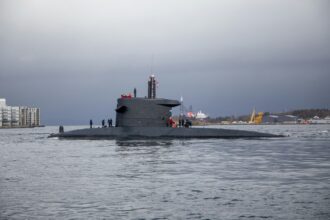
Russia’s Northern Fleet: Finland’s NATO Concerns
The geopolitical landscape of Northern Europe has been profoundly reshaped in recent years, with Russia’s resurgent military presence and Finland’s historic pivot towards NATO membership creating a complex and sensitive dynamic. At the heart of this shift lies the formidable Russian Northern Fleet, a powerful arm of the Russian armed forces whose proximity and evolving capabilities have become a central concern for Finland, now a full-fledged member of the North Atlantic Treaty Organization. Understanding the Northern Fleet’s significance, its recent activities, and the implications for Finnish security is crucial to grasping the current state of affairs in the Baltic Sea region and beyond.
The Russian Northern Fleet, headquartered in Severomorsk, Murmansk Oblast, stands as the largest of the Russian Navy’s four fleets. Its strategic importance is immense, encompassing not only the defense of Russia’s northern borders and Arctic territories but also projecting power into the Atlantic and beyond. The fleet’s capabilities are diverse, ranging from a substantial submarine force, including its prized strategic missile submarines, to surface vessels such as destroyers, frigates, and aircraft carriers. The Northern Fleet is also a key component of Russia’s nuclear deterrent, with a significant portion of its strategic nuclear submarines deployed within its operational area. Its presence in the Barents Sea and along the Norwegian Sea is a constant factor in regional security calculations.
Historical Evolution and Strategic Importance
The origins of the Northern Fleet can be traced back to the Soviet era, when its role was primarily focused on defending the northern approaches to the Soviet Union and supporting its submarine-launched ballistic missile (SLBM) programs. Following the collapse of the Soviet Union, the fleet experienced a period of decline, struggling with funding and modernization. However, under President Vladimir Putin, there has been a concerted effort to revitalize and expand the Northern Fleet, recognizing its enduring strategic value. This resurgence is driven by several factors, including Russia’s desire to assert its sovereignty in the Arctic, secure its energy resources, and maintain its status as a major global military power. The fleet’s operations are intrinsically linked to Russia’s broader foreign policy objectives and its strategic competition with Western powers.
Composition and Capabilities
The sheer scale and technological sophistication of the Northern Fleet are significant. Its submarine force is particularly noteworthy, comprising a mix of nuclear-powered attack submarines (SSNs) and nuclear-powered ballistic missile submarines (SSBNs). The SSBNs are the backbone of Russia’s nuclear triad, capable of launching devastating nuclear strikes from submerged positions. The SSNs, equipped with advanced weaponry, are designed for anti-submarine warfare, anti-ship operations, and reconnaissance. On the surface, the fleet boasts a range of warships, including modern destroyers and frigates equipped with advanced anti-air and anti-ship missiles. While Russia’s sole aircraft carrier, the Admiral Kuznetsov, has been a recurring source of concern due to its operational history and ongoing refits, its potential deployment remains a factor in the regional balance of power. The fleet’s aviation component, comprising naval aircraft and helicopters, further enhances its operational reach and capabilities.
Arctic Operations and Resource Protection
A primary focus for the Northern Fleet in recent years has been the Arctic. Russia views the Arctic as a region of vital strategic and economic importance, with vast reserves of oil, gas, and other natural resources. The Northern Fleet is tasked with protecting these resources, ensuring freedom of navigation through newly opening Arctic shipping routes, and asserting Russian sovereignty. This involves increased naval patrols, the development of new Arctic-capable warships and icebreakers, and the establishment of new military bases along the Arctic coast. The growing interest and activity in the Arctic by other nations, including NATO members, further elevate the strategic significance of the Northern Fleet’s presence in the region.
Following Finland’s accession to NATO, the strategic dynamics in the Arctic region have shifted significantly, prompting increased scrutiny of Russia’s Northern Fleet. An insightful article that delves into the implications of this development can be found at In The War Room, where experts analyze how Finland’s NATO membership may influence Russia’s naval operations and security posture in the Baltic Sea and beyond.
Russia’s Military Resurgence and Finland’s Shifting Stance
Finland’s decision to join NATO in April 2023 marked a seismic shift in its long-standing policy of military non-alignment. This historic move was directly precipitated by Russia’s full-scale invasion of Ukraine in February 2022, an act that irrevocably altered the security calculus in Europe. For decades, Finland maintained a robust defense capability and a policy of neutrality, balancing its relationship with Russia, its large neighbor, with its aspirations for Western integration. The events in Ukraine, however, shattered any remaining illusions about Russia’s respect for international norms and the security of its neighbors. The Northern Fleet, with its proximity and growing assertiveness, played a significant role in shaping this new reality for Finland.
The Impact of the Ukraine War
The full-scale invasion of Ukraine served as a stark wake-up call for Finland and its neighbor Sweden. The brutality of the conflict, the disregard for civilian populations, and the clear intent of Russia to expand its sphere of influence demonstrated that military aggression was a tangible threat in contemporary Europe. The war also highlighted the limitations of relying solely on individual national defense capabilities in the face of a determined and aggressive adversary. Finland, with its extensive shared border with Russia, felt particularly vulnerable. The perceived threat emanating from Russia’s military capabilities, including those of the Northern Fleet, became an immediate and pressing concern.
From Neutrality to Collective Defense
For over 70 years, Finland adhered to a policy of military non-alignment. This policy was rooted in historical experiences and the desire to maintain good relations with its powerful eastern neighbor. However, the geopolitical tectonic plates shifted dramatically with the Ukraine war. The invasion was seen not just as an attack on Ukraine, but as a direct challenge to the European security order. Finland, which shares an 830-mile border with Russia, found its neutrality increasingly untenable. The prospect of being isolated and vulnerable in the face of Russian aggression led to a broad consensus within Finland and across the political spectrum to seek the security guarantees offered by NATO’s collective defense clause.
Enhanced Border Security and Readiness
Following the invasion of Ukraine and the subsequent decision to pursue NATO membership, Finland significantly enhanced its border security measures and military readiness. This involved increased patrolling of the border, investments in surveillance technology, and exercises designed to test and improve the country’s defense capabilities. The Finnish Defence Forces have been actively modernizing their equipment, focusing on areas such as air defense, armored capabilities, and naval assets. The proximity of the Northern Fleet’s operational areas has necessitated a heightened state of vigilance along Finland’s coastline and in its territorial waters.
Northern Fleet’s Capabilities and Finland’s Concerns
The Russian Northern Fleet’s capabilities are a primary source of concern for Finland, particularly given their geographical proximity and the fleet’s strategic objectives. The fleet’s advanced weaponry, its significant submarine force, and its growing presence in the Arctic all contribute to Finland’s security deliberations. As a new member of NATO, Finland’s defense planning is now integrated with the broader alliance strategy, but its own specific vulnerabilities and concerns remain at the forefront.
Submarine Warfare and the Baltic Sea
The Northern Fleet’s substantial submarine force poses a significant challenge. While the most potent nuclear-powered submarines are based in the Arctic, the fleet also operates diesel-electric submarines that are capable of operating in the shallower waters of the Baltic Sea. These submarines, equipped with modern torpedoes and anti-ship missiles, can pose a considerable threat to naval traffic and coastal infrastructure. Finland, with its extensive coastline and reliance on maritime trade, is particularly sensitive to the submarine threat. The ability of these submarines to operate stealthily makes detection and interdiction a complex task for smaller navies.
Surface Fleet Modernization and Projection of Power
The ongoing modernization of the Northern Fleet’s surface vessels has also raised concerns. Newer frigates and destroyers are equipped with advanced anti-air and anti-ship missile systems, increasing their offensive and defensive capabilities. These ships are capable of projecting Russian power further into the Baltic Sea and beyond. For Finland, this means facing a more formidable naval adversary in its immediate vicinity. The deployment of these vessels during exercises or in proximity to Finnish waters is closely monitored.
Arctic Capabilities and Strategic Advantage
The Northern Fleet’s significant investments in Arctic capabilities, including ice-hardened vessels and advanced icebreakers, are also a point of strategic consideration for Finland. As climate change opens up new Arctic sea lanes, Russia’s enhanced presence in the region, backed by the Northern Fleet, creates potential for increased geopolitical competition and challenges to freedom of navigation. Finland, as an Arctic nation with a coastline on the Baltic Sea, is directly impacted by these developments. The operational capacity of the Northern Fleet in Arctic conditions can provide Russia with a strategic advantage in its asserted territorial claims and resource exploitation.
NATO Integration and Enhanced Finnish Defense
Finland’s accession to NATO has fundamentally altered its security posture, moving it from a position of individual national defense to one of collective security. This integration brings with it the benefits of shared intelligence, joint military exercises, and the commitment of mutual defense from all member states. However, it also means that Finland’s specific concerns, such as those relating to the Northern Fleet, are now integrated into the broader NATO strategic planning for the region.
The Principle of Collective Defense
The cornerstone of NATO is its Article 5, the principle of collective defense, which states that an attack against one member is considered an attack against all. For Finland, this means that any aggression against its territory would trigger a response from the entire alliance, significantly deterring potential adversaries. This collective security umbrella provides a level of reassurance that was absent during Finland’s period of non-alignment. The presence of NATO forces in the region and the commitment to mutual defense are critical deterrents.
Joint Military Exercises and Interoperability
Since joining NATO, Finland has been actively participating in a growing number of joint military exercises with its allies. These exercises are crucial for enhancing interoperability, testing joint operational plans, and building trust and understanding between different national forces. For Finland, these exercises are particularly important in scenarios involving naval operations in the Baltic Sea and in understanding how to counter potential threats posed by the Northern Fleet in conjunction with NATO allies. Exercises involving air defense, anti-submarine warfare, and amphibious operations are all relevant.
Intelligence Sharing and Situational Awareness
Membership in NATO provides Finland with access to a vast network of intelligence sharing among member states. This enhanced intelligence flow significantly improves Finland’s situational awareness regarding Russian military activities, including those of the Northern Fleet. Understanding the fleet’s deployments, its exercises, and its evolving capabilities is crucial for effective defense planning. This shared intelligence allows Finland to better assess threats and coordinate its responses with its NATO partners.
Following Finland’s accession to NATO, the dynamics of the Arctic region have shifted significantly, prompting increased scrutiny of Russia’s Northern Fleet. This development raises questions about the strategic implications for regional security and military balance. For a deeper understanding of how these changes might affect Russia’s naval capabilities and operations, you can read a related article that explores the potential responses from the Northern Fleet in light of NATO’s expansion. To learn more, visit this article.
The Future of Northern Security and the Northern Fleet’s Role
| Category | Data/Metrics |
|---|---|
| Number of Ships | 45 |
| Number of Submarines | 20 |
| Number of Personnel | 50,000 |
| Operational Area | Arctic Ocean and Northern Atlantic |
The Northern Fleet will undoubtedly continue to be a dominant factor in the security landscape of Northern Europe. As Russia pursues its strategic objectives and Finland deepens its integration within NATO, the dynamic between these entities will continue to evolve. The future of security in the region will hinge on a delicate balance of deterrence, diplomacy, and continued vigilance, with the Northern Fleet’s capabilities and intentions remaining a central element of this complex equation.
Deterrence and De-escalation
The presence of a robust NATO force in the region, coupled with Finland’s strengthened defense capabilities, serves as a critical deterrent against potential Russian aggression. However, maintaining stability also requires efforts towards de-escalation and the open communication channels to prevent miscalculations. The Northern Fleet’s operations, especially those conducted in close proximity to NATO members, will require careful monitoring and a measured response from the alliance to avoid unintended escalation.
Technological Advancements and Naval Power Projection
The ongoing technological advancements in naval warfare, both on the part of Russia and NATO, will continue to shape the strategic landscape. The development of new submarine technologies, unmanned maritime systems, and advanced missile systems will all play a role. The Northern Fleet’s ability to project power, particularly in the Arctic and the North Atlantic, will be influenced by these technological developments and will necessitate a continuous assessment of capabilities by Finland and its NATO allies.
The Baltic Sea as a Geopolitical Flashpoint
The Baltic Sea, with its strategic importance and the presence of multiple NATO members and Russia, remains a potential geopolitical flashpoint. The Northern Fleet’s operations in this enclosed sea, coupled with the defense strategies of the Baltic states and Poland, contribute to a heightened sense of military readiness. Finland’s accession to NATO strengthens the alliance’s position in the Baltic Sea, creating a more cohesive defense against any potential challenges. The interplay between the Northern Fleet and the collective defense of NATO will define the future security environment of this vital maritime region.

Russia’s Nuclear Submarines Depend on This Arctic Lifeline
FAQs
What is the Russia Northern Fleet?
The Russia Northern Fleet is one of the four fleets of the Russian Navy. It is based in the Arctic and Northern regions of Russia and is responsible for protecting Russian interests in the Arctic Ocean.
What is the significance of the Russia Northern Fleet after Finland’s potential NATO membership?
The potential membership of Finland in NATO has raised concerns for Russia, particularly in the context of the Russia Northern Fleet. The fleet plays a crucial role in Russia’s strategic interests in the Arctic, and any changes in the security dynamics in the region could impact the fleet’s operations.
How does the Russia Northern Fleet contribute to Russia’s military capabilities?
The Russia Northern Fleet is equipped with a variety of naval vessels, including submarines, surface ships, and support vessels. It also has naval aviation and coastal defense units. The fleet’s capabilities contribute to Russia’s overall military strength and its ability to project power in the Arctic region.
What are the main objectives of the Russia Northern Fleet?
The main objectives of the Russia Northern Fleet include safeguarding Russia’s national interests in the Arctic, conducting naval operations in the region, and ensuring the security of Russia’s northern borders. The fleet also participates in joint military exercises and contributes to Russia’s defense strategy.
How does the Russia Northern Fleet impact regional security dynamics?
The presence and activities of the Russia Northern Fleet have implications for regional security dynamics, particularly in the Arctic region. The fleet’s capabilities and operations are closely monitored by neighboring countries and have the potential to influence the overall security environment in the area.