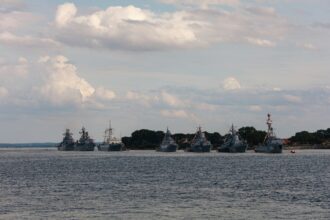
Russia’s Arctic Security Post-Finland NATO Expansion
The geopolitical landscape of the Arctic has undergone a dramatic transformation with Finland’s accession to NATO. For decades, Russia viewed its Arctic territories as a strategic bastion, a domain where its military presence was largely unchallenged. However, the inclusion of a new, capable NATO member along its extensive northern border fundamentally alters this calculus, forcing a re-evaluation of Russian Arctic security strategies. This shift is not merely a matter of adding another flag to an alliance; it represents a significant expansion of NATO’s geographic reach into a region of increasing global importance, with profound implications for Russia’s perceived security interests and its operational capacity in the High North.
Finland’s entry into NATO represents a watershed moment for Arctic security. Historically, Russia has enjoyed a relative insulation in its Arctic territories, a vast expanse of territory characterized by harsh climate, limited infrastructure, and strategic resource potential. This vastness, coupled with its formidable Arctic military capabilities, provided Russia with a sense of security and a degree of strategic depth. However, the addition of Finland, with its robust military, significant Arctic experience, and a lengthy shared border with Russia, introduces a new and direct NATO presence. This fundamentally alters the perception of the Arctic as a Russian-dominated or at least highly Russian-influenced space.
The Historical Russian Arctic Dominance
For many years, Russia’s Arctic strategy was predicated on a combination of geographical advantage and military might. Its extensive coastline, numerous military bases, and the powerful Northern Fleet were seen as deterrents against any external ambitions in the region. The perceived lack of a unified and coordinated military approach by Western powers in the Arctic allowed Russia to project an image of unchallenged authority. This era of relative quiet allowed Russia to focus on developing its Arctic infrastructure, exploiting its natural resources, and modernizing its military assets in the region, confident in its ability to defend its interests.
Finland’s Strategic Integration into NATO
Finland’s integration into NATO is not a sudden development but a strategic response to evolving geopolitical realities. Its decision, driven by Russia’s aggression in Ukraine, signifies a collective acknowledgment of the growing threat to European security, extending even to the Arctic. Finland’s membership brings to NATO a nation with deep knowledge of Arctic warfare, advanced military technology, and a substantial, well-trained armed forces. This infusion of capabilities directly translates to an enhanced NATO presence and operational capacity along Russia’s northern flank, creating a more complex and potentially challenging environment for Russian military planning.
The New Northern Frontier: A NATO-Adjacent Arctic
The accession of Finland effectively transforms the Arctic from a region with a strong Russian presence to one where Russia shares a significantly extended border with a powerful military alliance. This new reality necessitates a re-evaluation of Russia’s defensive posture. The previous assumption of a more distant and less coordinated Western military presence is now replaced by the tangible reality of NATO forces operating on Russia’s doorstep. This geographic proximity amplifies the potential for rapid deployment and increased interoperability among NATO members, creating a new dynamic of deterrence and potential conflict.
In light of Finland’s recent accession to NATO, the dynamics of Arctic security have shifted significantly, prompting a closer examination of Russia’s strategic posture in the region. An insightful article that delves into these developments can be found at this link, where the implications of NATO’s expansion on Arctic geopolitics are explored in detail. As Finland strengthens its ties with the alliance, the potential for increased military presence and cooperation among NATO members in the Arctic raises questions about Russia’s response and the future of security in this critical area.
Russia’s Enhanced Arctic Military Posture: A Response to Perceived Threats
In response to the expanded NATO presence, Russia is compelled to reassess and likely bolster its Arctic military capabilities. The perception of increased threat necessitates a more robust defensive posture, focusing on enhancing existing infrastructure, modernizing equipment, and potentially increasing troop deployments. This proactive approach aims to maintain Russia’s perceived strategic advantage and deter any perceived encroachment on its sovereign Arctic territories.
Modernization of the Northern Fleet and Arctic Units
The Russian Northern Fleet, long the cornerstone of its Arctic power projection, is undergoing significant modernization. This includes the development of new ice-capable warships, submarines, and naval aviation assets. The emphasis is on platforms that can operate effectively in the challenging Arctic environment, capable of both power projection and territorial defense. Furthermore, specialized Arctic brigades, equipped with unique cold-weather gear and vehicles, are being strengthened and outfitted with advanced weaponry. The objective is to ensure that these units can respond swiftly and effectively to any security challenge in the High North.
Strengthening Arctic Infrastructure and Forward Basing
Russia has invested heavily in expanding and modernizing its Arctic military infrastructure. This includes the refurbishment and establishment of new airfields, naval bases, and radar stations across its northern coastline. The aim is to create a network of forward-deployed assets that can provide early warning, facilitate rapid deployment of forces, and enhance logistical support in this vast and remote region. The development of year-round port facilities and ice-free access points is also a priority, ensuring the sustained operational capacity of its Arctic forces.
The Role of Arctic Air and Missile Defense
The expansion of NATO into Finland necessitates a strengthened air and missile defense network in the Russian Arctic. Russia is deploying advanced air defense systems, such as the S-400, and enhancing its radar capabilities to monitor air and missile threats from its northern flank. The objective is to create an impenetrable shield over its critical Arctic infrastructure, military installations, and resource extraction sites. This enhanced defense posture is a direct response to the increased aerial and missile capabilities that NATO can now bring to bear in the region.
Intelligence, Surveillance, and Reconnaissance (ISR) Capabilities
To effectively monitor and respond to the evolving security environment, Russia is significantly enhancing its ISR capabilities in the Arctic. This includes the deployment of advanced surveillance aircraft, drones, and satellite systems. The goal is to gain a comprehensive understanding of NATO activities along its border, including troop movements, naval deployments, and reconnaissance missions. Effective ISR is crucial for maintaining situational awareness and enabling rapid and informed decision-making in a region where distances are vast and operational windows can be limited.
NATO’s Arctic Security Calculus: A Unified Front
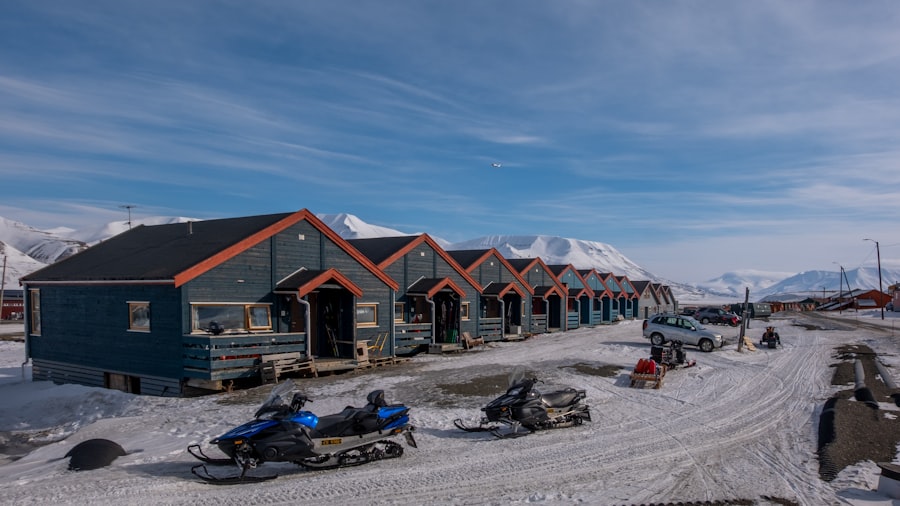
Finland’s membership transforms NATO’s Arctic security calculus from a fragmented approach to a more unified and cohesive strategy. The alliance now possesses a direct land border with Russia in the Arctic, necessitating a coordinated response and a strengthened collective defense posture. This shift signifies a commitment to the security of the entire Arctic region, rather than isolated bilateral arrangements.
Enhanced NATO Arctic Operations and Exercises
With Finland as a member, NATO can now conduct more extensive and complex Arctic exercises. These exercises are designed to test and improve the interoperability of allied forces in cold-weather environments, enhance maritime and air operations, and strengthen ground troop capabilities in the Arctic. The increased frequency and scope of these exercises send a clear signal of NATO’s commitment to the region and its ability to operate cohesively in challenging conditions.
Intelligence Sharing and Coordination Among Allies
A crucial benefit of Finland’s integration is the enhanced intelligence sharing and coordination among NATO allies. Finland’s intimate knowledge of the Arctic environment and its own intelligence assets are now available to the broader alliance. This collective intelligence picture provides a more comprehensive understanding of regional threats and allows for more effective joint planning and response. The ability to pool and analyze intelligence across a wider network significantly strengthens NATO’s overall situational awareness.
The Importance of Arctic Infrastructure for NATO
While Russia has been actively developing its Arctic infrastructure, NATO’s focus may shift towards leveraging existing infrastructure and strategically developing new capabilities to support allied operations. This could involve enhancing port facilities, airfields, and communication networks in the Nordic countries that share borders with Russia. The goal is to ensure that NATO forces can be rapidly deployed, sustained, and operate effectively throughout the Arctic domain, including areas previously less accessible to the alliance.
The Strategic Significance of the Greenland-Iceland-UK (GIUK) Gap
The GIUK gap, a critical maritime chokepoint between Greenland, Iceland, and the United Kingdom, has always been of strategic importance. With Finland’s accession, the overall defensive posture of NATO in the North Atlantic and Arctic regions is strengthened. The expanded NATO presence can further contribute to the monitoring and control of this vital passage, which is crucial for the movement of naval assets between the Atlantic and Arctic Oceans. This enhances NATO’s ability to project power and control maritime domains in the High North.
The Resource Race and Arctic Sovereignty
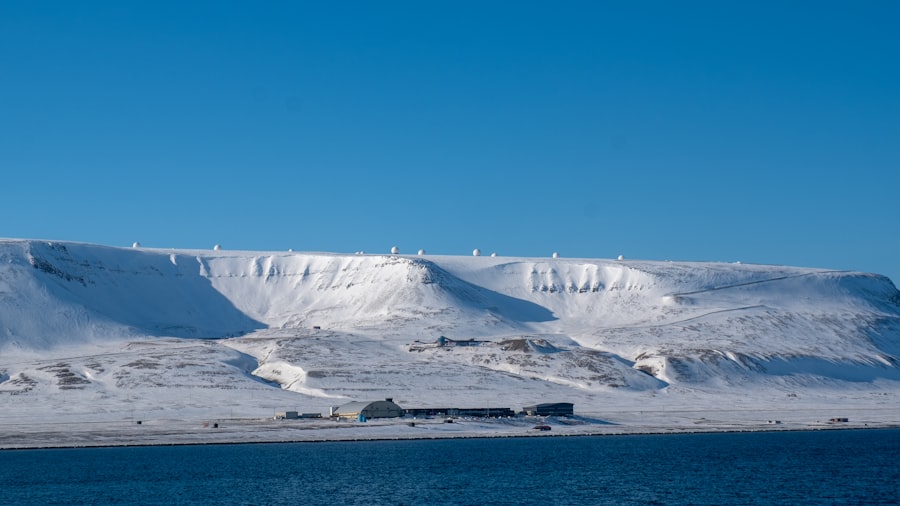
The Arctic is endowed with vast natural resources, and the increased military presence by both Russia and NATO fuels concerns about potential competition and disputes over resource rights and territorial claims. Russia has historically asserted its claims over its Arctic shelf and resources, and the expanding NATO presence could be perceived as a challenge to these assertions.
Russia’s Assertions of Arctic Resource Rights
Russia views its Arctic resources as vital for its economic future and national security. It has actively pursued exploration and extraction activities, asserting its sovereign rights over its continental shelf. The presence of NATO in closer proximity could be interpreted by Russia as an attempt to limit its access to these resources or to challenge its existing claims. This necessitates a careful management of resource-related activities to avoid escalating tensions.
Potential for Resource Competition and Dispute Resolution
The increased interest and military presence in the Arctic raise the potential for resource competition. While international law, particularly the UN Convention on the Law of the Sea (UNCLOS), provides a framework for resolving maritime boundary disputes, the geopolitical climate can complicate these processes. The focus will be on ensuring that any disputes are managed through diplomatic channels and international legal frameworks, rather than through military posturing.
The Role of Arctic Governance and International Law
The existing Arctic governance structures, such as the Arctic Council, are crucial for fostering cooperation and dialogue among Arctic states. However, the current geopolitical climate has impacted the effectiveness of these forums. Maintaining the principles of international law and strengthening Arctic governance mechanisms will be paramount in preventing resource-related disputes from escalating into broader security concerns.
The recent accession of Finland to NATO has significant implications for Arctic security, particularly concerning Russia’s strategic posture in the region. As Finland strengthens its military ties with NATO, analysts are closely monitoring how this shift might influence Russia’s activities in the Arctic, where it has been increasingly assertive. For a deeper understanding of the evolving dynamics in Arctic security following Finland’s NATO membership, you can read more in this insightful article on the topic. To explore further, visit this link.
The Future of Arctic Security: Diplomacy and Deterrence
| Metrics | Data |
|---|---|
| Number of Russian military bases in the Arctic | 6 |
| Arctic coastline under Russian control | over 24,000 kilometers |
| Number of Russian Arctic troops | approximately 50,000 |
| Investment in Arctic military infrastructure | over 400 million |
| Number of Russian icebreakers in the Arctic | more than 40 |
The post-Finland NATO expansion era in the Arctic demands a dual approach of robust deterrence and sustained diplomatic engagement. While the military balance has shifted, proactive dialogue and adherence to international norms are essential for maintaining stability and preventing unintended escalation.
The Balancing Act: Deterrence and De-escalation
Russia’s enhanced Arctic security posture, while driven by perceived threats, must be balanced with efforts to de-escalate tensions. NATO’s increased presence also serves as a deterrent, but responsible military conduct and clear communication are vital. The objective is to prevent miscalculation and foster an environment where dialogue can take precedence over confrontation.
The Importance of Dialogue and Confidence-Building Measures
Despite the heightened tensions, maintaining channels for dialogue and implementing confidence-building measures are crucial for Arctic security. This includes open communication regarding military activities, accident prevention protocols, and cooperation on shared challenges like climate change research and search and rescue operations. These measures can help build trust and reduce the risk of misunderstandings.
The Long-Term Impact on Arctic Cooperation
The geopolitical shifts in the Arctic will undoubtedly have a long-term impact on regional cooperation. While military considerations have become more prominent, the need for collaboration on issues such as environmental protection, scientific research, and maritime safety remains. Finding ways to compartmentalize these areas of cooperation, even amidst heightened security concerns, will be a significant challenge for all Arctic stakeholders.
The Arctic as a Zone of Peaceful Cooperation?
The aspiration for the Arctic to remain a zone of peaceful cooperation is increasingly challenged. The integration of Finland into NATO and Russia’s subsequent security responses have introduced a new layer of complexity. The future of the Arctic hinges on the ability of all actors to navigate these evolving dynamics with a commitment to de-escalation, robust diplomacy, and the unwavering adherence to international law. The path forward requires careful consideration of both security imperatives and the enduring need for cooperation in this strategically vital and environmentally sensitive region.

Russia’s Nuclear Submarines Depend on This Arctic Lifeline
FAQs
What is the current security situation in the Arctic region after Finland’s potential NATO membership?
The security situation in the Arctic region has become more complex and tense after Finland’s potential NATO membership. Russia has expressed concerns about NATO’s increasing presence in the region and has taken steps to strengthen its military capabilities in the Arctic.
How has Russia responded to Finland’s potential NATO membership in terms of Arctic security?
Russia has responded to Finland’s potential NATO membership by increasing its military presence and capabilities in the Arctic region. This includes the deployment of advanced weaponry, military exercises, and the construction of new military bases in the Arctic.
What are the key security concerns for Russia in the Arctic region?
Russia’s key security concerns in the Arctic region include the potential encroachment of NATO forces, the protection of its strategic interests and resources, and the preservation of its territorial integrity. The Arctic is of significant geopolitical and economic importance to Russia.
How has Finland’s potential NATO membership impacted the security dynamics in the Arctic region?
Finland’s potential NATO membership has impacted the security dynamics in the Arctic region by raising concerns and tensions between Russia and NATO. This has led to an increase in military activities and posturing in the region, as both sides seek to assert their influence and protect their interests.
What are the implications of the evolving security situation in the Arctic region for international relations?
The evolving security situation in the Arctic region has implications for international relations, particularly in terms of the relationship between Russia and NATO. It has the potential to further strain relations and escalate tensions, which could have broader implications for global security and cooperation in the Arctic.