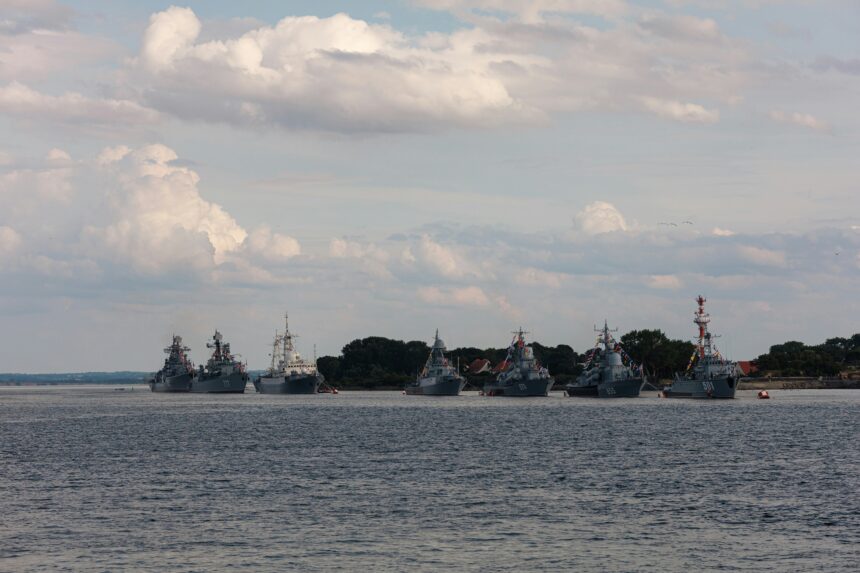
The Finland-Russia-NATO Nuclear Fleet Dilemma
For decades, the Finnish archipelago, a vast expanse of islands dotting the Baltic Sea, served as a delicate buffer, a quiet testament to a complex geopolitical dance. Finland, a nation with a proud history of neutrality, navigated the waters between the Soviet Union and the West with a practiced hand. Its position, however, has been irrevocably altered. The burgeoning relationship between Finland and the North Atlantic Treaty Organization (NATO), and the increasingly assertive posture of Russia, have ushered in a new era, one fraught with the potential for unintended consequences, particularly concerning the presence and potential deployment of nuclear-armed naval vessels in the Baltic Sea. This evolving scenario presents a multifaceted dilemma, one that demands careful consideration of historical context, strategic implications, and the very real risks associated with nuclear proliferation.
Finland’s post-World War II foreign policy was meticulously crafted around the concept of neutrality. This wasn’t a passive stance, but rather an active, pragmatic approach to ensuring its sovereignty and security in the shadow of its powerful eastern neighbor. The Paasikivi-Kekkonen line, a cornerstone of this policy, emphasized maintaining good relations with the Soviet Union while simultaneously safeguarding Finnish independence. This delicate balancing act allowed Finland to foster economic ties with the West and develop a robust democratic society, all while avoiding direct entanglement in the Cold War’s ideological battles. The Finnish military, while capable of defending its territory, was not designed for offensive operations or alliance commitments. This carefully cultivated image of neutrality was deeply ingrained in the national psyche and served as the bedrock of its international relations for generations.
The Echoes of History: The Cold War Context
During the Cold War, Finland’s neutrality was a strategic imperative. The Soviet Union, wary of NATO expansion, viewed Finland’s non-aligned status as a crucial element of its own security buffer. Any perceived move towards the West by Finland could have been interpreted as a provocative act, potentially leading to severe repercussions. Consequently, Finland treaded a careful path, engaging in economic cooperation with COMECON while maintaining diplomatic ties with Western nations. This tightrope walk required constant vigilance and a nuanced understanding of Soviet intentions. The Finnish leadership understood that its security was inextricably linked to its ability to maintain this delicate equilibrium. The presence of Soviet military installations in neighboring countries, coupled with the omnipresent threat of Soviet power, served as a constant reminder of the stakes involved.
The End of an Era: Post-Cold War Adjustments
The collapse of the Soviet Union in 1991 presented Finland with a new geopolitical landscape. The immediate threat from the East receded, allowing for a gradual reorientation of its foreign policy. While Finland initially maintained its non-aligned status, the increasing interconnectedness of the world and the emergence of new security challenges prompted a reevaluation. The rise of new global powers, the resurgence of nationalist sentiments in some regions, and the increasing frequency of cyber threats all contributed to a growing sense that absolute neutrality might not be the most effective guarantor of security in the 21st century. Finland began to engage more actively in international peacekeeping operations and participate in European Union security initiatives, signaling a subtle but significant shift away from its Cold War posture.
The Ukraine Factor: A Catalyst for Change
The most profound catalyst for Finland’s dramatic shift in foreign policy, however, was Russia’s full-scale invasion of Ukraine in February 2022. This brutal act of aggression shattered any lingering illusions about the stability of the European security order and served as a stark wake-up call for Finland. The perceived threat from Russia, once a distant concern, now felt immediate and tangible. The historical narrative of Russian expansionism, long relegated to the annals of history, suddenly seemed to be replaying itself on Europe’s doorstep. This existential threat, coupled with the perceived inability of existing security frameworks to adequately deter Russian aggression, led to an overwhelming public and political consensus in Finland that a fundamental change was necessary. The long-held ideal of neutrality, once a source of security, was now seen by many as a potential vulnerability.
The recent developments regarding Finland’s NATO membership and its implications for regional security have sparked significant discussions, particularly in light of Russia’s nuclear fleet activities in the Baltic Sea. For a deeper analysis of these geopolitical dynamics, you can read the related article on this topic at In The War Room, which explores the strategic considerations and potential responses from NATO and Russia in this evolving situation.
NATO’s Northern Expansion: A New Strategic Calculus
Finland’s decision to seek NATO membership was a watershed moment, marking a definitive departure from its post-war foreign policy. This momentous shift was driven by a confluence of factors, primarily the perceived existential threat posed by Russia. The accession of Finland, and subsequently Sweden, significantly alters the strategic landscape of the Baltic Sea region, introducing a new dynamic into the long-standing relationship between Russia and the Western military alliance. This expansion is not merely symbolic; it has tangible implications for military deployments, intelligence gathering, and the potential for escalation in the region.
The Rationale Behind the Bid: Deterrence and Defense
The primary motivation behind Finland’s NATO application was to enhance its security through collective defense. By joining NATO, Finland gains the security assurances of Article 5, which states that an attack against one member is an attack against all. This collective security umbrella provides a powerful deterrent against potential Russian aggression. Furthermore, membership allows Finland to participate in joint military exercises, intelligence sharing, and the development of common defense strategies with other NATO members. This integration aims to bolster its own defense capabilities and ensure that any potential adversary would face a significantly more formidable and coordinated response. The Finnish military, with its highly trained conscript army and advanced technology, is a valuable addition to NATO, strengthening the alliance’s northern flank.
Sweden’s Parallel Journey: A United Nordic Front
Sweden, Finland’s close neighbor and historical partner, followed a remarkably similar path towards NATO membership. While Sweden had a longer tradition of military non-alignment than Finland, the escalating threat from Russia also prompted a reevaluation of its security posture. The parallel applications of Finland and Sweden have created a unified Nordic bloc within NATO, significantly enhancing the alliance’s presence and capabilities in the strategically vital Baltic region. This united front presents a more cohesive and formidable deterrent against potential Russian assertiveness. The geographical proximity and shared security concerns of these two nations make their combined NATO membership a particularly significant development for regional stability.
Russia’s Response: Heightened Tensions and Countermeasures
Russia has vehemently opposed NATO’s expansion, viewing it as a direct threat to its national security. The accession of Finland and Sweden has been met with stern warnings and a promise of countermeasures. These countermeasures could include a range of actions, from increased military presence along its borders with Finland to the potential deployment of advanced weaponry, including nuclear-capable systems, in the Baltic Sea region. This heightened tension creates a precarious situation, where miscalculation or unintended escalation could have severe consequences. The rhetoric from Moscow has been consistently negative, signaling a significant deterioration in relations between Russia and its northern neighbors.
The Nuclear Shadow in the Baltic Sea
The presence of nuclear weapons, or the potential for their deployment, in the Baltic Sea region has long been a source of concern. With Finland and Sweden now members of NATO, and Russia’s own formidable nuclear arsenal, the strategic calculus surrounding nuclear deterrence in this confined and sensitive maritime space has become increasingly complex and potentially volatile. The very nature of nuclear weapons – their destructive power and the difficulty of controlling their use – makes their potential presence or deployment a significant point of anxiety.
NATO’s Nuclear Doctrine and the Baltic Context
NATO’s nuclear policy is based on the principle of deterrence, aiming to prevent nuclear or non-nuclear aggression. While NATO maintains a nuclear arsenal, its deployment and readiness are carefully managed. The alliance generally aims to maintain a credible nuclear deterrent while avoiding actions that could be perceived as unnecessarily provocative. However, the expansion of NATO into a region bordering Russia, and Russia’s own history of demonstrating its nuclear capabilities, raises questions about the potential for nuclear signaling or even the actual deployment of nuclear weapons in the Baltic Sea. The proximity of naval vessels, capable of carrying nuclear payloads, to Russian territory and to a newly expanded NATO border creates a particularly sensitive environment.
Russia’s Nuclear Posturing: A Deliberate Strategy?
Russia possesses a large and modern nuclear arsenal, and it has not shied away from referencing its nuclear capabilities in its rhetoric, particularly in the context of its conflict with Ukraine and the perceived encroachment of NATO. The Baltic Sea, with its strategic importance and limited geographical space, could become a theater for Russian nuclear signaling or even a place where Russia might consider deploying tactical nuclear weapons as a deterrent against perceived NATO superiority or as a means of escalation control. The transparency regarding Russia’s nuclear deployments is often limited, making it difficult to ascertain the true extent of their capabilities and intentions in the region.
The Risk of Escalation: Miscalculation and Accidental War
The increased proximity of nuclear-capable naval forces, combined with heightened geopolitical tensions, significantly elevates the risk of miscalculation or accidental conflict. In a crisis, naval vessels equipped with nuclear weapons could be placed on higher alert, increasing the chances of an incident leading to a dangerous escalation. The limited space in the Baltic Sea further exacerbates this risk, as naval maneuvers and even routine patrols could be misinterpreted or lead to unintended confrontations. The potential for a flashpoint incident, where a conventional naval encounter spirals out of control due to the presence of nuclear weapons, is a chilling prospect that demands careful consideration.
The Dilemma of Nuclear-Armed Naval Vessels
The core of the dilemma lies in the specific threat posed by nuclear-armed naval vessels operating in the Baltic Sea. These vessels, whether belonging to NATO or Russia, represent a potent and immediate nuclear threat due to their mobility and the devastating destructive capability they possess. Their presence, especially in a region already fraught with tension, magnifies the risks associated with nuclear deterrence.
The Mobility and Reach of Naval Nuclear Weapons
Naval vessels equipped with nuclear-armed missiles offer a unique and concerning dimension to nuclear deterrence. Their ability to move discreetly across vast stretches of ocean, coupled with the long range of modern missiles, means that potential targets can be threatened from multiple directions and without prior warning. In the confined waters of the Baltic Sea, this mobility takes on an even more acute significance. A nuclear-armed submarine or surface vessel could quickly reposition itself to pose an immediate threat to coastal cities or critical infrastructure, drastically shortening warning times and increasing the pressure for a rapid, and potentially catastrophic, response.
The Ambiguity of Conventional vs. Nuclear Loadouts
A significant challenge in managing the nuclear threat in the Baltic Sea is the inherent ambiguity surrounding the exact loadouts of naval vessels. It is often difficult to definitively determine whether a particular submarine or surface ship is carrying nuclear-armed missiles or conventional ones. This ambiguity can fuel suspicion and mistrust, leading to heightened alert levels and a greater likelihood of misinterpreting an adversary’s intentions. In a tense standoff, this lack of transparency can be a breeding ground for fear and a driver of escalation.
The Strategic Implications for Finland and Sweden
For Finland and Sweden, joining NATO with the inherent possibility of nuclear weapons operating in their territorial waters or nearby international waters presents a complex strategic and ethical challenge. While NATO’s nuclear doctrine is based on deterrence, the presence of these weapons on their doorstep, even if for defensive purposes, carries a significant psychological and existential weight. The debate within these nations about whether NATO should deploy nuclear weapons to their territory, or the implications of existing NATO nuclear deployments in the region, is likely to intensify. Balancing the security benefits of collective defense with the risks and moral implications of nuclear weapons will be a defining challenge for these new NATO members.
As Finland moves closer to NATO membership, concerns about Russia’s nuclear fleet in the Baltic Sea have intensified, prompting discussions about regional security dynamics. A related article explores the implications of this evolving situation and how it may affect the balance of power in Northern Europe. For more insights, you can read the full article here.
Navigating the Path Forward: De-escalation and Dialogue
| Country | NATO Membership | Russia Relations | Nuclear Fleet |
|---|---|---|---|
| Finland | Not a member | Neighboring country | No nuclear fleet |
The Finland-Russia-NATO nuclear fleet dilemma is a stark reminder of the enduring dangers of nuclear weapons and the fragility of international security. Addressing this complex issue requires a multi-pronged approach focused on de-escalation, transparent dialogue, and a renewed commitment to arms control. The current trajectory, characterized by increasing military posturing and heightened tensions, is unsustainable and carries the risk of a catastrophic outcome.
The Importance of Arms Control and Transparency
Reinvigorating arms control agreements and fostering greater transparency regarding nuclear arsenals are crucial steps towards mitigating the risks in the Baltic Sea. This could involve renewed efforts to establish verifiable limits on the deployment of nuclear weapons in the region and to implement confidence-building measures that increase predictability and reduce the likelihood of miscalculation. Open communication channels between NATO and Russia, even amidst disagreements, are essential for managing potential crises and preventing unintended escalation.
De-escalation and Confidence-Building Measures
Initiatives aimed at de-escalating military activities and building confidence are paramount. This could include agreements to limit naval exercises in sensitive areas, to provide advance notification of military movements, and to establish mechanisms for rapid communication in the event of an incident. The goal should be to reduce the perceived threat and create an environment where dialogue and cooperation can take root, however challenging that may seem in the current climate.
The Role of Diplomacy and International Cooperation
Ultimately, the resolution of the Finland-Russia-NATO nuclear fleet dilemma hinges on the power of diplomacy and sustained international cooperation. While military strength plays a role in deterrence, it cannot be the sole arbiter of security. A commitment to dialogue, a willingness to find common ground, and a recognition of the shared risks that nuclear weapons pose to all nations are essential for navigating this dangerous crossroads. The future of security in the Baltic Sea, and indeed the broader international community, depends on the ability of states to move beyond confrontation and embrace a path of reasoned engagement and mutual security.

Russia’s Nuclear Submarines Depend on This Arctic Lifeline
FAQs
What is the current relationship between Finland, NATO, and Russia?
Finland is not a member of NATO, but it has a partnership with the organization. Finland also shares a long border with Russia and has historically maintained a policy of military non-alignment.
Is Finland considering joining NATO?
There is ongoing debate in Finland about whether to join NATO, with some political parties and public figures advocating for membership. However, there is also significant opposition to joining the alliance.
What is the significance of Russia’s nuclear fleet in the context of Finland?
Russia’s nuclear fleet, including submarines and other vessels, operates in the Baltic Sea, which is of strategic importance to Finland. The presence of Russian nuclear-capable vessels in the region has implications for Finnish security and defense planning.
How does Finland view the current tensions between NATO and Russia?
Finland has expressed concern about the increased tensions between NATO and Russia, emphasizing the importance of maintaining stability and security in the Baltic Sea region. Finland has also called for dialogue and diplomatic solutions to mitigate the risk of conflict.
What are the potential implications of Finland’s relationship with NATO and Russia for nuclear security?
Finland’s position between NATO and Russia, as well as its proximity to the Baltic Sea, raises questions about nuclear security and the potential risks associated with the presence of nuclear-capable forces in the region. This dynamic underscores the importance of nuclear non-proliferation and arms control efforts.