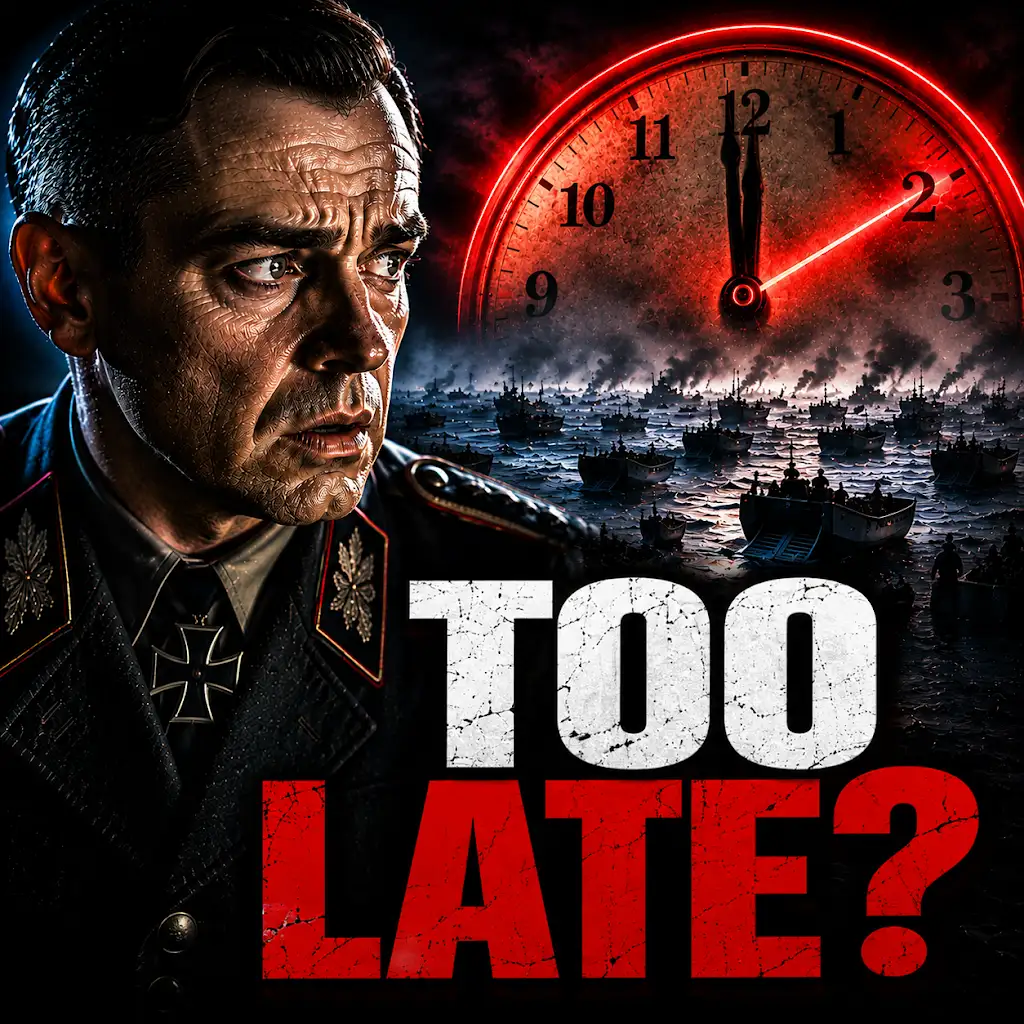
Field Marshal Erwin Rommel, the “Desert Fox,” arrived in Normandy with a singular, audacious vision. His primary objective was not merely to defend the coastline but to shatter the Allied invasion at the water’s edge, to exploit the chaos of their landing and turn it into a catastrophic defeat for them. His strategic thinking, honed in the arid deserts of North Africa, was adapted, albeit with significant constraints, to the hedgerow-filled bocage of Northern France. The story of Rommel’s panzer strategy in Normandy is one of brilliant foresight clashing with logistical realities, innovative ideas against overwhelming enemy might, and ultimately, a valiant but doomed defense.
Field Marshal Rommel’s appointment to inspect and then command Army Group B in early 1944 was a direct response to growing concerns within the German High Command regarding the perceived weakness of the Atlantic Wall. While Adolf Hitler had envisioned a formidable, unbroken line of fortifications stretching from Norway to the Spanish border, the reality on the ground was far more piecemeal and, in many sectors, particularly Normandy, significantly underdeveloped. Rommel, with his reputation for aggressive action and his keen understanding of mobile warfare, was tasked with transforming this defensive barrier into a truly impregnable fortress.
The Atlantic Wall: A Grand Vision, a Fragmented Reality
The concept of the Atlantic Wall was born out of Hitler’s desire to prevent a repeat of the costly Allied landings on the continent experienced during World War I. It was envisioned as a multi-layered defense system, incorporating concrete bunkers, pillboxes, anti-tank obstacles, minefields, and coastal artillery batteries. The idea was to make any amphibious assault prohibitively costly for the enemy, forcing them to either abandon the idea or suffer devastating losses.
Hitler’s Strategic Objectives
Hitler’s primary strategic objective was to deter an Allied invasion altogether. He believed that by presenting an unassailable defensive front, the Western Allies would be compelled to focus their efforts elsewhere, perhaps on a protracted blockade or a distant secondary front. The Atlantic Wall was intended as a powerful psychological and physical deterrent.
The Reality on the Ground
However, the actual construction and manning of the Atlantic Wall were plagued by a myriad of problems. Resources were stretched thin, and manpower was diverted to the Eastern Front. Many sectors of the wall were heavily fortified, but others, especially the less strategically significant coastal areas, remained sparsely defended. The sheer length of the coastline presented an immense challenge for effective fortification and troop deployment.
Rommel’s Appointment and Assessment
Upon his arrival, Rommel was acutely aware of the shortcomings of the existing defenses. He recognized that the Atlantic Wall, as it stood, was more of a symbolic barrier than a genuinely impenetrable one. His initial inspections revealed significant gaps and weaknesses, particularly in the areas he was assigned to command. He understood that a static defense alone would not suffice against the anticipated Allied onslaught.
The “Desert Fox” Arrives in Normandy
Rommel’s experience in North Africa had taught him the critical importance of aggressive, decisive action. He believed that a purely defensive strategy was doomed to failure in the face of overwhelming Allied air and naval superiority. He saw the need for mobile reserves, specifically panzer divisions, positioned to strike hard and fast at the point of Allied penetration.
Critiquing the Existing Defenses
Rommel was deeply critical of the decentralized command structure and the perceived complacency of some commanders. He advocated for a more unified approach to defense, with clear lines of responsibility and rapid response capabilities. He also expressed concerns about the inadequate distribution of reserves, which he believed were too far inland to effectively counter an amphibious landing.
Rommel’s Strategic Doctrine: Defense in Depth and Counterattack
Rommel’s strategic thinking was fundamentally different from that of many of his contemporaries. While the prevailing German doctrine often emphasized a deep, layered defense to absorb enemy attacks and bleed them dry, Rommel championed a more proactive approach. He believed that the best defense was a strong offense, or at least, a meticulously planned and executed counteroffensive.
The Concept of Defense in Depth
While Rommel’s focus was on the counterattack, he did not entirely disregard defensive principles. His concept of defense in depth involved creating multiple lines of resistance, designed to channel and slow down an enemy advance rather than to stop it outright. This would allow time for reserves to mobilize and engage the enemy in a decisive battle on favorable terms.
Layered Defensive Systems
Rommel envisioned a series of defensive positions, beginning with the heavily fortified beaches themselves. Behind the beaches, he planned to establish secondary defensive lines in the interior, utilizing the natural advantages of the terrain, such as the hedgerows of Normandy, to create formidable obstacles.
Exploiting Terrain Features
The bocage country of Normandy, with its dense hedgerows, narrow lanes, and small fields, was a feature Rommel recognized as both a challenge and an opportunity. While it would hinder large-scale armored formations, it also offered excellent defensive positions and ambush opportunities for well-prepared defenders.
The Crucial Role of the Counterattack
Rommel’s core strategic tenet was the swift and decisive counterattack. He believed that the Allied invasion would be at its most vulnerable in the immediate aftermath of landing, when their forces were disorganized, their supply lines were precarious, and their air superiority might be temporarily contested.
Striking the Amphibious Spearhead
His primary goal was to engage and destroy the Allied beachhead before they could consolidate their positions and bring their full weight to bear. This would involve launching panzer divisions at the enemy landing zones, exploiting any breaches in their defenses, and pushing them back into the sea.
The Importance of Reserves
Crucially, Rommel argued for the strategic placement of his mobile reserves, particularly his panzer divisions, closer to the coast. He felt that the Allied air power would make it incredibly difficult for these divisions to move forward to the front lines once the invasion had begun if they were stationed too far inland.
Panzer Division Deployment: The Great Debate
One of the most contentious aspects of Rommel’s strategy in Normandy revolved around the deployment of the crucial panzer divisions. Rommel vehemently advocated for these powerful armored formations to be positioned within striking distance of the coast, ready to launch immediate counterattacks. However, he faced significant opposition from other senior German commanders, including Gerd von Rundstedt, the nominal commander of all German forces in the West, who favored a more traditional, deep reserve strategy.
Rommel’s Preferred Strategy: Coastal Proximity
Rommel understood that the speed and shock value of panzer divisions were their greatest assets. To effectively utilize these assets against an amphibious landing, they needed to be close enough to the beaches to launch their assault before the Allies could establish a secure lodgment and reinforce their positions.
The Need for Immediate Intervention
He believed that any delay in committing the panzers would allow the Allies to consolidate their gains, bring in more troops and equipment, and negate the initial shock of their landing. His vision was to hit them hard and fast, disrupting their advance and preventing them from breaking out of their beachhead.
Concerns over Allied Air Superiority
Rommel was acutely aware of the devastating impact of Allied air power on troop movements. He argued that moving panzer divisions from deep inland reserves to the coast after the invasion had begun would be an incredibly dangerous and time-consuming undertaking, making them vulnerable to aerial attack at every turn.
von Rundstedt’s Counter-Argument: Deep Reserves
Field Marshal von Rundstedt, a highly respected but more conservative commander, held a different view. He believed that the Allied air superiority was so overwhelming that committing panzer divisions to the coast prematurely would simply expose them to destruction before they could even engage the enemy.
Protecting the Panzer Reserve
His strategy was to keep the panzer divisions as a deep reserve, well behind the front lines, where they would be protected from air attack. They would then be committed only after the main thrust of the Allied invasion had been identified and the immediate threat to the coast had been assessed.
The “Wait and See” Approach
This “wait and see” approach, while seemingly prudent from a perspective of preserving valuable armored assets, ultimately played into the hands of the Allies, allowing them to gain a foothold and build up their strength. The debate over panzer deployment would become a critical factor in the initial stages of the Normandy campaign.
The Reality of D-Day: The Failed Counterattack
On June 6, 1944, the Allied invasion of Normandy, codenamed Operation Overlord, commenced. Rommel, anticipating the invasion, had taken a calculated risk by leaving his command to visit his family in Germany. However, the German defenses, while formidable in places, were ultimately outmatched by the sheer scale and coordination of the Allied assault.
The Allied Landings
The Allied forces landed on five designated beaches: Utah, Omaha, Gold, Juno, and Sword. The landings were met with fierce resistance, particularly on Omaha Beach, where the German defenses were heavily fortified, and the terrain favored the defenders. Despite heavy casualties, the Allies managed to establish a foothold on all five beaches.
Beach Defenses and Resistance
The German defenders, often outnumbered but well-entrenched, fought tenaciously. They utilized their bunkers, machine gun nests, and artillery to inflict heavy casualties on the advancing Allied troops. However, the Allies’ overwhelming air and naval bombardment, combined with their superior numbers and determination, gradually wore down the German resistance.
The Importance of Air and Naval Superiority
The Allied air forces maintained constant surveillance and provided crucial support for the ground troops. Their naval bombardment softened up beach defenses and provided covering fire. This combined superiority in the air and at sea was a critical factor in the success of the landings.
Rommel’s Attempts to Rally the Panzers
Upon receiving news of the invasion, Rommel immediately rushed back to Normandy. He recognized the critical need to commit his panzer reserves to push back the Allied beachhead. However, the protracted debate over their deployment and the logistical challenges of moving them under constant Allied air attack hampered his efforts.
Delays and Misinformation
The German command structure was slow to react. There was confusion and miscommunication regarding the scale of the invasion and the exact locations of the landings. This led to crucial delays in releasing the panzer divisions, allowing the Allies to gain precious time.
The Impact of Air Interdiction
The Allied air forces effectively targeted German troop movements. The panzer divisions, when finally ordered into action, were subjected to relentless aerial bombardment, significantly disrupting their formations and reducing their combat effectiveness. Many tanks and other armored vehicles were destroyed before they even reached the front lines.
Rommel’s Strategic Legacy in Normandy
Despite the ultimate German defeat in Normandy, Rommel’s strategic vision and his proactive approach to defense left an indelible mark on the campaign. His insistence on mobile reserves and the importance of decisive counterattacks, while not fully realized due to various factors, highlighted a more dynamic approach to warfare.
The Missed Opportunity
Rommel’s strategy was designed to exploit the inherent vulnerabilities of an amphibious landing. Had his panzer divisions been positioned closer to the coast and been allowed to engage the Allies earlier and with greater force, the outcome of D-Day might have been very different. His strategic vision represented a potential turning point, a missed opportunity for the German defense.
The “What If” Scenario
Historians continue to debate the “what if” scenarios of the Normandy campaign. The possibility exists that a more aggressive and coordinated panzer counterattack, as envisioned by Rommel, could have inflicted such heavy casualties on the initial Allied landings that the invasion might have been halted or at least significantly delayed.
The Role of Allied Intelligence
It is also important to acknowledge the role of Allied intelligence, particularly the success of Operation Fortitude, which deceived the Germans into believing the main invasion would occur elsewhere. This deception played a crucial role in the deployment of German forces and in Rommel’s own strategic planning.
Adaptability and Innovation in Warfare
Rommel’s approach to the defense of Normandy, though ultimately unsuccessful, demonstrated his ability to adapt his battlefield-tested strategies to a new and challenging environment. His understanding of combined arms warfare and the critical role of mobile reserves remained central to his thinking, even as he faced the overwhelming might of the Allied war machine.
Lessons Learned for Both Sides
The Normandy campaign provided valuable lessons for both sides. The Allies learned the importance of meticulous planning, overwhelming logistical support, and the decisive impact of air superiority. The Germans, on the other hand, were forced to confront the limitations of static defense against a technologically superior and numerically dominant enemy, and the devastating consequences of internal command disagreements.
A Strategic Mind at Odds with Reality
Ultimately, Rommel’s panzer strategy in Normandy was a testament to his strategic brilliance and his unwavering belief in decisive action. However, it was a strategy that collided with the harsh realities of dwindling resources, Allied air and naval supremacy, and a German command structure struggling with indecision and internal conflict. While the “Desert Fox” was unable to conjure victory from the hedgerows of Normandy, his strategic insights continue to be studied and debated, offering a fascinating glimpse into a brilliant military mind confronting an insurmountable challenge.