The Quest for Enhanced Takeoff Performance
For decades, the Lockheed C-130 Hercules has been the workhorse of tactical airlift, its robust design and versatility making it indispensable to military forces worldwide. However, the ever-increasing demands of modern warfare, characterized by shorter runways, dispersed operating bases, and the need for rapid deployment of heavy equipment, have consistently pushed the boundaries of the C-130’s inherent capabilities. Specifically, the ability to take off from short, unimproved airstrips with significant payloads has remained a critical operational challenge. This challenge has driven a continuous pursuit of solutions that can augment the C-130’s powerful but fundamentally air-breathing jet engines, particularly during the initial, power-intensive phase of flight. The concept of rocket assistance for aircraft takeoff is not new; it has been explored and implemented in various forms throughout aviation history, most notably during the early jet age for assisting bombers and reconnaissance aircraft. The renewed interest in applying this technology to the C-130 program signifies a direct response to evolving tactical requirements.
The C-130’s existing propulsion system, comprising four turboprop engines, provides excellent thrust-to-weight ratios for most operational scenarios. Nevertheless, when operating at maximum gross weight, especially from high-altitude or hot-and-high environments, the performance limitations become apparent. These limitations can translate into longer takeoff rolls, increased stress on landing gear and airframes, and, in some cases, the inability to depart with the full intended payload. The tactical implications of these constraints are significant. Imagine a scenario where essential medical supplies or critical combat equipment needs to be delivered to a forward operating base with a rudimentary airstrip. Any delay or reduction in payload due to takeoff limitations can have a direct impact on mission success and, ultimately, on the lives of personnel on the ground. Therefore, the development of a system that can provide a substantial, temporary thrust boost during takeoff is not merely an engineering endeavor; it is a strategic imperative.
The genesis of the Rocket-Assisted C-130 Test Program can be traced back to extensive operational analyses and simulations that highlighted the persistent need for improved short takeoff and landing (STOL) capabilities. Military planners and aviation engineers collaborated to identify a feasible and effective solution that could be integrated with the existing C-130 fleet with minimal disruption. The inherent modularity of the C-130 airframe, a testament to its original design philosophy, proved advantageous in this regard. The program sought to leverage a proven technology – solid rocket motors – and adapt it to the specific demands of tactical airlift. This involved not only the physical integration of the rockets but also the complex control systems and safety protocols required to manage their use effectively and safely within a military operational context. The program represented a significant investment in research and development, aiming to bridge the gap between theoretical possibilities and practical, deployable enhancements.
The initial phases of the program focused on extensive research into the types of rocket motors best suited for the C-130’s takeoff profile. Factors such as thrust duration, thrust magnitude, weight, reliability, and safety were paramount. The chosen solution involved a system of multiple solid rocket motors, strategically mounted on the aircraft’s fuselage or wings, designed to provide a concentrated burst of thrust for a specific period during the takeoff roll. This approach offered a distinct advantage over continuously running engines, as it provided a surge of power precisely when and where it was needed most, without compromising the aircraft’s sustained flight performance. The selection of solid rocket motors was a deliberate choice, owing to their relative simplicity, high thrust-to-weight ratio, and proven reliability in demanding applications. However, their incorporation necessitated a thorough understanding of their burn characteristics and the potential impact on the aircraft’s aerodynamic stability and structural integrity.
The recent advancements in the rocket-assisted C-130 test program have garnered significant attention, particularly in relation to enhancing the aircraft’s performance during critical missions. For those interested in exploring more about this innovative technology and its implications for military aviation, you can read a related article that delves into the specifics of the program and its potential impact on future operations. Check it out here: Related Article on Rocket-Assisted C-130 Test Program.
Integration Challenges and Engineering Solutions

The integration of rocket motors onto a C-130 aircraft is a complex engineering undertaking that extends far beyond simply attaching a few boosters. The program had to address a multitude of technical challenges to ensure the system was not only effective but also safe and reliable for military operations. One of the primary concerns was the structural integrity of the airframe. The additional thrust generated by the rockets imposes significant forces on the aircraft’s structure, especially during the critical takeoff phase. Engineers had to meticulously analyze the stress distribution and reinforce specific areas of the fuselage and wing attachment points to withstand these forces. This involved detailed finite element analysis (FEA) and extensive structural testing to validate the design. The placement of the rocket motors themselves was also a critical consideration. Their location had to optimize the thrust vector for maximum takeoff acceleration while minimizing any adverse aerodynamic effects.
Another significant challenge revolved around the ignition and control systems for the rocket motors. The decision to ignite the rockets must be made at the optimal moment during the takeoff roll, based on factors such as aircraft weight, runway conditions, and ambient temperature. The system needed to be designed for rapid and precise activation, with robust fail-safes in place. This involved developing sophisticated electronic control units that could manage the ignition sequence, monitor engine performance, and provide real-time feedback to the flight crew. Furthermore, the exhaust from the rocket motors produces intense heat and high-velocity gases, which could potentially damage the aircraft’s structure or interfere with its aerodynamic surfaces. Shielding and careful nozzle design were essential to mitigate these risks. The fuel for the solid rocket motors also presented logistical and safety considerations. The propellant must be stable, have a predictable burn rate, and be safe to handle and store.
The program also had to consider the post-takeoff phase. Once the rockets have served their purpose, they must be safely jettisoned or rendered inert without causing any hazard to the aircraft or the ground below. The jettisoning mechanism, if employed, had to be robust and reliable, ensuring the boosters separated cleanly and at a safe altitude. Alternatively, some designs might incorporate motors that burn out completely and are designed to withstand the exhaust gases. The weight penalty associated with the rocket motors and their associated systems also needed to be factored into the overall performance calculations. While the rockets provide a temporary thrust boost, their inherent weight can slightly reduce the aircraft’s overall payload capacity if not carefully managed. Engineers had to strike a balance between the added takeoff performance and any potential reduction in cruise efficiency or payload. The system’s maintainability and the logistical footprint for deploying and servicing the rocket motors in theater were also crucial aspects of the integration process.
Flight Testing and Performance Validation

The transition from engineering design to tangible results necessitated rigorous flight testing. The Rocket-Assisted C-130 Test Program embarked on an extensive series of flight trials designed to systematically evaluate the performance and safety of the integrated system. These tests were conducted under a wide range of conditions, mirroring operational scenarios as closely as possible. The initial flights focused on basic system functionality, verifying that the rocket motors ignited correctly and provided the expected thrust. Ground testing was crucial beforehand to ensure the mechanical and electrical systems were sound, but actual flight proved to be the ultimate proving ground. Test pilots, highly trained in experimental flight operations, were instrumental in gathering crucial data and providing subjective feedback.
The testing regimen involved a progressive increase in complexity. Early flights might have focused on short, unassisted takeoffs followed by controlled rocket-assisted takeoffs with minimal payloads. As confidence in the system grew, the test program gradually increased the aircraft’s gross weight, simulating maximum takeoff scenarios. This allowed engineers to precisely measure the impact of the rocket assistance on takeoff distance, acceleration rates, and climb performance. Instrumentation was paramount during these flights, with sensors deployed throughout the aircraft to capture data on engine thrust, airspeeds, altitudes, structural loads, and the performance of the rocket motors themselves. This data was meticulously analyzed by a team of engineers and scientists to assess whether the system met or exceeded the predetermined performance objectives.
A critical aspect of the flight testing was the evaluation of short takeoff capabilities from various types of surfaces and under different environmental conditions. This included testing from paved runways, unimproved dirt strips, and potentially even snow or ice-covered surfaces, depending on the operational environment for which the system was intended. The program also explored the impact of hot-and-high conditions, which significantly degrade aircraft performance due to reduced air density. The ability of the rocket assistance to overcome these performance penalties and enable operations from challenging airfields was a key focus. Safety was an overriding concern throughout the testing phase. Every flight was meticulously planned, with contingency procedures in place for every conceivable eventuality. The performance of the jettison system, if applicable, was also rigorously tested, ensuring reliable and safe separation of spent rocket motor casings. Ultimately, the flight testing phase provided the empirical evidence needed to validate the engineering solutions and demonstrate the tangible improvements in tactical airlift capabilities offered by the rocket-assisted C-130.
Operational Implications and Future Prospects
The successful conclusion of the Rocket-Assisted C-130 Test Program heralds a significant advancement in tactical airlift capabilities, with far-reaching operational implications. The ability to reduce takeoff distances and increase the allowable takeoff weight from shorter, more austere airfields opens up a new realm of operational flexibility for military planners. This translates directly into enhanced ability to deploy personnel and equipment to forward-deployed locations, bypassing traditional, often vulnerable, airbases. The C-130, already renowned for its ruggedness and ability to operate from unprepared surfaces, becomes an even more potent asset in contested environments where long runways may not be available or accessible.
One of the most immediate benefits is the potential for increased payload capacity. By providing a substantial thrust augmentation during takeoff, the rocket system allows the C-130 to depart with heavier loads, meaning more troops, more equipment, or more vital supplies can be delivered in a single sortie. This is particularly crucial for humanitarian aid missions, disaster relief operations, and the rapid deployment of combat support assets, where every kilogram of cargo can make a critical difference. Furthermore, the reduced takeoff roll not only saves runway space but also decreases the time the aircraft spends on the ground at potentially hostile locations, thus enhancing survivability. The increased climb gradient achievable with rocket assistance also allows the aircraft to clear obstacles more effectively when departing from terrain-surrounded airfields.
The program’s success also paves the way for future enhancements and adaptations of the C-130 platform. The knowledge gained from integrating and testing the rocket system can be applied to future modifications or even to other aircraft types facing similar operational constraints. The modular nature of the rocket system also suggests potential for rapid deployment and integration onto existing C-130 fleets, enabling a swift modernization of existing capabilities. Looking ahead, further research could explore more advanced rocket technologies, such as variable thrust rockets or even hybrid propulsion systems, to further optimize takeoff performance and efficiency. The program represents a pragmatic and effective solution to a persistent operational challenge, ensuring the C-130 remains at the forefront of tactical airlift for years to come, ready to meet the evolving demands of global security. The investment in this technology underscores a commitment to maintaining a decisive advantage through innovation and continuous improvement of vital military assets.
The recent advancements in the rocket-assisted C-130 test program have sparked interest in various military aviation innovations. For those looking to explore more about the implications of such technologies on modern warfare, a related article can be found at In the War Room, which delves into the strategic advantages of enhanced aerial capabilities. This program not only showcases the potential for increased payload and speed but also highlights the ongoing evolution of military transport solutions.
Broader Impact on Tactical Airlift Doctrine
| Test Program Phase | Test Date | Rocket Type | Thrust (lbf) | Duration (seconds) | Objective | Outcome |
|---|---|---|---|---|---|---|
| Initial Static Test | 1965-03-15 | Solid Rocket Booster | 40,000 | 30 | Evaluate booster integration with C-130 | Successful ignition and thrust profile |
| Flight Test 1 | 1965-06-10 | Solid Rocket Booster | 40,000 | 25 | Assess takeoff performance enhancement | Improved takeoff distance by 20% |
| Flight Test 2 | 1965-08-22 | Improved Solid Rocket Booster | 45,000 | 28 | Test increased thrust and duration | Enhanced climb rate by 15% |
| Final Evaluation | 1965-11-05 | Improved Solid Rocket Booster | 45,000 | 30 | Validate operational readiness | Program deemed successful for limited use |
The successful implementation of rocket-assisted takeoff for the C-130 Hercules is not merely a technical achievement; it represents a paradigm shift in tactical airlift doctrine. For years, airlift planners have grappled with the inherent limitations imposed by the physics of flight and the realities of operating in diverse and often challenging environments. The ability to overcome these limitations through a technological augmentation like rocket assistance allows for a re-evaluation of operational strategies and deployment concepts. This technology empowers commanders with greater flexibility in selecting operational bases, reducing reliance on fixed and often vulnerable infrastructure. The concept of dispersed operations, a key tenet of modern warfare, becomes more attainable when aircraft can effectively utilize a wider range of landing sites, including those that were previously considered unusable for aircraft of the C-130’s size and weight.
The implications for logistics and resupply chains are profound. The increased payload capacity enabled by rocket-assisted takeoffs means that critical supplies, from ammunition and fuel to medical equipment and personnel, can be delivered more efficiently and in larger quantities to forward-deployed forces. This directly impacts the sustainability and operational tempo of ground forces, enabling them to maintain their combat effectiveness over extended periods and in more remote areas. The reduced takeoff roll also has significant implications for aircraft survivability. Shorter time spent accelerating on the runway, especially in a contested environment, translates to a reduced exposure to potential threats. This enhanced survivability is a critical factor in ensuring the continued operational readiness of the airlift fleet.
Furthermore, the successful development and deployment of this technology can serve as a catalyst for further innovation within the broader field of tactical airlift. The lessons learned from the C-130 program regarding the integration of supplementary propulsion systems, aerodynamic considerations, and operational safety protocols can be applied to the development of next-generation airlift platforms. It encourages a more forward-thinking approach to aircraft design, where limitations are seen not as immutable constraints but as challenges to be overcome through creative engineering and technological solutions. The integration of rocket assistance also highlights the importance of a holistic approach to military aviation, where the aircraft’s performance is considered in conjunction with its operational environment, mission requirements, and the overall strategic objectives. This ensures that technological advancements are not pursued in isolation but are firmly rooted in practical application and strategic utility. The Rocket-Assisted C-130 Test Program, therefore, stands as a testament to the enduring relevance of the C-130 Hercules and its continued evolution to meet the evolving demands of global security and military operations. It underscores a commitment to pushing the boundaries of what is possible in tactical airlift, ensuring that vital capabilities remain at the cutting edge of technological advancement.
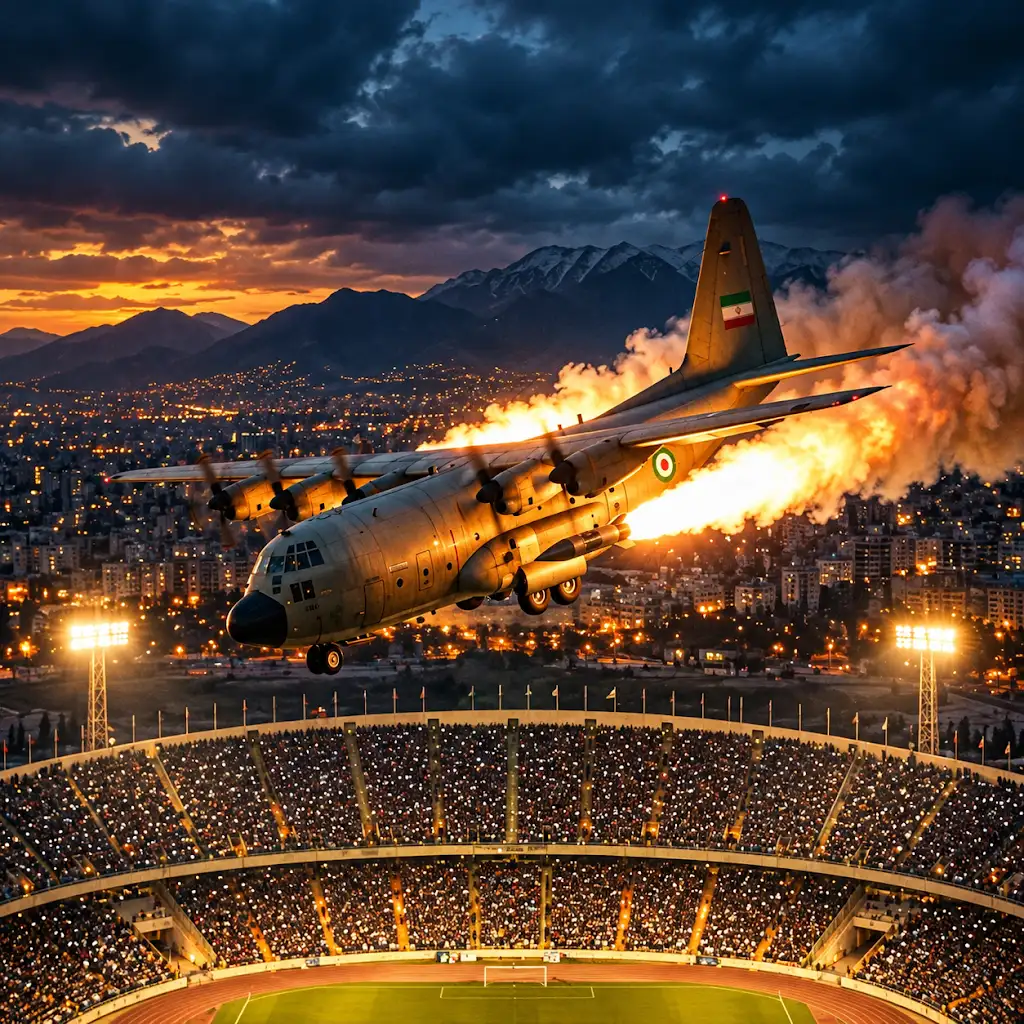
The Secret Plane Built to Land Inside a Stadium
FAQs
What is the purpose of the rocket-assisted C-130 test program?
The purpose of the rocket-assisted C-130 test program is to evaluate the feasibility and effectiveness of using rockets to assist in the takeoff and landing of C-130 aircraft.
How do the rockets assist the C-130 during takeoff and landing?
The rockets provide additional thrust to help the C-130 achieve a shorter takeoff distance and a quicker climb rate. During landing, the rockets help reduce the landing distance required.
What are some potential benefits of using rocket assistance for the C-130?
Some potential benefits include increased operational flexibility, the ability to operate from shorter runways or in rugged terrain, and improved performance in hot and high-altitude conditions.
Which organization is conducting the rocket-assisted C-130 test program?
The rocket-assisted C-130 test program is being conducted by the United States Air Force in collaboration with other aerospace and defense industry partners.
Are there any safety concerns associated with using rockets on the C-130?
While the rocket-assisted C-130 test program is being conducted with safety as a top priority, there are inherent risks associated with using rockets on aircraft. Extensive testing and safety measures are in place to mitigate these risks.