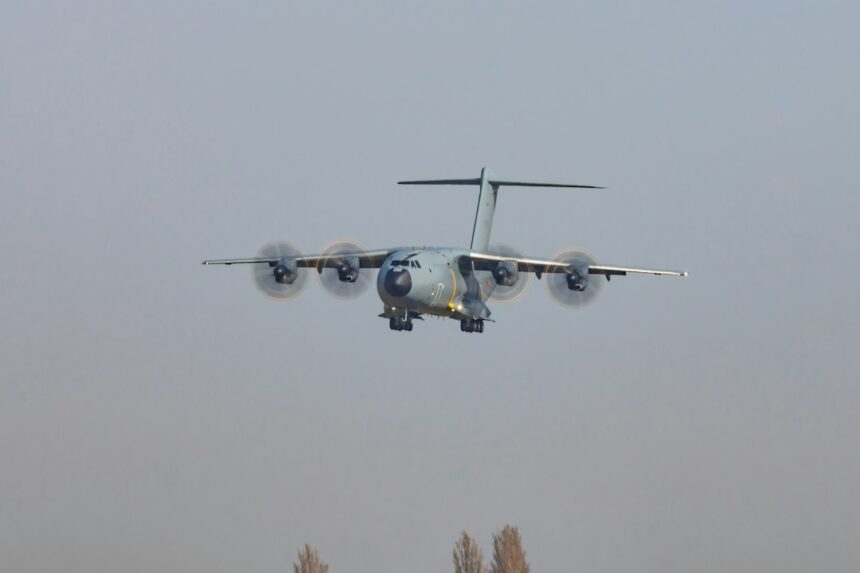
The Lockheed C-130 Hercules, a titan of tactical airlift for decades, is renowned for its versatility and robust performance across a multitude of terrains and operational environments. Its ability to operate from austere and short airfields has been a cornerstone of its success, enabling critical resupply and troop insertion missions in remote and challenging locations. However, even for a platform as capable as the C-130, operating from extremely short runways presents inherent limitations, particularly concerning landing distances. The physics of flight dictate that a heavier aircraft, or one landing at a higher speed, will require a greater distance to decelerate to a stop. This limitation can be a significant impediment in scenarios where friendly forces are operating in areas with limited infrastructure or where enemy action has degraded existing runways. To overcome these constraints and further enhance the C-130’s short-runway capabilities, the concept of rocket-assisted landings, often referred to as JATO (Jet Assisted Take Off) or RATO (Rocket Assisted Take Off) when applied to landing, has been explored and, in some historical contexts, implemented. While JATO is more commonly associated with takeoffs, the principles of using rocket thrust to augment deceleration can be applied to landing scenarios, offering a dramatic reduction in required landing roll. This article delves into the mechanics, historical precedents, practical applications, challenges, and future potential of employing rocket assistance for C-130 landings, focusing on its ability to enhance short-runway operations.
The Physics of Deceleration and Rocket Augmentation
The fundamental challenge in landing an aircraft on a short runway is achieving a rapid and safe deceleration. When a C-130 touches down, its kinetic energy is substantial. This energy must be dissipated through a combination of aerodynamic drag (from the wings and deployed speed brakes), rolling resistance (from the tires on the runway), and reverse thrust from its engines. For very short runways, the available distance may not be sufficient for these conventional methods to bring the aircraft to a halt before overrunning the runway. This is where rocket assistance becomes a powerful, albeit temporary, solution.
Understanding Kinetic Energy and Braking Force
An aircraft’s kinetic energy, the energy of motion, is directly proportional to its mass and the square of its velocity. Mathematically, this is represented by the formula KE = 1/2 m v², where ‘m’ is mass and ‘v’ is velocity. A heavier C-130, especially when fully loaded with cargo or troops, possesses a considerable amount of kinetic energy upon landing. The braking force available is limited by the friction between the tires and the runway, the effectiveness of the aircraft’s braking systems (wheel brakes), and the ability of the engines to generate reverse thrust.
The Role of Rocket Thrust in Deceleration
Rocket motors, when ignited, produce a significant and immediate thrust. In a landing assist scenario, these rockets would be oriented to produce a forward-directed thrust relative to the aircraft’s direction of travel. This forward thrust, when applied during the landing roll, acts as a powerful braking force by counteracting the aircraft’s forward momentum. Instead of solely relying on forces that oppose motion, rocket assistance actively pushes against that motion, thereby dramatically increasing the rate of deceleration. The magnitude of the thrust provided by the rockets can be precisely controlled, allowing for a tailored reduction in landing distance. This is a crucial advantage, as it offers a solution beyond the inherent limitations of conventional aerodynamic and mechanical braking systems. The effectiveness of rocket assistance is particularly pronounced at higher landing speeds, where the kinetic energy is greatest and the demand for braking force is most critical. By reducing the velocity of the aircraft more rapidly in the initial stages of the landing roll, the overall distance required to stop is significantly diminished.
Rocket-assisted landings for the C-130 have been a topic of interest in military aviation, particularly for enhancing the aircraft’s performance in short or rough field landings. For a deeper understanding of the advancements and applications of this technology, you can read a related article on the subject at In The War Room. This resource provides insights into the innovative methods being employed to improve the operational capabilities of the C-130 in various environments.
Historical Precedents and Operational Deployments
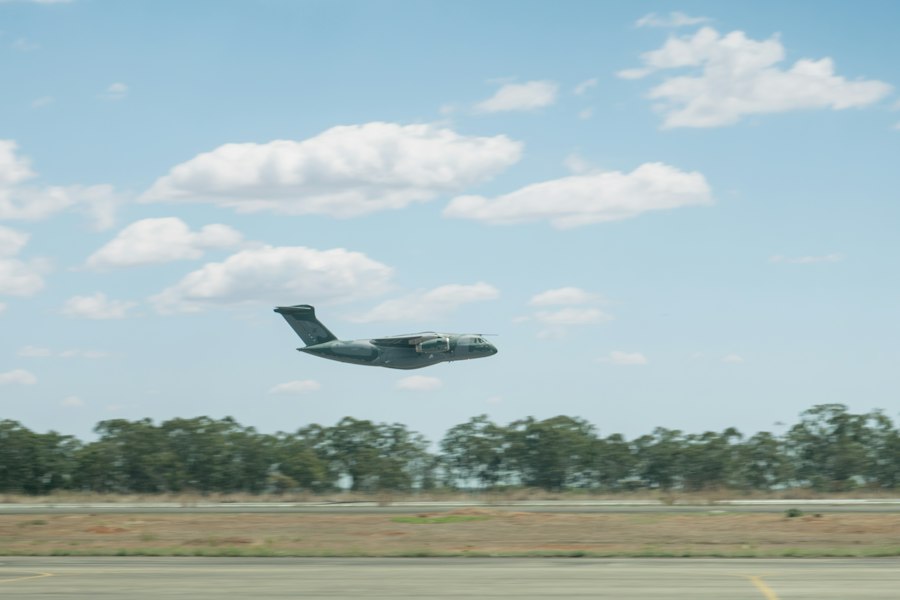
The concept of using rocket propulsion to assist aircraft in overcoming runway limitations is not new. While most famously associated with takeoffs, particularly during World War II to enable heavily laden aircraft to leave short or unprepared fields, the underlying principle of augmenting thrust for critical flight phases has a long history. The application to landings, though less common, has also been explored and, in specific, albeit limited, operational contexts, utilized.
World War II and the Dawn of JATO
During World War II, the need to launch aircraft from aircraft carriers with insufficient deck space or from hastily constructed forward airfields became paramount. JATO units, essentially solid-fuel rockets, were developed and employed to provide the extra thrust needed for a successful takeoff. These units were typically attached externally to the aircraft and jettisoned after their fuel was expended. The success of JATO in takeoffs demonstrated the immense potential of rocket propulsion to augment aircraft performance in overcoming critical speed and distance requirements. This early success laid the groundwork for considering similar applications in other phases of flight.
Early Exploration of Landing Assist
While takeoffs were the primary focus, the potential for rocket assistance in landings was also recognized. The logic was straightforward: if rockets could help an aircraft accelerate to flying speed more quickly, they could also help it decelerate more rapidly. However, the complexities of integrating rocket systems for landing, particularly concerning reliability, safety, and the need for precise timing, presented greater challenges than for takeoffs. Early experiments and theoretical studies explored various configurations and methods for employing rockets to aid in deceleration. These investigations were often driven by specific operational needs, such as accessing remote bases or operating from damaged airfields.
Specific C-130 Applications and Demonstrations
The C-130 Hercules, with its inherent short-field capabilities and extensive operational history, was a natural platform for such investigations. While not a standard operational fit, the U.S. Air Force and its predecessor organizations have conducted tests and demonstrations of rocket-assisted C-130 operations. These demonstrations, though often confined to testing environments, showcased the remarkable reduction in landing distance achievable with rocket augmentation. The sight of a C-130, even a heavy one, coming to a halt in an exceptionally short distance was a powerful testament to the technology’s potential. These historical deployments, even if limited in scope, provided invaluable data and experience, highlighting both the advantages and the practical considerations of using rockets for landing assist.
Practical Applications and Operational Scenarios

The ability to significantly reduce the landing roll of a C-130 opens up a range of new operational possibilities, particularly in environments where infrastructure is minimal, compromised, or non-existent. These scenarios are often characterized by the need for rapid deployment of personnel and materiel to front-line positions or humanitarian aid to disaster-stricken regions.
Accessing Austere and Unprepared Airfields
The primary advantage of rocket-assisted landings lies in the ability to utilize airfields that would otherwise be too short for a C-130. This includes forward operating bases (FOBs) with very limited runway length, makeshift landing strips created in remote areas, or even degraded runways where a significant portion has been damaged. For military operations, this translates to the ability to deliver critical supplies, reinforcements, and equipment directly to the point of need, bypassing the requirement for longer, more established airbases that might be further from the operational area and more vulnerable to attack. In humanitarian aid scenarios, this could mean reaching isolated communities cut off by natural disasters, allowing for the delivery of food, medicine, and emergency personnel directly to affected populations.
Enhancing Mission Flexibility and Survivability
Rocket-assisted landings provide a significant boost to mission flexibility. Commanders gain the option to utilize a wider array of landing sites, allowing for greater strategic surprise and adaptability. The ability to land in more confined spaces also enhances survivability. Aircraft can operate from smaller, less conspicuous locations, reducing their exposure to enemy observation and attack. Furthermore, in scenarios where an aircraft may have sustained battle damage affecting its braking systems, rocket assistance could provide a crucial margin of safety to still bring the aircraft to a halt within the available runway length. This could be the difference between a safe landing and a catastrophic overrun.
Rapid Turnaround and Redeployment Capabilities
Beyond just landing, the ability to stop quickly can also facilitate faster aircraft turnaround and redeployment. With a shorter landing roll, aircraft can clear the runway more rapidly, allowing subsequent aircraft to land without delay. This is particularly important in high-tempo operations where maximizing aircraft utilization is critical. The ability to land and depart from shorter strips also opens up the possibility of operating from locations that might not have extensive taxiways or parking areas, streamlining ground operations.
Challenges and Considerations for Implementation
While the benefits of rocket-assisted landings are clear, the implementation of such a system on the C-130 is not without its significant challenges. These range from the technical complexities of integrating and operating the rocket systems to the logistical and safety considerations inherent in using powerful pyrotechnics in a critical flight phase.
Technical Integration and System Reliability
Integrating rocket motors into the C-130’s existing airframe requires careful engineering. The rockets must be securely mounted, allowing for their rapid and reliable deployment. The ignition system must be robust and capable of precise timing, ensuring that the rockets fire at the optimal moment during the landing roll. The weight and drag introduced by the rocket pods also need to be factored into the aircraft’s performance calculations. Furthermore, the reliability of the rocket motors themselves is paramount. A failure to ignite or a premature burnout could have severe consequences. Extensive testing and validation would be required to ensure the system meets rigorous safety and performance standards.
Safety Protocols and Crew Training
The use of rockets on a landing aircraft introduces significant safety considerations. The potential for fire, explosion, or uncontrolled trajectories of spent rocket casings must be meticulously addressed. Strict safety protocols for handling, loading, and arming the rocket systems would be essential. Crew training would also need to be comprehensive, ensuring that pilots and ground personnel are fully proficient in the operation of the system. This includes understanding the effects of rocket thrust on aircraft handling during deceleration, the procedures for emergency situations, and the correct sequencing of actions. The psychological aspect of operating with such a powerful and potentially volatile system also needs to be considered, requiring thorough acclimatization and confidence-building exercises.
Logistical Support and Cost Implications
The operational deployment of rocket-assisted landings would necessitate a robust logistical support infrastructure. This includes the manufacturing, storage, transportation, and maintenance of the rocket motors themselves. These are specialized consumables, and their widespread deployment would require significant investment in production and supply chain management. The cost of purchasing and maintaining the rocket systems, as well as the training associated with their use, would also be a significant factor. A cost-benefit analysis would be crucial to determine if the operational advantages justify the increased expenditure. The availability of suitable runways, even with rocket assistance, could still be a limiting factor in some scenarios, and the decision to invest in such a system would hinge on the frequency and criticality of operations requiring it.
Rocket-assisted landings for C-130 aircraft have garnered significant attention for their potential to enhance operational capabilities in challenging environments. For a deeper understanding of this innovative technology and its implications for military aviation, you can explore a related article that discusses various advancements in aerial operations. This article provides insights into the mechanics and benefits of rocket assistance in landing scenarios, making it a valuable resource for those interested in the future of military transport. To read more, visit this article.
The Future of Short-Runway Operations and Rocketry
| Metric | Value | Unit | Description |
|---|---|---|---|
| Aircraft Model | C-130 Hercules | – | Military transport aircraft used for rocket-assisted landings |
| Rocket Assist Type | Rocket-Assisted Landing System (RALS) | – | System used to reduce landing distance by providing additional thrust |
| Rocket Thrust | 10,000 | lbf (pounds-force) | Approximate thrust provided by the rocket motors during landing |
| Landing Distance Reduction | 30-40 | % | Percentage reduction in landing roll distance with rocket assist |
| Rocket Burn Duration | 3-5 | seconds | Duration of rocket thrust application during landing |
| Approach Speed | 110-120 | knots | Typical approach speed for rocket-assisted C-130 landing |
| Landing Weight | 120,000 | lbs | Maximum landing weight of the C-130 during rocket-assisted landing |
| Runway Length Required (Without RALS) | 3,000-4,000 | feet | Typical runway length needed for a standard C-130 landing |
| Runway Length Required (With RALS) | 1,800-2,500 | feet | Reduced runway length needed when using rocket-assisted landing |
As technology advances and operational demands evolve, the concept of rocket-assisted landings for aircraft like the C-130 may see renewed interest or evolve into more sophisticated forms. The fundamental principles of augmenting deceleration remain relevant, and future innovations could address the current challenges and unlock even greater potential.
Advances in Rocket Propulsion Technology
Future developments in rocket propulsion could lead to more efficient, safer, and more controllable systems. Advances in materials science might enable lighter and more robust rocket casings, reducing the overall weight penalty. Improved propellant formulations could offer longer burn times or more precise thrust control. The development of “smart” rocket systems that can adjust thrust based on real-time sensor data could further enhance safety and effectiveness. The possibility of modular and easily deployable rocket pods that can be fitted to a variety of aircraft platforms could also emerge.
Hybrid Systems and Advanced Braking Technologies
The future might not necessarily involve solely relying on traditional rocket motors. Hybrid systems that combine rocket assistance with other advanced braking technologies could offer a more integrated and optimized solution. This could include advanced aerodynamic braking surfaces, active wheel braking systems that adapt to changing runway conditions, or even electromagnetic braking systems. The synergy between these different deceleration methods, augmented by precise rocket thrust, could offer unprecedented short-runway performance. The integration of artificial intelligence and advanced control algorithms could also play a significant role in optimizing the deployment and management of such hybrid systems.
The Enduring Need for Austere Operations
The demand for aircraft capable of operating from austere and short runways is unlikely to diminish. Geopolitical instability, the need for rapid humanitarian response, and the exploration of remote regions all point to a continued requirement for flexible and capable airlift. While advancements in conventional aircraft design and operational techniques will continue, the inherent physics of deceleration will always pose a challenge in extremely confined spaces. Rocket assistance, in some form, may well remain a viable and potent solution for overcoming these ultimate limitations, ensuring that the C-130, and its successors, can continue to deliver critical support where it is needed most, regardless of the runway conditions. The lessons learned from historical applications and the ongoing pursuit of technological innovation suggest that the concept of rocket augmentation for landings will continue to be a topic of interest and development in the pursuit of enhanced short-runway operations.
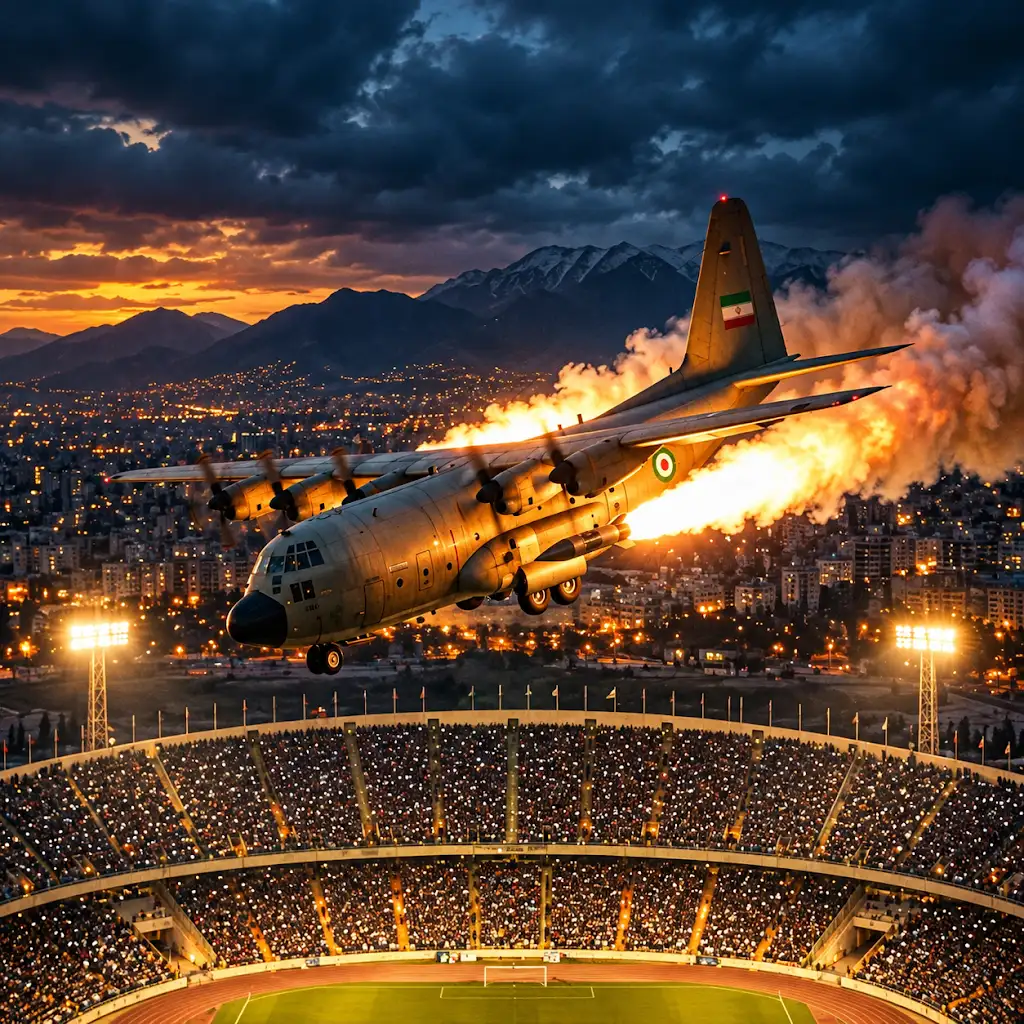
The Secret Plane Built to Land Inside a Stadium
FAQs
What is a rocket-assisted C-130 landing?
A rocket-assisted C-130 landing is a technique used by military aircraft to land on short or unprepared runways by deploying rockets to assist in the braking process.
How do the rockets help in the landing process?
The rockets are typically mounted on the sides of the aircraft and are fired upon landing to provide additional braking force, helping the aircraft to come to a stop in a shorter distance.
When are rocket-assisted landings commonly used?
Rocket-assisted landings are commonly used in military operations where aircraft need to land on short runways, in remote locations, or in emergency situations where traditional landing methods may not be feasible.
Are rocket-assisted landings safe for the aircraft and crew?
When performed correctly and under proper conditions, rocket-assisted landings can be safe for the aircraft and crew. However, they require precise planning, training, and execution to minimize risks.
What are the advantages of using rocket-assisted landings?
The main advantages of using rocket-assisted landings include the ability to land on short or unprepared runways, increased operational flexibility, and the ability to access remote or otherwise inaccessible locations during military operations.