The shadow of the rising sun, once a symbol of imperial ambition and naval dominance, had been irrevocably tarnished by the ashes of World War II. Japan, utterly defeated and occupied, found its once-formidable military machine dismantled. The Imperial Japanese Navy, a force that had challenged the mightiest navies of the world, ceased to exist. Its ships were scuttled, surrendered, or scrapped. Among the most severely affected were its submarines, a silent, deadly arm that had inflicted significant damage on Allied shipping. The very concept of a Japanese submarine fleet was relegated to the history books, a testament to a bygone era of military power.
However, the post-war world was a landscape of shifting alliances and burgeoning geopolitical tensions. As the Cold War cast its long shadow, the former enemies found themselves re-evaluating their strategic positions. Japan, situated on the front lines of a divided Asia, became a crucial linchpin in the burgeoning American-led security architecture. The spectre of a resurgent communist China and the persistent threat from the Soviet Union necessitated a re-evaluation of Japan’s defense capabilities. It was within this complex and rapidly evolving strategic calculus that the seeds of the Japanese submarine fleet’s resurgence were sown, not as a tool of aggression, but as a vital component of a defensive alliance.
The Dawn of a New Era: From Disarmament to Self-Defense
The immediate aftermath of World War II saw Japan stripped of all offensive military capabilities. The Allied occupation, led by the United States, enforced a strict demilitarization policy. The Imperial Japanese Navy was dissolved, and its assets were systematically removed. This period was characterized by a profound sense of national trauma and a strong desire for peace, enshrined in the new Japanese constitution, particularly Article 9, which renounced war and the maintenance of armed forces. Yet, as the geopolitical landscape shifted, this pacifist ideal began to be interpreted through a lens of self-preservation.
The Korean War Catalyst
The outbreak of the Korean War in 1950 proved to be a pivotal moment. The conflict underscored the reality of a Cold War division and the immediate threat of communist expansion in Asia. For the United States, the strategic importance of Japan as a bulwark against communism became paramount. This led to a gradual relaxation of the stringent demilitarization policies. The focus shifted from complete disarmament to the establishment of a defensive force that could assist in regional stability and deter aggression.
The Birth of the Maritime Self-Defense Force
In 1954, the Japan Maritime Self-Defense Force (JMSDF) was formally established. This marked the official re-emergence of a Japanese naval capability, albeit with a strictly defensive mandate. Initially, the JMSDF was equipped with ex-US Navy vessels and focused on mine-sweeping and anti-submarine warfare (ASW) to protect Japanese waters and shipping lanes. The notion of submarines, once a symbol of offensive power, was now being considered in the context of modern anti-submarine warfare and territorial defense.
Early Steps Towards Underwater Capability
The reintroduction of submarines into Japan’s naval arsenal was a gradual and carefully managed process. The initial emphasis was on acquiring defensive capabilities. The first post-war Japanese submarines were not built in Japan, but rather leased or purchased from the United States. These early acquisitions were primarily for training and familiarization with modern submarine technologies and doctrines, crucial for developing a nascent underwater warfare capability. This marked a significant departure from the pre-war era, where Japanese submarine design and construction were world-leading. The focus was now on understanding and countering the submarine threat, rather than projecting it.
After World War II, Japan’s submarine fleet underwent significant changes, transitioning from a wartime force to a modern naval component. An insightful article that explores the evolution and current status of Japan’s submarine capabilities can be found at In the War Room. This piece delves into the strategic importance of submarines in Japan’s defense policy and how they have adapted to contemporary maritime challenges.
Rebuilding the Silent Service: Technological Acquisition and Adaptation
The path to rebuilding a credible submarine fleet was not one of instant revival. It was a deliberate and phased process of technological acquisition, adaptation, and, crucially, domestic development. The JMSDF’s submarine program was heavily influenced by its alliance with the United States, but it also demonstrated a remarkable capacity for innovation and absorption of new technologies.
The American Influence: Training and Early Acquisitions
The early years of the JMSDF submarine program were heavily reliant on American assistance. The United States provided crucial training for Japanese submariners, imparting modern operational doctrines and safety procedures. Furthermore, the US Navy transferred surplus submarines to Japan, providing vital platforms for experience. These submarines, while not cutting-edge, offered invaluable hands-on experience for the nascent JMSDF submariner corps. This period was essential for rebuilding the human element of a submarine force, a component as critical as the hardware itself.
The Leap to Domestic Construction: Early Designs
By the late 1950s and early 1960s, Japan began to develop its own submarine construction capabilities. The first domestically built submarines were based on modified designs from earlier US vessels, but they represented a significant step towards self-sufficiency. These submarines, such as the early Oyashio-class (not to be confused with the later, more advanced class of the same name), were diesel-electric, reflecting the standard technology of the era. The focus was on building reliable platforms that could operate effectively within Japan’s coastal waters and the surrounding sea lanes.
Embracing Advanced Technologies: The Move Towards Air-Independent Propulsion
As submarine technology advanced globally, Japan was quick to adapt. The JMSDF began to explore and eventually implement advanced propulsion systems. The introduction of Air-Independent Propulsion (AIP) technology was a major leap forward. AIP systems allow non-nuclear submarines to remain submerged for significantly longer periods without the need to surface or snorkel for air, greatly enhancing their stealth and operational endurance. Japan was among the first nations to widely adopt AIP technology for its conventional submarines, a testament to its commitment to maintaining a technologically advanced underwater force.
The Strategic Rationale: Deterrence, Defense, and Power Projection
The resurgence of the Japanese submarine fleet was driven by a multifaceted strategic rationale. While Japan’s constitution prohibits offensive military capabilities, its submarines serve crucial defensive and deterrent roles within the broader context of regional security. Their capabilities are designed to protect Japan’s vast maritime interests and contribute to the stability of the Indo-Pacific region.
Securing Sea Lines of Communication (SLOCs)
Japan is an island nation heavily reliant on maritime trade for its economic survival. Its sea lines of communication (SLOCs) are vital for the import of energy, raw materials, and the export of finished goods. A submarine fleet, with its inherent stealth and anti-ship capabilities, is a critical asset for deterring potential aggressors from disrupting these vital trade routes. The presence of submarines can force an adversary to expend significant resources on anti-submarine warfare, thus increasing the cost and risk of any aggression against Japan’s maritime lifelines.
Enhancing Anti-Submarine Warfare (ASW) Capabilities
Ironically, one of the primary roles of a modern submarine fleet is to counter other submarines. In an era where potential adversaries also operate advanced submarine forces, Japan’s own submarines are essential for developing and honing its ASW capabilities. They provide a realistic and challenging target for the JMSDF’s ASW aircraft and surface escorts, thereby improving the overall effectiveness of its defensive posture. Furthermore, Japanese submarines can actively track and neutralize enemy submarines that pose a threat to Japan’s waters.
Contributing to Alliance Security and Regional Stability
As a key ally of the United States, Japan’s military capabilities are designed to complement and enhance the collective security of the region. The JMSDF’s submarine fleet plays a role in joint exercises and strategic planning with its allies. Its presence contributes to a credible deterrent against potential aggression by regional powers. By maintaining a capable and technologically advanced submarine force, Japan signals its commitment to regional security and its ability to contribute to a stable Indo-Pacific, a crucial aspect of the broader US-Japan alliance.
The Stealth Advantage: A Deterrent in its Own Right
The inherent stealth of modern submarines makes them a unique deterrent. Their ability to operate undetected for extended periods creates a pervasive sense of uncertainty for potential adversaries. This “shadow” capability forces potential aggressors to constantly consider the possibility of a hidden threat, thus raising the threshold for any military action. For a nation like Japan, seeking to deter aggression without overtly projecting offensive power, the submarine provides a potent and asymmetric means of achieving this objective.
Modern Submarines of Japan: Sophistication and Specialization
The current generation of Japanese submarines represents the pinnacle of conventional submarine technology. These vessels are not mere imitations of foreign designs; they are highly sophisticated platforms, tailored to the specific operational requirements of the JMSDF and incorporating cutting-edge indigenous technology.
The Sōryū-class: A Benchmark in Conventional Submarine Design
The Sōryū-class submarines are widely considered to be among the most advanced conventionally powered submarines in the world. These diesel-electric AIP submarines are characterized by their large size, advanced sonar systems, and potent weapon loadout. They are designed for extended underwater endurance, stealth, and a wide range of missions, including intelligence gathering, mine laying, and anti-ship operations. Their construction reflects Japan’s advanced shipbuilding and technological expertise.
The Ōyashio-class: A Workhorse of the Fleet
While the Sōryū-class represents the cutting edge, the Ōyashio-class submarines remain a vital component of the JMSDF’s underwater strength. These submarines, while older, have been continuously upgraded and represent a formidable force. They are known for their reliability and their ability to perform a variety of roles, ensuring a robust and capable submarine force capable of sustained operations.
Future Developments: The Taigei-class and Beyond
The JMSDF is continually looking towards the future. The development of the Taigei-class submarines represents the next evolutionary step in their underwater capabilities. These new submarines are expected to incorporate further advancements in automation, sensor technology, and potentially new propulsion systems, ensuring that Japan’s submarine fleet remains at the forefront of conventional submarine technology. This ongoing investment in research and development underscores Japan’s long-term commitment to maintaining a highly capable and modern submarine force.
After World War II, Japan’s submarine fleet underwent significant transformation, evolving from a wartime force into a modern naval component focused on defense and deterrence. This shift is explored in detail in a related article that discusses the strategic implications of Japan’s submarine capabilities in the post-war era. For those interested in understanding how Japan rebuilt its naval power, you can read more about it here.
Challenges and the Future Landscape
| Year | Number of Submarines | Type/Class | Displacement (tons) | Primary Role | Notes |
|---|---|---|---|---|---|
| 1954 | 2 | Harushio-class (early models) | 1,850 (surfaced) | Coastal defense | Re-establishment of submarine fleet under JMSDF |
| 1970 | 10 | Yūshio-class | 2,250 (surfaced) | Anti-submarine warfare | Improved sonar and torpedo systems |
| 1990 | 16 | Oyashio-class | 2,750 (surfaced) | Multi-role attack | Introduction of advanced quieting technology |
| 2010 | 16 | Sōryū-class | 2,950 (surfaced) | Long-range patrol and attack | Air-independent propulsion (AIP) introduced |
| 2024 | 22 | Tōryū-class (planned) | Approx. 3,000 (surfaced) | Advanced stealth and endurance | Next-generation submarines under development |
Despite its impressive resurgence and technological advancements, the Japanese submarine fleet, like any military force, faces ongoing challenges and must adapt to a continually evolving strategic landscape.
The Burden of Maintenance and Operational Tempo
Maintaining a modern submarine fleet is a complex and costly endeavor. The advanced technology incorporated into these vessels requires specialized maintenance and highly trained personnel. The JMSDF must balance the operational tempo of its submarine patrols with the demands of maintenance and crew readiness, ensuring that its submarines are always in peak condition for deployment.
The Evolving Threat Environment
The Indo-Pacific region is characterized by a dynamic and often unpredictable security environment. The proliferation of advanced submarine technology by other regional powers necessitates a continuous reassessment of threats and the adaptation of defensive strategies. Japan’s submarine fleet must remain adaptable to counter new and emerging submarine capabilities and doctrines.
Navigating Constitutional Constraints
While the JMSDF operates within the bounds of Japan’s pacifist constitution, the interpretation and application of these constraints in a tense geopolitical climate remain a subject of ongoing discussion. The capabilities of the submarine fleet, while ostensibly defensive, are inherently versatile. Future developments and deployments will undoubtedly continue to navigate this delicate balance between national security imperatives and constitutional principles.
Technological Arms Race and Innovation
The global development of submarine technology is a continuous arms race. Japan, while a leader in conventional submarine design, must remain vigilant and invest in research and development to stay ahead of potential adversaries. This includes exploring new sensor technologies, quieter propulsion systems, and advanced combat systems to maintain its technological edge. The future of the Japanese submarine fleet will depend on its ability to innovate and adapt to these ongoing technological shifts, ensuring its continued relevance as a cornerstone of Japan’s defense strategy. The shadow of the rising sun may have dimmed, but the silent, deadly prowess of its submarines continues to grow, a testament to Japan’s enduring commitment to its own security and the stability of the region.
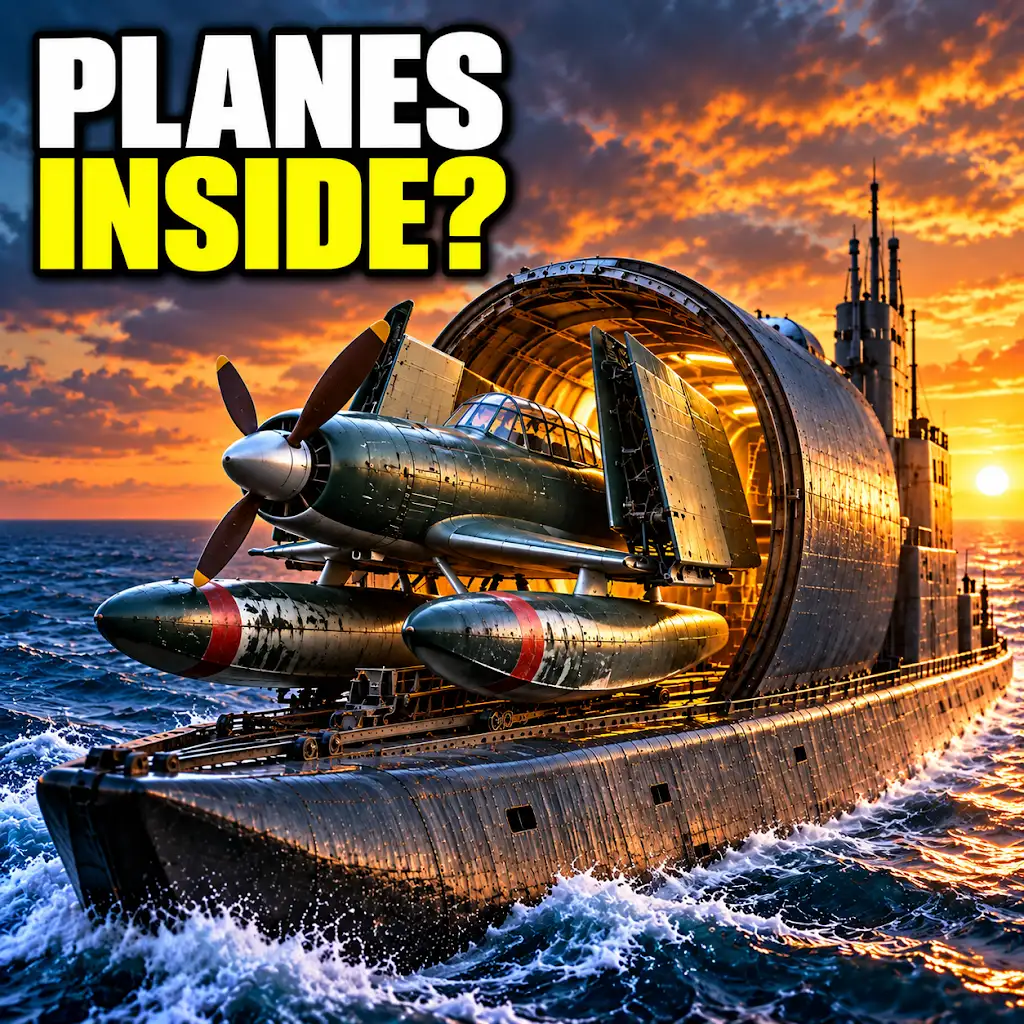
Japan Built a Submarine That Could Launch Three Planes
FAQs
1. How many submarines did Japan have after World War II?
Japan had a total of 145 submarines after World War II.
2. What happened to Japan’s submarine fleet after World War II?
After World War II, Japan’s submarine fleet was disbanded and the remaining submarines were either scrapped or transferred to other countries.
3. Did Japan rebuild its submarine fleet after World War II?
Yes, Japan gradually rebuilt its submarine fleet in the post-war years, focusing on modernizing its technology and capabilities.
4. What role did Japan’s submarine fleet play in the Cold War era?
During the Cold War era, Japan’s submarine fleet primarily focused on maritime defense and surveillance activities in the region.
5. How does Japan’s submarine fleet compare to other countries today?
Today, Japan’s submarine fleet is considered one of the most advanced and capable in the world, with a focus on anti-submarine warfare and strategic deterrence.