The Prussian General Staff stands as a monumental testament to foresight, adaptability, and the relentless pursuit of military excellence. For centuries, armies had relied on the inherent bravery of their soldiers and the tactical genius of individual commanders. While these elements remained crucial, Prussia, through its General Staff, pioneered a systematic, institutional approach to warfare that fundamentally reshaped military organization and strategy, setting a standard that would echo through generations and across continents. Their success was not born of chance, but of a deliberate and continuous process of reform, driven by a deep understanding of the changing nature of conflict and the imperative to leverage every available resource – intellectual, human, and material – for victory.
The foundations of the Prussian General Staff were laid in response to the humiliating defeats Prussia suffered at the hands of Napoleon. The early 19th century witnessed the rise of mass conscript armies, fueled by revolutionary fervor and led by commanders capable of large-scale strategic maneuvers. Prussia, with its relatively smaller, professional army, found itself outmatched in both numbers and strategic depth. This stark reality served as a powerful catalyst for introspection and radical change.
The Shadow of Defeat: Napoleon’s Impact
The Napoleonic Wars exposed critical vulnerabilities in the Prussian military system. The reliance on antiquated tactics and a rigid command structure proved incapable of countering Napoleon’s innovative and dynamic approach to warfare. The swift disintegration of the Prussian army at Jena-Auerstedt in 1806 was a particularly bitter pill, forcing the monarchy and its military thinkers to acknowledge the urgent need for a fundamental overhaul. This defeat wasn’t merely a military setback; it was an existential threat that galvanized a reformist spirit within the Prussian elite.
Scharnhorst’s Vision: The Architect of Reform
The figure most prominently associated with the birth of the modern Prussian General Staff is Lieutenant General Gerhard von Scharnhorst. Appointed to the Prussian Military Reorganization Commission in 1807, Scharnhorst was a visionary who understood that victory in the modern era demanded more than just courage. He advocated for a professional, intellectually rigorous, and strategically capable military leadership. His core belief was that military success was not solely dependent on battlefield prowess but on meticulous planning, continuous learning, and the systematic development of military talent. He recognized that a standing army, while important, was insufficient without a robust and adaptable command and control apparatus capable of orchestrating its movements and operations with precision.
The Birth of the General Staff Corps
Scharnhorst’s efforts culminated in the establishment of the General Staff Corps. This was not simply a group of officers assigned to a commander; it was an independent body tasked with the critical functions of planning, training, and intellectual development. The General Staff was designed to be the brain of the army, detached from the immediate pressures of command yet deeply integrated into its operational planning. Its members were selected for their intellectual capabilities, analytical skills, and dedication to the art of war. This marked a significant departure from previous organizational structures where staff functions were often performed by individuals with little formal training or dedicated organizational support. The General Staff Corps was intended to be a continuous institution, ensuring that knowledge and experience were accumulated and disseminated, fostering a culture of constant improvement.
The Prussian General Staff military reforms played a crucial role in shaping modern military organization and strategy, emphasizing the importance of efficient planning and coordination. For a deeper understanding of these reforms and their impact on military history, you can explore the article titled “The Evolution of Military Strategy: Lessons from the Prussian General Staff” available at In the War Room. This article delves into the principles established by the Prussian General Staff and how they influenced contemporary military practices.
The Core Pillars of General Staff Functionality
The effectiveness of the Prussian General Staff was built upon a series of interconnected pillars, each designed to ensure the army’s readiness, adaptability, and intellectual superiority. These pillars were not static; they evolved over time, reflecting the changing demands of warfare.
Strategic Planning and Operational Art
At its heart, the General Staff was the engine of strategic planning. It was responsible for analyzing the political objectives of the state and translating them into actionable military plans. This involved a comprehensive understanding of the geopolitical landscape, the strengths and weaknesses of potential adversaries, and the logistical capabilities of the Prussian forces. The concept of “operational art” – the bridging of strategy and tactics – was a key development fostered by the General Staff. They focused on coordinating the movements of large formations to achieve decisive results, rather than simply engaging in isolated battles. This required a deep understanding of logistics, terrain, and the psychology of both friend and foe.
Scenario Planning and Wargaming
To hone their planning capabilities, the General Staff extensively employed scenario planning and wargaming. These exercises allowed them to explore various potential conflicts, test different strategies, and identify potential pitfalls before actual combat. This iterative process of hypothesis, testing, and refinement was crucial in developing flexible and robust operational plans. The emphasis was on understanding the “fog of war” and developing contingency plans for unforeseen events.
Intelligence Gathering and Analysis
Effective military planning is impossible without accurate intelligence. The General Staff established sophisticated systems for gathering and analyzing information about enemy forces, political intentions, and the broader operational environment. This included espionage, diplomatic intelligence, and the analysis of open-source information. The interpretation of this data was crucial, allowing the Staff to anticipate enemy moves and adapt their own plans accordingly.
The Prussian General Staff military reforms played a crucial role in shaping modern military organization and strategy. These reforms emphasized the importance of planning, training, and efficient communication, which significantly enhanced the effectiveness of the Prussian army. For a deeper understanding of these transformative changes, you can explore a related article that discusses the impact of these reforms on contemporary military practices. The insights provided in this piece can help illuminate the lasting legacy of the Prussian General Staff. To read more, visit this article.
Training and Education: Cultivating Military Expertise
The General Staff understood that a well-trained and educated officer corps was essential for executing even the most brilliant plans. They took a leading role in shaping military education and training, ensuring that officers were not only skilled in their immediate duties but also possessed a deep understanding of military theory, history, and the evolving nature of warfare.
The War Academy (Kriegsakademie)
A cornerstone of this educational reform was the establishment and development of the Kriegsakademie in Berlin. This institution was not merely a place for theoretical instruction; it was a crucible for developing future military leaders. Cadets were subjected to rigorous academic study, focusing on strategy, tactics, history, mathematics, and logistics. The curriculum was designed to foster critical thinking, analytical skills, and a profound understanding of the principles of war. Graduates of the Kriegsakademie were highly sought after and formed the intellectual backbone of the General Staff.
Promotion Based on Merit, Not Birth
Crucially, the reforms championed by the General Staff emphasized promotion based on merit and demonstrated ability, rather than solely on aristocratic lineage. While the Prussian officer corps remained largely aristocratic, the General Staff actively sought out and promoted talented individuals from all backgrounds. This ensured that the most capable minds were placed in positions of responsibility, regardless of their social standing. This meritocratic element was vital in fostering innovation and preventing stagnation within the military leadership.
Standardization and Doctrine Development
A key role of the General Staff was to develop and disseminate military doctrine. This provided a common language, a shared understanding of principles, and a consistent framework for operations. Standardization extended beyond doctrine to include aspects like military organization, equipment, and logistical procedures, ensuring that the army could operate as a cohesive and efficient whole.
Codification of Military Principles
The General Staff meticulously studied historical campaigns and battles, identifying recurring patterns and timeless principles of warfare. These insights were codified into manuals and regulations, providing a theoretical foundation for military action. This process of learning from the past to inform the future was a continuous endeavor.
Development of Tactical Innovations
The General Staff was not afraid to challenge existing conventions and develop new tactical approaches. They experimented with formations, maneuver warfare, and the integration of new technologies, ensuring that the Prussian army remained at the forefront of military innovation. Their willingness to adapt and innovate was a crucial factor in their repeated successes.
The General Staff in Action: From Reforms to Victories
The true test of the Prussian General Staff’s reforms came in the crucible of war. The mid-19th century saw Prussia emerge as a dominant European power, a transformation largely attributable to the strategic and operational direction provided by the General Staff.
The Wars of Unification: Engineering Prussian Dominance
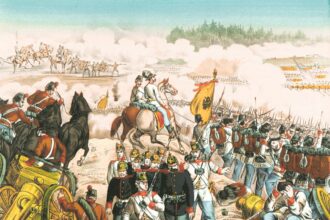
The series of wars that led to the unification of Germany under Prussian leadership – the Second Schleswig War (1864), the Austro-Prussian War (1866), and the Franco-Prussian War (1870-1871) – showcased the efficacy of the Prussian General Staff’s planning and execution. In each conflict, Prussia, often facing numerically superior adversaries, achieved decisive victories.
The Austro-Prussian War (1866): A Masterclass in Operational Art
The Seven Weeks’ War against Austria is often cited as a prime example of the General Staff’s genius. Under the leadership of Helmuth von Moltke the Elder, the General Staff orchestrated a brilliant campaign of maneuver. They effectively divided Austrian forces and, through rapid marches and coordinated attacks, achieved a decisive victory at the Battle of Königgrätz (Sadowa). This victory was a testament to the General Staff’s ability to conduct complex, multi-front operations and achieve strategic objectives with minimal losses. The speed and precision of their mobilization and deployment were unprecedented.
The Franco-Prussian War (1870-1871): Overwhelming the Enemy
The Franco-Prussian War further cemented the General Staff’s reputation. Their meticulous planning, detailed intelligence, and superior operational art allowed them to overwhelm French forces. The rapid siege and capture of Paris, along with the devastating defeat of French armies at Sedan, were direct consequences of the General Staff’s foresight and strategic execution. The ability to mobilize, deploy, and sustain large armies across vast distances was a critical factor in their success. The General Staff’s mastery of logistics and infrastructure utilization was as important as their tactical acumen.
The Role of Moltke the Elder: The Epitome of General Staff Leadership
Helmuth von Moltke the Elder, Chief of the Prussian General Staff from 1857 to 1888, personified the ideals and effectiveness of the institution. His leadership was characterized by intellectual rigor, strategic foresight, and a profound understanding of the principles of warfare. He was a master of delegation, trusting his subordinate staff officers while maintaining overall strategic direction. His famous quote, “One must always seek to win, not only the battle, but the entire campaign,” encapsulates the General Staff’s overarching strategic perspective. Moltke fostered a culture of continuous learning and adaptation, ensuring that the General Staff remained a dynamic and evolving entity.
Evolution and Legacy: A Lasting Impact on Military Thought
The Prussian General Staff’s influence extended far beyond its own existence. Its principles and organizational structure were studied and emulated by military establishments around the world, shaping the development of modern warfare.
The German General Staff: A Continuation and Refinement
The Prussian General Staff evolved into the German General Staff during the unification of Germany. While retaining its core principles, it continued to adapt and refine its methods in response to new technological advancements and changing geopolitical realities. The German General Staff maintained its reputation for intellectual prowess and operational excellence throughout the late 19th and early 20th centuries.
Global Influence and Emulation
Military leaders and thinkers from numerous countries studied the Prussian model. The establishment of general staffs in other nations, such as France, Great Britain, and the United States, was often directly inspired by the Prussian example. The emphasis on professional military education, strategic planning, and a dedicated planning staff became a cornerstone of modern military organization. The lessons learned from Prussian successes and failures were incorporated into the curricula of military academies worldwide.
The Enduring Principles
The core principles championed by the Prussian General Staff – professionalization, intellectual rigor, continuous learning, strategic planning, and operational art – remain fundamental to military success today. While the technologies of warfare have transformed dramatically, the need for a highly competent and adaptable military leadership that can translate political objectives into effective military action remains as critical as ever. The Prussian General Staff provided a blueprint for achieving this, a legacy that continues to inform military thought and practice across the globe. Their achievements serve as a powerful reminder that military victory is not merely a matter of brute force, but of the intelligent application of resources, the cultivation of talent, and the relentless pursuit of knowledge and adaptation.

The Military Machine That Didn’t Need a Napoleon
FAQs
What were the Prussian General Staff military reforms?
The Prussian General Staff military reforms were a series of changes implemented in the 19th century to modernize and professionalize the Prussian army. These reforms aimed to improve the organization, training, and tactics of the military, making it more efficient and effective in warfare.
When did the Prussian General Staff military reforms take place?
The Prussian General Staff military reforms took place primarily during the early to mid-19th century, with significant developments occurring under the leadership of General Gerhard von Scharnhorst and later Helmuth von Moltke. These reforms were instrumental in shaping the Prussian military into a formidable force.
What were some key aspects of the Prussian General Staff military reforms?
Some key aspects of the Prussian General Staff military reforms included the establishment of a centralized general staff to oversee military operations, the adoption of new training methods and tactics, the introduction of a merit-based promotion system, and the emphasis on strategic planning and coordination.
How did the Prussian General Staff military reforms impact the Prussian army?
The Prussian General Staff military reforms had a profound impact on the Prussian army, transforming it into one of the most formidable military forces in Europe. The reforms improved the army’s organizational structure, leadership, and operational capabilities, ultimately contributing to Prussia’s military successes in various conflicts.
What was the legacy of the Prussian General Staff military reforms?
The legacy of the Prussian General Staff military reforms was far-reaching, influencing military thinking and practices around the world. The reforms set a precedent for modern military staff systems and strategic planning, and their impact can be seen in the development of other military institutions and doctrines.