The Prussian Army, a name synonymous with discipline, innovation, and military prowess, carved an indelible mark on the annals of warfare. Its remarkable ascendance from a relatively modest military force to a dominant European power was not a matter of mere chance, but a testament to a meticulously crafted and rigorously applied military strategy. This strategy, characterized by its emphasis on efficiency, professionalism, and adaptability, served as a model for armies across the globe, influencing military thought and practice for generations.
The strategic brilliance of the Prussian Army was not a sudden revelation but the product of centuries of reform and development, deeply rooted in the unique socio-political landscape of Prussia. The nation’s precarious geographical position, surrounded by larger and often more powerful neighbors, necessitated a military capable of both formidable defense and decisive offense. This existential imperative fostered a culture of militarism that permeated Prussian society, shaping its institutions and its very identity.
The Legacy of Frederick the Great
No discussion of Prussian military strategy would be complete without acknowledging the pivotal role of Frederick the Great. His reign, from 1740 to 1786, witnessed a period of significant military innovation and expansion. Frederick inherited a well-trained army, a legacy of his father, Frederick William I, the “Soldier King,” who had prioritized military expenditure and discipline above all else. Frederick the Great, however, elevated this foundation to new heights. He personally engaged in the art of war, meticulously studying campaigns of antiquity and his contemporaries, and translating this knowledge into practical tactical and strategic doctrines.
The “Oblique Order” and its Application
One of Frederick’s most celebrated tactical innovations was the “oblique order” of battle. This formation, often misunderstood as a simple diagonal deployment, was in fact a sophisticated maneuver designed to concentrate force against a weaker point of the enemy’s line while maintaining a strong defensive flank. Instead of engaging the enemy frontally, Frederick would typically advance with his main body at an angle, outflanking one wing of the enemy. This allowed him to achieve local superiority, crush that wing, and then pivot to roll up the rest of the enemy formation. The oblique order demanded exceptional drill and coordination, reflecting the Prussian emphasis on precise execution. Its effectiveness lay in its psychological impact as well, often catching the enemy off guard and disrupting their battle plans.
The Importance of Mobility and Speed
Frederick the Great also understood the critical role of mobility. His army was trained to move with remarkable speed across the battlefield, allowing them to exploit opportunities, reinforce threatened sectors, and dictate the pace of engagements. This emphasis on rapid deployment and maneuver was a direct counterpoint to the more static and ponderous warfare often practiced by other European powers of the era. The ability to achieve surprise through speed was a cornerstone of his strategy, enabling him to achieve victories against numerically superior forces.
The Impact of the Napoleonic Wars
The disastrous defeat at Jena-Auerstedt in 1806 against Napoleon Bonaparte’s Grande Armée served as a harsh but ultimately transformative lesson for Prussia. While a devastating blow to Prussian pride and military standing, it also catalyzed a profound period of reform, known as the Prussian Reforms. The recognition of their own shortcomings in the face of Napoleonic brilliance forced Prussian strategists and military thinkers to re-evaluate their entire approach to warfare.
The Scharnhorst Reforms and the Birth of a Modern Army
The key figures behind these reforms, most notably Gerhard von Scharnhorst and August von Gneisenau, understood that Prussia could not hope to defeat Napoleon by simply replicating his tactics. They recognized the need for a more professional, meritocratic, and adaptable military system. This led to a cascade of changes that would fundamentally reshape the Prussian Army.
Abolition of Corporal Punishment and Promotion by Merit
A significant reform was the abolition of the brutal corporal punishment that had been a hallmark of earlier armies. This was replaced by a system of military justice that, while still stern, was more in line with the ideals of the time. Crucially, promotions were increasingly based on merit and ability rather than solely on aristocratic birth. This opened up opportunities for talented officers from lower social strata, injecting fresh perspectives and competence into the officer corps.
The Introduction of a General Staff
Perhaps the most enduring legacy of the Scharnhorst reforms was the establishment of a professional General Staff. Prior to this, military planning was often ad hoc and dependent on the personal genius of individual commanders. The General Staff, on the other hand, was a permanent body of highly trained officers responsible for strategic planning, operational art, and the coordination of campaigns. This institutionalized expertise ensured continuity and a consistent approach to warfare, regardless of individual leadership changes.
The Prussian Army’s military strategy has long been a subject of study for historians and military enthusiasts alike, particularly due to its innovative approaches to warfare and organization. For a deeper understanding of these strategies and their impact on modern military tactics, you can explore a related article that discusses the evolution of Prussian military doctrine and its implications for contemporary armed forces. Check it out here: Prussian Army Military Strategy.
The Prussian General Staff: The Brains of the Operation
The Prussian General Staff evolved into the undisputed intellectual powerhouse of the army, a body whose influence extended far beyond the battlefield. Its meticulous approach to planning, analysis, and training became legendary, setting a benchmark for military organizations worldwide. The General Staff was not merely a planning department; it was an institution dedicated to the continuous study and refinement of warfare.
The Principles of War and the Prussian Doctrine
The General Staff meticulously codified the principles of warfare, distilling the lessons of past conflicts into actionable doctrines. These principles, often articulated in detailed manuals and strategic studies, emphasized concepts such as concentration of force, surprise, speed, and the decisive battle.
Concentration of Force and the Quest for the Decisive Engagement
The Prussian doctrine placed immense importance on concentrating overwhelming force at a decisive point. This was not simply about numerical superiority, but about skillfully maneuvering forces to achieve local superiority at the point of contact. The goal was to achieve a decisive engagement that would shatter the enemy’s will to fight, thus bringing the war to a swift conclusion. This objective informed their operational planning, dictating troop movements and logistical support.
The Art of Maneuver and the “Schwerpunkt”
The concept of the Schwerpunkt, or “center of gravity,” was central to Prussian operational art. It involved identifying the most critical element of the enemy’s strength or will and focusing all available resources to attack and destroy it. This often translated into complex maneuvers designed to bypass enemy strongpoints and strike at their vital organs. The emphasis was on achieving a strategic advantage through maneuver rather than direct confrontation, mirroring Frederick the Great’s earlier emphasis on mobility.
Training and Education: Cultivating Military Genius
The General Staff recognized that superior strategy required a highly educated and skilled officer corps. This led to a comprehensive overhaul of military education and training. The War Academy (Kriegsakademie) became a crucible for developing strategic thinkers and operational artists.
The Role of the Kriegsakademie
The Kriegsakademie was not just a place for theoretical study; it was a vibrant intellectual hub where officers engaged in rigorous debate, simulated campaigns, and historical analysis. Students were encouraged to think critically, to question established norms, and to develop their own strategic insights. Graduates of the Kriegsakademie formed the intellectual backbone of the General Staff and commanded the army’s most important formations.
Continuous Professional Development
The commitment to continuous professional development was a hallmark of the Prussian system. Officers were expected to remain students of war throughout their careers, constantly analyzing new developments, technologies, and potential threats. This culture of lifelong learning ensured that the Prussian Army remained at the forefront of military thought.
Logistics and Mobilization: The Unseen Pillars of Victory

A military strategy, no matter how brilliant, is rendered impotent without the ability to supply and move its forces effectively. The Prussian Army, in its pursuit of efficiency, paid meticulous attention to logistics and mobilization, creating systems that were both robust and remarkably agile.
The Importance of the Railway Network
The advent of the railway revolutionized military logistics, and Prussia was quick to embrace its potential. The General Staff understood that the ability to rapidly transport troops, equipment, and supplies over long distances was a crucial strategic advantage. They worked closely with railway companies to develop dedicated military lines and timetables, ensuring that mobilization could be completed with unprecedented speed.
Strategic Deployment and Rapid Concentration
The Prussian railway network allowed for the swift and efficient deployment of troops to potential theaters of war. This enabled them to concentrate overwhelming force at critical junctures, often before their adversaries could fully mobilize. This speed of deployment was a key factor in their successes during the Austro-Prussian War (1866) and the Franco-Prussian War (1870-1871).
The Landwehr and Reserve System: A Citizen Army Mobilized
Beyond the professional army, Prussia developed a sophisticated reserve system, the Landwehr. This served as a vital component of their mobilization strategy, allowing them to rapidly expand their fighting force by drawing upon a well-trained citizenry.
Integrating Reserves with Professional Troops
The Landwehr was not simply a collection of untrained civilians. Its members received regular training and were integrated into the regular army structure during times of crisis. This ensured that reserves were familiar with military procedures and could operate effectively alongside professional soldiers. This integration allowed for a rapid and large-scale mobilization, providing the necessary manpower for extended campaigns.
The “Millstones” of Prussian Mobilization
The meticulous planning and execution of mobilization, often referred to as the “millstones” of Prussian strategy, were so effective that they often demoralized potential adversaries before a shot was even fired. The sheer speed and scale of their mobilization demonstrated their readiness and capacity, creating a psychological advantage.
Innovation and Adaptability: Staying Ahead of the Curve
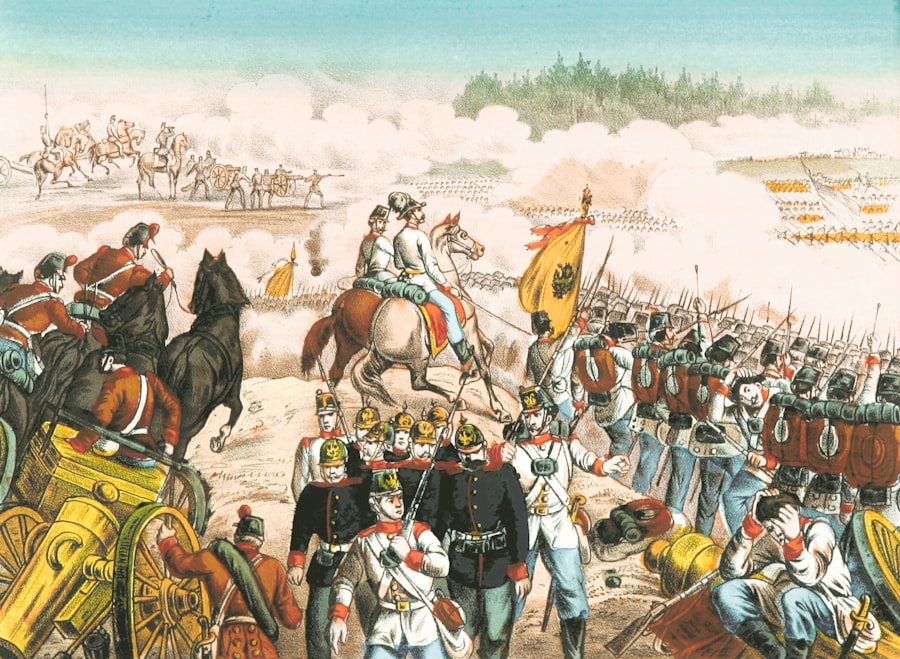
The Prussian Army’s success was not static; it was a dynamic process of constant innovation and adaptation. They were not afraid to question their own doctrines and to embrace new technologies and methodologies when they offered a strategic advantage.
Technological Adoption and Integration
The Prussian military was remarkably receptive to technological advancements. They were among the first to fully appreciate the implications of the breech-loading rifle and later the machine gun.
The Dreyse Needle Gun and its Impact
The introduction of the Dreyse needle gun in the mid-19th century represented a significant leap in infantry firepower. This breech-loading rifle allowed soldiers to reload much faster than their muzzle-loading counterparts, giving Prussian infantry a decisive advantage in firefights. The General Staff ensured that this new technology was integrated into their tactics, leading to devastating effectiveness on the battlefield.
The Role of Artillery and Communications
Prussia also invested heavily in artillery development and the effective use of communication technologies, such as the telegraph. This allowed for better coordination of large formations and more effective fire support, further enhancing their battlefield dominance.
The Art of Deception and Psychological Warfare
Beyond technological and tactical innovations, the Prussian Army understood the importance of deception and psychological warfare. They sought to sow confusion and doubt among their enemies, often through clever maneuvers and well-timed propaganda.
Exploiting Enemy Weaknesses Through Information
The General Staff actively sought to gather intelligence on enemy plans, morale, and weaknesses. This information was then used to craft strategies that exploited these vulnerabilities, often through feints, diversions, and the creation of an atmosphere of uncertainty.
The Prussian Army’s military strategy has long been a subject of interest for historians and military enthusiasts alike, particularly due to its emphasis on rapid mobilization and decisive engagement. A fascinating exploration of this topic can be found in an article that delves into the evolution of military tactics and their impact on modern warfare. For those looking to deepen their understanding of this influential approach, you can read more about it in the insightful piece available at In the War Room. This resource provides a comprehensive analysis of how the principles established by the Prussian Army continue to resonate in contemporary military doctrines.
The Prussian Legacy: A Lasting Influence on Warfare
| Strategy | Description |
|---|---|
| Linear Tactics | Prussian Army used linear tactics with disciplined infantry formations to maximize firepower. |
| Flexible Command Structure | The Prussian Army had a flexible command structure that allowed for quick decision-making on the battlefield. |
| Combined Arms | Prussian Army integrated infantry, cavalry, and artillery to create a balanced and effective fighting force. |
| Defensive Warfare | Prussian Army often relied on defensive warfare, using fortifications and defensive positions to repel enemy attacks. |
The military strategy of the Prussian Army, a meticulously constructed edifice of efficiency, professionalism, and adaptability, left an enduring legacy. Its influence resonated throughout the 19th and early 20th centuries, shaping the doctrines and practices of armies across the globe.
The Foundation for Modern Military Doctrine
The principles of the Prussian General Staff – systematic planning, rigorous training, emphasis on operational art, and the integration of logistics – became foundational elements of modern military doctrine. Many of the concepts they pioneered are still taught and applied in military academies today.
The German Army and the Evolution of Strategy
The direct descendant of the Prussian Army, the German Army of the late 19th and early 20th centuries, continued to build upon this legacy. Their innovative strategies, such as the Schlieffen Plan, though ultimately unsuccessful in their ultimate aims, demonstrated a continued commitment to the Prussian traditions of strategic thinking and operational planning.
Lessons for Contemporary Military Thought
Even in the face of evolving warfare in the 21st century, the core tenets of Prussian military strategy offer valuable insights. The emphasis on clear objectives, disciplined execution, intelligent resource allocation, and the relentless pursuit of efficiency remain crucial for success in any military endeavor. The Prussian Army’s journey from a minor principality to a dominant military power serves as a powerful reminder that strategic vision, coupled with unwavering commitment to excellence, can forge an unstoppable force. Their legacy is not just a historical footnote; it is a living testament to the enduring power of effective military strategy.

The Military Machine That Didn’t Need a Napoleon
FAQs
What was the Prussian Army military strategy?
The Prussian Army’s military strategy was based on the concept of aggressive offense and decisive battles. They focused on rapid mobilization, quick and decisive attacks, and the use of combined arms tactics to overwhelm their opponents.
What were the key principles of the Prussian Army military strategy?
The key principles of the Prussian Army’s military strategy included the use of maneuver warfare, the concentration of forces at the decisive point, and the exploitation of enemy weaknesses. They also emphasized the importance of training, discipline, and leadership.
How did the Prussian Army’s military strategy influence military tactics and operations?
The Prussian Army’s military strategy influenced military tactics and operations by emphasizing the importance of speed, flexibility, and initiative. They developed tactics such as the oblique order and the use of combined arms to achieve decisive victories on the battlefield.
What impact did the Prussian Army’s military strategy have on military history?
The Prussian Army’s military strategy had a significant impact on military history, particularly during the 19th century. Their emphasis on offensive operations and decisive battles influenced the development of modern warfare and had a lasting impact on military tactics and doctrine.
How did the Prussian Army’s military strategy contribute to the success of Prussia in conflicts and wars?
The Prussian Army’s military strategy contributed to the success of Prussia in conflicts and wars by allowing them to achieve rapid and decisive victories over their opponents. Their focus on offensive operations and the use of combined arms tactics gave them a strategic advantage on the battlefield.