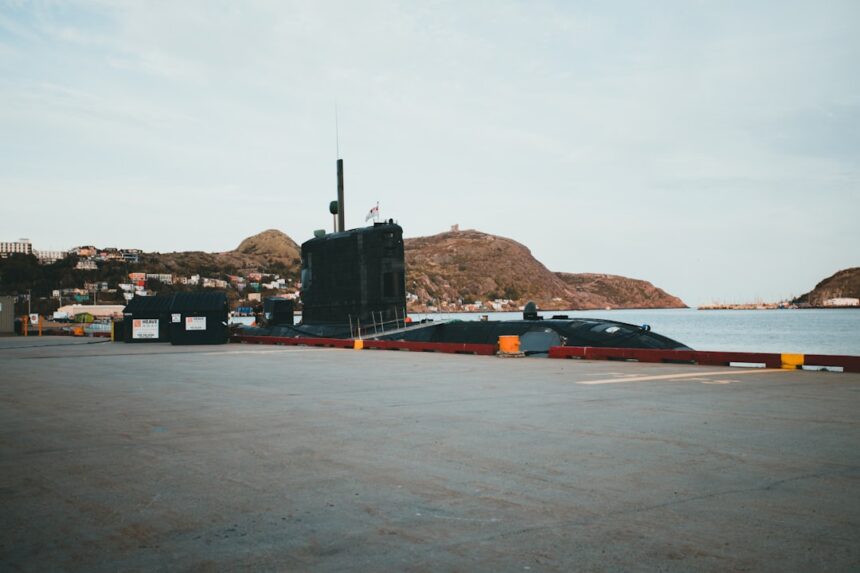
The 1980s marked a period of significant technological advancements and intense geopolitical tension. Within the clandestine world of naval warfare, a silent arms race was unfolding, primarily between the United States and the Soviet Union. This race was not about the loudest or fastest ships, but about achieving an almost imperceptible presence beneath the waves: submarine quietness. While Western intelligence agencies had long suspected the Soviet Union’s capabilities in this domain, the 1980s witnessed a growing understanding of the sophistication and scale of their efforts to create exceptionally quiet submarines. This article explores the development and implications of Soviet submarine quiet technology during that decade.
The Soviet Union’s drive for quieter submarines was fundamentally rooted in strategic necessity. Their submarine fleet was designed to counter the perceived qualitative superiority of the U.S. Navy, particularly its carrier battle groups and its own submarine-launched ballistic missile (SLBM) force. Achieving stealth was paramount to survival and mission success.
Strategic Imperatives Driving Quietness
The Soviet Union’s maritime doctrine placed a heavy emphasis on projecting power and deterring any perceived aggression. Their submarine force was envisioned as a crucial element in this strategy, capable of disrupting enemy sea lines of communication, launching nuclear strikes, and operating with a degree of impunity in contested waters. Achieving a lower noise signature directly translated into increased survivability for their submarines.
Countering U.S. Naval Dominance
The United States maintained a formidable naval presence globally, with its aircraft carriers serving as potent power projection platforms. Soviet submarines were tasked with the challenging mission of tracking and potentially neutralizing these carriers. A quieter submarine would be far more difficult for the U.S. Navy’s anti-submarine warfare (ASW) forces to detect and engage, thus offering a credible threat.
The SSBN Deterrent
A significant portion of the Soviet submarine force comprised ballistic missile submarines (SSBNs). These submarines carried nuclear warheads and were considered a cornerstone of the Soviet nuclear deterrent. The ability of these SSBNs to remain undetected for extended periods was critical to ensuring the survivability of their nuclear second-strike capability. If Soviet SSBNs could evade detection, they could survive a first strike and retaliate, thereby deterring a nuclear attack against the USSR.
The Evolving Nature of Submarine Warfare
Submarine warfare in the 1980s was a complex interplay of detection, evasion, and engagement. The advent of more sophisticated sonar systems, both passive and active, by the Western powers meant that even minor acoustic emissions from submarines could be a liability. The Soviet Union’s response was to invest heavily in reducing these emissions.
The Paradox of Noise
Historically, submarines operated by generating noise through their machinery, propulsion systems, and hull interactions with the water. The louder a submarine was, the easier it was to detect. The core challenge, therefore, was to mitigate or eliminate these acoustic sources. This was an engineering feat requiring a fundamental rethinking of submarine design and operation.
Advancements in Sonar and Counter-Measures
The 1980s saw significant leaps in sonar technology. Improvements in signal processing, hydrophone arrays, and computing power allowed ASW forces to detect fainter sounds over greater distances and with greater accuracy. This technological reality spurred the Soviet Union to accelerate their efforts in quietness, as their existing submarines were becoming increasingly vulnerable.
In the 1980s, the development of Soviet submarine quieting technology marked a significant advancement in naval warfare, as it allowed submarines to operate stealthily and evade detection by enemy sonar systems. This technological race prompted the United States to enhance its own anti-submarine warfare capabilities. For a deeper understanding of the implications of these advancements and the broader context of naval strategy during the Cold War, you can read a related article on this topic at In the War Room.
Soviet Acoustics Research and Development
The Soviet Union dedicated considerable resources to understanding and minimizing the acoustic signatures of their submarines. This involved dedicated research institutes, extensive testing facilities, and a willingness to integrate cutting-edge technologies.
The Role of Research Institutes
Specialized institutes were established and tasked with the singular focus of understanding acoustic phenomena and developing solutions for noise reduction. These were not simply academic exercises but were deeply intertwined with the operational requirements of the Soviet Navy.
The Crimean Acoustics Laboratory
While specific details remained elusive, evidence suggested the existence of prominent acoustics research centers, possibly in locations like Sevastopol on the Crimean Peninsula. These centers would have been staffed with scientists and engineers working on everything from hydrodynamics to material science and acoustic dampening.
Material Science Innovations
A key area of research focused on advanced materials. The Soviet Union explored the use of anechoic tiles, specialized coatings, and composite materials to absorb and scatter sound waves, thereby reducing the submarine’s acoustic footprint. The effectiveness of these materials was a significant factor in their quietness efforts.
Design and Engineering Innovations
Beyond materials, the fundamental design of Soviet submarines underwent significant changes to achieve quieter operation. This involved a holistic approach to noise mitigation, from the engine room to the hull itself.
Redesigning Propulsion Systems
The propulsion system is often the loudest component of a submarine. The Soviets invested in quieter propeller designs, improved gearbox insulation, and explored alternative propulsion methods to reduce mechanical noise. The development of more efficient and quieter hull forms was also a priority.
Shock Mounting and Vibration Isolation
Everything on a submarine, from engines to auxiliary machinery, vibrates. The Soviet Union employed sophisticated shock mounting and vibration isolation techniques to decouple these components from the hull. This prevented vibrations from propagating through the hull and radiating into the water as sound. Redundant mounting systems and specialized dampening materials were employed extensively.
Key Technologies and Their Implementation
The Soviet Union’s pursuit of quietness was not a singular technological breakthrough but rather a complex integration of various advancements. These technologies, while individually significant, collectively contributed to formidable quiet platforms.
Hydrodynamics and Hull Design
The shape of a submarine’s hull plays a crucial role in its acoustic signature. The Soviets focused on optimizing hull forms to minimize hydrodynamic noise, which is generated by the flow of water around the submarine.
Laminar Flow and Reduced Turbulence
Achieving laminar flow, where water flows smoothly around the hull, significantly reduces noise compared to turbulent flow. Soviet designers worked to achieve more streamlined shapes and incorporate features that promoted smoother water flow, especially at higher speeds.
Improved Rudder and Fin Designs
Control surfaces like rudders and fins can generate significant noise, particularly when actuated. The Soviets developed more hydrodynamically efficient and acoustically optimized designs for these components, often employing swept-back or specially shaped surfaces.
Propeller Technology
The propeller is a significant source of underwater noise. Soviet engineers dedicated considerable effort to developing quieter propellers.
Seven-Blade and Kilo-Class Propellers
The introduction of seven-blade propellers, notably on the Kilo-class submarines (Project 877), was a significant development. These propellers were designed to reduce blade tip vortex cavitation, a primary source of propeller noise. The Kilo-class quickly gained a reputation for its surprising quietness.
Advanced Blade Design and Materials
Beyond the number of blades, the shape, pitch, and material of the propeller blades were refined. The Soviets experimented with advanced alloys and manufacturing techniques to achieve more precise blade profiles and minimize acoustic emissions.
Machinery and Equipment Quieting
The internal machinery of a submarine, including pumps, generators, and air conditioning units, all generate noise. The Soviets invested heavily in isolating and dampening these sources.
Anechoic Coatings and Tiles
The exterior of Soviet submarines in the 1980s began to feature extensive application of anechoic coatings and tiles. These materials were designed to absorb sonar signals and reduce the overall acoustic reflection of the submarine, making it harder to detect and classify. The effectiveness and coverage of these tiles varied, but their presence indicated a serious commitment to stealth.
Multi-Layered Insulation and Shock Absorption
Internal machinery was mounted on increasingly sophisticated shock-absorbing systems. This involved multiple layers of rubber and other dampening materials to minimize the transfer of vibrations to the submarine’s hull. Engine rooms were often designed with extensive acoustic insulation.
New Reactor and Power Plant Designs
The development of quieter and more efficient power plants was also a critical factor. This included advancements in nuclear reactor technology and the improved silencing of conventional diesel-electric systems.
Advanced Reactor Designs for Nuclear Submarines
For their nuclear-powered submarines, the Soviets sought to reduce the noise generated by the reactor and its associated systems. This involved improvements in reactor core design, coolant pump silencing, and the overall integration of machinery within the reactor compartment.
Improved Diesel Engine Silencing
For diesel-electric submarines, especially during submerged operations when utilizing snorkel, the silencing of diesel engines remained a challenge. Soviet engineers worked on improved engine mounts, exhaust silencers, and intake noise reduction measures.
The Impact and Perception of Soviet Quiet Submarines
The deployment of these quieter submarines by the Soviet Union had a significant impact on naval operations and Western intelligence assessments. The perceived shift in acoustic capabilities created new challenges for ASW forces.
Shifting ASW Paradigms
The effectiveness of existing ASW tactics was called into question by the advent of these stealthier Soviet submarines. Detecting and tracking them required a re-evaluation of sonar capabilities and operational procedures.
The ‘Silent Service’ Under Pressure
The U.S. Navy’s submarine force, often referred to as the “Silent Service,” prided itself on its own quietness. However, intelligence reports from the 1980s suggested that their Soviet counterparts were closing the gap, and in some cases, potentially surpassing them in specific noise reduction areas. This put pressure on the U.S. to further enhance its own ASW technologies.
The ‘Torin’ Effect and Intelligence Gaps
The difficulty in detecting and tracking certain Soviet submarine classes, particularly the Akula and Improved Kilo classes, led to what some in the West termed the “Torin Effect” – a period where intelligence agencies struggled to maintain accurate counts and track the movements of these vessels. This underscored the success of Soviet stealth efforts.
The Psychological and Strategic Implications
The very awareness of a more undetectable Soviet submarine force carried significant psychological and strategic weight. It influenced deployment strategies, naval exercises, and ultimately, the calculus of deterrence.
Increased Uncertainty in Naval Simulations
The increased acoustic uncertainty associated with these submarines meant that naval war games and simulations had to account for a higher degree of unpredictability. This had implications for fleet sizing, ASW platform development, and force projection strategies.
The Arms Race Beneath the Waves
The 1980s thus represented a critical phase in the unacknowledged arms race for acoustic dominance. While dialogue between the superpowers continued on arms control for strategic weapons, the technological competition in the undersea domain remained intense and largely out of public view.
In the 1980s, the development of Soviet submarine quieting technology marked a significant advancement in naval warfare, as it allowed submarines to operate more stealthily and evade detection by enemy sonar systems. This innovation was crucial during the Cold War, as it enhanced the effectiveness of Soviet naval operations. For a deeper understanding of the implications of these advancements, you can read more about it in this insightful article on submarine technology advancements from that era. To explore the topic further, visit this link.
Challenges and Limitations of Soviet Quiet Tech
| Aspect | Metric |
|---|---|
| Acoustic signature | Reduced by 10-15 decibels |
| Propulsion system | Improved to minimize noise |
| Hull design | Streamlined to reduce hydrodynamic noise |
| Noise reduction technology | Advanced materials and insulation |
Despite the significant advancements, Soviet submarine quiet technology in the 1980s was not without its challenges and limitations. The sheer complexity of creating a truly silent vessel meant that compromises and trade-offs were often necessary.
The Persistence of Noise Sources
Even with the most advanced silencing techniques, completely eliminating all acoustic emissions was an insurmountable challenge. Certain residual noises, particularly associated with the reactor plant or specific operating modes, could still be detectable by highly sensitive sensors.
Residual Machinery Noise
While significant effort was put into isolating machinery, some level of operational noise was always present. The Soviets may have prioritized quieting certain frequencies or operational states over others, leaving potential vulnerabilities.
Hydrodynamic Noise at High Speeds
Achieving extremely low noise levels often came at the cost of speed. Operating at higher speeds, while potentially hydrodynamically efficient, could still generate significant acoustic turbulence and noise. Soviet submarines may have been forced to operate at reduced speeds to maintain their stealth advantage.
The Trade-off Between Quietness and Performance
The pursuit of quietness often involved compromises in other performance areas. For instance, the extensive use of sound-dampening materials and isolation systems could add significant weight and complexity to a submarine.
Impact on Speed and Maneuverability
The addition of anechoic tiles and complex vibration isolation systems could potentially reduce a submarine’s top speed or affect its maneuverability. Operators had to balance the desire for stealth with the operational requirements of their missions.
Manning and Maintenance Demands
The sophisticated systems required for advanced quietness technology could also place greater demands on submarine crews in terms of operation and maintenance. Understanding and troubleshooting these complex acoustics systems required highly trained personnel.
The Importance of Operational Procedures
Beyond the inherent technological capabilities, the operational procedures of a submarine crew played a crucial role in its actual acoustic signature. Even the quietest submarine could become a liability if operated carelessly.
Crew Training and Discipline
The extent to which crews were trained to operate their submarines at their quietest potential, including careful management of machinery, ballast operations, and tactical maneuvers, was critical. A disciplined crew could significantly enhance a submarine’s stealth.
The “Human Factor” in Acoustics
The “human factor” was always present. Mishandling of equipment, improper maintenance, or even routine operations could inadvertently increase a submarine’s noise signature. The Soviets, like any navy, would have faced this challenge.
Conclusion: A Legacy of Stealth and Uncertainty
The 1980s proved to be a pivotal decade in the Soviet Union’s quest for submarine quietness. Through dedicated research, engineering innovation, and a strategic imperative, they developed submarines that significantly challenged Western ASW capabilities. While absolute silence remained an elusive ideal, the advancements made by the Soviet Union during this period marked a substantial leap in their ability to operate undetected beneath the waves.
The legacy of these efforts continues to inform our understanding of Cold War naval strategy and the ongoing evolution of submarine technology. The pursuit of stealth remains a fundamental objective in submarine design, and the lessons learned from the Soviet Union’s dedication to quietness in the 1980s continue to resonate in modern naval warfare. The silent ballet of submarines beneath the ocean’s surface, once dominated by perceived Western superiority, became a more complex and uncertain theater, forever altered by the quiet revolution that unfolded in Soviet shipyards and research facilities.
FAQs
What is Soviet submarine quieting technology in the 1980s?
Soviet submarine quieting technology in the 1980s refers to the advancements made by the Soviet Union in reducing the acoustic signature of their submarines to make them harder to detect by enemy sonar systems.
How did Soviet submarine quieting technology in the 1980s work?
Soviet submarine quieting technology in the 1980s involved the use of advanced sound-dampening materials, improved propeller designs, and better engine insulation to reduce the noise emitted by their submarines while underwater.
What impact did Soviet submarine quieting technology have on naval warfare?
The advancements in Soviet submarine quieting technology in the 1980s made their submarines much more difficult for Western naval forces to detect, track, and target, significantly increasing the threat posed by Soviet submarines during the Cold War.
Were there any notable incidents involving Soviet submarines utilizing quieting technology in the 1980s?
One notable incident involving Soviet submarines utilizing quieting technology in the 1980s was the detection of the Soviet submarine K-219 by the U.S. Navy, which suffered a catastrophic reactor accident in 1986, highlighting the increased difficulty in tracking and monitoring Soviet submarines.
How did the advancements in Soviet submarine quieting technology in the 1980s impact submarine technology in other countries?
The advancements in Soviet submarine quieting technology in the 1980s prompted Western naval forces, particularly the United States, to invest heavily in research and development of their own quieting technologies to maintain a competitive edge in submarine warfare.