A deep dive into the historical relationship between pre-Islamic Iranian civilizations and the subsequent rise of Iranian nationalism reveals a complex tapestry woven from shared heritage, selective interpretation, and evolving political currents. This essay will explore how the grandeur of ancient Persia, encompassing its empires, cultural achievements, and enduring symbols, became a foundational element for a modern national identity, particularly in the 20th century. It is crucial, however, to approach this historical narrative with a critical lens, acknowledging the selective appropriation of the past and the inherent challenges in projecting ancient glories onto a distinct modern nation-state.
The pre-Islamic history of the Iranian plateau is marked by the rise and fall of powerful empires that left an indelible mark on the region and beyond. These vast political entities, stretching from the Achaemenids to the Sasanians, provided a rich reservoir of historical memory and cultural achievement that would later be drawn upon by proponents of Iranian nationalism.
The Achaemenid Zenith: A Foundation of Grandeur
The Achaemenid Empire (c. 550-330 BCE) stands as the first truly imperial power to emerge from the Iranian plateau. Its founders, Cyrus the Great and his successors, extended their dominion across a vast swathe of the ancient world, encompassing Mesopotamia, Egypt, parts of Greece, and even reaching into Central Asia.
The Cyrus Cylinder and the Concept of Empire
Cyrus the Great’s reputation, as documented in the Cyrus Cylinder, for relative tolerance towards conquered peoples and the restoration of their religious practices, has been a significant point of reference. While often presented as an early declaration of human rights, its historical context as a royal inscription intended to legitimize rule and secure loyalty within a diverse empire requires nuance. Nevertheless, the narrative of a benevolent and unifying ruler resonated powerfully with later nationalist aspirations.
Persepolis and the Symbols of Power
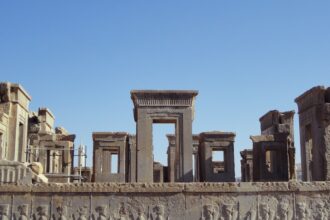
The architectural marvel of Persepolis, with its majestic palaces and intricate reliefs, served as a potent visual representation of Achaemenid power and sophistication. The iconography of the empire – the winged disc, the lion and bull motifs, the processions of tribute bearers – became enduring symbols of Iranian identity. These monumental ruins, rediscovered and studied over centuries, offered tangible evidence of a glorious past and a basis for national pride.
The Administrative and Cultural Achievements
Beyond their military might, the Achaemenids established sophisticated administrative systems, including a postal service, a standardized coinage, and a common language for official purposes (Aramaic). Their patronage of arts and sciences, while not always documented with the same detail as their military campaigns, contributed to a rich cultural heritage. This period fostered a sense of shared experience and common identity among the diverse populations under Achaemenid rule, laying groundwork for later conceptualizations of a unified Iranian realm.
Hellenistic Interlude and its Lasting Impact
The conquest of the Achaemenid Empire by Alexander the Great in the 4th century BCE introduced a significant Hellenistic influence into the region. While seemingly a period of foreign dominance, this era also saw the fusion of Greek and Persian cultures, a process that would subtly shape subsequent Iranian polities.
The Seleucid and Greco-Bactrian Kingdoms
The successor states to Alexander’s empire, such as the Seleucid Empire and the Greco-Bactrian Kingdom, maintained a presence on the eastern Iranian plateau. These periods saw the introduction of Greek language, administration, and artistic styles, often through their adoption and adaptation by local elites.
The Syncretic Nature of Art and Religion
Evidence from this period suggests a degree of cultural syncretism. Buddhist art in Gandhara, for instance, exhibits Persian architectural and stylistic elements alongside Indian iconography. This fusion, rather than outright annihilation, demonstrates the resilience and adaptive capacity of Iranian cultural elements, contributing to a complex and multilayered historical trajectory.
The Parthian and Sasanian Eras: Guardians of the Iranian Identity
Following the Hellenistic period, two major Iranian dynasties, the Parthians and the Sasanians, emerged to fill the power vacuum and reassert Iranian dominance in the region. These empires, particularly the Sasanians, played a crucial role in consolidating statehood and defining a distinct cultural and religious identity.
The Parthian Empire: A Strong but Fragmented Power
The Parthian Empire (c. 247 BCE – 224 CE) challenged Roman expansion in the East and maintained a level of influence for several centuries. While often characterized by a more decentralized feudal system compared to the Achaemenids, the Parthians fostered a distinct cultural identity and played a vital role in the Silk Road trade routes.
The Sasanian Revival: Zoroastrianism and Imperial Ideology
The Sasanian Empire (224–651 CE) represents a conscious effort to revive the glory of the Achaemenids. This period witnessed a significant reemphasis on Zoroastrianism as the state religion, which became deeply intertwined with imperial ideology and Iranian identity.
The Codification of Zoroastrianism
Under the Sasanians, the Avesta, the collection of Zoroastrian scriptures, was compiled and standardized. This process solidified Zoroastrianism as a distinct religious and cultural force, differentiating Iranian identity from its neighbors, particularly the Abrahamic faiths that would later gain prominence.
Grand Architectural and Artistic Achievements
The Sasanians left behind impressive architectural remnants, including palaces at Ctesiphon and the rock reliefs at Naqsh-e Rustam and Bishapur, which depicted royal victories and religious scenes. Their achievements in metallurgy, textiles, and diplomacy also contributed to their reputation as a powerful and sophisticated civilization.
The exploration of pre-Islamic greatness and its significance in shaping Iranian nationalism is a fascinating topic that delves into the rich cultural and historical heritage of Iran. A related article that provides valuable insights into this theme can be found at this link. It discusses how the legacy of ancient Persian empires continues to influence contemporary Iranian identity and national pride, highlighting the enduring impact of pre-Islamic history on modern Iranian society.
The Arab Conquest and the Erasure of the Past
The Arab conquest of the Sasanian Empire in the 7th century CE marked a pivotal turning point in Iranian history, ushering in a period of Islamic rule and profound cultural transformation. This event is often viewed through the lens of national trauma and a perceived loss of cultural and political autonomy.
The Dawn of Islamic Rule and Cultural Transformation
The advent of Islam brought with it a new religion, language, and administrative system that gradually supplanted established Iranian traditions. While the initial conquest was marked by military victories, a more gradual process of Islamization and Arabization took place over centuries.
The Introduction of Arabic Language and Script
Arabic became the language of administration, scholarship, and religious discourse throughout the conquered territories. This led to a significant influx of Arabic vocabulary into the Persian language and the adoption of the Arabic script, fundamentally altering the linguistic landscape.
The Rise of Islamic Scholarship and Persian Literature
Despite the dominance of Arabic, Persian language and culture did not disappear. Instead, it underwent a process of adaptation and resurgence. Persian poets and scholars, while often writing in Arabic, also began to produce works in Persian, preserving and developing the literary tradition.
The Golden Age of Persian Poetry
The 9th to 13th centuries are often referred to as the “Golden Age” of Persian literature, with figures like Ferdowsi, Rumi, and Hafez producing masterpieces that remain influential today. These works often drew inspiration from pre-Islamic Iranian myths and legends, subtly weaving them into an Islamic framework.
Resistance and Resilience: Preserving the Iranian Core
The period of Arab rule was not one of passive assimilation. Various forms of resistance and cultural preservation emerged, keeping alive a sense of distinct Iranian identity.
The Shu’ubiyya Movement
The Shu’ubiyya movement, which emerged in the 9th century, was a literary and intellectual challenge to Arab cultural supremacy. It celebrated non-Arab cultures, particularly Persian, and advocated for the recognition of their contributions and historical significance.
The Role of Surnames and Lineage
While many converted to Islam, the importance of lineage and family history remained significant for some Iranian families. The persistence of certain surnames and genealogical claims served as a subtle link to the pre-Islamic past.
The Seeds of Nationalism: Formulating a Modern Identity
The idea of “Iranian nationalism” in its modern sense is a relatively recent phenomenon, largely emerging in the late 19th and 20th centuries. It was shaped by a confluence of factors, including Western influence, the decline of imperial powers, and a conscious effort to forge a cohesive national identity from a diverse historical and cultural inheritance.
The Impact of Western Scholarship and Antiquarianism
The renewed interest in ancient Persia by European scholars and archaeologists in the 19th century played a crucial role in reintroducing and reinterpreting the pre-Islamic past for a modern audience.
Rediscovery of Archaeological Sites
Excavations at sites like Persepolis and Pasargadae brought to light the material evidence of Achaemenid grandeur, inspiring a sense of awe and national pride. These discoveries provided tangible proof of Iran’s historical significance and its contributions to world civilization.
The Translation and Study of Ancient Texts
The translation and study of ancient Persian texts, including the Avesta and classical Persian literature, further illuminated the rich cultural heritage of the pre-Islamic period. This academic work provided intellectual fuel for nationalist narratives.
The Pahlavi Dynasty and the Assertion of a Pre-Islamic Identity
The rise of the Pahlavi dynasty in the 20th century marked a significant turning point in the official promotion of Iranian nationalism, with a strong emphasis on pre-Islamic heritage.
Reza Shah’s Nationalism and State-Building
Reza Shah Pahlavi, the founder of the dynasty, embarked on a ambitious program of modernization and nation-building. A key aspect of his agenda was the promotion of a secular, Iran-centric national identity that drew heavily on pre-Islamic Iran.
The “Aryan Myth” and Racial Nationalism
Influenced by prevailing racial theories of the time, Reza Shah’s regime promoted an “Aryan myth,” linking modern Iranians to the ancient Aryans and emphasizing a shared racial heritage. This narrative was used to foster a sense of superiority and distinctiveness.
The Persianization of Arabic and Turkish Loanwords
Policies were implemented to “purify” the Persian language by eliminating or replacing Arabic and Turkish loanwords with Persian equivalents, often derived from classical Persian literature. This linguistic purism aimed to reinforce a distinct Iranian linguistic identity.
Mohammad Reza Shah and the 2500th Anniversary of the Persian Empire
Mohammad Reza Shah Pahlavi continued his father’s nationalist agenda. The lavish celebration of the 2500th anniversary of the Persian Empire in 1971 was a prominent example of the state’s effort to link modern Iran to its ancient imperial past, showcasing symbols and narratives of pre-Islamic greatness.
Symbols and Narratives: The Enduring Power of the Past
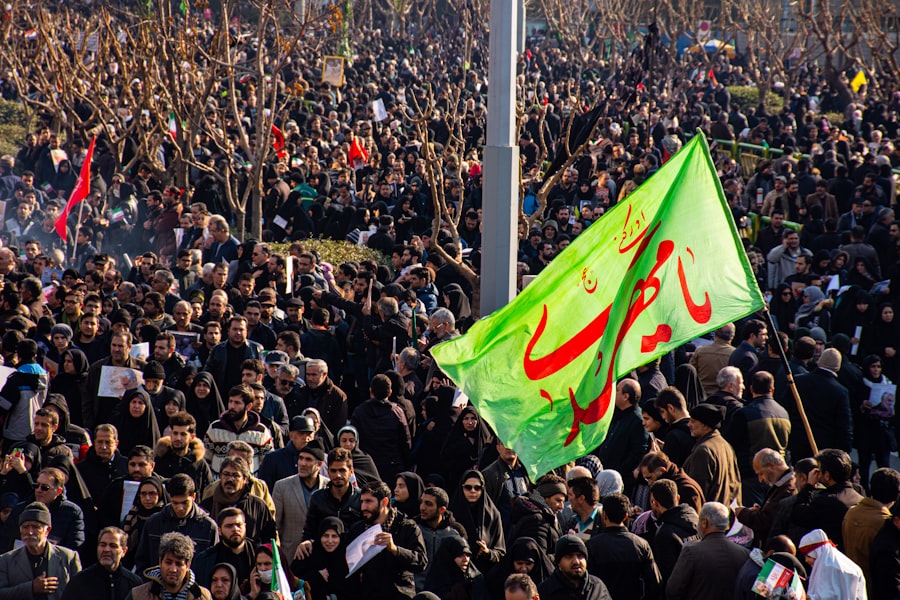
The pre-Islamic past provided a potent arsenal of symbols, myths, and historical narratives that were consciously mobilized to construct modern Iranian nationalism.
Iconic Figures and Their Nationalist Reappropriation
Certain pre-Islamic figures were elevated to near-mythical status, their deeds and character reinterpreted to embody nationalist ideals.
Cyrus the Great: The Benevolent Founder of an Empire
Cyrus the Great was particularly valorized as the founder of the first great Iranian empire and a ruler of exceptional wisdom and justice. His legacy was presented as a model for modern leadership and a testament to the inherent greatness of the Iranian people.
Key Sasanian Kings: Warriors and Defenders of the Faith
Sasanian kings like Ardashir I and Shapur I, known for their military prowess and the expansion of the empire, were portrayed as strong leaders who defended Iranian sovereignty and cultural purity.
Enduring Symbols of Iranian Identity
Beyond specific figures, a range of visual and conceptual symbols drawn from the pre-Islamic era became integral to the nationalist imagination.
The Faravahar: A Symbol of Divine Protection and Goodness
The Faravahar, a winged disc with a human figure, is often interpreted as a symbol of Zoroastrian faith and divine protection, as well as representing the triumph of good over evil. Its adoption as a nationalist emblem underscored a connection to ancient spiritual traditions.
The Lion and Sun Motif: A Royal and National Emblem
The Lion and Sun motif, a recurrent symbol in Persian art and heraldry, evolved over time from a royal emblem to a national symbol, evoking a sense of continuity and historical legitimacy.
The exploration of pre-Islamic greatness in Iran has become a significant aspect of contemporary Iranian nationalism, as many seek to reconnect with their rich historical heritage. An insightful article that delves into this topic can be found on In the War Room, which discusses how the legacy of ancient Persia continues to influence modern Iranian identity. For those interested in understanding the complexities of this relationship, the article provides a comprehensive analysis of the cultural and historical factors at play. You can read more about it in this related article.
Criticisms and Contemporary Considerations
| Metrics | Pre Islamic Greatness | Iranian Nationalism |
|---|---|---|
| Art and Architecture | Palaces, Persepolis | Revival of Persian culture |
| Literature | Epic poetry, Ferdowsi | Promotion of Persian language |
| Empire | Achaemenid, Sassanian | National pride and unity |
| Religion | Zoroastrianism | Preservation of ancient beliefs |
While the embrace of pre-Islamic heritage has been a powerful force in shaping Iranian nationalism, it is also subject to critical examination regarding its historical accuracy, inclusivity, and contemporary implications.
The Problem of Historical Authenticity and Selective Interpretation
Nationalist narratives often involve a selective interpretation of history, emphasizing aspects that align with the desired national identity while downplaying or ignoring others.
The “Golden Age” Fallacy
The romanticization of the pre-Islamic past, often referred to as a “golden age,” can overlook periods of internal strife, social inequality, and external pressure that also characterized these empires.
The Erasure of Non-Persian Contributions
A strong focus on Persianate culture and identity within nationalist discourse can sometimes marginalize the contributions of other ethnic and linguistic groups within the broader Iranian plateau.
The Political Utility of Pre-Islamic Heritage
The use of pre-Islamic history as a cornerstone of national identity has often been politically motivated, serving to legitimize regimes and foster a sense of unity against perceived external threats.
Secular Nationalism versus Religious Identity
The promotion of a secular, pre-Islamic national identity by some Pahlavi-era rulers was, in part, a strategy to dilute the influence of religious clergy and establish a distinct national ideology.
The Impact of the Islamic Revolution
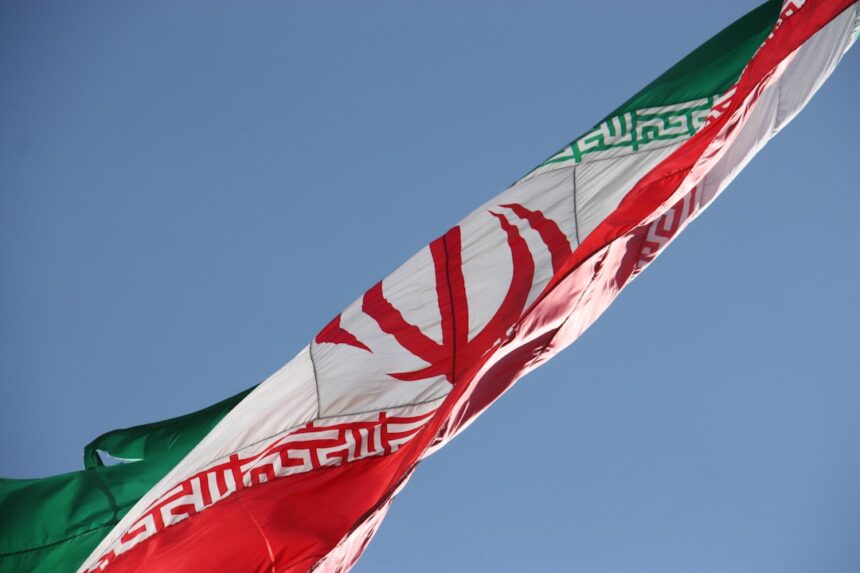
Following the 1979 Islamic Revolution, the relationship between pre-Islamic heritage and national identity became more complex. While some elements of Iran’s ancient past continued to be appreciated, the dominant ideological framing shifted towards an Islamic identity, leading to a renegotiation of the role of pre-Islamic symbolism and narratives.
In conclusion, the historical narrative of pre-Islamic greatness and its influence on Iranian nationalism is a multifaceted one. The empires of ancient Persia provided a rich fount of cultural achievements and symbolic capital that were selectively drawn upon to forge a modern national consciousness. However, understanding this relationship requires a nuanced approach that acknowledges the process of historical interpretation, the political motivations behind nationalist narratives, and the evolving nature of national identity in response to changing historical circumstances. The legacy of pre-Islamic Iran continues to be a potent, albeit complex, element in the ongoing construction of Iranian identity.
FAQs
What is pre-Islamic greatness in Iranian history?
Pre-Islamic greatness in Iranian history refers to the period before the spread of Islam in Iran, which is often associated with the ancient Persian Empire. This era is known for its rich cultural, artistic, and scientific achievements, including the development of the Persian language, literature, and architecture.
What is Iranian nationalism?
Iranian nationalism is a political and cultural movement that emphasizes the pride and identity of the Iranian people, often rooted in the country’s pre-Islamic history and achievements. It seeks to promote a sense of unity and solidarity among Iranians, regardless of their religious or ethnic backgrounds.
How does pre-Islamic greatness influence Iranian nationalism?
The concept of pre-Islamic greatness plays a significant role in shaping Iranian nationalism by serving as a source of pride and inspiration for the Iranian people. It is often used to assert Iran’s historical and cultural significance, and to promote a sense of national identity that transcends religious and ethnic differences.
What are some examples of pre-Islamic greatness in Iranian history?
Examples of pre-Islamic greatness in Iranian history include the Achaemenid Empire, which was one of the largest and most powerful empires in ancient history, as well as the development of Zoroastrianism, an ancient Iranian religion that had a profound influence on Persian culture and identity.
How does Iranian nationalism impact modern Iran?
Iranian nationalism continues to play a significant role in shaping modern Iran, influencing political discourse, cultural expressions, and national identity. It has also been a driving force behind movements for social and political change, as well as efforts to preserve and promote Iran’s rich cultural heritage.