Navigating the Depths: Deep-Sea Cables and Maritime Trade Routes
The modern global economy is inextricably linked to the smooth operation of both its physical arteries and its invisible information highways. While vast container ships, laden with goods, dominate our perception of maritime trade, an equally critical, yet often unseen, infrastructure underpins its success: the network of deep-sea telecommunications cables. These submerged conduits, stretching across continents and under oceans, carry the vast majority of international data traffic. Their presence and protection are fundamental to the efficiency, security, and continued growth of global commerce, directly influencing the established and emerging maritime trade routes that facilitate the movement of physical goods.
The rapid expansion of the internet and the increasing demand for real-time communication have necessitated the development of a sophisticated global network of undersea cables. These cables, far more than simple wires, are complex engineering marvels designed to withstand immense pressure, corrosive environments, and the occasional hazard of the deep sea. They form the backbone of international telecommunications, carrying voice, data, and video signals at the speed of light across vast distances.
A Brief History of Submarine Communication
The concept of transmitting information via underwater cables dates back to the 19th century, primarily for telegraphic communication. Early transatlantic telegraph cables, though prone to failure, laid the groundwork for the more robust and complex systems of today. The evolution from copper-based wires to fiber optic technology has dramatically increased capacity and reliability, transforming communication from a luxury to a ubiquitous utility. This historical trajectory highlights a continuous drive to overcome geographical barriers and facilitate faster, more widespread information exchange.
The Technology Behind the Depths
Modern deep-sea cables are sophisticated systems comprising multiple components. At their core are bundles of glass fibers, each thinner than a human hair, through which light pulses carry data. These fibers are protected by layers of steel wire, polyethylene sheathing, and sometimes even copper conductors for power delivery to the signal-boosting repeaters embedded along the cable’s length. The design and placement of these repeaters are critical for maintaining signal integrity over thousands of kilometers.
Data Capacity and Growth
The data-carrying capacity of fiber optic cables is immense and continually growing. What was once measured in kilobits per second is now in terabits per second. This exponential increase in capacity is essential to support the ever-growing volume of online transactions, cloud computing, streaming services, and the industrial internet of things (IIoT) that is increasingly integrated into maritime logistics. Without this substantial bandwidth, the digital operations foundational to modern trade would be impossible.
Deep-sea cables play a crucial role in facilitating global maritime trade routes, serving as the backbone of international communication and data transfer. An insightful article that delves into the significance of these undersea cables and their impact on trade can be found at this link: Understanding Deep-Sea Cables and Maritime Trade Routes. This resource explores how these cables not only enhance connectivity but also influence economic dynamics across various regions.
Intertwined Fortunes: Cables and Maritime Trade Routes
The relationship between deep-sea cable networks and maritime trade routes is symbiotic and increasingly interdependent. The existence of robust communication infrastructure directly influences the viability and efficiency of shipping lanes, while the routes themselves can sometimes pose physical challenges to the cables.
The Digital Backbone of Shipping Logistics
Maritime trade today is a highly sophisticated operation, heavily reliant on real-time data. From the moment a shipment is booked to its final delivery, a constant flow of information is exchanged. This includes vessel tracking (Automatic Identification System – AIS data), cargo manifests, weather updates, port congestion reports, financial transactions, and crew communications. All of this critical data traverses the deep-sea cable network. Disruptions to this network can have cascading effects, leading to significant delays, increased costs, and operational inefficiencies.
The Influence of Cables on Route Efficiency
The placement of new deep-sea cables can, in certain instances, influence the development or optimization of maritime trade routes. By enabling enhanced communication and data sharing between ports, vessels, and shore-based operations, these cables can facilitate more efficient routing. For example, real-time traffic management systems, powered by seamless data flow, can help optimize vessel passage through busy straits or canals, reducing transit times and fuel consumption. Furthermore, the ability to monitor environmental conditions and predict weather patterns with greater accuracy, thanks to widespread data collection and transmission, aids in safer and more efficient navigation across trade routes.
Geographical Synergies and Challenges
Many critical maritime trade routes pass across or in close proximity to areas where deep-sea cables are laid. This geographical overlap presents both opportunities for synergy and potential for conflict. The major shipping lanes of the Atlantic, Pacific, and Indian Oceans are paralleled by extensive subsea cable systems. This proximity means that any risks to one infrastructure can potentially impact the other.
Threats and Vulnerabilities: Protecting the Subsea Arteries

Despite their robust construction, deep-sea cables are not immune to physical threats. These vulnerabilities can lead to disruptions in data flow, impacting maritime trade operations and global commerce. Understanding these threats is crucial for ensuring the resilience of the undersea network.
Accidental Damage: The Fishing and Anchoring Menace
One of the most common causes of cable damage is accidental contact with fishing vessels’ gear and ship anchors. Trawling operations can snag and sever cables, while anchors dropped carelessly can cause significant abrasions or outright breaks. The vast expanse of the ocean floor means that cables often lie in areas where such activities occur, creating a persistent risk. Regulatory efforts and awareness campaigns aim to mitigate this, but the sheer volume of maritime traffic makes complete prevention challenging.
Natural Hazards: The Unpredictable Ocean Floor
The ocean floor is not a static environment. Underwater earthquakes, volcanic activity, and landslides can physically dislodge or damage buried cables. While cables are typically laid in geologically stable areas, the risk of extreme geological events, though lower, cannot be entirely discounted. The movement of ocean currents and sedimentation can also erode protective layers over time, exposing cables to wear.
Deliberate Interference: A Growing Geopolitical Concern
In recent years, concerns about deliberate interference with undersea cables have risen, particularly in the context of geopolitical tensions. Sabotage by state or non-state actors poses a significant threat to critical communication infrastructure. The potential for disrupting global data flow, including the data vital to maritime trade, makes undersea cables attractive targets for those seeking to exert influence or cause disruption. This has led to increased focus on cable security and surveillance.
The Impact of Cable Faults on Maritime Operations
A single cable fault can have far-reaching consequences. A disruption in data flow can prevent vessels from receiving crucial navigation updates, disrupt customs clearance procedures, delay cargo transfers at ports, and interrupt financial transactions related to shipping. The reliance on redundant cable routes helps mitigate the impact of a single failure, but a widespread outage or the simultaneous failure of multiple critical links could cripple global maritime commerce for an extended period.
Resilience and Redundancy: Fortifying the Subsea Network
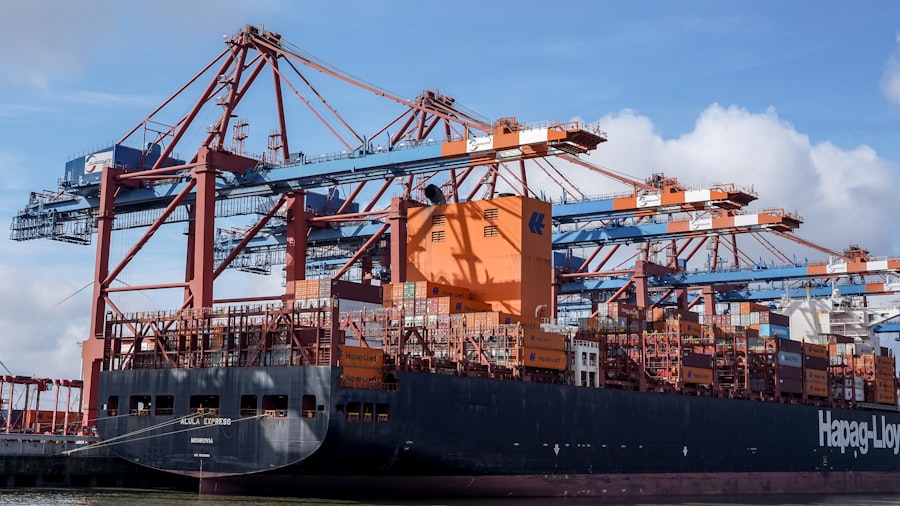
To counter the inherent vulnerabilities of deep-sea cables, significant efforts are dedicated to building resilience and redundancy into the global network. This proactive approach aims to minimize the impact of any potential disruptions and ensure the continuous flow of data essential for maritime trade.
The Importance of Diversification
A key strategy for ensuring network resilience is geographical diversification. Cables are laid in multiple, geographically dispersed routes, often forming redundant paths between continents. This means that if one cable is damaged, data traffic can often be rerouted through alternative connections, preventing a complete communication blackout. This diversification is a critical factor in supporting the complex web of global maritime trade, which often involves multiple stops and relies on continuous connectivity.
Submarine Cable Protection Measures
Various measures are employed to protect submarine cables from physical damage. These include burying cables at significant depths in high-risk areas, using reinforced sheathing, and developing sophisticated monitoring systems that can detect anomalies or potential threats in real-time. Cable operators also work with maritime authorities to establish protected cable zones and promote best practices among maritime users to minimize the risk of accidental damage.
Cable Repair and Maintenance
The maintenance and repair of deep-sea cables are complex and costly operations. Specialized vessels equipped with sophisticated machinery are deployed to locate damaged sections, retrieve them from the ocean floor, repair or replace the damaged components, and re-lay the cable. These operations require precision and can take considerable time, underscoring the importance of preventing damage in the first place. The speed and efficiency of these repairs are critical to restoring connectivity for maritime trade.
Advancements in Cable Technology
Ongoing research and development in cable technology focus on enhancing durability, increasing data-carrying capacity, and improving self-monitoring capabilities. Newer cable designs incorporate advanced materials and protective coatings, while continuous innovation in signal amplification and transmission protocols further boosts network performance and resilience. These advancements not only improve the functionality of the cables themselves but also contribute to the overall robustness of the digital infrastructure supporting global trade.
Deep-sea cables play a crucial role in facilitating global maritime trade routes, connecting continents and enabling seamless communication. An insightful article that delves into the significance of these underwater networks can be found at In the War Room, where it explores how advancements in technology are reshaping the dynamics of international shipping and trade. Understanding the interplay between digital infrastructure and maritime logistics is essential for grasping the future of global commerce.
The Future Landscape: Emerging Trends and Considerations
| Deep-Sea Cables Maritime Trade Routes | |
|---|---|
| Number of deep-sea cables | 400+ |
| Total length of cables | 1.2 million km |
| Busiest trade route | Asia-Europe |
| Number of connected countries | 240+ |
The synergy between deep-sea cables and maritime trade is not static; it is an evolving relationship influenced by technological advancements, changing geopolitical landscapes, and the continuous growth of global commerce. Understanding these emerging trends is crucial for anticipating the future of both infrastructures.
The Rise of Underwater Internet of Things (U-IoT)
The expansion of the Internet of Things (IoT) into the maritime domain, and increasingly into the ocean itself, presents new opportunities and demands on subsea cable networks. U-IoT devices, deployed for environmental monitoring, subsea asset management, and autonomous navigation, generate continuous streams of data that must be transmitted ashore. This increased data flow will necessitate further expansion and enhancement of existing cable infrastructure.
Quantum Communication and its Potential Impact
While still in its nascent stages, quantum communication technology holds the potential to revolutionize secure data transmission. The development of quantum-resistant encryption and potentially quantum entanglement-based communication could have profound implications for the security and privacy of data transmitted via subsea cables. This could enhance the integrity of sensitive maritime trade information.
The Strategic Importance of Subsea Cables in Geopolitics
The critical role of subsea cables in facilitating global communication and commerce has elevated their strategic importance in international relations. Nations are increasingly investing in their own subsea cable networks and paying closer attention to the security and control of these vital arteries. This geopolitical focus could lead to greater investment in cable infrastructure, but also to increased tensions and potential disputes over their control and use.
Sustainable Maritime Trade and the Role of Connectivity
As the maritime industry moves towards greater sustainability, enhanced connectivity provided by deep-sea cables will play a crucial role. Real-time data analysis for optimizing fuel efficiency, reducing emissions, and managing waste will become increasingly important. Furthermore, the development of smart ports and autonomous shipping, heavily reliant on constant data exchange, will further cement the link between robust subsea cable networks and a more sustainable future for maritime trade. The efficient flow of data will enable better resource management and operational optimization, contributing to environmental goals.
FAQs
What are deep-sea cables?
Deep-sea cables are underwater cables that are laid on the seabed to transmit data, telecommunications, and internet traffic between continents and countries. These cables are essential for global communication and connectivity.
How are deep-sea cables important for maritime trade routes?
Deep-sea cables play a crucial role in maritime trade routes by enabling the transmission of real-time data, communication, and navigation information for ships at sea. They also facilitate the exchange of electronic documents and transactions between ports and shipping companies, contributing to the efficiency and safety of maritime trade.
How are deep-sea cables laid on the ocean floor?
Deep-sea cables are typically laid on the ocean floor by specialized cable-laying ships. The process involves carefully planning the route, protecting the cables from damage, and securing them to the seabed. Once in place, the cables are buried under the seabed to protect them from fishing activities and natural disturbances.
What are the challenges associated with deep-sea cables and maritime trade routes?
Challenges related to deep-sea cables and maritime trade routes include potential damage from ship anchors, fishing activities, and natural disasters such as earthquakes and undersea landslides. Additionally, there is a risk of intentional damage or sabotage to the cables, which can disrupt global communication and trade.
How do deep-sea cables impact global connectivity and trade?
Deep-sea cables are essential for global connectivity and trade, as they enable the seamless transmission of data, communication, and financial transactions across continents. They support the growth of international trade by facilitating efficient and reliable communication between ports, shipping companies, and trading partners worldwide.