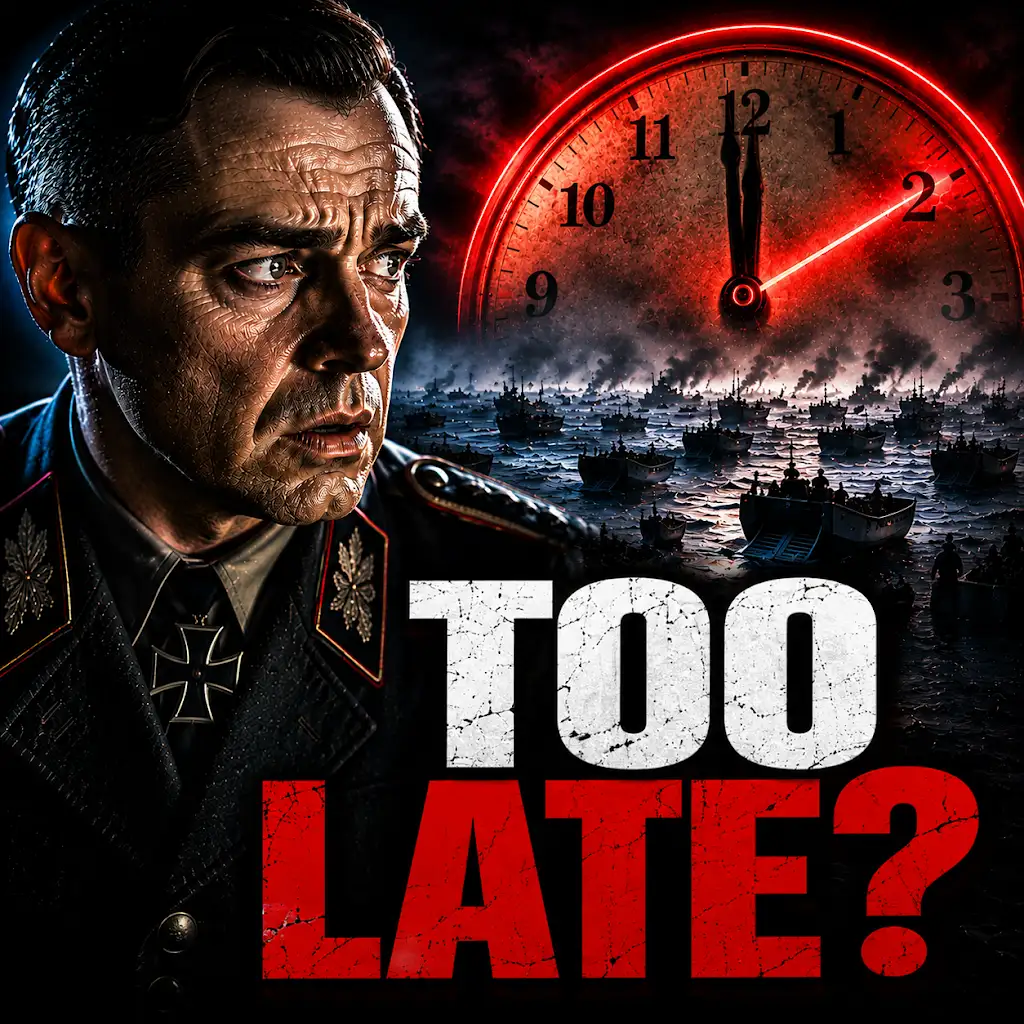
The Panzer Lehr Division, a formidable armored formation of the Wehrmacht, was thrust into the crucible of Normandy on D-Day, June 6, 1944. Its deployment, though intended to be a decisive blow against the Allied invasion, ultimately became a testament to the ferocity of the fighting and the immense challenges faced by German forces in the opening hours of the Normandy campaign. This elite unit, forged in the fires of the Eastern Front and meticulously prepared for battle, found itself ill-positioned, under constant air attack, and facing an enemy that seemed to spring from the very earth.
A New Breed of Armored Division
Panzer Lehr, meaning “Armored Training Division,” was established in January 1944. Its designation was somewhat misleading; it was far from a mere training unit. Instead, it represented a deliberate effort by the Oberkommando der Wehrmacht (OKW) to create a highly mobile and powerful armored division, equipped with the latest German armor and led by experienced officers. The intention was to have a strategic reserve, capable of being rapidly deployed to any threatened sector of the Western Front.
Recruitment and Training
The division’s cadre was drawn from seasoned veterans, many of whom had combat experience on the Eastern Front. This provided a core of battle-hardened soldiers and NCOs. The enlisted men were a mix of experienced personnel and new recruits, who underwent rigorous training. The division’s unique status meant that it benefited from the most advanced equipment available, including the formidable Panzer V Panther and Panzer VI Tiger tanks, as well as Sturmgeschütz (assault guns) and a full complement of armored personnel carriers (APCs) and self-propelled artillery. The emphasis was on combined arms operations, with close coordination between tanks, infantry, artillery, and engineers.
Strategic Significance and Deployment Plans
Panzer Lehr was designated as a mobile reserve for Army Group B, under Field Marshal Erwin Rommel. Its commander, Lieutenant General Fritz Bayerlein, was a veteran of numerous campaigns and a highly respected armor commander. The division was stationed in the Versailles and Chartres areas, west of Paris, providing a significant strategic depth. This positioning, while intended for rapid deployment, would prove to be a critical factor in its delayed arrival on the battlefield. German doctrine dictated that armored reserves were not to be committed too early, but rather held back to deliver a decisive counterattack once the enemy’s main effort and objectives were identified.
The Long Road to Normandy
The Fog of War and Misinformation
The Allied invasion of Normandy was meticulously planned and executed with a high degree of deception. Operation Fortitude, the elaborate Allied deception campaign, had successfully convinced the Germans that the main landing would occur at the Pas-de-Calais. This belief, coupled with the inherent difficulty in gathering accurate intelligence on Allied movements, contributed to the German high command’s misjudgment of the invasion’s true location and scale. Panzer Lehr, along with other elite units, was held in reserve based on this flawed understanding.
The Unseen Enemy: Allied Air Superiority
One of the most significant factors impacting Panzer Lehr’s movement was the overwhelming Allied air superiority. From the moment the invasion began, the skies over Normandy were dominated by Allied aircraft. This had a devastating effect on German ground movements. Any attempt to move troops and equipment, especially by day, was met with intense air attacks. Roads, railway lines, and even forests where units attempted to conceal themselves became targets for fighter-bombers and reconnaissance aircraft.
The Relentless Strafe
The constant threat of Allied aircraft forced German units to travel primarily under the cover of darkness. This significantly slowed down their advance, adding precious hours to an already precarious journey. The psychological impact of these attacks was also considerable, contributing to a sense of vulnerability and exhaustion among the troops.
Engineering Challenges and Disruptions
The Allied bombing campaign had also targeted key infrastructure, including bridges and railway lines. This forced Panzer Lehr to undertake extensive detours and relied heavily on road transport, further exacerbating the delays. German engineers worked tirelessly to repair damaged routes, but the sheer scale of the destruction and the continuous aerial threat made progress incredibly slow.
The Dilemma of Hitler’s Authorization
Adding to the complexity of the situation was the requirement for Hitler’s personal authorization to commit the Panzer reserves. Even when intelligence indicated the invasion was underway, there was a delay in obtaining the necessary orders, as the German high command grappled with the possibility of deception or a secondary landing elsewhere. This bureaucratic bottleneck proved to be a critical hindrance, preventing Panzer Lehr from being released to the front as quickly as its commander would have liked.
The Crucible of the Bocage
Arriving on a Burning Battlefield
By the time Panzer Lehr began to arrive in the Normandy sector, the initial landings had already been secured by the Allied forces, and the fighting had devolved into brutal engagements within the hedgerow country – the bocage. This terrain, characterized by dense hedgerows, narrow lanes, and small fields, was ideally suited for defensive warfare and proved to be a nightmare for heavily armored formations.
The Initial Engagements: Thury-Harcourt and Tilly-sur-Seulles
Elements of Panzer Lehr were first committed to the fight in the Thury-Harcourt area and around Tilly-sur-Seulles. These were not the decisive counterattacks envisioned in their deployment plans, but rather desperate attempts to plug gaps and prevent further Allied advances. The division found itself facing seasoned British and American infantry, supported by Allied armor and artillery.
Facing Elite Allied Units
The Allied forces that Panzer Lehr encountered were not green conscripts. They were the well-trained and well-equipped troops of the British XXX Corps and the American V Corps. These units had fought in North Africa and Italy and were hardened veterans. The experience of fighting in the bocage, where close-quarters combat was the norm, meant that even the formidable Panzer Lehr tanks were vulnerable to anti-tank guns, bazookas, and infantry assaults.
The Struggle for Supremacy in the Bocage
The hedgerow country significantly negated the advantages of German armor. The limited visibility meant that tanks could be easily ambushed. The narrow lanes restricted maneuverability, and the dense vegetation provided excellent cover for Allied infantry to set up anti-tank ambushes. Panzer Lehr’s tanks, though superior in some respects, found it difficult to engage targets effectively and were often caught in deadly crossfires.
The Battle for Caen: A Strategic Prize
Caen, a strategically important city, became a focal point of the early Normandy campaign. Panzer Lehr was eventually committed to the defense of Caen and its surrounding areas. This was a protracted and brutal struggle, characterized by intense artillery duels, infantry assaults, and armored clashes. The division, though fighting bravely, found itself increasingly attrited in the relentless fighting.
The Unrelenting Allied Offensive
The British and Canadian forces relentlessly assaulted the German positions around Caen. The Allied air forces continued to provide close air support, softening up German defenses before ground assaults. Panzer Lehr found itself under constant pressure, with little respite.
The Cost of Attrition
Despite its elite status and formidable equipment, Panzer Lehr began to suffer significant casualties. Tanks were destroyed, vehicles damaged, and personnel killed or wounded. The division’s initial strength was gradually eroded by the constant fighting and the inability to receive adequate reinforcements or replacements.
Panzer Lehr’s Tactical Fights and Flaws
The Limits of German Armor
While the Panther and Tiger tanks were technologically advanced and fearsome opponents, they were not invincible. In the confined spaces of the bocage, their advantages in firepower and armor protection were often negated by the Allies’ ability to exploit the terrain and use concentrated anti-tank fire.
Ambushes and Close-Quarters Combat
Allied infantry proved adept at ambushing German tanks. They would lie in wait in hedgerows, using Panzerfausts and Panzerschrecks (anti-tank rocket launchers) to disable or destroy tanks at close range. The heavy tanks, designed for open warfare, struggled to maneuver effectively in the narrow confines, making them easy targets.
The Vulnerability of Logistics
Even the best-equipped units are only as effective as their supply lines. Panzer Lehr, like all German units in Normandy, suffered from increasingly strained logistical support. Ammunition, fuel, and spare parts were difficult to procure and transport to the front lines, further hindering their ability to fight effectively.
The Unfortunate Encounters: Operation Epsom and Cobra
Panzer Lehr participated in several significant engagements where its operational effectiveness was severely tested.
Operation Epsom (June 26 – July 1, 1944)
Operation Epsom, a major British offensive south of Caen, saw Panzer Lehr heavily involved in the fierce defensive battles. The division fought tenaciously to hold its lines against determined British assaults, but the overwhelming weight of Allied artillery and air power, coupled with persistent infantry attacks, gradually pushed them back.
Operation Cobra (July 25 – August 1, 1944)
Operation Cobra, the American breakout from the Normandy beachhead, was another critical moment. Panzer Lehr was among the German units desperately trying to contain the American advance. The massive aerial bombardment that preceded Cobra devastated German defenses, and Panzer Lehr, caught in the storm, suffered heavy losses. The division’s attempts to counterattack were met with fierce resistance and air attacks.
The Unforeseen Impact of Allied Tactics
The Allies adapted their tactics to the realities of the bocage. They developed new methods for breaching hedgerows, employing specialized armored vehicles like the Sherman Crab flail tanks to clear obstacles. They also refined their artillery and air support coordination, ensuring that German defensive positions were relentlessly pounded before ground assaults.
The Long and Bitter Retreat
The Falaise Pocket: A Death Trap
As the Allied forces closed in, Panzer Lehr, along with many other German units, found itself trapped in the Falaise Pocket. This was a catastrophic encirclement where German forces were squeezed between converging Allied armies.
The Desperate Fight for Survival
Within the pocket, Panzer Lehr, now severely depleted and exhausted, fought a desperate rearguard action. The division’s remaining tanks and personnel were committed to holding back the Allied advance, buying time for other units to escape. The fighting was brutal and chaotic, with little hope of relief.
The Heavy Toll of the Pocket
The Falaise Pocket represented the nadir for Panzer Lehr. The division suffered immense casualties, with a significant portion of its remaining equipment destroyed or captured. Those who managed to escape were severely weakened and scattered.
The Long Road to the Rhine
After the Falaise Pocket, the remnants of Panzer Lehr were gradually withdrawn from the front lines. The division, once a proud and powerful armored formation, was now a shadow of its former self. It was refitted and reorganized in the following months, but the losses sustained in Normandy were irreparable.
Reorganization and Partial Recovery
In the aftermath of the Falaise Pocket, efforts were made to rebuild Panzer Lehr. However, the dire straits of the German war effort meant that replacements were scarce, and the quality of new equipment was often inferior. The division would continue to fight in subsequent campaigns, but the devastating impact of its baptism by fire in Normandy would forever shape its destiny.
A Legacy of Fierce Resistance
Despite its ultimate fate, the Panzer Lehr Division left a legacy of fierce resistance on the battlefields of Normandy. Its soldiers fought with determination and courage against overwhelming odds. Their experience, however, also serves as a stark reminder of the challenges faced by armored forces in highly restrictive terrain and the devastating impact of Allied air superiority and superior logistics. The story of Panzer Lehr on D-Day is a complex tapestry woven with threads of tactical prowess, strategic miscalculation, and the unyielding brutality of modern warfare.