Operation Paul Bunyan: Averting Conflict with Precision
The Shadow of the Ax: Precursors to Operation Paul Bunyan
The Korean Peninsula, a land perpetually teetering on the precipice of division, has been a flashpoint of geopolitical tension for decades. Following the devastating Korean War (1950-1953), the armistice agreement established a fragile peace, demarcated by the heavily fortified Demilitarized Zone (DMZ). However, this peace was perpetually shadowed by the specter of renewed hostilities. North Korea, under the Kim dynasty’s iron grip, maintained a substantial military presence, including a formidable artillery force positioned along the DMZ and within striking distance of Seoul, the bustling South Korean capital. The constant threat of an unprovoked attack, often fueled by propaganda and ideological fervor, cast a long shadow over the lives of millions.
The United States, as a principal security guarantor for the Republic of Korea, remained deeply involved in the peninsula’s defense. Joint military exercises were a regular feature, designed to hone readiness and deter aggression. Yet, the specific vulnerabilities posed by North Korea’s artillery concentration remained a persistent concern. Intelligence reports frequently highlighted the sheer destructive potential of these weapon systems, capable of inflicting immense damage on South Korea’s civilian population and critical infrastructure in a matter of minutes. The psychological impact of this ever-present threat was also significant, contributing to a climate of anxiety and uncertainty.
In the lead-up to the events that would necessitate Operation Paul Bunyan, the tensions on the Korean Peninsula had reached a fever pitch. The volatile political landscape, coupled with North Korea’s unpredictable behavior, created an environment ripe for miscalculation and escalation. The international community, while advocating for peace, often found itself grappling with the complexities of engaging with a reclusive and ideologically driven regime. This intricate geopolitical tapestry, woven with threads of historical animosity, military posturing, and ideological divergence, set the stage for a critical juncture where decisive, yet carefully calibrated, action would be required.
Operation Paul Bunyan, a massive show of force following the Korean War, was designed to demonstrate U.S. military power without escalating tensions into full-blown conflict. This operation, which involved the destruction of a poplar tree in the Korean Demilitarized Zone, cleverly avoided war by emphasizing psychological tactics over direct military engagement. For a deeper understanding of the strategic implications of such operations and how they can prevent conflict, you can read a related article on this topic at In the War Room.
The Unforeseen Flashpoint: The Demilitarized Zone Incident
The Korean Peninsula’s most heavily militarized border, the Demilitarized Zone (DMZ), has served as a constant reminder of the unresolved conflict. This buffer zone, stretching across the peninsula, is a stark testament to the division of a nation and the deep-seated animosities that persist. Within this tense landscape, small incursions, provocations, and skirmishes have been a recurring feature, each incident carrying the potential to ignite a larger conflagration. The Joint Security Area (JSA) within the DMZ, where soldiers from both North and South Korea stand mere feet apart, has been the site of numerous confrontations, both physical and psychological.
In August 1976, the simmering tensions within the DMZ erupted into a violent confrontation. A routine tree-trimming operation by United Nations Command (UNC) personnel, including American and South Korean soldiers, in the Panmunjom area of the JSA became the catalyst for a brutal attack. The objective was to clear a poplar tree that obstructed the view from a UNC observation post. This seemingly innocuous task, however, was deemed an act of aggression by North Korean forces. Unprovoked, a contingent of North Korean soldiers, armed with axes and clubs, descended upon the UNC work party. The attack was swift and merciless, resulting in the deaths of two American Army officers, Captain Arthur Bonifas and First Lieutenant Mark Barrett, and the wounding of several others.
The brutality of the assault sent shockwaves throughout the international community and, most significantly, within the military commands of the United States and South Korea. The unprovoked nature of the attack, the targeting of unarmed personnel, and the audacity with which it was carried out, underscored the extreme risks inherent in the Korean Peninsula’s volatile environment. The incident was not merely a localized skirmish; it was a direct challenge to the armistice agreement and a clear signal of North Korea’s willingness to employ lethal force to assert its territorial claims and intimidate its adversaries. The gravity of the situation demanded an immediate and decisive response, one that would signal resolve without precipitating an all-out war.
The Strategic Imperative: Decapitating the Threat
The immediate aftermath of the Panmunjom incident was marked by a heightened state of alert on both sides of the DMZ. The North Korean leadership, by orchestrating such a brazen attack, had effectively placed the ball firmly in the court of the United Nations Command and the United States. The question was no longer if a response would be necessary, but what kind of response would be appropriate and effective. The leadership recognized that a purely retaliatory strike, while perhaps satisfying a sense of justice, could easily spiral out of control. The specter of a full-scale invasion, with its catastrophic human and economic costs, loomed large.
The core of the strategic dilemma lay in addressing the immediate threat while mitigating the risk of escalation. North Korea’s artillery, densely packed along the DMZ, represented a formidable and immediate danger. The ability of these artillery pieces to saturate Seoul with destructive fire in a matter of minutes was a strategic vulnerability that could not be ignored. Therefore, any response needed to be carefully calibrated to neutralize this immediate threat without provoking a wider conflict.
The concept of “decapitation,” in a military sense, refers to the elimination of an enemy’s leadership or critical command and control capabilities. While Operation Paul Bunyan did not involve the direct targeting of North Korean leadership in the traditional sense, it aimed to “decapitate” the immediate offensive capability that threatened South Korea. The focus was on dismantling the offensive posture that made North Korea so dangerous. This meant targeting the instruments of aggression, specifically the artillery emplacements that were so close to the DMZ and so readily capable of delivering devastating blows. The operation needed to demonstrate a clear message of resolve and capability, a demonstration that would deter future provocations and reassure South Korea of its security. The challenge was to achieve this objective with surgical precision, minimizing collateral damage and the risk of unintended consequences.
The Genesis of Operation Paul Bunyan: Precision and Deterrence
In the wake of the Panmunjom massacre, the United States and South Korea engaged in urgent consultations. The gravity of the situation demanded a response that was both firm and measured. A direct military assault on North Korea was deemed too risky, potentially triggering a devastating war. Instead, the focus shifted to a more targeted approach, one that would send an unmistakable message of resolve while minimizing the risk of escalation. This led to the conception of Operation Paul Bunyan, an operation characterized by its precision and its underlying objective of deterrence.
The name “Paul Bunyan,” conjures images of strength, power, and a legendary figure capable of immense feats. In the context of this operation, it symbolized the United States’ unwavering commitment to the defense of South Korea and its ability to project power when necessary. The operation was not about outright aggression, but about a calculated demonstration of force designed to alter North Korea’s calculus and prevent future transgressions.
The core of the operation revolved around the removal of a specific poplar tree within the DMZ. This tree, much like the one that had been the subject of the fatal trimming operation, obstructed the view from a UN observation post. However, the significance of this particular tree lay not in its obstruction, but in its symbolic and strategic placement. Its removal was intended as a direct and visible response to North Korea’s aggression. The operation was planned with meticulous detail, emphasizing the need for overwhelming force to neutralize any potential North Korean interference. The goal was to demonstrate that the UNC possessed the capability and the will to enforce its operational parameters within the DMZ, regardless of North Korean objections. This was a carefully orchestrated display of power, designed to underscore the consequences of future provocations.
Operation Paul Bunyan, a significant military operation that took place in 1976, was designed to demonstrate U.S. resolve without escalating tensions into full-blown conflict. This operation, which involved the meticulous dismantling of a tree in the Korean Demilitarized Zone, served as a powerful reminder of the delicate balance between showing strength and avoiding war. For a deeper understanding of the strategies employed during this period, you can read more about related military operations in this insightful article here.
The Execution of the Operation: A Show of Force
The planning for Operation Paul Bunyan was conducted with the utmost secrecy and urgency. The objective was clear: to fell the targeted tree within the DMZ swiftly and decisively, while simultaneously deterring any North Korean interference. This required a carefully coordinated and overwhelming show of force, designed to leave no room for doubt about the UNC’s capabilities and resolve.
On August 21, 1976, under the cover of darkness and with a pre-dawn sky promising visibility, the operation commenced. The execution was a testament to military precision and logistical prowess. A contingent of approximately 64 soldiers, drawn from various units of the UNC, including special forces and engineers, was deployed. They were supported by an array of formidable military assets.
The Air Dominance Component: Securing the Skies
The skies above the operation area were secured by a significant air presence. Fighter jets, including F-4 Phantoms and F-5 Tigers, were scrambled and positioned to provide close air support and to deter any potential air incursions by North Korea. The constant hum of their engines overhead served as a psychological deterrent to any observers on the North Korean side. Reconnaissance aircraft also provided real-time intelligence, ensuring that any movements or preparations by North Korean forces were immediately detected and reported. The air component was crucial in establishing air superiority, preventing North Korea from using its own air assets to interfere with the ground operation.
The Ground Assault: Overwhelming Force
The ground forces were the main operational element. Armed with M16 rifles and other standard infantry weapons, they were tasked with securing the perimeter and protecting the tree-cutting detail. Their presence alone was a formidable deterrent. However, the operation was designed to be more than just a show of force; it was meant to be an overwhelming one.
The Heavy Machinery: The Tools of Precision
The centerpiece of the ground operation was the utilization of heavy machinery. Two South Korean bulldozers were deployed, their powerful engines rumbling as they approached the targeted tree. These machines were not merely for clearing brush; they were the instruments of precision, designed to fell the tree quickly and efficiently. Their sheer size and destructive potential were intended to discourage any thought of direct confrontation by North Korean forces.
The Supporting Arms: Deterrence in Every Direction
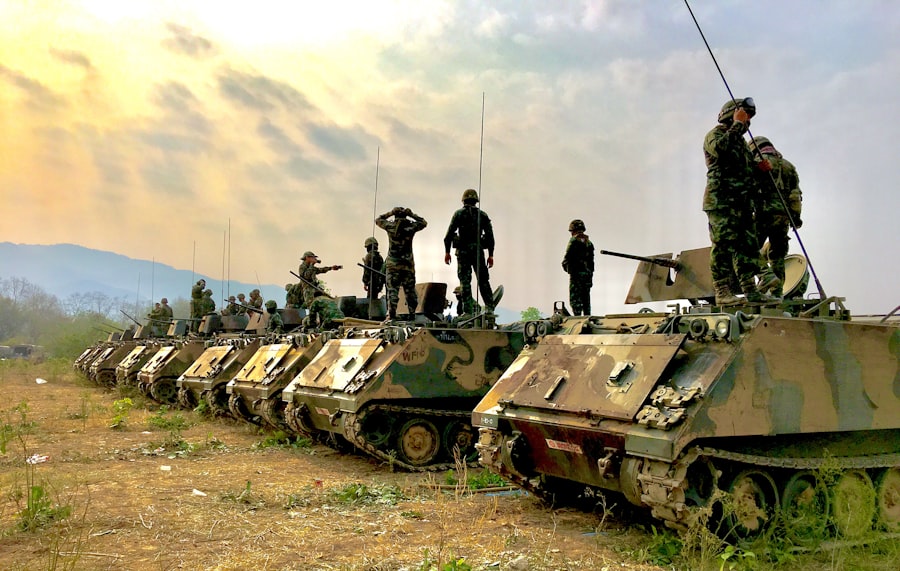
In addition to the bulldozers, a significant number of armed personnel were strategically positioned. Machine gunners provided a strong defensive perimeter. The operation was also supported by a battery of M60 tanks and M101 howitzers. While the howitzers were not fired, their presence, loaded and ready, served as a powerful visual deterrent. The tanks, with their cannons trained towards the North Korean positions, communicated a clear message: any interference would be met with overwhelming retaliatory firepower. The combination of air and ground assets created a layered defense and offense, designed to neutralize any potential threat and ensure the successful completion of the mission.
The operation itself was remarkably swift. The bulldozers, under the protection of the armed personnel, rapidly approached the tree. The sound of their engines mingled with the whirring of chainsaws as the tree was cut down in a matter of minutes. The entire operation, from the initial deployment to the withdrawal of forces, took approximately 45 minutes. This speed was critical, minimizing the window of opportunity for North Korea to mount an effective counter-response. The successful felling of the tree, under such a show of force, was a clear and unambiguous message to Pyongyang.
The Aftermath and Lingering Impact: A Fragile Peace Reaffirmed
The successful execution of Operation Paul Bunyan had a profound and immediate impact on the volatile situation on the Korean Peninsula. The overwhelming show of force, combined with the precision with which the operation was carried out, sent a clear and unequivocal message to North Korea: the United States and South Korea were prepared to defend their interests and enforce the terms of the armistice agreement. The operation served as a powerful deterrent, significantly reducing the likelihood of further unprovoked attacks and provocations in the immediate aftermath.
North Korea, having been decisively outmaneuvered and outmatched, largely refrained from retaliatory actions that could have escalated the conflict. While the regime continued its rhetoric and its military posturing, the specific threat of a large-scale artillery barrage seemed to be tempered. The operation demonstrated that the UNC possessed the capability and the will to respond decisively to aggression, and that such a response would be swift and overwhelming.
However, the operation did not fundamentally alter the underlying geopolitical realities of the Korean Peninsula. The division remained, and the fundamental ideological differences between North and South Korea persisted. The armistice agreement, while holding, remained a fragile peace, constantly subject to the whims of the North Korean leadership. Operation Paul Bunyan was a successful exercise in crisis management and deterrence, a testament to the effectiveness of precision and overwhelming force in averting a potentially catastrophic conflict.
The Reshaping of Protocols: Enhanced DMZ Security
The incident and the subsequent operation led to a reassessment and enhancement of security protocols within the DMZ. The UNC implemented stricter procedures for routine activities, particularly those that could be misinterpreted by the North Korean side. Observation posts were re-evaluated for their visibility, and any potential obstructions were addressed with greater alacrity and foresight. The emphasis shifted towards proactive measures to prevent incidents rather than solely reacting to them. The concept of “de-escalation through communication and clear signaling” gained prominence, though the effectiveness of such measures remained dependent on the willingness of both sides to engage constructively.
The Psychological Deterrent: A Lesson Learned
Beyond the tangible security measures, Operation Paul Bunyan served as a significant psychological deterrent. North Korea, having experienced the swift and decisive response of the UNC, understood the potential costs of further aggression. The operation reinforced the understanding that the United States would not tolerate provocations that threatened the security of its allies. This lesson, while not erasing the long-standing tensions, contributed to a period of relative calm on the immediate front lines.
The Long Shadow of Division: An Unresolved Future
Despite the success of Operation Paul Bunyan in averting immediate conflict, the long-term prospects for peace on the Korean Peninsula remained uncertain. The fundamental issues of division, reunification, and North Korea’s nuclear ambitions continued to cast a long shadow. The operation served as a critical intervention, a moment where a potentially disastrous escalation was averted through careful planning and decisive action. It stands as a stark reminder of the precarious balance on the Korean Peninsula and the constant need for vigilance, diplomacy, and, when necessary, the precise application of military power. The legacy of Operation Paul Bunyan lies not only in its immediate success but also in the lessons it offered about managing high-stakes geopolitical confrontations.

America Sent an Aircraft Carrier to Cut Down One Tree
FAQs
What was Operation Paul Bunyan?
Operation Paul Bunyan was a military operation conducted by the United States and South Korea in 1976 to cut down a tree in the Korean Demilitarized Zone (DMZ) that was blocking the view of a United Nations Command checkpoint.
Why was the tree-cutting operation necessary?
The tree-cutting operation was necessary because the tree was obstructing the view of a UNC checkpoint, making it difficult to monitor activity in the DMZ. This was a violation of the armistice agreement between North and South Korea.
How did North Korea initially respond to the tree-cutting operation?
North Korea responded aggressively to the tree-cutting operation by sending a group of soldiers to confront the UNC forces. This led to a tense standoff between the two sides.
How did the United States and South Korea prevent the situation from escalating into a full-blown war?
To prevent the situation from escalating, the United States and South Korea deployed a large show of force, including helicopters, fighter jets, and ground troops. This display of strength deterred North Korea from taking further aggressive action.
What was the outcome of Operation Paul Bunyan?
Operation Paul Bunyan was successful in achieving its objective of cutting down the tree in the DMZ. Despite the initial tensions, the situation was resolved without escalating into a full-scale conflict, thanks to the decisive and coordinated actions of the United States and South Korea.