The silent hunters of the deep, submarines, have long been the epitome of discreet military power. Their ability to operate unseen beneath the waves offers unparalleled strategic advantages, from intelligence gathering to power projection. For decades, advancements in submarine technology have been driven by a relentless pursuit of stealth, endurance, and sophistication. While traditional materials and engineering have formed the backbone of this evolution, a class of materials once considered niche has emerged as a transformative force: rare earth magnets. These powerful and remarkably versatile magnetic materials are quietly revolutionizing various aspects of submarine design and functionality, pushing the boundaries of what these underwater vessels can achieve.
Before delving into their specific applications in submarines, it is crucial to understand what rare earth magnets are and why they are so significant. The term “rare earth” refers to a group of 17 metallic elements on the periodic table, including lanthanum, cerium, neodymium, and samarium, among others. Despite their name, these elements are not particularly rare in the Earth’s crust; rather, they are difficult and expensive to extract and refine in commercially viable quantities. Their true value lies in their unique magnetic properties when alloyed with other elements.
The Chemistry of Magnetism
Rare earth magnets are typically classified into two main categories: Neodymium-Iron-Boron (NdFeB) magnets and Samarium-Cobalt (SmCo) magnets.
Neodymium-Iron-Boron (NdFeB) Magnets: The Reigning Champions
Developed in the 1980s, NdFeB magnets are the strongest type of permanent magnets commercially available today. They boast an incredibly high magnetic field strength relative to their size and weight, making them ideal for applications where space and weight are at a premium – a constant consideration in submarine design. The precise composition and manufacturing processes for NdFeB magnets are closely guarded secrets, but they generally involve sintering a powder of neodymium, iron, and boron at high temperatures, followed by magnetization. Their remarkable magnetic force is a direct result of the unique electron configuration of the neodymium atoms, which allows for strong alignment of magnetic dipoles.
Samarium-Cobalt (SmCo) Magnets: Endurance in Extremes
Samarium-Cobalt magnets, while not as powerful as their neodymium counterparts, offer significant advantages in specific environments. They possess exceptional resistance to high temperatures and corrosion, making them ideal for applications where extreme conditions are encountered. This resilience is attributed to the inherent stability of the samarium-cobalt alloy. For submarines operating in harsh, saltwater environments and potentially subjected to significant thermal fluctuations, the durability of SmCo magnets is a valuable asset.
Why Rare Earth Magnets Matter for Submarines
The core advantage of rare earth magnets for submarine technology boils down to their superior magnetic performance. They offer:
- Higher Magnetic Field Strength: This means they can generate stronger magnetic forces with a smaller footprint.
- Improved Energy Efficiency: Their powerful magnetic fields require less energy to achieve desired outcomes.
- Enhanced Durability and Resistance: Particularly for SmCo magnets, their ability to withstand heat and corrosion is critical.
- Weight and Size Reduction: The compact nature of rare earth magnets allows for the development of smaller, lighter, yet more powerful components.
These characteristics translate directly into tangible benefits for submarine development, enabling greater sophistication, improved performance, and enhanced operational capabilities.
Rare earth magnets play a crucial role in the advancement of submarine technology, particularly in enhancing the efficiency of electric motors and sensors used in these vessels. For a deeper understanding of the applications and implications of rare earth materials in military technology, you can read a related article that discusses their significance in various defense systems. To explore this topic further, visit this article.
Driving Stealth: Magnets in Acoustic Management
Stealth is paramount for submarines. Their primary advantage lies in their ability to remain undetected by enemy sonar systems. Acoustic management, therefore, is a critical area where rare earth magnets are making a significant impact.
Advanced Sonar Systems: Seeing the Unseen
Modern submarines rely on sophisticated sonar systems to detect and track potential threats. These systems utilize sound waves to map the underwater environment.
High-Performance Transducers
The heart of any sonar system lies in its transducers, which convert electrical energy into sound waves (for active sonar) and sound waves back into electrical signals (for passive sonar). Rare earth magnets, particularly NdFeB, are instrumental in the design of high-performance transducers.
Precision and Sensitivity
The intense magnetic fields generated by NdFeB magnets allow for more precise control over the movement of diaphragm elements within the transducers. This translates to:
- Increased Sensitivity: The ability to detect fainter sound signals, crucial for identifying distant or stealthy targets.
- Broader Frequency Range: Enabling sonar systems to operate across a wider spectrum of sound, improving the detection of various types of vessels and underwater phenomena.
- Enhanced Directionality: Allowing sonar beams to be focused more precisely, reducing unwanted echoes and improving target identification.
The smaller size of rare earth magnet-based transducers also allows for their integration into more complex and distributed sonar arrays, further enhancing the submarine’s ability to “hear” its surroundings comprehensively.
Noise Reduction and Vibration Dampening
Beyond active detection, reducing a submarine’s own acoustic signature is equally vital for stealth. Rare earth magnets play a role in achieving this through their application in noise reduction technologies.
Magnetic Bearings for Rotating Machinery
Many submarine systems involve rotating machinery, such as pumps, electric motors, and ventilation fans. These components can generate significant noise and vibration. Traditional bearings, while effective, can contribute to this acoustic footprint.
The Silent Revolution of Magnetic Levitation
Magnetic bearings, enabled by powerful rare earth magnets, offer a revolutionary approach to reducing noise and vibration. Instead of physical contact, these bearings use magnetic fields to levitate and support rotating shafts.
- Elimination of Friction: The absence of physical contact eliminates wear and tear, thereby significantly reducing friction-induced noise.
- Smoother Operation: Magnetic bearings provide exceptionally smooth rotational motion, minimizing vibrations that can propagate through the submarine’s hull and be detected by enemy sonar.
- Reduced Maintenance: The lack of physical wear also translates to lower maintenance requirements and increased reliability.
The high energy density of rare earth magnets allows for the creation of compact and powerful magnetic bearing systems, making them a practical solution for various rotating components within a submarine.
Powering Progress: Magnets in Propulsion and Electrical Systems

The immense power required to propel a submarine submerged for extended periods demands highly efficient and reliable electrical and propulsion systems. Rare earth magnets are at the forefront of these advancements.
High-Efficiency Electric Motors
The transition from traditional diesel-electric propulsion to more advanced electric drive systems has been a significant trend in submarine technology. These systems offer greater stealth and maneuverability.
Permanent Magnet Synchronous Motors (PMSMs)
Permanent Magnet Synchronous Motors (PMSMs) are a key component of modern electric propulsion. The use of rare earth magnets in PMSMs offers substantial advantages over conventional induction motors.
The Advantages of Magnetic Muscle
- Increased Power Density: PMSMs can deliver more power for their size and weight compared to induction motors. This is critical for submarines where space is at a premium.
- Improved Efficiency at All Speeds: Rare earth magnets ensure a strong and consistent magnetic field, leading to higher efficiency across a wider range of operating speeds. This means less energy is wasted as heat, extending mission endurance.
- Reduced Heat Generation: Higher efficiency translates to less waste heat, which is a crucial consideration for submarines as heat signatures can be detected.
- Enhanced Torque Control: PMSMs offer precise control over torque, enabling more agile maneuvering and greater responsiveness from the propulsion system.
The integration of rare earth magnet-based PMSMs in submarine propulsion systems allows for quieter operation, increased speed, and extended submerged endurance.
Advanced Generator Designs
Beyond propulsion, generators are essential for providing electrical power to the various systems onboard a submarine. Rare earth magnets are also enhancing generator technology.
Compact and Powerful Generators
Similar to motors, generators utilizing rare earth magnets can be designed to be more compact and produce more power for their size. This is particularly important for submarines where space constraints are always a primary concern.
Optimizing Energy Generation
- Higher Power Output: The strong magnetic fields facilitate more efficient conversion of mechanical energy into electrical energy.
- Reduced Weight and Volume: Smaller, lighter generators free up valuable internal space within the submarine.
- Improved Reliability: Fewer moving parts and less reliance on external excitation sources can contribute to increased reliability.
The development of high-power-density generators using rare earth magnets is crucial for supporting the increasing power demands of modern submarine systems, including advanced sensors, weapons systems, and life support.
Enhancing Survivability: Magnets in Control Systems and Actuation
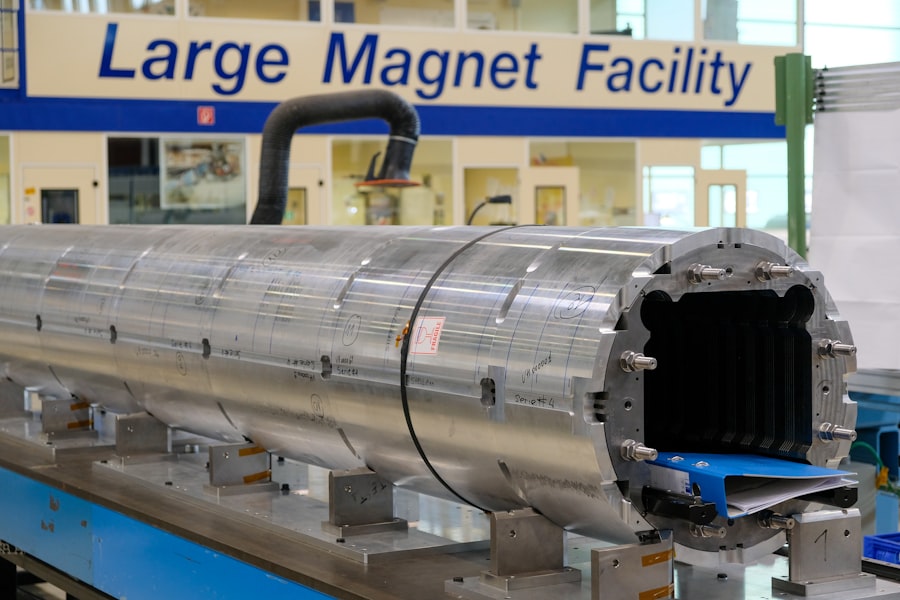
The ability to precisely control various onboard systems is vital for a submarine’s operational effectiveness and survivability. Rare earth magnets are playing an increasingly important role in actuation and control mechanisms.
Precise Actuation for Control Surfaces
Submarines rely on control surfaces, such as dive planes and rudders, to maneuver effectively underwater. The actuators that move these surfaces need to be powerful, precise, and reliable.
Electro-Mechanical Actuators
Electro-mechanical actuators, powered by electric motors, are replacing older hydraulic systems in many modern applications due to their efficiency and reduced maintenance needs. Rare earth magnets are a key component in these advanced actuators.
The Power of Precision Movement
- Fast Response Times: The strong magnetic fields enable rapid and precise movements of the control surfaces, allowing for quicker reactions to changing underwater conditions or tactical situations.
- High Force Output: Rare earth magnets allow actuators to generate significant force, enabling precise and responsive control even against the immense water pressure.
- Reduced Size and Weight: Compact, powerful actuators lead to less encumbrance within the submarine’s structure.
- Reliability in Harsh Environments: The robust nature of rare earth magnets contributes to the overall reliability of these critical systems.
The use of rare earth magnet-based actuators ensures that a submarine can maintain optimal trim, depth, and course with exceptional accuracy, crucial for both stealth and maneuvering in complex environments.
Magnetic Clutches and Brakes
In various mechanical systems onboard, precise control over power transmission is required. Magnetic clutches and brakes offer a reliable and efficient solution.
Smooth and Responsive Engagement
Magnetic clutches and brakes utilize magnetic fields to engage or disengage power transmission. Rare earth magnets enable:
- Smooth and Controllable Engagement/Disengagement: This allows for gradual changes in speed or stopping, preventing sudden jolts that could be detected acoustically.
- High Torque Capacity: Despite their compact size, rare earth magnet-based systems can transmit significant torque.
- Low Maintenance: With no physical wear parts like brake pads, these systems require minimal maintenance.
- Fast Response: The magnetic fields can be activated and deactivated quickly, offering responsive control.
These components are critical for managing power flow in systems ranging from weapon deployment mechanisms to auxiliary machinery, ensuring smooth and controlled operations.
Rare earth magnets play a crucial role in enhancing the performance of submarines, particularly in their propulsion systems and sonar technology. These powerful magnets contribute to the efficiency and stealth of underwater vessels, making them essential in modern naval operations. For a deeper understanding of the strategic implications of such technologies, you can explore a related article on military advancements at In the War Room. This resource provides insights into how innovations like rare earth magnets are shaping the future of naval warfare.
The Future is Magnetic: Next-Generation Submarine Technologies
| Submarine Type | Rare Earth Magnet Usage | Benefits |
|---|---|---|
| Nuclear Submarines | Used in propulsion systems and sonar equipment | Enhanced performance and efficiency |
| Attack Submarines | Utilized in electric motors and control systems | Improved maneuverability and power |
| Ballistic Missile Submarines | Incorporated in navigation and communication systems | Enhanced accuracy and reliability |
The integration of rare earth magnets into submarine technology is not a static development; it is an ongoing evolution. As research and development continue, even more revolutionary applications are on the horizon.
Advanced Weapon Systems
The next generation of submarine-launched weapons may also benefit from the enhanced capabilities offered by rare earth magnets.
Precision Guidance and Launch Systems
The improved precision and responsiveness enabled by rare earth magnet-based actuators and control systems can lead to more accurate targeting and launch sequences for torpedoes and missiles. Lighter and more powerful actuators can also contribute to more streamlined and efficient weapon systems.
Next-Generation Sensors and Communications
The ever-increasing demand for sophisticated sensors and communication systems onboard submarines will further drive the need for compact, high-performance components.
Enhanced Signal Processing and Transmission
Rare earth magnets can contribute to the development of smaller, more powerful motors for sensor arrays, as well as enabling more efficient signal processing through advanced electromagnetic components. While not directly part of the communication signal itself, the enabling technologies for transmitting and receiving signals, such as antennae positioning systems or internal signal routing, could leverage magnetic actuation.
Miniaturization and System Integration
A key overarching trend in modern engineering is miniaturization. Rare earth magnets are instrumental in this pursuit, allowing for the development of smaller, more powerful components that can be integrated into more complex and efficient systems. This can lead to:
- More Internal Space: Freeing up valuable space for additional equipment, payloads, or crew facilities.
- Improved Aerodynamics/Hydrodynamics: Smaller and more integrated components can contribute to sleeker hull designs and improved underwater performance.
- Consolidated Systems: The ability to achieve higher performance with smaller components allows for greater system integration and simplification.
The ongoing research into new rare earth magnet alloys and manufacturing techniques promises even greater magnetic strengths and specialized properties, further expanding their potential in submarine applications. As the strategic importance of underwater dominance continues to grow, the silent, yet profound, influence of rare earth magnets on submarine technology will undoubtedly become even more pronounced, ensuring these underwater vessels remain at the cutting edge of naval power.

China’s Invisible Chokehold on Modern Weapons
FAQs
What are rare earth magnets?
Rare earth magnets are strong permanent magnets made from alloys of rare earth elements. They are known for their exceptional magnetic properties, such as high coercivity and high energy product.
How are rare earth magnets used in submarines?
Rare earth magnets are used in submarines for various applications, such as in the propulsion system, sonar equipment, and other electronic components. They are valued for their strength and reliability in these critical systems.
Why are rare earth magnets preferred in submarines?
Rare earth magnets are preferred in submarines due to their high magnetic strength, which allows for compact and efficient designs. They also offer excellent performance in harsh environments, making them ideal for use in submarines.
What are the challenges associated with rare earth magnets in submarines?
One challenge associated with rare earth magnets in submarines is their vulnerability to demagnetization in high-temperature and high-pressure conditions. Additionally, the supply chain for rare earth elements can be unstable, leading to potential supply chain disruptions.
Are there any alternatives to rare earth magnets in submarines?
While rare earth magnets are commonly used in submarines, there are alternative magnet materials, such as ceramic and alnico magnets, that can be used in certain applications. However, these alternatives may not offer the same level of performance as rare earth magnets.