The windswept plains surrounding Lone Tree, a nondescript geographical marker etched onto the vast canvas of the American West, bore witness to a chilling spectacle in the late autumn of 1961. The Cold War, a global chess match played with the gnawing fear of mutually assured destruction, had reached a critical juncture. In this stark landscape, far from the gilded halls of diplomacy, the United States military orchestrated a meticulously planned, high-stakes exercise codenamed “Operation Frozen Timber.” This was not merely a training drill; it was a potent demonstration of strategic might, a stark message aimed directly at the heart of the Soviet Union, a nation bristling with its own atomic ambitions. The echoes of B-52 engines, the thunder of simulated artillery, and the tense whispers of radar operators would soon become the haunting symphony of a world teetering on the precipice.
The Genesis of “Frozen Timber”: A Cold War Chill
The early 1960s were characterized by an escalating arms race and a palpable sense of unease. The Cuban Missile Crisis, though yet to erupt into open confrontation, loomed as a shadow on the horizon. Soviet advancements in missile technology and their increasingly assertive geopolitical posture demanded a clear and unequivocal response from the United States. The strategic imperative was to showcase the nation’s ability to project power and retaliate effectively, even in the face of a surprise attack.
The Shifting Sands of Global Power
The geopolitical landscape was in constant flux. The Soviet Union, under Nikita Khrushchev, was aggressively pursuing its ideological expansion, challenging Western influence in newly independent nations and flexing its military muscle. The development of intercontinental ballistic missiles (ICBMs) further fueled anxieties, suggesting the Soviets possessed the capability to strike deep into American territory. This perceived vulnerability spurred a desire for robust defensive and offensive capabilities.
The Berlin Crisis and Its Ripples
The ongoing Berlin Crisis, a persistent point of contention between the East and West, added another layer of urgency. The division of Germany and the symbolic importance of Berlin as a gateway to Western Europe meant that any perceived weakness in the NATO alliance could be exploited by the Soviets. Operation Frozen Timber was, in part, a reassurance to allies and a deterrent to potential aggressors, demonstrating that the United States was prepared to defend its interests and allies with overwhelming force.
The Strategic Imperative: Deterrence and Readiness
The core tenet of Cold War military strategy was deterrence. The goal was to convince the Soviet Union that any act of aggression would result in a devastating counter-response, making war an unacceptable option. Operation Frozen Timber was designed to validate and refine the nation’s nuclear retaliatory capabilities and its ability to conduct large-scale conventional operations in a challenging environment.
The Doctrine of Massive Retaliation and Its Evolution
The prevailing military doctrine at the time was “Massive Retaliation,” a strategy that threatened a disproportionate nuclear response to any Soviet aggression, conventional or nuclear. While effective in its bluntness, it also carried the risk of escalation. Operation Frozen Timber, while still firmly rooted in the nuclear deterrent, also aimed to demonstrate a more nuanced approach, showcasing the ability to deploy and sustain forces for a prolonged conflict, even if the ultimate trump card remained nuclear. The exercise was a testing ground for response scenarios that went beyond immediate nuclear exchange.
During the Cold War, military operations often revolved around strategic locations, with one notable incident involving a single tree that became a focal point for intelligence gathering and surveillance. This peculiar scenario highlights the lengths to which both sides would go to secure an advantage. For a deeper understanding of the intricacies of Cold War military strategies and operations, you can read more in this related article: Cold War Military Operations: The Significance of a Single Tree.
Lone Tree: A Canvas for Conflict
The choice of Lone Tree as the theater for Operation Frozen Timber was no accident. Its vast, sparsely populated expanse offered a perfect environment for simulating large-scale troop movements, aerial bombardments, and strategic deployments without the risk of significant civilian casualties or disruption to populated areas. The harsh, often unpredictable weather conditions of the region also provided a realistic training ground for forces that might be deployed in similar climates.
Strategic Geography and Tactical Advantage
The geographical location of Lone Tree offered unique tactical advantages. Its remoteness allowed for significant freedom of movement for both air and ground forces, enabling complex maneuvers that would be impossible in more densely populated regions. The open terrain also provided clear lines of sight for reconnaissance and surveillance, crucial for intelligence gathering and targeting.
The Harsh Embrace of the Elements
The autumnal winds that swept across the plains of Lone Tree brought with them biting cold, unpredictable snow squalls, and limited visibility. These were not inconveniences; they were integral components of the exercise. Military planners sought to test the resilience of equipment and personnel under extreme conditions, ensuring that the United States military could operate effectively regardless of the weather. The ability to maintain command and control, execute complex aerial formations, and conduct ground operations in sub-zero temperatures was a critical measure of readiness.
The Players: Forces Assembled for the Showdown
Operation Frozen Timber was a colossal undertaking, drawing together a diverse array of military assets. From the supersonic might of the Strategic Air Command’s bombers to the ground-hugging agility of armored divisions, a significant portion of the US military’s power was mobilized for this critical demonstration. The exercise involved thousands of personnel, hundreds of aircraft, and a substantial ground force.
Strategic Air Command: The Nuclear Sword
The Strategic Air Command (SAC), the United States’ primary nuclear deterrent force, played a pivotal role in Operation Frozen Timber. Its B-52 Stratofortresses, symbols of American aerial power, conducted simulated bombing runs, demonstrating their ability to penetrate Soviet airspace and deliver a devastating payload. The exercise allowed SAC to test its readiness, its navigation systems, and its ability to coordinate with other branches of the military.
Simulated Nuclear Strikes and Real-World Implications
The core of SAC’s contribution involved simulated nuclear strikes. These were not mere target practice; they were meticulously planned scenarios designed to test response times, communication protocols, and the overall effectiveness of the nuclear triad: bombers, intercontinental ballistic missiles, and submarine-launched ballistic missiles. The message was clear: the United States possessed the capability to inflict unacceptable damage.
Tactical Air Command and Ground Forces: The Spearhead
Beyond the strategic nuclear threat, Operation Frozen Timber also emphasized the importance of conventional warfare. The Tactical Air Command (TAC) provided crucial close air support for ground troops, while armored and infantry divisions engaged in simulated combat scenarios. This demonstrated the US’s ability to wage both limited and large-scale conventional conflicts, adding another layer of complexity to its deterrent posture.
Joint Operations and Inter-Service Cooperation
The success of Operation Frozen Timber hinged on seamless inter-service cooperation. Air Force fighters worked in tandem with Army helicopters, while ground troops relied on airborne intelligence and artillery support. This emphasis on joint operations was a critical lesson learned from past conflicts and a testament to the evolving nature of modern warfare. The exercise was a crucible for forging these working relationships.
The Scenario: A Dance on the Brink
The narrative underpinning Operation Frozen Timber was designed to mirror a potential flashpoint in the Cold War. While specific details remained classified, the general thrust involved a scenario where Soviet aggression, possibly in Europe or a proxy conflict, necessitated a swift and decisive American response. This response would test the entire spectrum of US military capabilities, from reconnaissance and intelligence gathering to strategic bombing and ground engagement.
Intelligence Gathering and Early Warning Systems
The exercise began with a simulated intelligence surge, testing the nation’s early warning systems and its ability to gather real-time intelligence on enemy movements. This involved the deployment of reconnaissance aircraft, the monitoring of radar screens, and the analysis of signals intelligence. The ability to detect a threat early was paramount to initiating a timely and effective response.
The Role of Electronic Warfare and Deception
Beyond overt military movements, Operation Frozen Timber also incorporated elements of electronic warfare and deception. Both sides would have attempted to jam enemy communications, disrupt radar systems, and employ countermeasures to confuse and mislead. The exercise allowed for the testing of these sophisticated tactics, crucial in a modern, technologically driven conflict.
The Air Campaign: Dominance Above the Plains
The aerial component of Operation Frozen Timber was particularly dramatic. SAC bombers, escorted by fighter jets, would have executed complex flight paths, simulating strikes against designated targets. The noise and visual spectacle of hundreds of aircraft operating in concert against a hostile backdrop was intended to be awe-inspiring and intimidating.
Air Superiority and Bombing Runs
Achieving air superiority was a key objective. Fighter pilots engaged in simulated dogfights, while bombers navigated through heavily defended airspace. The exercise tested the effectiveness of air-to-air combat tactics and the precision of bombing runs, even in challenging weather conditions. The ability to deny the enemy control of the skies was a prerequisite for any successful ground operation.
The Ground War: A Brutal Ballet
On the ground, the exercise simulated a massive armored thrust and counter-thrust. Tank divisions clashed in thunderous exchanges, supported by infantry and artillery. The harsh terrain and weather added a significant layer of difficulty, testing the endurance and adaptability of the ground forces.
Mechanized Warfare and Infantry Assaults
The exercise was a showcase of mechanized warfare, with tanks and armored personnel carriers engaging in coordinated assaults. The integration of infantry units into these offensive operations was critical, highlighting the need for combined arms tactics. The simulation aimed to replicate the chaos and brutality of ground combat in a realistic environment.
During the Cold War, military operations often involved strategic decisions that could seem trivial at first glance, such as the infamous incident over a single tree in East Germany. This peculiar event highlighted the intense rivalry and paranoia between the superpowers, where even a solitary tree could become a focal point of conflict. For a deeper understanding of the complexities and nuances of Cold War military strategies, you can explore this insightful article on the topic at In the War Room.
The Legacy of Frozen Timber: Lessons Learned and Echoes of War
Operation Frozen Timber, like many exercises of its kind during the Cold War, was a success in achieving its primary objectives. It provided invaluable data on the readiness of American forces, the effectiveness of new technologies, and the challenges of operating in extreme conditions. More importantly, it served as a potent psychological weapon, a stark reminder to the Soviet Union of the unwavering resolve and formidable military might of the United States.
Technological Advancements and Tactical Refinements
The data gathered during Operation Frozen Timber contributed to significant advancements in military technology and tactical doctrine. The performance of aircraft, communication systems, and weapon platforms under stress provided crucial feedback for future development. The lessons learned refined strategies for air-ground integration, electronic warfare, and operating in challenging environments.
The Evolution of Air-Ground Coordination
The exercise highlighted the critical need for seamless integration between air and ground forces. Refinements were made to communication protocols, targeting procedures, and the methods by which tactical air support was requested and delivered. This focus on combined arms operations became a cornerstone of modern military doctrine.
A Message Sent, A World On Edge
While the overt purpose of Operation Frozen Timber was to deter Soviet aggression, it also contributed to the prevailing atmosphere of tension and anxiety. The sheer scale of the military mobilization, though conducted in a remote area, was a stark reminder of the ever-present threat of global conflict. The exercise was a public display of strength, intended to be seen and understood by both allies and adversaries.
The Double-Edged Sword of Deterrence
Deterrence, by its very nature, relies on the credible threat of force. Operation Frozen Timber successfully demonstrated this credibility. However, it also underscored the inherent danger of an arms race and the constant risk of miscalculation or unintended escalation. The exercise was a testament to the precarious balance of power that defined the Cold War.
The winds have long since died down over Lone Tree, and the thundering engines of the B-52s are but a distant memory. Yet, the legacy of Operation Frozen Timber endures. It stands as a testament to the immense power and strategic ingenuity of the United States military during a defining period of global history. It was an exercise in controlled aggression, a high-stakes gamble played out on the desolate plains, a chilling reminder that in the shadow of nuclear annihilation, the world held its breath. The echoes of that frozen timber, a symbol of both resilience and potential destruction, continue to resonate through the annals of Cold War history.
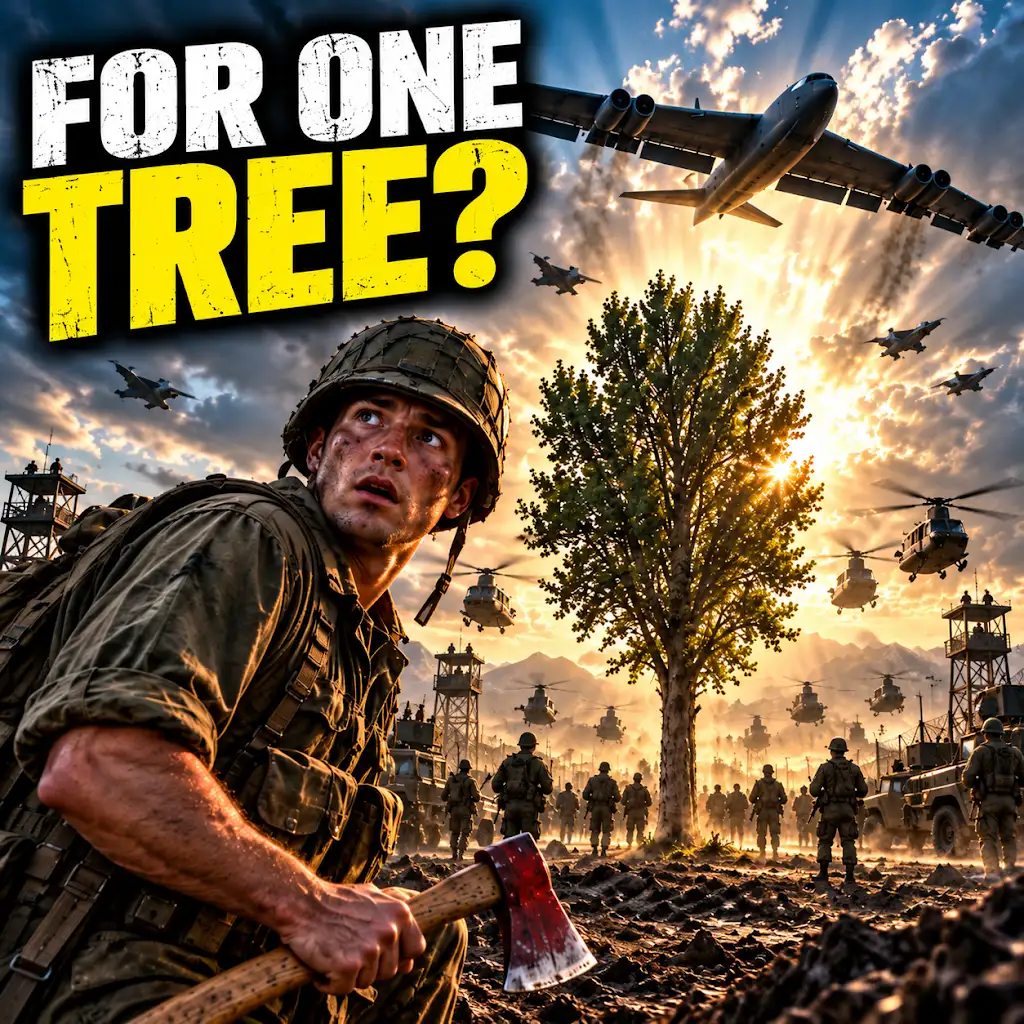
America Sent an Aircraft Carrier to Cut Down One Tree
FAQs
What was the Cold War military operation over one tree?
The Cold War military operation over one tree refers to an incident that occurred in 1976 when North Korean soldiers attacked a group of United States soldiers who were attempting to trim a poplar tree in the Korean Demilitarized Zone (DMZ).
Why were the United States soldiers trying to trim the tree in the Korean DMZ?
The United States soldiers were attempting to trim the poplar tree in the Korean DMZ as part of a routine operation to improve visibility and remove any potential obstacles that could be used by North Korean forces for surveillance or attacks.
What led to the confrontation between North Korean and United States soldiers during the operation?
The confrontation between North Korean and United States soldiers during the operation was sparked by a disagreement over the trimming of the tree. North Korean soldiers demanded that the tree not be trimmed, while the United States soldiers proceeded with the operation, leading to a violent clash.
How did the Cold War military operation over one tree escalate?
The Cold War military operation over one tree escalated when North Korean soldiers attacked the United States soldiers with axes, resulting in a fierce firefight between the two sides. Two United States soldiers were killed, and several others were injured in the incident.
What were the consequences of the Cold War military operation over one tree?
The Cold War military operation over one tree, also known as the “Axe Murder Incident,” led to heightened tensions between North Korea and the United States. It also resulted in the United States launching Operation Paul Bunyan, a massive show of force that involved cutting down the tree with chainsaws and deploying a large number of troops to the DMZ.