Operation Eagle Claw, a catastrophic attempt to rescue American hostages from Iran in 1980, serves as a stark and enduring case study in the intricate and often unforgiving realities of military strategy. Beyond the immediate tactical failures, the operation’s unraveling laid bare critical deficiencies in planning, intelligence, and inter-service cooperation, offering profound lessons that continue to shape military doctrine. However, the narrative of Eagle Claw extends beyond its strategic blunders; it also provides a unique lens through which to examine the concept of “credible sportsmanship” in the context of international relations and military operations, even in their most dire and consequential manifestations. The failure to achieve its objectives, while a bitter pill, forced a nation and its military to confront its limitations, adapt, and ultimately emerge with a more robust and nuanced understanding of what constitutes success, failure, and the ethical considerations inherent in the use of force.
The Strategic Imperative and the Illusions of Control
The genesis of Operation Eagle Claw lay in a desperate attempt to resolve a deeply embarrassing and politically damaging international crisis: the prolonged captivity of 52 American diplomats and citizens in the Iranian embassy. The Iranian Revolution had fundamentally altered the geopolitical landscape, and the hostage situation represented a direct challenge to American prestige and influence. The strategic imperative was clear: secure the release of the hostages and restore a semblance of American strength and resolve on the world stage. The perceived audacity of the undertaking, a daring rescue mission behind enemy lines, was intended to project an image of decisive action and unwavering commitment. However, this strategic imperative was built upon a foundation of often-flawed assumptions and an overestimation of the control the United States could exert over the complex and unpredictable environment in which the operation would unfold.
Intelligence Shortcomings and the Shadow of Uncertainty
A critical vulnerability in the planning of Eagle Claw was the inadequacy of its intelligence gathering and analysis. The chaotic post-revolutionary environment in Iran meant that real-time, granular intelligence was difficult to obtain and even harder to verify. The planners relied on information that was, in hindsight, outdated or incomplete, particularly regarding the layout of the embassy, the number and disposition of the captors, and the potential for resistance. This intelligence gap created a vacuum that was filled with assumptions, leading to a mission profile that was ill-suited to the realities on the ground. The lack of precise knowledge about the terrain, the Iranian security forces’ response capabilities, and the exact location of the hostages within the embassy complex meant that the operation was inherently more vulnerable to unforeseen circumstances. The mission’s success hinged on a series of perfectly executed steps, each dependent on accurate and up-to-the-minute intelligence that was simply not available. The planners were operating in a fog of uncertainty, and the consequences of this uncertainty proved to be devastating. The illusion of control, born from a desire to act decisively, masked the profound lack of precise knowledge required for such a high-stakes endeavor.
Inter-Service Cooperation: A Fractured Foundation
The ambitious nature of Operation Eagle Claw necessitated unprecedented levels of cooperation between different branches of the United States military. The mission involved Army helicopters, Air Force transport planes, Navy ships offshore, and special forces units drawn from the Marines and Army. While the concept of joint operations had been recognized for years, the practical implementation of truly seamless inter-service collaboration remained a significant challenge. In the case of Eagle Claw, this fractured foundation manifested in several critical areas. Communication protocols were not fully harmonized, leading to delays and misunderstandings. Different operational doctrines and equipment interoperability issues created friction and inefficiency. The chain of command, while ostensibly unified, suffered from bureaucratic hurdles and a lack of shared understanding of the operational tempo and specific requirements of each participating element. This lack of cohesive synergy meant that when unforeseen problems arose, the fragmented command structure was unable to respond with the agility and decisiveness required, exacerbating the cascading failures. The planning process itself seemed to prioritize the inclusion of various units rather than ensuring their genuine, integrated operational effectiveness.
Operation Eagle Claw, the ill-fated mission to rescue American hostages in Iran in 1980, paved the way for subsequent military operations, including the development of the Credible Sport program. This initiative aimed to create a modified version of the C-130 Hercules aircraft capable of short takeoff and landing in hostile environments, enhancing the U.S. military’s ability to conduct similar rescue missions in the future. For more insights into these significant military operations and their implications, you can read a related article at this link.
The Mechanics of Failure: A Cascade of Contingencies
The catastrophic unraveling of Operation Eagle Claw was not the result of a single, isolated error but rather a tragic cascade of interconnected failures, each exacerbating the next. The meticulously crafted plan, designed to account for a multitude of potential contingencies, ultimately proved too rigid and brittle to withstand the unpredictable realities of a hostile environment. The mission’s operational tempo and reliance on precise timing meant that any deviation from the script had far-reaching consequences.
Desert Dust and Mechanical Malfunctions
The initial phases of the operation, involving the deployment of helicopters deep into Iran, were immediately beset by severe environmental challenges. The vastness of the Dasht-e Kavir desert, a key transit point for the rescue force, presented unexpected obstacles, most notably powerful sandstorms that significantly degraded visibility and posed a direct threat to aircraft operations. One of the key helicopters, an RH-53 Sea Stallion, suffered a catastrophic mechanical failure due to what was later attributed to dust infiltration in its main rotor system. This mechanical breakdown, occurring far from any support infrastructure, immediately jeopardized the mission’s viability. The failure of even a single critical asset, especially one with limited redundancy, had an outsized impact on the entire operation. The inability to replace or repair the damaged helicopter and the growing concern for the safety of the crew forced a critical decision point. This mechanical issue was not just an isolated incident; it was the first domino to fall in a rapidly unfolding sequence of failures.
The Unforeseen Encounter and the Road to Abort
The decision to abort Operation Eagle Claw was precipitated by a series of alarming encounters and compounding issues. Following the mechanical failure of the helicopter, a second aircraft suffered further damage due to flying through a dust cloud. More critically, while attempting to land at the pre-designated desert rendezvous point, known as “Desert One,” the assembled helicopters were met with an unexpected and potentially hostile encounter with Iranian civilians and, crucially, military patrols. The risk of detection and engagement, which the planners had attempted to mitigate through stringent stealth protocols, became a palpable and immediate threat. The presence of these unexpected elements meant that the element of surprise, so vital to the success of the mission, was compromised. The safety of the entire rescue force was now in question. The aborted mission, however, did not end the dangers. The frantic efforts to reposition the remaining helicopters and facilitate a safe departure led to a tragic accident.
The Catastrophe at Desert One: A Fiery Culmination
The most devastating moment of Operation Eagle Claw occurred at Desert One, a remote desert location chosen as the primary staging area for the rescue. As the helicopters attempted to refuel and prepare for the next phase of the mission, a collision occurred between a helicopter and a C-130 transport aircraft. The ensuing inferno resulted in the deaths of eight U.S. servicemen and the severe injury of several others. This tragic accident was the brutal culmination of the mission’s failures, transforming a strategic setback into a national tragedy. The collision underscored the extreme stress and disarray the operation had fallen into. The loss of life and the graphic nature of the accident sent shockwaves through the American public and government, permanently branding Eagle Claw as a mission of profound failure and loss. The inability to achieve the primary objective was now overshadowed by the immense human cost.
Repercussions and Reassessment: The Birth of Delta Force

The fallout from Operation Eagle Claw was immediate and far-reaching. The mission’s ignominious failure exposed deep-seated flaws in American military planning, intelligence capabilities, and inter-service coordination. The public outcry and political embarrassment necessitated a thorough and unflinching reassessment of how such operations were conceived and executed. The lessons learned, though painful, were transformative, leading directly to significant organizational and doctrinal changes within the U.S. military.
The Genesis of a Specialized Counterterrorism Unit
One of the most significant outcomes of Eagle Claw’s failure was the accelerated development and formalization of a dedicated counterterrorism special operations unit. Prior to this operation, the responsibility for such high-risk rescue missions was fragmented and often ill-defined. The need for a highly trained, specialized, and self-sufficient unit capable of conducting complex hostage rescue operations in hostile environments became undeniably clear. This imperative led to the accelerated establishment and refinement of what would become known as Delta Force (also known as the 1st Special Forces Operational Detachment-Delta, or 1st SFOD-D). Delta Force was conceived as a premier unit, drawing its personnel from the most elite ranks of the U.S. Army Special Forces and Rangers, and emphasizing rigorous training in unconventional warfare, direct action, hostage rescue, and intelligence gathering. The lessons of Eagle Claw were directly embedded in its foundational doctrine, emphasizing meticulous planning, redundant systems, and a unified command structure designed to prevent the types of failures that had plagued the earlier mission.
The Evolution of Joint Special Operations Command (JSOC)
The operational and strategic shortcomings exposed by Eagle Claw also catalyzed the evolution of joint special operations command and control structures. The mission highlighted the critical need for a more unified and integrated approach to special operations planning and execution, transcending traditional service boundaries. In response, the Joint Special Operations Command (JSOC) was eventually established, with the mandate to oversee and coordinate the activities of the United States’ most sensitive special operations forces, including Delta Force and the Navy’s SEAL Team Six. JSOC was designed to provide a centralized command and control element that could streamline planning, resource allocation, and operational execution for complex, multi-service special operations. This organizational shift was a direct acknowledgment that the fragmented approach that contributed to Eagle Claw’s failure was no longer tenable in the face of evolving global threats. The goal was to create a seamless operational capability, where the strengths of each service could be leveraged synergistically without the friction and inefficiencies that had previously hampered joint efforts.
The Concept of Credible Sportsmanship in International Affairs
The term “sportsmanship” typically conjures images of fair play, respect for opponents, and adherence to rules within the context of athletic competition. Applying this concept to the realm of international relations and military operations, particularly in the wake of a failed mission like Eagle Claw, requires a nuanced interpretation. Credible sportsmanship, in this context, does not imply an absence of conflict or a softening of national interests, but rather a commitment to certain ethical frameworks and a recognition of the broader implications of one’s actions, even in moments of intense geopolitical rivalry. Operation Eagle Claw, paradoxically, offers insights into this concept through its failures and the subsequent reflections.
The Unseen Rules of Engagement and Restraint
While nations engage in competition and, at times, conflict, there exist implicit and explicit “rules of engagement” that govern their behavior. These rules are not merely tactical but also ethical and strategic. In the context of Eagle Claw, the attempt to rescue hostages was a legitimate act of statecraft, but the manner in which it was conceived and executed, particularly the risks posed to civilian lives and the potential for escalation, touches upon the boundaries of credible sportsmanship. A nation demonstrating credible sportsmanship in international affairs would not only pursue its objectives but would do so with a degree of calculated restraint, minimizing collateral damage and adhering to international norms, even when faced with provocation. The failures of Eagle Claw, particularly the tragic accident at Desert One, highlight the immense responsibility that comes with wielding military power and the consequences of failing to uphold these unspoken rules. The pursuit of a vital national objective cannot supersede the fundamental obligation to conduct operations with a profound respect for human life and the potential for unintended consequences.
The Post-Failure Reckoning: Acknowledging Limitations and Learning
A crucial aspect of credible sportsmanship, in the international arena, lies in the aftermath of failure. The way a nation responds to a significant setback speaks volumes about its character and its commitment to ethical conduct. Operation Eagle Claw presented a severe blow to American prestige. However, the subsequent rigorous self-examination, the establishment of new specialized units, and the doctrinal reforms that followed demonstrated a commitment to learning from mistakes. This willingness to acknowledge limitations, to dissect failures without succumbing to denial, and to implement substantive changes in strategy and capability can be seen as a form of credible sportsmanship on a national level. It signifies a maturity that understands that true strength lies not only in the ability to act but also in the capacity to adapt and improve, even when the lessons are harsh and the consequences are dire. The very act of dissecting the failures of Eagle Claw, making them public, and using them as a catalyst for improvement demonstrates a form of accountability that is a hallmark of credible behavior, both domestically and on the international stage.
Operation Eagle Claw, the ill-fated rescue mission during the Iran hostage crisis, has often been compared to the subsequent operation known as Credible Sport, which aimed to refine and improve the tactics used in the earlier attempt. For a deeper understanding of these military operations and their implications, you can read a related article that explores the lessons learned from both missions. This analysis highlights the evolution of U.S. military strategy in complex environments and can be found at this link.
The Enduring Legacy of Eagle Claw: Strategy, Adaptation, and a Hard-Won Credibility
| Operation | Date | Objective | Outcome | Key Metrics |
|---|---|---|---|---|
| Operation Eagle Claw | April 24-25, 1980 | Rescue 52 American hostages in Tehran, Iran | Mission failed due to helicopter mechanical issues and a fatal crash |
– 8 helicopters deployed – 5 helicopters operational at staging area – 8 U.S. servicemen killed – 1 aircraft destroyed in collision – Mission aborted after 8 hours |
| Operation Credible Sport | 1980 (planned, never executed) | Develop and test modified C-130 aircraft for hostage rescue | Test flights conducted; one aircraft crashed during testing |
– Modified C-130 with rocket-assisted landing system – 2 test flights completed – 1 crash during second test flight – Program cancelled after crash and political changes |
Operation Eagle Claw remains a potent symbol of strategic miscalculation and operational failure. Yet, its legacy extends far beyond the immediate tactical blunders and the tragic loss of life. The operation served as a brutal but ultimately effective catalyst for profound change within the United States military. The lessons learned from its catastrophic unraveling have become foundational principles for modern special operations, shaping doctrine, organization, and the very understanding of what constitutes success in high-stakes missions. The strategic imperative that drove the operation, the pursuit of national interests and the protection of citizens, remains constant, but the methods and the understanding of the inherent complexities have been irrevocably altered.
The failure of Eagle Claw compelled a level of introspection that few other events could have achieved. It forced a nation to confront its assumptions, to rigorously examine its intelligence gathering and analysis capabilities, and to acknowledge the critical importance of seamless inter-service cooperation. The establishment of Delta Force and the strengthening of JSOC are direct descendants of this painful reckoning. These developments have not only enhanced the United States’ counterterrorism capabilities but have also set a benchmark for specialized military operations worldwide. The strategic adaptations that followed Eagle Claw represent a triumph of learning from adversity, demonstrating that even the most profound failures can be transmuted into valuable lessons that fortify national security and enhance operational effectiveness. The enduring legacy of Eagle Claw is not one of unmitigated disaster, but of a hard-won credibility forged in the crucible of failure, a testament to the military’s capacity for adaptation and its commitment to continuous improvement. The lessons learned continue to inform how nations approach complex strategic challenges, underscoring the vital connection between meticulous planning, robust intelligence, cohesive command, and a profound understanding of the human element in the pursuit of national objectives.
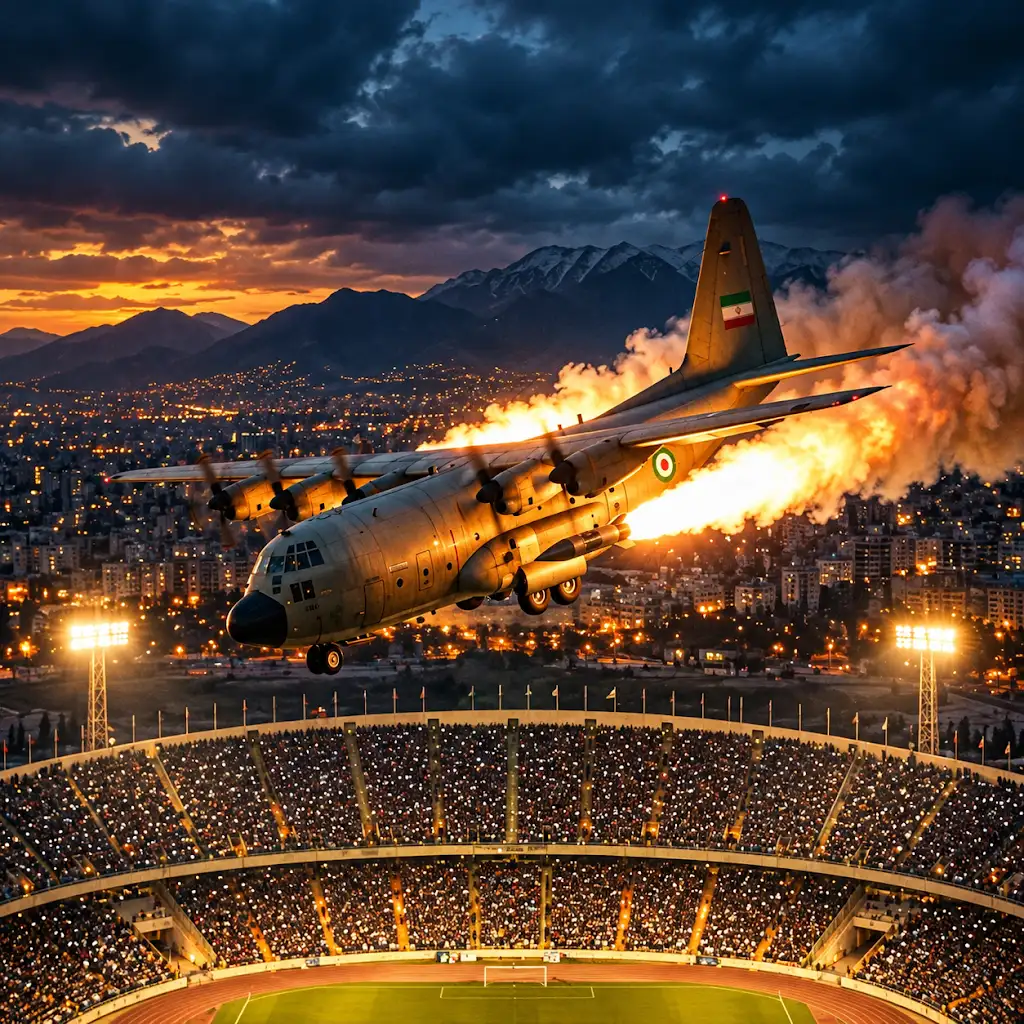
The Secret Plane Built to Land Inside a Stadium
FAQs
What was Operation Eagle Claw?
Operation Eagle Claw was a failed mission conducted by the United States military in April 1980 to rescue American hostages held in Iran.
What were the main reasons for the failure of Operation Eagle Claw?
The main reasons for the failure of Operation Eagle Claw included poor planning, equipment failures, adverse weather conditions, and a collision between a helicopter and a transport plane.
How did Operation Eagle Claw impact future military operations?
Operation Eagle Claw led to significant changes in how the military plans and executes special operations, including the creation of the United States Special Operations Command (USSOCOM) in 1987.
What is credible sport?
Credible sport refers to a concept in military operations where forces conduct realistic training exercises to ensure they are prepared for actual combat situations.
How does credible sport contribute to military readiness?
Credible sport helps maintain military readiness by allowing forces to practice and refine their skills, test equipment and tactics, and identify areas for improvement in a controlled environment.