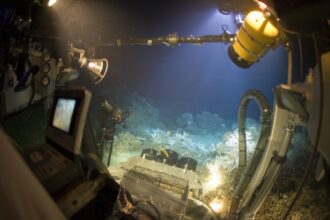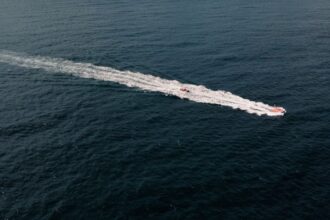
Minehunter vessels are specialized naval ships designed to locate, identify, and destroy underwater mines that threaten maritime navigation. These vessels utilize advanced sonar systems, remotely operated vehicles (ROVs), and mine disposal equipment to clear explosive devices from shipping lanes and coastal waters. Naval mines can remain active for decades after deployment, creating long-term hazards for commercial shipping, fishing vessels, and naval operations.
The operational capabilities of minehunters include precise navigation systems, hull designs that minimize magnetic and acoustic signatures, and specialized crews trained in explosive ordnance disposal. These ships typically operate in shallow coastal waters and harbor approaches where mines are most commonly deployed. Modern minehunters employ autonomous underwater vehicles and sophisticated detection equipment to identify mines while maintaining safe distances from potential threats.
Minehunter operations extend beyond active conflict zones to include post-war clearance missions and routine maritime security patrols. International naval forces coordinate minehunting activities through organizations such as NATO’s Mine Countermeasures Group, which standardizes procedures and equipment across member nations. These vessels also support commercial maritime activities by ensuring shipping channels remain navigable, particularly in strategically important waterways such as the Strait of Hormuz, Suez Canal, and major port approaches where mine threats could significantly impact global trade flows.
Key Takeaways
- Minehunter vessels play a critical role in ensuring maritime security by detecting and neutralizing underwater mines.
- Advances in technology have significantly improved the effectiveness and safety of minehunting operations.
- Clearing mines is essential to protect commercial shipping routes and prevent accidents at sea.
- Minehunting crews require specialized training and expertise to operate complex equipment and handle dangerous situations.
- Collaboration between minehunter vessels and other naval forces enhances the success of mine clearance and maritime safety efforts.
The Evolution of Minehunting Technology
The evolution of minehunting technology has been marked by significant advancements that have transformed the capabilities of minehunter vessels. Initially, minehunting relied heavily on manual detection methods, such as divers and simple sonar systems. However, as technology progressed, the introduction of sophisticated sonar systems and remotely operated vehicles (ROVs) revolutionized the field.
Modern minehunters are equipped with advanced sensors that can detect even the most elusive mines with remarkable precision. This technological leap has drastically reduced the time required for mine clearance operations and increased the safety of personnel involved. In recent years, the integration of artificial intelligence (AI) and machine learning into minehunting technology has further enhanced operational efficiency.
These innovations allow for real-time data analysis and improved decision-making processes during mine detection and neutralization. Autonomous underwater vehicles (AUVs) are now capable of conducting extensive surveys of seabeds, identifying potential threats without putting human lives at risk. As technology continues to evolve, the future of minehunting promises even greater advancements, including enhanced automation and improved collaboration between various naval assets.
The Importance of Clearing Mines from the Seas

Clearing mines from the seas is of paramount importance for several reasons. Firstly, underwater mines pose a significant threat to maritime safety, endangering both military vessels and commercial shipping. The presence of mines can lead to catastrophic accidents, resulting in loss of life and damage to ships.
By conducting thorough mine clearance operations, navies can ensure safe navigation for all vessels, thereby protecting lives and preserving economic interests. Secondly, the removal of mines is essential for restoring access to critical maritime routes that may have been compromised due to conflict or other geopolitical tensions. Many regions rely heavily on maritime trade for their economic stability; thus, ensuring that shipping lanes are free from mines is vital for global commerce.
Furthermore, clearing mines contributes to environmental restoration efforts in post-conflict areas, allowing marine ecosystems to recover from the impacts of warfare. The importance of mine clearance extends beyond immediate safety concerns; it is integral to fostering long-term stability and prosperity in affected regions.
The Challenges Faced by Minehunter Vessels
Despite their critical role in maritime security, minehunter vessels face numerous challenges that can hinder their effectiveness. One significant challenge is the evolving nature of underwater mines themselves. As technology advances, so too do the methods used to design and deploy mines.
Modern mines can be more sophisticated and harder to detect than their predecessors, requiring continuous adaptation and innovation in minehunting techniques. This arms race between mine design and detection technology presents an ongoing challenge for naval forces worldwide. Additionally, minehunter vessels often operate in complex environments where factors such as weather conditions, underwater topography, and marine traffic can complicate operations.
Adverse weather can limit visibility and hinder sonar performance, while busy shipping lanes increase the risk of accidental detonations during clearance operations. Furthermore, the psychological toll on crews operating in potentially dangerous waters cannot be overlooked; the constant threat posed by mines can create a high-stress environment that impacts decision-making and operational effectiveness.
The Training and Expertise of Minehunting Crews
| Metric | Description | Typical Value/Range | Unit |
|---|---|---|---|
| Vessel Length | Overall length of the minehunter vessel | 50 – 70 | meters |
| Displacement | Weight of the vessel when fully loaded | 500 – 900 | tons |
| Maximum Speed | Top speed of the minehunter vessel | 14 – 18 | knots |
| Mine Detection Range | Effective range of sonar systems for mine detection | 500 – 1500 | meters |
| Mine Clearance Rate | Number of mines cleared per hour during operations | 1 – 3 | mines/hour |
| Clearance Methods | Techniques used for mine clearance | Mechanical, Influence Sweep, ROV (Remotely Operated Vehicle) | N/A |
| Typical Crew Size | Number of personnel onboard during mine clearance missions | 30 – 50 | persons |
| Operational Endurance | Duration vessel can operate without resupply | 10 – 21 | days |
| Sonar Type | Type of sonar used for mine detection | High-frequency hull-mounted or variable-depth sonar | N/A |
| ROV Deployment Depth | Maximum operational depth for remotely operated vehicles | 300 – 500 | meters |
The success of minehunter vessels is heavily reliant on the training and expertise of their crews.
Crews undergo rigorous training programs that encompass various aspects of mine detection and neutralization, including sonar operation, ROV handling, and explosive ordnance disposal (EOD) techniques.
This comprehensive training ensures that personnel are well-prepared to tackle the challenges they may encounter during missions. Moreover, teamwork is essential in minehunting operations. Crews must work seamlessly together to coordinate complex tasks under pressure while maintaining situational awareness.
Regular drills and exercises are conducted to enhance communication and collaboration among team members, fostering a culture of safety and efficiency. The expertise developed through extensive training not only enhances operational success but also instills confidence in crew members as they navigate potentially hazardous environments.
The Different Types of Minehunting Equipment

Minehunter vessels are equipped with a diverse array of specialized equipment designed to detect and neutralize underwater mines effectively. One of the primary tools used in minehunting is sonar technology, which employs sound waves to identify objects on the seabed. Various types of sonar systems are utilized, including side-scan sonar for wide-area searches and multi-beam sonar for detailed mapping of underwater terrain.
These systems provide critical data that aids crews in locating potential threats. In addition to sonar systems, minehunter vessels often deploy remotely operated vehicles (ROVs) equipped with cameras and manipulative arms for close inspection and neutralization of identified mines. These unmanned systems allow crews to conduct operations at a safe distance from potential hazards.
Furthermore, advanced explosive ordnance disposal (EOD) equipment is essential for safely disarming or destroying mines once they have been located. The combination of these technologies enables minehunter vessels to operate efficiently and effectively in diverse maritime environments.
The Collaboration between Minehunter Vessels and Other Naval Forces
Collaboration between minehunter vessels and other naval forces is vital for enhancing overall maritime security. Joint operations involving surface ships, submarines, and aircraft can significantly improve situational awareness and operational effectiveness during mine clearance missions. By sharing intelligence and resources, naval forces can create a comprehensive approach to countering underwater threats.
Furthermore, international cooperation plays a crucial role in addressing the global challenge posed by naval mines. Many countries engage in joint exercises and training programs aimed at improving interoperability among their respective naval forces. Such collaborations not only enhance individual capabilities but also foster relationships between nations that can be instrumental during times of crisis.
The collective effort to address maritime security challenges underscores the importance of unity among naval forces in safeguarding international waters.
The Global Impact of Minehunting Operations
The global impact of minehunting operations extends far beyond immediate safety concerns; it encompasses economic stability, environmental protection, and humanitarian efforts. By ensuring that shipping lanes are clear from mines, these operations facilitate international trade and commerce, which are vital for economic growth in many regions. The ability to navigate safely through previously mined waters encourages investment and development opportunities in affected areas.
Additionally, minehunting operations contribute significantly to environmental preservation by allowing marine ecosystems to recover from the devastation caused by warfare. Unexploded ordnance can have long-lasting effects on marine life; thus, clearing these hazards is essential for restoring ecological balance. Furthermore, the humanitarian aspect of mine clearance cannot be overlooked; by creating safe conditions for navigation, these operations enable humanitarian aid organizations to deliver assistance to communities affected by conflict or disaster.
The Future of Minehunting Technology and Tactics
As technology continues to advance at an unprecedented pace, the future of minehunting promises exciting developments that will reshape tactics and operational capabilities. Innovations such as artificial intelligence (AI) are expected to play a pivotal role in enhancing detection accuracy and automating various aspects of mine clearance operations. AI algorithms can analyze vast amounts of data collected by sonar systems more efficiently than human operators, leading to quicker identification of potential threats.
Autonomous underwater vehicles (AUVs) equipped with advanced sensors will be able to conduct extensive surveys with minimal human intervention, reducing risks associated with manned operations. As these technologies continue to evolve, they will enable naval forces to adapt their tactics to meet emerging threats while ensuring the safety of personnel involved in mine clearance missions.
The Environmental Impact of Mine Clearing Operations
While mine clearing operations are essential for ensuring maritime safety and security, they also carry environmental implications that must be carefully considered. The process of removing underwater mines can disturb marine ecosystems, particularly if explosives are used during neutralization efforts. Careful planning and execution are necessary to minimize ecological disruption while effectively addressing the threat posed by mines.
Furthermore, the presence of unexploded ordnance can have long-term effects on marine life if not properly addressed. Clearing these hazards not only protects human lives but also allows marine ecosystems to recover from the impacts of warfare or conflict-related activities. As awareness grows regarding environmental sustainability, future mine clearing operations will likely incorporate more environmentally friendly practices aimed at minimizing ecological damage while achieving operational objectives.
The Humanitarian Role of Minehunter Vessels in Post-Conflict Zones
Minehunter vessels play a vital humanitarian role in post-conflict zones where unexploded ordnance poses significant risks to civilian populations. In many cases, conflicts leave behind a legacy of mines that continue to threaten lives long after hostilities have ceased. Minehunter vessels are often deployed as part of international efforts to clear these hazards, enabling communities to reclaim their waterways safely.
By facilitating safe navigation for humanitarian aid deliveries and restoring access to vital resources such as fishing grounds or transportation routes, minehunter vessels contribute significantly to rebuilding efforts in affected regions. Their presence not only enhances safety but also instills hope among local populations striving for recovery after conflict. The humanitarian mission undertaken by these vessels underscores their multifaceted role in promoting peace and stability in post-conflict environments while ensuring that communities can thrive once again.
Minehunter vessels play a crucial role in ensuring safe maritime navigation by effectively executing mine clearance procedures. For a deeper understanding of the operational strategies and technologies employed in mine clearance, you can refer to a related article on this topic at In The War Room. This resource provides valuable insights into the challenges faced by minehunters and the innovative solutions being implemented to enhance their effectiveness in clearing naval mines.
FAQs
What is a minehunter vessel?
A minehunter vessel is a specialized naval ship designed to detect, classify, and neutralize underwater mines. Unlike minesweepers, minehunters use high-definition sonar and remotely operated vehicles (ROVs) to locate individual mines with precision.
How do minehunter vessels detect underwater mines?
Minehunter vessels use advanced sonar systems, such as high-frequency hull-mounted or variable-depth sonar, to scan the seabed for mines. They may also deploy remotely operated vehicles (ROVs) equipped with cameras and sonar to inspect suspicious objects.
What are the main steps in mine clearance procedures?
Mine clearance typically involves detection, classification, identification, and neutralization. After locating a mine, the vessel classifies it to confirm it is a threat, then either destroys it in place using explosive charges or removes it for disposal.
What technologies are commonly used in mine clearance?
Technologies include high-resolution sonar, remotely operated vehicles (ROVs), autonomous underwater vehicles (AUVs), and explosive ordnance disposal (EOD) tools. These enable safe and effective identification and disposal of mines.
How do minehunter vessels neutralize mines?
Neutralization methods include placing explosive charges near the mine to detonate it safely or using ROVs to attach devices that disable the mine. Some vessels also use mechanical or influence sweep systems to trigger mines remotely.
Are minehunter vessels used in both military and humanitarian operations?
Yes, minehunter vessels are used in military operations to secure naval routes and ports, as well as in humanitarian missions to clear mines from commercial shipping lanes and coastal areas to ensure safe navigation.
What distinguishes a minehunter from a minesweeper?
Minehunters focus on detecting and neutralizing individual mines using sonar and ROVs, while minesweepers clear areas by towing equipment that triggers or cuts mines en masse. Minehunters are more precise but typically operate at slower speeds.
What safety measures are in place during mine clearance?
Safety measures include remote operation of detection and disposal equipment, strict operational protocols, and coordination with naval command to minimize risk to personnel and vessels during mine clearance activities.
Can minehunter vessels operate in all water depths?
Minehunter vessels are generally designed to operate in coastal and shallow waters where mines are commonly deployed. Some advanced systems allow operations in deeper waters, but capabilities vary by vessel class and equipment.
How long does a typical mine clearance operation take?
The duration depends on the size of the area, density of mines, and environmental conditions. Clearance can take from several hours to days or weeks, especially in heavily mined or complex underwater environments.