
Midway: The Pacific War’s Pivotal Moment
The vast expanse of the Pacific Ocean, a theater of brutal conflict during the Second World War, bore witness to countless engagements. Yet, amidst the chaos and destruction, one battle stands out, a lightning strike that fundamentally altered the course of the war. The Battle of Midway, fought in early June 1942, was not merely a clash of naval fleets; it was a crucible of strategic brilliance, technological prowess, and sheer human courage, a moment where the tide of the Pacific War irrevocably turned in favor of the Allied forces.
The year 1942 dawned under a dark cloud for the United States. The devastating surprise attack on Pearl Harbor in December 1941 had crippled the American Pacific Fleet and ignited a fervent desire for retribution. Following Pearl Harbor, Japan, buoyed by a string of swift victories across Southeast Asia and the Pacific, seemed an unstoppable force. Their objective was clear: to expand their dominion, secure vital resources, and cripple any remaining American capacity to resist their imperial ambitions. The Japanese Imperial Navy, under the masterful leadership of Admiral Isoroku Yamamoto, aimed to deliver a decisive blow that would consolidate their gains and potentially force the United States to negotiate a peace favorable to Japan.
The Imperial Japanese Navy’s Ambitions
Following the rapid successes of the Pearl Harbor attack and the subsequent campaigns in the Philippines, Singapore, and the Dutch East Indies, the Japanese naval command was emboldened. Admiral Yamamoto, the architect of the Pearl Harbor raid, envisioned a grand strategy to achieve a decisive victory that would permanently alter the strategic balance in the Pacific. His primary target was the strategically vital Midway Atoll, a small but crucial American outpost located roughly halfway between North America and Asia. The capture of Midway would serve multiple purposes for the Japanese.
Securing Advanced Bases and Deepening Defenses
Firstly, Midway would provide a critical forward operating base, allowing the Japanese to extend their defensive perimeter and project power further into the Central Pacific. This would further isolate American territories and make it more difficult for the United States to launch offensive operations. Secondly, it was believed that forcing a decisive naval battle near Midway would lure the remaining American aircraft carriers, which had miraculously escaped the Pearl Harbor attack, into a trap. The Japanese planned to annihilate these carriers, thereby eliminating America’s primary offensive naval capability in the Pacific.
The Plan for Decisive Victory
Yamamoto’s plan was audacious and complex, involving a multi-pronged attack. A diversionary force was sent north to attack the Aleutian Islands, designed to draw American attention and naval assets away from the main assault on Midway. The core of the Japanese attack force comprised four of their most powerful aircraft carriers: Akagi, Kaga, Soryu, and Hiryu, supported by a vast armada of battleships, cruisers, destroyers, and troop transports. This force was intended to overwhelm the American defenders on Midway and then engage and destroy any American naval response. The Japanese were confident in their superior naval power and the combat experience of their veteran pilots, believing victory was all but assured.
The Strategic Importance of Midway
Midway Atoll, though a small chain of islands, held immense strategic significance. Its location made it a vital stepping stone in the Pacific, controlling access routes and serving as a potential launching point for operations in both directions. For the United States, it was a critical forward defense position, a sentinel guarding the approaches to Hawaii and the American West Coast. Its capture by Japan would have been a devastating blow, allowing for increased aerial reconnaissance and bombing of American installations and potentially paving the way for an invasion of Hawaii itself.
A Crucial Stepping Stone in the Pacific
The United States had long recognized the importance of Midway. It was a refueling station for aircraft and ships, and its airfields provided a crucial base for patrol and reconnaissance missions. Control of Midway was essential for maintaining freedom of movement in the vast Pacific and for projecting American power westward. Its loss would have significantly lengthened American supply lines and provided Japan with a powerful base for further expansion.
The Eyes and Ears of the Pacific Fleet
Beyond its logistical importance, Midway served as a vital intelligence gathering hub. American forces stationed there were tasked with the crucial role of maintaining a constant watch over Japanese naval movements. This included the vital task of listening for radio transmissions and conducting aerial reconnaissance, efforts that would prove instrumental in the unfolding battle. The information gathered from Midway was essential for the American command to understand the enemy’s intentions and to formulate an effective response.
The Battle of Midway is often regarded as a crucial turning point in the Pacific War, marking a significant shift in momentum from Japanese to Allied forces. For a deeper understanding of the strategies and implications surrounding this pivotal battle, you can explore a related article that delves into the broader context of the Pacific theater. This insightful piece can be found at In the War Room, where it examines the key events leading up to Midway and its lasting impact on the course of World War II.
The Unseen Battle: Intelligence and Codebreaking
In the lead-up to Midway, an unseen battle of paramount importance was being waged in the shadows: the battle of intelligence. While the Japanese meticulously planned their attack, believing their secrecy to be impenetrable, American cryptanalysts, working tirelessly at Station HYPO in Pearl Harbor, had achieved a breakthrough that would prove decisive. Led by Commander Joseph Rochefort, these dedicated individuals had managed to partially break the Japanese naval code, JN-25b. This intelligence coup allowed the Americans to glean vital information about Japanese intentions, including the timing and target of their next major offensive.
The Work of Station HYPO
Station HYPO, a small, unassuming intelligence unit, became the linchpin of America’s ability to counter the Japanese onslaught. For months, their analysts had painstakingly worked to decipher the complex Japanese naval codes. Their efforts were often hampered by limited resources and the sheer difficulty of the task, but their perseverance and ingenuity began to yield dividends. They intercepted and analyzed countless Japanese radio messages, slowly piecing together a picture of their operational plans.
Cracking the Japanese Code
The breakthrough came when Rochefort and his team were able to identify a specific, often-used operational code phrase that indicated the target of a major upcoming operation. By correlating this with other intercepted traffic and understanding Japanese naval doctrine, they were able to deduce with remarkable accuracy that the target was Midway Atoll. This was not a lucky guess; it was the result of meticulous analysis and a deep understanding of the enemy’s patterns of behavior.
The Critical Warning
The intelligence provided by Station HYPO was nothing short of a miracle. It allowed Admiral Chester W. Nimitz, the Commander-in-Chief of the U.S. Pacific Fleet, to know the date and general composition of the Japanese attack force before the Japanese themselves were even aware that their plans had been compromised. This foreknowledge gave the American forces a crucial advantage, enabling them to set a trap for the unsuspecting Japanese fleet.
The Deception and the Trap
Armed with the knowledge of the impending attack on Midway, Admiral Nimitz and his staff devised a daring counter-plan. They understood that they could not match the Japanese in sheer numbers of ships and aircraft. Therefore, their strategy would rely on surprise, ambush, and exploiting the Japanese overconfidence.
Ambushing the Imperial Navy
Nimitz ordered his carriers, USS Enterprise, USS Hornet, and the hastily repaired USS Yorktown, to lie in wait northeast of Midway, out of the expected Japanese search radius. The plan was to allow the Japanese fleet to approach Midway, engage the island’s defenses, and then launch their carrier-based aircraft in what they believed would be a decisive strike. At that critical moment, the American carriers would emerge from their hiding place and launch their own devastating air attacks against the Japanese carriers while they were vulnerable and their aircraft were rearming or refueling.
Misdirection and Calculated Risk
Part of the American strategy also involved a degree of deception. While the main American carrier force was positioned to spring the trap, other smaller naval units were positioned to create the impression of a wider defensive net, potentially drawing the Japanese into committing their forces in a way that would expose their carriers. This was a calculated risk, as it meant exposing the American carriers to potential danger, but the potential reward of destroying the Japanese carrier force was deemed worth the gamble.
The Carrier Duel: The Heart of the Battle
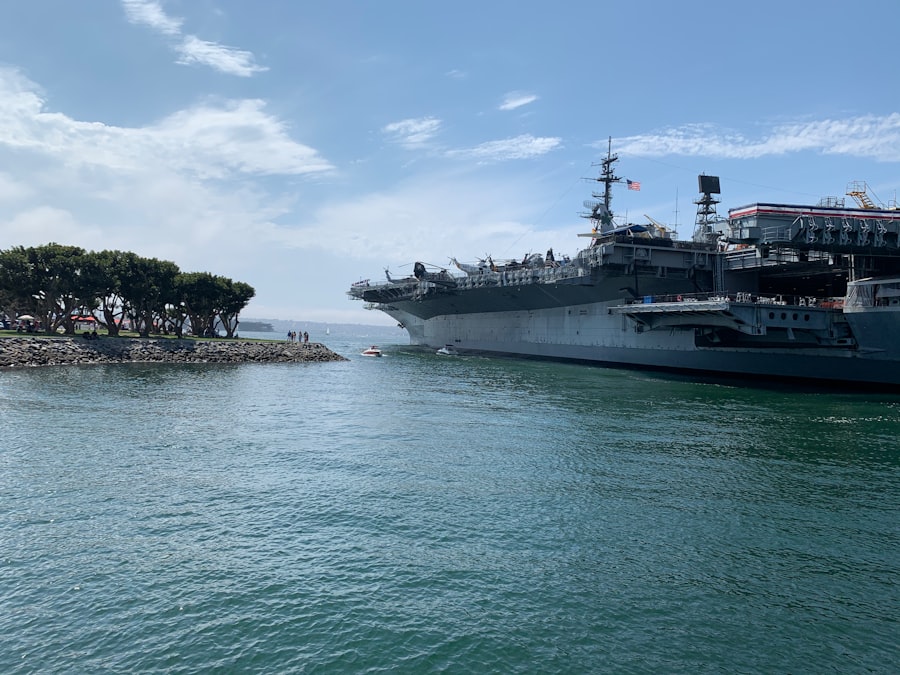
The Battle of Midway, from a naval perspective, was primarily a carrier battle. For the first time in history, the decisive engagements were fought by aircraft launched from carriers, with the ships themselves often remaining out of direct sight of each other. The fate of the Pacific Fleet, and indeed the course of the war, rested on the performance of these airborne weapons platforms and the skill of their pilots.
The Opening Strikes
On the morning of June 4th, 1942, the battle commenced. Japanese aircraft launched from their carriers delivered a devastating first wave of attacks on Midway Atoll. The island’s defenders fought valiantly, but the sheer ferocity of the Japanese assault inflicted significant damage. However, the American intelligence had paid off, and the Japanese attack on Midway was not the decisive blow they had anticipated.
The Air Assault on Midway
The initial Japanese air raids were designed to neutralize the island’s defenses, particularly its airfields, in preparation for a subsequent landing. Waves of bombers and torpedo planes descended upon Midway, targeting infrastructure and defensive positions. While some damage was inflicted, the defenders, alerted by the foreknowledge provided by intelligence, were able to mount a spirited defense. American fighter planes scrambled to intercept the attackers, and anti-aircraft batteries blazed, inflicting some losses on the Japanese formations.
The U.S. Response from the Island
Despite the heavy attacks, the airfields on Midway remained operational. This allowed American aircraft, including B-17 bombers and PBY Catalina flying boats, to launch their own attacks against the Japanese fleet. While these attacks were largely unsuccessful in inflicting significant damage on the Japanese warships, they served to harass the enemy and, crucially, to draw the Japanese carriers into a more vulnerable position.
The Turning Point: Three Carriers Lost
The critical moments of the battle unfolded in rapid succession. The American carriers, having launched their own aircraft, moved into position to strike. The Japanese carriers, believing they had successfully suppressed the defenses of Midway and were preparing for a second strike, had tragically relaxed their combat air patrol and were in the process of rearming and refueling their aircraft. This moment of vulnerability was precisely what the American commanders had anticipated.
The Dive Bombers’ Fury
The U.S. Navy dive bombers, flying at high altitude and then plummeting towards their targets, found the Japanese carriers largely undefended by their own fighter escorts. In a series of devastating attacks, American planes found their marks. Within a terrifyingly short period, the Japanese carriers Akagi, Kaga, and Soryu were engulfed in flames, crippled by the precision bombing.
The Hiryu’s Last Stand
The fourth Japanese carrier, Hiryu, managed to evade the initial wave of American attacks and, in a desperate counter-attack, launched its own aircraft. These planes managed to inflict significant damage on the USS Yorktown, one of the American carriers. However, this was the Hiryu’s final act. Shortly thereafter, American dive bombers located and attacked the Hiryu, setting it ablaze.
The Sacrifice of the Yorktown
The USS Yorktown, though grievously wounded by the Japanese counter-attack, fought on valiantly. Its crew worked tirelessly to save the ship, but the damage was too severe. The Yorktown ultimately succumbed to its wounds, sinking several days later, a testament to the fierce fighting and the heavy cost of the victory. Its loss was a painful reminder that even in victory, war exacts a terrible price.
The Aftermath and the Shift in Momentum

The Battle of Midway was a resounding victory for the United States, a triumph achieved against overwhelming odds. The destruction of four of Japan’s most powerful aircraft carriers, along with a significant portion of their experienced aircrews, represented an irreplaceable loss for the Imperial Japanese Navy. This single battle fundamentally altered the strategic balance of power in the Pacific, shifting the initiative firmly into American hands.
A Devastating Blow to Japanese Naval Power
The loss of four fleet carriers – Akagi, Kaga, Soryu, and Hiryu – was a catastrophic blow to Japan’s naval capability. These were the capital ships that had spearheaded their conquests across the Pacific, and their absence created a massive void. Japan’s industrial capacity, unlike that of the United States, was not sufficient to quickly replace such losses. This meant that for the remainder of the war, the Imperial Japanese Navy would be on the defensive, struggling to counter the growing might of the American fleet.
The Irreplaceable Loss of Experienced Aircrews
Beyond the loss of the carriers themselves, the battle also resulted in the decimation of Japan’s veteran naval aviators. These pilots were highly trained and experienced, having honed their skills in numerous combat engagements. Their loss was, in many ways, more significant than the loss of the ships. Replacing these skilled pilots would take years, a luxury that Japan could not afford in the escalating conflict.
The End of Japanese Naval Supremacy
For years, the Imperial Japanese Navy had enjoyed a perceived, and often real, superiority in the Pacific. The Battle of Midway decisively ended this era. While Japan would continue to fight fiercely, they would never again be able to dictate the terms of engagement or launch large-scale offensive operations with the same confidence and capability. The strategic initiative had passed to the United States.
The Beginning of the Island-Hopping Campaign
With the Japanese naval threat significantly diminished, the United States was now able to begin its long and arduous campaign of “island hopping” across the Pacific. This strategy involved capturing key islands, one by one, to establish forward bases for American forces and to gradually push back the Japanese defenses. Midway provided a crucial stepping stone in this process, allowing for the projection of American power further into the Pacific.
Reclaiming Lost Territory and Advancing Westward
The victory at Midway gave the Allies the confidence and the strategic advantage needed to begin reclaiming territory that had been lost to the Japanese in the early stages of the war. The subsequent campaigns, such as Guadalcanal, Tarawa, Saipan, and Iwo Jima, were all made possible by the strategic shift that occurred at Midway. Each island captured brought American forces closer to Japan, chipping away at their vast defensive perimeter.
The Long Road to Tokyo
The island-hopping campaign was a brutal and costly endeavor, characterized by fierce Japanese resistance and heavy casualties on both sides. However, the strategic foundation for this long advance was laid at Midway. The battle effectively ended Japan’s ability to launch major offensive operations and allowed the United States to dictate the pace and direction of the war in the Pacific.
The Battle of Midway is often regarded as a crucial turning point in the Pacific War, significantly altering the balance of power between the United States and Japan. This pivotal conflict not only showcased the importance of intelligence and strategy but also set the stage for subsequent Allied victories in the Pacific theater. For a deeper understanding of the events leading up to Midway and its lasting impact, you can explore a related article that delves into the intricacies of naval warfare during this critical period in history. Check it out here.
Legacy and the Lessons Learned
| Event | Date | Significance |
|---|---|---|
| Battle of Midway | June 4-7, 1942 | Turning point in the Pacific War, marked the end of Japanese expansion and the beginning of Allied counteroffensive |
| Japanese losses | 4 carriers, 1 cruiser, 248 aircraft, and over 3,000 personnel | Severely weakened Japanese naval power and shifted the balance of power in the Pacific |
| American losses | 1 carrier, 1 destroyer, 150 aircraft, and around 300 personnel | Despite losses, the US Navy gained a strategic advantage and boosted morale |
The Battle of Midway remains a subject of intense study and admiration among military historians. It serves as a powerful testament to the importance of intelligence, strategic planning, and the courage of those who fought. The lessons learned from Midway continue to resonate in modern naval warfare and strategic thinking.
The Triumph of Intelligence and Planning
Midway is often cited as the quintessential example of how superior intelligence and meticulous planning can overcome numerical disadvantages. The ability of Station HYPO to break Japanese codes and provide critical foreknowledge was the single most important factor in the American victory. Admiral Nimitz’s bold decision to trust this intelligence and set a trap demonstrated masterful strategic thinking under immense pressure.
The Importance of Cryptanalysis
The success of cryptanalysis at Midway underscored its vital role in modern warfare. The ability to penetrate enemy communications provides an unparalleled advantage, allowing for proactive defense and offensive planning. The legacy of Station HYPO continues to inspire intelligence agencies worldwide.
Strategic Foresight and Risk Management
Admiral Nimitz’s gamble at Midway, positioning his carriers out of sight and waiting for the opportune moment, exemplified strategic foresight and effective risk management. He understood the strengths and weaknesses of both his own forces and the enemy’s, and he made a calculated decision that ultimately paid off handsomely.
The Evolution of Naval Warfare
Midway marked a significant turning point in naval warfare, solidifying the dominance of the aircraft carrier as the capital ship of modern navies. The battle demonstrated that naval power could now be projected through the air, and that control of the skies over the ocean was paramount. This led to a rapid shift in naval doctrine and shipbuilding priorities across the globe.
The Carrier Replaces the Battleship
Prior to Midway, battleships were considered the ultimate symbols of naval power. The battle proved that aircraft carriers, with their ability to strike at distant targets with devastating force, were the true arbiters of naval supremacy. This realization led to a significant reduction in battleship construction and a massive increase in carrier development and deployment.
The Enduring Symbol of American Resilience
The Battle of Midway stands as a powerful symbol of American resilience and determination in the face of adversity. Emerging from the devastating blow of Pearl Harbor, the American forces at Midway fought with extraordinary courage and ingenuity to achieve a victory that not only saved the Pacific Fleet but also turned the tide of the entire war. It is a reminder that even in the darkest hours, strategic brilliance and unwavering courage can lead to triumph.
Japan Won Pearl Harbor—So Why Did It Lose the War?
FAQs
What was the significance of the Battle of Midway in the Pacific War?
The Battle of Midway was a turning point in the Pacific War, as it marked the first major defeat for the Japanese Navy and a significant shift in the balance of power in the Pacific.
When did the Battle of Midway take place?
The Battle of Midway took place from June 4 to June 7, 1942.
What were the key factors that contributed to the Allied victory at Midway?
Key factors that contributed to the Allied victory at Midway included successful code-breaking efforts, effective coordination of air and naval forces, and the strategic positioning of American carriers.
How did the outcome of the Battle of Midway impact the rest of the Pacific War?
The outcome of the Battle of Midway shifted the momentum in favor of the Allies, and it marked the beginning of the end for Japanese expansion in the Pacific. It also allowed the Allies to go on the offensive and begin reclaiming territory from the Japanese.
What was the long-term impact of the Battle of Midway on the outcome of World War II?
The Battle of Midway weakened the Japanese Navy and set the stage for further Allied advances in the Pacific. It also boosted American morale and demonstrated the effectiveness of carrier-based naval warfare.