The Soviet Navy’s quest for naval supremacy in the Cold War led to the development of a diverse and often innovative fleet. Among the most potent and distinct vessels to emerge from this era was the “Lun” class missile carrier, a design that pushed the boundaries of naval warfare. While often categorized as cruisers, these ships were purpose-built missile platforms, their primary role being the launch of anti-ship missiles from a distance. They represented a significant Soviet investment in projecting power and deterring potential adversaries, particularly the United States Navy’s carrier strike groups. The Lun class, though only one ship was completed, remains a fascinating case study in Soviet military engineering and strategic thinking.
The Genesis of a Missile Carrier Concept
The development of the Lun class was deeply rooted in the strategic imperatives of the Soviet Union during the latter half of the 20th century. The perceived threat posed by American carrier battle groups, with their potent air wings and defensive capabilities, loomed large in Soviet naval doctrine. Traditional gun armament had become increasingly ineffective against such well-defended targets. The advent and rapid advancement of guided missiles offered a new paradigm for naval combat, one that the Soviets were eager to exploit. The concept was to create a vessel capable of overwhelming enemy defenses with a saturation of anti-ship missiles, neutralizing the most dangerous threats to Soviet naval operations. This led to a focus on high-volume missile armament, dictating much of the design philosophy for the Lun class.
Strategic Imperatives and the Anti-Ship Missile Revolution
The post-World War II naval landscape was dominated by the dominance of the aircraft carrier. The US Navy, in particular, operated powerful carrier strike groups that could project air power across vast distances. The Soviet Union, with a coastline largely facing the Atlantic and Pacific oceans, found itself at a strategic disadvantage. Their navy, while growing, was largely defensive in nature, lacking the global reach of its American counterpart. The development of effective anti-ship missiles, such as the P-15 Termit (NATO reporting name: Styx) and later the more powerful P-500 Bazalt (NATO: Sonnet) and P-1000 Vulkan (NATO: Nucleus), offered a way to counter the carrier threat without necessarily engaging in direct fleet-to-fleet combat. These missiles, with their range and destructive potential, could theoretically cripple or sink even the largest capital ships from beyond the horizon. The Lun class was designed as a dedicated carrier for these formidable weapons, a mobile missile launcher capable of delivering a devastating first strike.
The Project 1143.7 and its Sister Projects
The Lun class, formally designated Project 1143.7, was part of a broader Soviet naval shipbuilding program that included other large, specialized vessels. While the Lun was unique in its pure missile-carrying focus, it shared some design elements and technological lineage with the “Krechet” class (Project 1143), commonly known as the Kiev class. The Kiev class were versatile heavy aircraft-carrying cruisers, which combined aircraft operations with a significant missile armament. The intention for the Lun class was to create a vessel that stripped away the aviation components to maximize missile capacity. Other related projects included the massive, but ultimately unrealized, Ulyanovsk class nuclear-powered supercarriers. The Project 1143.7 was conceived as a complementary platform, not a direct replacement for any existing vessel, but rather a specialized asset to address a specific strategic requirement.
The Lun class missile carrier, known for its unique design and capabilities, has garnered significant attention in military discussions. For a deeper understanding of its operational features and strategic implications, you can read a related article that explores the various aspects of this formidable vessel. Check it out here: Lun Class Missile Carrier Explained.
Design and Armament: A Missile-Focused Warship
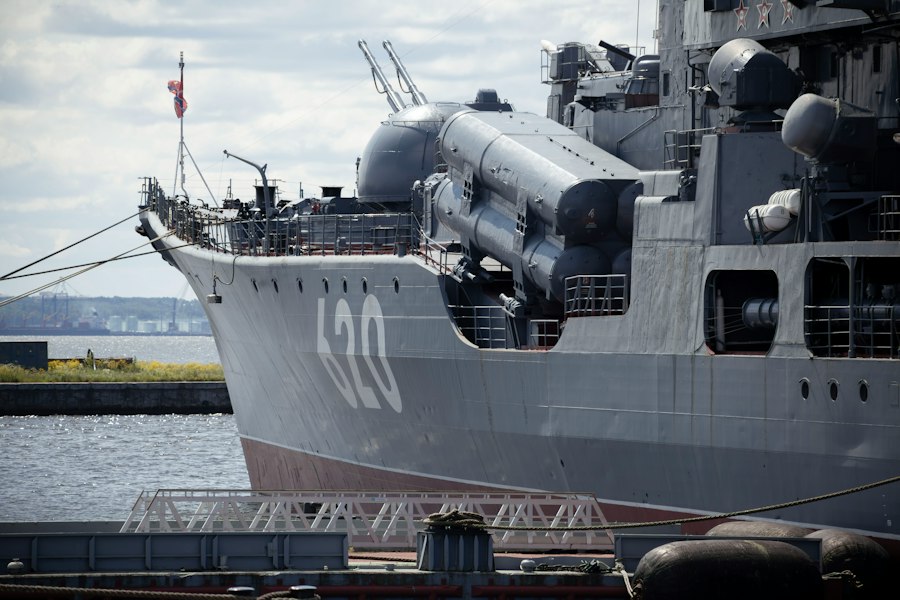
The defining characteristic of the Lun class was its overwhelming offensive capability. Every aspect of its design was geared towards maximizing the number of anti-ship missiles it could carry and launch. This resulted in a distinctive silhouette and a heavy reliance on missile launchers as the primary visible armament. The ship’s hull was a robust, purpose-built design, optimized for stability and the massive weight of its ordnance. The absence of aircraft facilities meant that a significant portion of the deck space, which on a carrier would be dedicated to flight operations, could be allocated to missile launchers and their associated support systems.
The P-500 Bazalt/P-1000 Vulkan Missile System
The primary offensive punch of the Lun class was delivered by the formidable P-500 Bazalt (NATO: Sonnet) anti-ship missile. Later iterations and upgrades considered for the class involved the even more potent P-1000 Vulkan (NATO: Nucleus), a successor to the Bazalt with increased range and warhead. These were large, supersonic missiles designed to overwhelm enemy defenses through sheer numbers and speed. The Bazalt missiles typically carried a conventional high-explosive warhead, though later variants could be equipped with nuclear warheads. The missiles were launched from canisterized launchers, arranged in multiple banks along the ship’s deck. The sheer volume of these missiles meant that a single Lun class vessel could theoretically saturate the defenses of a carrier strike group with a single volley, a concept known as a “salvo launch.” The guidance system for these missiles involved a combination of inertial navigation and active radar homing, allowing them to seek out and destroy their targets.
Structural Layout and Missile Stowage
The Lun class featured a unique and striking profile due to its missile armament. The superstructure was relatively low and streamlined, designed to minimize radar cross-section and to not interfere with the missile launch arcs. The majority of the deck space was occupied by rows of large, inclined missile launchers, giving the ship its characteristic “missile carrier” appearance. These launchers were typically arranged in multiple tiers, maximizing the number of missiles that could be carried. The internal layout was dedicated to housing and supporting these missiles, including extensive magazines for storage, loading mechanisms, and the necessary command and control systems for targeting and firing. The ship’s internal structure had to be exceptionally strong to withstand the shock of multiple missile launches in rapid succession.
Secondary Armament and Defensive Systems
While the anti-ship missiles were the star of the show, the Lun class was not entirely without secondary armament and defensive systems. These were designed to protect the vessel itself from smaller threats, such as enemy aircraft, helicopters, and smaller naval vessels that might attempt to close the range. Typically, these ships were equipped with close-in weapon systems (CIWS) such as the AK-630 Gatling gun, designed to provide a last-ditch defense against incoming missiles and aircraft. Surface-to-air missile systems, such as the SA-N-9 Gauntlet (for point defense), were also likely intended or fitted to provide an anti-air capability. However, these defensive systems were secondary to the ship’s primary offensive role and were not designed to engage in prolonged fleet engagements. The emphasis remained squarely on delivering its missile payload.
Operational History and Limitations
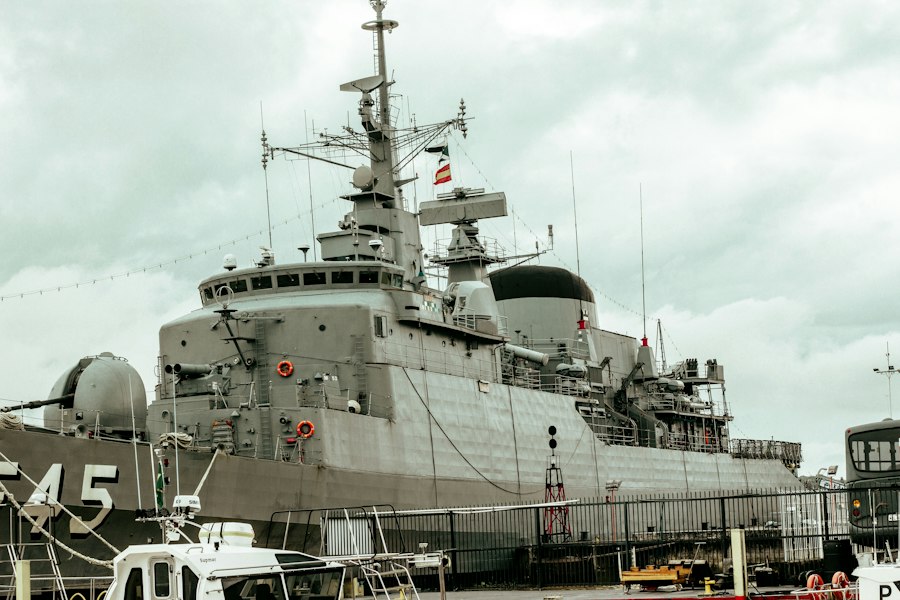
The operational career of the Lun class was remarkably short and, in many ways, a testament to the challenges of realizing such a specialized and unique warship. Only one vessel of the class, the “Lun,” was ever completed and entered service with the Soviet Navy. Its operational deployments were limited, and its strategic utility was increasingly questioned as naval technology evolved. The sheer cost and complexity of maintaining such a specialized platform also presented significant hurdles.
The Singular Service of the “Lun”
The lead ship, the missile carrier “Lun” (NATO reporting name: “Enos”), was laid down in 1976 and commissioned into the Soviet Navy in 1987. Its service life was extraordinarily brief. The ship was primarily based in the Caspian Sea, operating with the Caspian Flotilla. This unusual deployment location for a vessel of its intended capability was likely due to a combination of factors, including the limited range of its primary armament in the open ocean and the political sensitivities surrounding the deployment of such a potent weapon system in international waters. During its operational period, the “Lun” participated in exercises but did not see combat. Its existence was largely shrouded in secrecy, typical of many Soviet military projects.
The Demise of a Unique Class
Following the dissolution of the Soviet Union in 1991, the “Lun” found itself in a precarious position. Without the vast resources of the Soviet state, its maintenance and operational costs became unsustainable. The ship was eventually decommissioned in the mid-1990s. For years, it languished in port, a decaying monument to a bold but ultimately unfulfilled naval concept. In the 2000s, there were discussions about refitting it as a hotel or a museum, but these plans never materialized. The “Lun” was eventually dismantled for scrap, a final end to the only completed vessel of its kind. The economic and political upheaval of the post-Soviet era proved to be a more potent force than any missile it carried.
Strategic Obsolescence and Programmatic Challenges
The very specialized nature of the Lun class also contributed to its limited operational life and the decision not to proceed with further construction. As anti-ship missile technology advanced and countermeasures became more sophisticated, the effectiveness of a platform dedicated solely to launching these weapons was called into question. The development of stealth technology, for example, began to make large, conventional warships more vulnerable. Furthermore, the immense cost of building and maintaining such a highly specialized vessel, coupled with the limited strategic scenarios where it could be optimally employed, made it a difficult proposition for the financially strained Russian Navy after the Soviet collapse. The program faced significant programmatic challenges from its inception, and the subsequent economic realities made its continuation impossible.
Design Philosophy and Strategic Implications
The Lun class represented a significant departure from traditional warship design, prioritizing offensive missile capability above all else. This radical approach reflected a particular strain of Soviet naval thinking, focused on delivering decisive strikes and overwhelming enemy defenses. The strategic implications of such a vessel were far-reaching, intended to deter potential adversaries and to project Soviet power in key maritime regions. The sheer volume of ordnance carried by the Lun class was designed to be a psychological as well as a physical threat.
The “Missile Boat Mentality” on a Cruiser Scale
The Lun class can be seen as an extreme manifestation of the Soviet emphasis on missile warfare. While smaller missile boats were a staple of the Soviet Navy, the Lun took this concept and scaled it up to cruiser size. The philosophy was to create a single platform capable of delivering a salvo that could neutralize a significant enemy threat, such as a carrier group. This “missile boat mentality” translated into a design that was essentially a highly mobile, survivable missile launcher. The absence of a significant anti-air capability beyond self-defense systems further underscored this singular focus. The ship was designed to engage and destroy, not to survive prolonged engagements or to project power in a multifaceted way.
Deterrence and Power Projection in the Cold War Context
The Lun class was conceived within the tense geopolitical landscape of the Cold War. Its existence served as a potent symbol of Soviet naval power and a clear message to potential adversaries. The ability to launch a devastating salvo of anti-ship missiles from a relatively safe distance was intended to deter any aggressive actions by naval forces, particularly those of the United States. The prospect of a single ship capable of inflicting crippling damage on an aircraft carrier strike group would have forced naval planners on both sides to reconsider their operational strategies. The Lun class, even with only one unit completed, contributed to the broader strategy of “equal deterrence,” ensuring that the Soviet Union possessed the means to inflict unacceptable damage on an aggressor.
A Legacy of Innovation and Specialization
Although the Lun class ultimately proved to be a short-lived experiment, its legacy lies in its bold innovation and extreme specialization. It demonstrated the Soviet Navy’s willingness to push the boundaries of naval design in pursuit of strategic objectives. The concept of a dedicated missile carrier, while not widely adopted by other navies, highlighted the evolving nature of naval warfare and the growing importance of missile technology. The Lun class stands as a testament to a unique period in naval history, where dedicated platforms for specific offensive roles were conceived and, in this case, at least partially realized. It remains a fascinating example of a weapon system designed for a singular, devastating purpose.
The Lun class missile carrier, a unique vessel designed for anti-ship operations, has garnered attention for its impressive capabilities and distinctive design. For those interested in exploring more about naval warfare and the technology behind such vessels, a related article can be found at In The War Room, which delves into various aspects of modern naval strategies and the evolution of missile carriers. This resource provides valuable insights that complement the understanding of the Lun class and its role in contemporary maritime defense.
Technical Specifications and Capabilities
| Attribute | Details |
|---|---|
| Class Name | Lun-class missile carrier |
| Type | Guided missile hovercraft |
| Country of Origin | Russia (Soviet Union) |
| Displacement | Approx. 400 tons (full load) |
| Length | 45 meters (approx.) |
| Beam (Width) | 31 meters (approx.) |
| Propulsion | Gas turbine engines driving air cushion |
| Speed | Up to 60 knots (approx.) |
| Armament | 6x P-270 Moskit (SS-N-22 Sunburn) anti-ship missiles |
| Role | Fast attack missile craft for coastal defense and offensive operations |
| Unique Features | First and only missile-armed hovercraft; high speed and maneuverability |
| Operational Era | 1980s to present (limited numbers) |
While detailed technical specifications for Soviet warships were often kept under wraps, enough information has emerged over the years to provide a clear picture of the Lun class’s capabilities and limitations. Its dimensions, displacement, and propulsion systems were indicative of a large, capable warship, designed to operate at sea for extended periods. However, its primary offensive armament, the missile systems, represented the true cutting edge of its design.
Dimensions, Displacement, and Propulsion
The Lun class missile carrier measured approximately 114 meters (374 feet) in length, with a beam of 22 meters (72 feet). Its displacement was around 3,600 tons at standard load, increasing to over 4,000 tons fully loaded. This made it a substantial vessel, capable of carrying a considerable amount of ordnance and sustaining operations at sea. Propulsion was provided by a gas turbine system, delivering a top speed in the region of 27 knots (approximately 31 mph or 50 km/h). This speed was adequate for its role, allowing it to position itself for missile launches and to evade threats, though it was not exceptionally fast compared to some other naval vessels of its era. The ship’s design emphasized stability to provide a stable firing platform for its large missiles.
Missile Capacities and Launch Systems
The defining feature of the Lun class was its immense missile capacity. Each ship was designed to carry a staggering 12 P-500 Bazalt (or P-1000 Vulkan) anti-ship missiles, arranged in six twin canister launchers mounted on the forward deck. These missiles were approximately 10 meters (33 feet) long and weighed several tons each. The launch sequence for these missiles was designed to be rapid, allowing for a devastating salvo to be unleashed in a matter of minutes. The complexity of the internal systems required to support and launch such a volume of heavy missiles was considerable, including sophisticated fire control systems, missile handling equipment, and magazine spaces.
Complement and Crew
As a specialized warship with a focus on missile armament rather than extensive combat support or aircraft operations, the Lun class had a relatively moderate crew complement compared to some other vessels of similar size. Estimates suggest a crew of around 60-70 personnel. This crew would have consisted of sailors responsible for ship operations, navigation, engineering, and the highly specialized personnel required to operate and maintain the missile systems. The automation and integrated nature of the weapon systems meant that a smaller crew could effectively manage the ship’s primary mission.
Design Philosophy and Strategic Implications
The Lun class missile carrier, designated Project 1143.7 by the Soviet Navy, was born out of a specific strategic doctrine and a unique interpretation of naval warfare. Its design was a radical departure from conventional warship construction, prioritizing the delivery of overwhelming anti-ship missile power above all other considerations. This singular focus had profound implications for its operational role, its limitations, and its place in naval history.
The “Missile Boat Mentality” on a Cruiser Scale
The Soviet Navy had a long history of developing and deploying fast attack craft, often heavily armed with anti-ship missiles. These smaller vessels provided a cost-effective means of engaging larger, more powerful surface combatants. The Lun class can be viewed as an ambitious attempt to scale this “missile boat mentality” up to the size and operational capability of a cruiser. The idea was to create a single, potent platform that could deliver a devastating first strike against an enemy fleet, particularly the formidable aircraft carrier battle groups of the United States Navy. This philosophy dictated a design that was essentially a highly mobile and survivable missile launcher, with all other considerations taking a backseat to maximizing missile capacity and launch capability. The absence of significant anti-air capabilities beyond point-defense systems further underscored this singular focus on offensive missile delivery.
Deterrence and Power Projection in the Cold War Context
The development and, even the existence of, the Lun class served as a potent symbol of Soviet naval power and a clear deterrent in the highly charged geopolitical climate of the Cold War. The ability to launch a massive salvo of anti-ship missiles from a relatively safe distance was intended to make any aggressive naval action against the Soviet Union incredibly costly. The prospect of a single ship capable of inflicting crippling damage on an aircraft carrier strike group would have significantly influenced naval planning on both sides. The Lun class contributed to the broader Soviet strategy of “equal deterrence,” aiming to ensure that the Soviet Union possessed the means to inflict unacceptable damage on an aggressor, thereby discouraging pre-emptive strikes or naval aggression. The potential for nuclear warheads on its missiles added another layer to this deterrent calculus.
A Legacy of Innovation and Specialization
While the Lun class ultimately proved to be a short-lived and singular program, its legacy lies in its bold innovation and extreme specialization. It exemplified the Soviet Union’s willingness to explore unconventional solutions to achieve strategic objectives and to push the boundaries of naval design. The concept of a dedicated missile carrier, while not widely adopted by other navies, highlighted the evolving nature of naval warfare and the increasing importance of missile technology. The Lun class stands as a fascinating case study of a weapon system designed for a very specific, devastating purpose. It represents a unique chapter in naval history, showcasing the lengths to which a nation would go to counter perceived threats and project its power on the global stage, even if the ultimate realization of that vision was limited. The technical and doctrinal lessons learned from its conception and brief existence continued to inform naval thinking long after its deactivation.

The Soviet Warship That Learned to Fly
FAQs
What is a Lun class missile carrier?
A Lun class missile carrier is a type of Soviet ekranoplan, or ground effect vehicle, designed to carry and launch missiles. It is also known as Project 903.
How big is a Lun class missile carrier?
The Lun class missile carrier is approximately 73 meters long, with a wingspan of 44 meters. It has a maximum takeoff weight of around 380 tons.
What is the purpose of a Lun class missile carrier?
The primary purpose of a Lun class missile carrier is to provide a platform for launching anti-ship missiles at naval targets. It is designed to operate in coastal areas and can carry up to six P-270 Moskit supersonic cruise missiles.
How fast can a Lun class missile carrier travel?
A Lun class missile carrier can reach speeds of up to 340 miles per hour (550 kilometers per hour) while flying in ground effect mode, which allows it to travel efficiently just above the surface of the water.
Are Lun class missile carriers still in service?
No, the Lun class missile carriers are no longer in active service. The only completed vessel, the MD-160, was retired in the late 1990s and is currently on display at a naval museum in Russia.