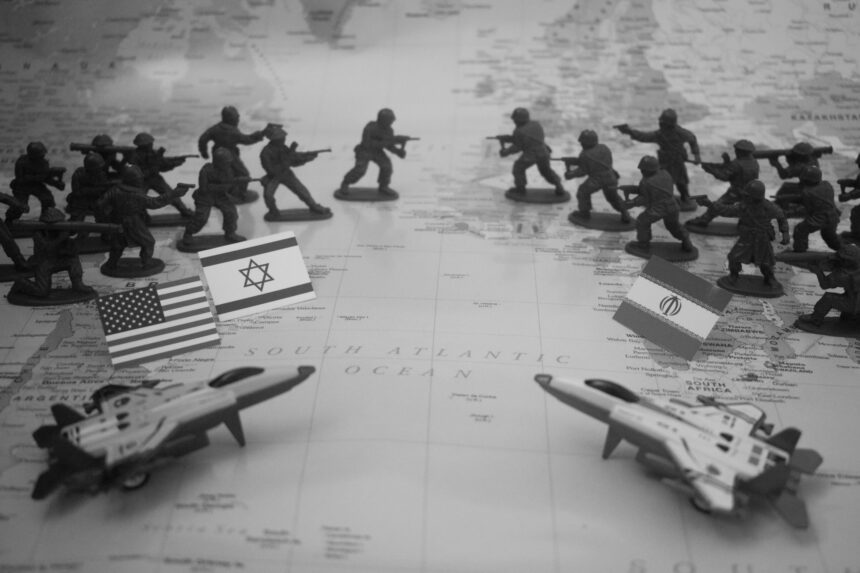
The humid air of the Middle East crackled with a tension that had been building for months, a simmering pot of political and military anxieties about to boil over. For Israel, a nation forged in the crucible of historical persecution and perpetual vulnerability, the morning of June 5, 1967, dawned with a sense of grim necessity. The Arab nations surrounding it, increasingly belligerent and heavily armed, had issued pronouncements of impending annihilation, and the strategic landscape was shifting towards an almost unbearable precipice. It was in this volatile atmosphere that Israel launched a pre-emptive, lightning-fast air strike that would irrevocably alter the geopolitical map of the region, igniting the Six-Day War.
The prelude to the Six-Day War was a tense dance on the edge of oblivion. Decades of animosity, fueled by the creation of Israel in 1948 and subsequent Arab-Israeli wars, had created a powder keg. The 1956 Suez Crisis had offered a temporary respite, but the underlying issues remained unresolved, festering and growing more potent with each passing year. By 1967, a new generation of leaders had emerged on both sides, some with a fervent desire for a final resolution, others driven by nationalist fervor and popular pressure.
Escalating Tensions in the Spring of 1967
The spring of 1967 witnessed a dramatic escalation of rhetoric and military posturing. Egypt, under the charismatic leadership of Gamal Abdel Nasser, was at the forefront of this rising tide of hostility. Nasser, a pan-Arab nationalist, sought to unite the Arab world against Israel, portraying the Jewish state as an imperialist outpost. His government began a vigorous military buildup, acquiring advanced Soviet weaponry and conducting large-scale military exercises that were seen as overtly provocative by Israel.
The Withdrawal of UN Peacekeepers
A crucial turning point in the escalating crisis was the sudden and unexpected withdrawal of the United Nations Emergency Force (UNEF) from the Sinai Peninsula. Established in 1956 to oversee the Israeli withdrawal from Sinai after the Suez Crisis and to maintain peace along the Egyptian-Israeli border, UNEF had served as a crucial buffer. In May 1967, amidst growing pressure from Nasser and a perceived shift in the political winds, UN Secretary-General U Thant acceded to Egypt’s request for UNEF’s removal. This decision, while technically within Egypt’s sovereign rights, was viewed by Israel as a grave strategic blunder, effectively removing a vital layer of international deterrence and opening a direct path for Egyptian forces to approach its border.
The Blockade of the Straits of Tiran
Adding fuel to the fire, Egypt, on May 22, 1967, declared the Straits of Tiran closed to Israeli shipping. This was a direct challenge to international law, as the Straits were considered international waterways. For Israel, this blockade was an act of war. The Straits of Tiran were Israel’s sole maritime link to the southern port of Eilat, and their closure threatened to cripple its economy and sever its access to vital resources and trade routes. The international community, while expressing concern, was slow to take decisive action, leaving Israel feeling increasingly isolated and under imminent threat.
The Arab Military Buildup and Rhetoric
The military buildup in the surrounding Arab nations was substantial and, from Israel’s perspective, deeply menacing. Egypt amassed its army in the Sinai Peninsula, deploying its elite armored divisions and air force near the Israeli border. Jordan, under King Hussein, also moved its forces into strategic positions, and its rhetoric became increasingly aggressive, with Jordanian artillery units positioned to shell Israeli territory. Syria, controlling the strategically important Golan Heights, also increased its military activity along its border with Israel. The pronouncements emanating from Arab capitals were chillingly clear, with leaders openly vowing to destroy Israel and drive its inhabitants into the sea.
The Doctrine of Pre-emptive Strike
For Israel, the doctrine of pre-emptive strike was not an aggressive policy but a matter of survival. Faced with overwhelming odds and the stated intent of its neighbors to annihilate it, the Israeli leadership concluded that waiting to be attacked would be a fatal error. Intelligence reports indicated that Arab air forces were poised for an imminent assault, and the window for a decisive Israeli action was rapidly closing. The strategic imperative was to neutralize the enemy’s offensive capabilities before they could be unleashed.
On June 5, 1967, the Israeli air force launched a preemptive strike against Egypt, marking the beginning of the Six-Day War. This pivotal moment in Middle Eastern history is explored in detail in a related article that provides insights into the strategic decisions and geopolitical ramifications of the conflict. To read more about the events surrounding this significant military operation, you can visit the article at In The War Room.
Operation Focus: The Dawn of the Air War
The early morning hours of June 5, 1967, saw the execution of “Operation Focus,” a meticulously planned and brilliantly executed air strike that would define the opening of the Six-Day War. The Israeli Air Force (IAF), though smaller in numbers than its Arab counterparts, possessed a critical advantage: superior pilot training, sophisticated tactics, and a profound understanding of its enemy’s vulnerabilities. The IAF’s strategy was audacious: to decapitate the Arab air forces by destroying their aircraft on the ground.
The Deception and Surprise Element
A key element of Operation Focus was its element of surprise. The IAF launched its first waves of aircraft just as the Arab air forces were preparing for their own planned offensive. This timing was crucial, catching many pilots and ground crews still engaged in pre-flight routines. Furthermore, the IAF employed clever deception tactics, including the use of dummy aircraft and the precise timing of their takeoffs to mask the true scale of their operation.
The First Wave: Crushing the Egyptian Air Force
The initial assault targeted Egyptian airfields in the Sinai and mainland Egypt. Waves of Israeli Mirages, Mystères, and Super Mystères streaked across the skies, delivering devastating payloads of bombs and rockets. The attack was swift and precise, aiming to destroy aircraft on the tarmac, damage runways, and cripple command and control facilities. The Egyptian air force, caught completely off guard, suffered catastrophic losses in a matter of hours. Within a single morning, the vast majority of its fighter and bomber fleet was rendered inoperable.
Subsequent Waves: Neutralizing Other Arab Air Forces
Following the crippling blow to the Egyptian air force, the IAF swiftly redirected its attention to the air bases of Syria, Jordan, and Iraq. These strikes were equally effective, further ensuring Israeli air superiority. The coordinated attacks systematically dismantled the offensive capabilities of the Arab air forces, effectively neutralizing their ability to challenge Israeli air dominance for the remainder of the conflict.
The Strategic Significance of Air Superiority
The achievement of air superiority by Israel in the opening hours of the war was not merely a tactical victory; it was a profound strategic triumph. It allowed the Israeli Defense Forces (IDF) to operate with impunity, unimpeded by enemy air attacks. This freedom of movement enabled rapid ground advances, provided crucial close air support for ground troops, and facilitated effective reconnaissance. The psychological impact of this initial success was also immense, demoralizing the Arab forces and bolstering the confidence of the Israeli soldiers.
The Psychological Impact on Arab Forces
The swift and devastating destruction of their air forces had a profound psychological impact on the Arab armies. The initial shock and confusion quickly gave way to demoralization and a sense of hopelessness. The knowledge that they were vulnerable from the air, with no effective counter-attack capability, significantly hampered their ability to resist the Israeli ground advances.
The Ground War Unleashed: Three Fronts Ignite

With air superiority firmly established, the Israeli ground forces launched their offensives on multiple fronts. The meticulously planned ground campaigns, supported by the unchallenged Israeli air power, aimed to achieve decisive territorial gains and neutralize the immediate threats to Israel’s security. The war, initially anticipated by some to be a protracted conflict, would unfold with remarkable speed.
On June 5, 1967, the Israeli air force launched a surprise attack that marked the beginning of the Six-Day War, significantly altering the geopolitical landscape of the Middle East. This preemptive strike aimed at neutralizing the Egyptian air force and has been the subject of extensive analysis in various historical accounts. For those interested in a deeper understanding of the events surrounding this pivotal moment, you can explore a related article that provides further insights into the strategies and consequences of the conflict. Check out the article here for more information.
The Sinai Front: A Lightning Advance
The largest and most significant ground campaign unfolded in the Sinai Peninsula. The IDF’s Southern Command, under the leadership of Major General Yigal Allon, launched a multi-pronged assault against Egyptian positions. The Israeli forces, renowned for their discipline, training, and innovative tactics, pushed deep into the Sinai.
The Battle of Abu Ageila
A key engagement on the Sinai front was the Battle of Abu Ageila. This heavily fortified Egyptian position was a linchpin in their defensive line. The IDF’s armored brigades, supported by artillery and air strikes, launched a daring assault, bypassing and encircling the Egyptian strongholds. The battle was fierce, but the superior coordination and battlefield effectiveness of the Israeli forces ultimately prevailed, opening the way for the advance towards the Suez Canal.
The Capture of the Gaza Strip and Sharm El Sheikh
As the Israeli forces pushed deeper into the Sinai, they also captured the Gaza Strip and reached the strategic resort town of Sharm El Sheikh on the southern tip of the peninsula. The capture of Sharm El Sheikh was of immense symbolic and strategic importance, as it effectively reopened the Straits of Tiran and ended the Egyptian blockade. The swiftness of the advance astonished many, as Israeli tanks rolled across the desert, overwhelming Egyptian resistance.
The Jordanian Front: Jerusalem in Focus
On the Jordanian front, the situation was particularly sensitive, with the Old City of Jerusalem, a holy site for Judaism, Christianity, and Islam, being under Jordanian control. The Israeli government was acutely aware of the international implications of any military action in Jerusalem.
The Battle for Jerusalem
The IDF’s Central Command, under the command of Major General Uzi Narkiss, faced the difficult task of dislodging Jordanian forces from Jerusalem and the surrounding West Bank. The fighting in Jerusalem was intense and often brutal, with Israeli paratroopers and infantry engaged in street-to-street combat. The strategic objective was to liberate the Old City and unify Jerusalem under Israeli control.
The Liberation of the Old City
After intense fighting, on June 7, 1967, Israeli paratroopers under the command of Mordechai Gur breached the Lion’s Gate and entered the Old City. The sight of Israeli soldiers standing before the Western Wall, the holiest site in Judaism, was a moment of profound emotional and historical significance for the Jewish people. The Old City, which had been divided for 19 years, was once again under Israeli sovereignty. The West Bank, including Jericho and Nablus, also fell to Israeli forces.
The Syrian Front: The Golan Heights Ascendant
The Syrian front presented a different set of challenges, with Syrian artillery positioned on the strategically dominant Golan Heights constantly shelling Israeli kibbutzim and settlements in the Galilee below. The capture of the Golan Heights was a necessary step to secure Israel’s northern border.
The Assault on the Golan Heights
The IDF’s Northern Command launched an offensive against the heavily fortified Syrian positions on the Golan Heights. The Syrian defenses were formidable, with bunkers, trenches, and minefields designed to repel any assault. The Israeli infantry and armored forces, under intense artillery and air support, fought their way up the steep slopes.
The Annexation of the Golan Heights
By June 10, 1967, the Israeli forces had achieved their objectives on the Golan Heights, securing the territory and silencing the Syrian artillery. The capture of the Golan Heights provided Israel with a crucial buffer zone against potential future Syrian aggression and significantly improved its defensive posture in the north. This territory would later be annexed by Israel, a move not recognized by the international community.
The Aftermath: A New Regional Order

The Six-Day War concluded on June 10, 1967, with an armistice brokered by the United Nations. The speed and decisiveness of the Israeli victory were astonishing, leaving the region and the world in a state of shock. The territorial gains made by Israel were substantial and would have profound and lasting consequences for the geopolitical landscape of the Middle East.
Territorial Gains and Their Implications
In just six days, Israel had captured the Sinai Peninsula from Egypt, the Gaza Strip, the West Bank (including East Jerusalem) from Jordan, and the Golan Heights from Syria. These territorial acquisitions dramatically altered the strategic balance of power in the region and created a new set of complex geopolitical challenges. The occupied territories would become a focal point of the Arab-Israeli conflict for decades to come, fueling Palestinian nationalism and leading to ongoing disputes over land, borders, and self-determination.
The Palestinian Question Intensified
The occupation of the West Bank and Gaza Strip brought a large Palestinian population under Israeli control. This intensified the Palestinian question, transforming it from a refugee issue into one of occupation and self-governance. The ensuing decades would see the rise of the Palestine Liberation Organization (PLO) and a protracted struggle for an independent Palestinian state.
The Rise of the Settlements
Following the occupation of the West Bank and Gaza, Israel began establishing settlements in these territories. These settlements became a major point of contention in the peace process, viewed by many as an impediment to a two-state solution and a violation of international law.
The Global Geopolitical Shift
The Six-Day War had a significant impact on global geopolitics. It solidified the United States’ position as Israel’s primary military and diplomatic ally, while also deepening the Soviet Union’s commitment to its Arab allies. The war highlighted the enduring complexities of the Arab-Israeli conflict and its potential to draw in major world powers. The international community’s response, particularly through United Nations Security Council Resolution 242, which called for Israeli withdrawal from territories occupied in the recent conflict in exchange for peace, would shape diplomatic efforts for years to come.
The Role of Superpowers
The conflict underscored the deep involvement of the United States and the Soviet Union in the Middle East. The US provided critical support to Israel, while the Soviet Union supplied military aid and political backing to Egypt, Syria, and other Arab nations. This dynamic of superpower rivalry played a significant role in shaping the region’s trajectory.
The Legacy of the Six-Day War
The Six-Day War remains a pivotal moment in modern Middle Eastern history. Its repercussions are still felt today, influencing political dynamics, security concerns, and the ongoing quest for peace. The war not only redefined borders but also reshaped national identities, created new generations of refugees, and set the stage for a protracted and complex conflict that continues to challenge the region’s stability. The pre-emptive strike of June 5, 1967, though driven by a perceived existential threat, unleashed a chain of events that would have profound and enduring consequences for millions of people across the Middle East.

The Intelligence System That Won the Six-Day War Before It Began
FAQs
What happened during the June 5, 1967 Israeli air attack?
On June 5, 1967, Israeli Air Force launched a surprise attack on Egyptian airfields, marking the beginning of the Six-Day War. The attack was part of a preemptive strike by Israel against its Arab neighbors.
What were the objectives of the Israeli air attack?
The main objectives of the Israeli air attack were to neutralize the Egyptian Air Force and gain air superiority in order to prevent any potential threat from Egypt and other Arab countries.
How did the Israeli air attack impact the Six-Day War?
The Israeli air attack was a crucial factor in the outcome of the Six-Day War. By destroying a significant portion of the Egyptian Air Force on the ground, Israel gained air superiority and was able to swiftly defeat the combined forces of Egypt, Jordan, and Syria.
What were the consequences of the Israeli air attack?
The Israeli air attack led to a rapid and decisive victory for Israel in the Six-Day War. It also resulted in the occupation of the Sinai Peninsula, the West Bank, and the Golan Heights, significantly altering the geopolitical landscape of the region.
How did the international community respond to the Israeli air attack?
The international community reacted with concern and condemnation of the Israeli air attack, leading to diplomatic efforts to end the conflict. The United Nations Security Council passed Resolution 242, calling for the withdrawal of Israeli forces from the territories occupied during the war.