It is a common misconception that Japan’s attack on Pearl Harbor was a decisive victory for the Empire of Japan. While the initial strike on December 7, 1941, achieved tactical surprise and inflicted devastating damage on the U.S. Pacific Fleet, the long-term strategic consequences proved to be anything but a triumph for Japan. The attack, intended to cripple American naval power and secure Japan’s dominance in Southeast Asia, instead galvanized a sleeping giant, ultimately leading to Japan’s unconditional surrender just over three years later. This article will explore the intricate narrative of what is often mistakenly labeled “Japan’s Victory at Pearl Harbor,” dissecting the immediate outcomes, the strategic miscalculations, and the profound, unintended consequences that forever altered the course of the Pacific War and the world.
The audacious plan to strike at the heart of the American Pacific presence was codenamed “Operation Z.” For months, Japanese naval strategists had meticulously planned this preemptive strike, driven by a desperate gamble to gain a crucial advantage in the escalating tensions with the United States. The objective was clear: to neutralize the U.S. Pacific Fleet, thereby preventing it from interfering with Japan’s planned expansion into the resource-rich Dutch East Indies and other parts of Southeast Asia. The element of surprise was paramount, and the Japanese military poured immense resources into ensuring its success.
The Strategic Imperative: Securing the Southern Resource Area
By the late 1930s and early 1940s, Japan’s insatiable appetite for raw materials, particularly oil and rubber, had become a critical national security concern. The Western powers, led by the United States, had imposed increasingly stringent economic sanctions in response to Japan’s aggressive expansionism in China. The “Southern Resource Area,” encompassing territories like the Dutch East Indies (modern-day Indonesia) and Malaya, was seen as the solution to Japan’s resource bottleneck. However, the presence of the U.S. Pacific Fleet at Pearl Harbor represented a significant obstacle to this expansion.
The Oil Embargo: A Fatal Ultimatum
The U.S. oil embargo, imposed in July 1941, was a turning point. It placed Japan in an untenable position. Without access to vital oil supplies, its military machine and industrial complex would grind to a halt within a year or two. This existential threat fueled the resolve of hardliners within the Japanese government and military, who argued that war was inevitable and that a decisive blow was necessary to break the American blockade and secure the needed resources.
The Illusion of a Negotiated Settlement
Despite the growing inevitability of conflict, diplomatic efforts continued, albeit with little genuine hope of a resolution. The Japanese leadership, while publicly engaged in negotiations, privately viewed them as a stalling tactic. The hope was that a swift and decisive military victory would force the United States to the negotiating table on Japanese terms, accepting their dominance in Asia.
The Planning and Execution of the Attack
The planning for Operation Z was a masterpiece of operational secrecy and innovation. The Japanese Imperial Navy, under the command of Admiral Isoroku Yamamoto, assembled a formidable carrier strike force, the Kido Butai, comprising six aircraft carriers. This force was designed to deliver a devastating blow, overwhelming the American defenses with a concentrated aerial assault.
The Carrier Task Force: A New Era of Naval Warfare
The reliance on aircraft carriers as the primary offensive weapon marked a significant shift in naval doctrine. The Kido Butai, comprising the carriers Akagi, Kaga, Sōryū, Hiryū, Shōkaku, and Zuikaku, was the largest and most powerful carrier fleet ever assembled at that time. It carried over 400 aircraft, ready to unleash a storm of bombs and torpedoes.
Torpedo Innovations: Overcoming Harbor Defenses
A key challenge was the shallow depth of Pearl Harbor, which made it difficult to launch conventional torpedoes. Japanese engineers developed a special aerial torpedo, the “Type 91,” which was fitted with fins to stabilize it and prevent it from diving too deep. This innovation was crucial to the success of the torpedo bombing attacks.
The First and Second Waves: A Symphony of Destruction
On the morning of December 7, 1941, under a clear Hawaiian sky, the Kido Butai launched its first wave of aircraft. The attack began at 7:55 AM Hawaiian time. The element of surprise was complete. American sailors were caught off guard, many still at breakfast or asleep. The first wave focused on the battleships moored along “Battleship Row,” inflicting immense damage. The second wave, launched about an hour later, targeted airfields and remaining ships, further compounding the devastation.
The attack on Pearl Harbor on December 7, 1941, marked a pivotal moment in World War II, leading to the United States’ entry into the conflict. For a deeper understanding of the events surrounding this significant historical event, you can read a related article that explores the strategic implications and aftermath of Japan’s surprise attack. To learn more, visit this article.
The Devastating Harvest: Immediate Outcomes
The immediate impact of the attack on Pearl Harbor was undeniably catastrophic for the United States. The U.S. Pacific Fleet, the very force intended to protect American interests in the Pacific, was crippled. The visual spectacle of burning ships and exploding oil tanks was a stark testament to the effectiveness of the Japanese assault.
The Sinking and Damaging of U.S. Naval Vessels
The toll on American naval power was immense. Eight U.S. Navy battleships were damaged, with four sunk: the USS Arizona, USS Oklahoma, USS California, and USS West Virginia. The USS Utah, a target ship, was also sunk. Numerous other cruisers, destroyers, and auxiliary vessels sustained varying degrees of damage.
The USS Arizona: A Symbol of Sacrifice
The sinking of the USS Arizona, which exploded when bombs detonated its forward magazine, killing 1,177 of its crew, became a potent symbol of the tragedy. The wreckage of the Arizona, still resting at the bottom of Pearl Harbor, serves as a solemn memorial.
Beyond the Battleships: Damage to Other Vessels
While the battleships bore the brunt of the attack, other vessels also suffered. The USS Nevada, the only battleship to attempt to get underway, was beached to prevent it from sinking and blocking the harbor entrance. Several cruisers and destroyers were damaged or sunk, further depleting the fleet’s operational capacity.
The Loss of American Air Power
In addition to the naval losses, the attack also devastated American air power in Hawaii. Many U.S. Army Air Corps and U.S. Navy aircraft were caught on the ground at Hickam Field and Wheeler Army Airfield, where they were easy targets for the attacking Japanese planes.
The Destruction of Aircraft on the Ground
Hundreds of American aircraft, including fighters, bombers, and reconnaissance planes, were destroyed or severely damaged before they could even get airborne. This rendered the American air defense in the Pacific largely ineffective in the initial stages of the war.
The Impact on Reconnaissance and Patrols
The destruction of so many aircraft severely hampered the American ability to conduct reconnaissance and patrol missions, further contributing to the initial Japanese advantage in the Pacific theater.
The Human Cost: Casualties and Grief
Beyond the material losses, the human cost of the attack was profound. Over 2,400 Americans were killed and over 1,000 wounded. The sheer scale of the loss of life sent shockwaves across the United States.
The Surprise and Its Psychological Impact
The surprise nature of the attack, and the fact that it occurred on a Sunday morning, instilled a deep sense of shock and outrage throughout the nation. The feeling of being attacked without provocation left a lasting psychological scar.
The Beginning of a Nation’s Grief
The days following the attack were marked by mourning and a collective sense of loss. Families across America received the devastating news of loved ones lost at Pearl Harbor, marking the beginning of a prolonged period of grief and national resolve.
The Strategic Miscalculations: Seeds of Defeat

While the attack on Pearl Harbor was a tactical success, it was a colossal strategic blunder. The Japanese leadership fundamentally misjudged the American response and underestimated the nation’s capacity for industrial mobilization and unwavering determination in the face of aggression.
The Underestimation of American Resolve
Admiral Yamamoto himself had a grudging respect for American industrial power and believed that a prolonged war would be unwinnable for Japan. However, the prevailing sentiment among many in the Japanese military was that the United States was a decadent and materialistic nation that would lose the will to fight after suffering initial setbacks. This proved to be a fatal miscalculation.
The “Sleeping Giant” Awakened
The attack on Pearl Harbor, rather than intimidating the United States, had the opposite effect. It united a previously divided nation and galvanized public opinion behind the war effort. The “sleeping giant” was indeed awakened, and its response would be overwhelming.
The Rallying Cry: “Remember Pearl Harbor!”
The phrase “Remember Pearl Harbor!” became a powerful rallying cry for American servicemen and civilians alike. It symbolized the injustice of the attack and fueled a burning desire for revenge and ultimate victory.
The Failure to Destroy Key Infrastructure
One of the most significant strategic errors was the failure of the Japanese attack to cripple American naval power to the extent intended. While the battleships were heavily damaged, the vital American aircraft carriers were not present at Pearl Harbor during the attack, having been at sea on a mission.
The Crucial Absence of U.S. Aircraft Carriers
The U.S. Navy’s three carriers – the USS Enterprise, USS Lexington, and USS Saratoga – were all absent from Pearl Harbor on December 7, 1941. This proved to be a crucial oversight for the Japanese, as these carriers would become the backbone of the American Pacific Fleet in the ensuing months and years.
The Untouched Oil Storage Facilities
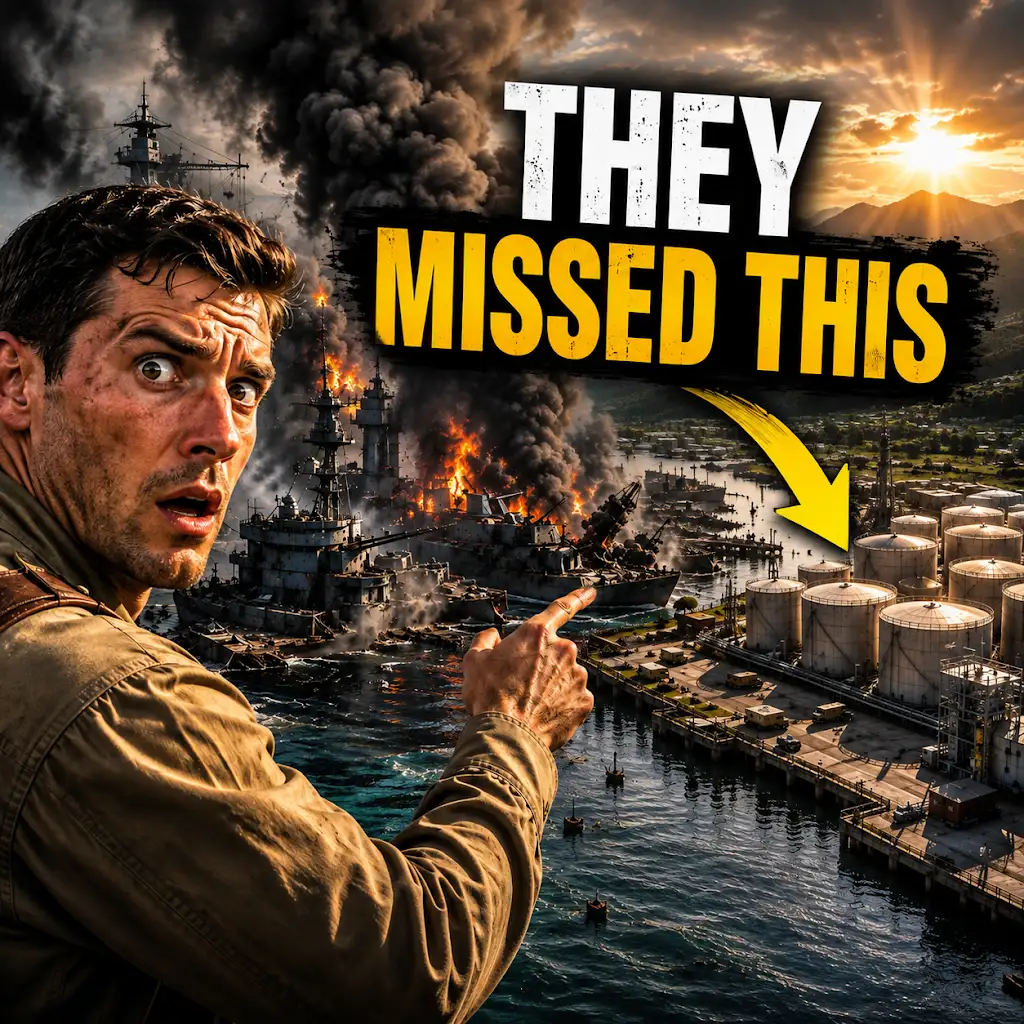
Equally significant was the Japanese failure to target the vast oil storage facilities at Pearl Harbor. These facilities, containing millions of barrels of oil, were essential for the continued operation of the U.S. Pacific Fleet. Their destruction would have severely hampered American naval capabilities for an extended period.
The Declaration of War: A Formal Invitation to Fight
The attack, followed by a formal declaration of war by Japan on December 8, 1941 (December 7 in the U.S.), removed any lingering ambiguity about the state of affairs. It officially brought the United States into World War II, transforming a regional conflict into a global conflagration.
The Timing of the Declaration
The delay in delivering the formal declaration of war, which reached the U.S. State Department after the attack had already begun, further fueled American outrage and reinforced the perception of Japan’s treachery.
The Broadening of the Conflict
The United States’ entry into the war dramatically shifted the global balance of power. The industrial might of America, now fully committed to the Allied cause, would prove to be a decisive factor in the eventual defeat of the Axis powers.
The Unintended Consequences: The Path to Defeat
The long-term consequences of the Pearl Harbor attack were a series of unintended outcomes that directly contributed to Japan’s ultimate defeat. The attack, while securing initial territorial gains, sowed the seeds of its own destruction.
The Industrial Might of the United States Unleashed
The most significant unintended consequence was the unleashing of the unparalleled industrial capacity of the United States. The nation that had been on the brink of economic depression was now fully mobilized for war.
The “Arsenal of Democracy” in Full Swing
American factories churned out warships, aircraft, tanks, and supplies at an astonishing rate, far exceeding the production capabilities of Japan. This industrial advantage would prove to be insurmountable for the resource-scarce Empire of Japan.
Technological Innovation and Superiority
The war spurred immense technological innovation in the United States, leading to advancements in radar, sonar, aircraft design, and eventually, the development of the atomic bomb. These technological leaps contributed significantly to American battlefield superiority.
The Prolongation and Escalation of the War
Instead of a swift victory that would force the United States to negotiate, the attack on Pearl Harbor guaranteed a long and brutal war of attrition. The Pacific War, a vast and unforgiving theater, would become a draining conflict for Japan.
The Island Hopping Campaign
The U.S. strategy of “island hopping” systematically chipped away at Japanese defenses across the Pacific. Each victory, though costly, brought Allied forces closer to the Japanese home islands.
The Naval War in the Pacific
The absence of the U.S. carriers at Pearl Harbor allowed them to play a pivotal role in key naval battles, such as the Battle of Midway, which proved to be a turning point in the Pacific War, effectively crippling the Japanese carrier fleet.
The Moral and Diplomatic Isolation of Japan
While Japan initially achieved some diplomatic successes in Southeast Asia, the brutal nature of its occupation and its attacks on civilian populations gradually eroded any international sympathy or support it might have had.
War Crimes and Atrocities
The widespread war crimes and atrocities committed by Japanese forces throughout the war, from the Bataan Death March to the mistreatment of prisoners of war, solidified a global perception of Japan as a brutal and inhumane aggressor.
The Soviet Union’s Entry into the War
The eventual entry of the Soviet Union into the war against Japan in August 1945, just days before Japan’s surrender, further underscored Japan’s precarious diplomatic and military position.
The attack on Pearl Harbor marked a significant turning point in World War II, leading to the United States’ entry into the conflict. This event not only reshaped military strategies but also had profound implications for international relations. For a deeper understanding of the consequences and the broader context of this pivotal moment, you can explore a related article on the topic at In the War Room, which provides insightful analysis and historical perspectives.
The Legacy of Pearl Harbor: A Defining Moment
| Event | Date | Outcome |
|---|---|---|
| Pearl Harbor Attack | December 7, 1941 | Japan won |
The attack on Pearl Harbor remains a defining moment in both American and world history. Its legacy is complex, marked by both the initial devastation and the eventual triumph of the Allied powers.
A Symbol of American Resilience and Sacrifice
For Americans, Pearl Harbor is a somber reminder of the sacrifices made by those who served and died. It is a symbol of the nation’s resilience in the face of adversity and its commitment to defending freedom.
The Enduring Memorials and Commemorations
The USS Arizona Memorial, along with numerous other memorials and ceremonies, ensures that the events of December 7, 1941, are never forgotten. These sites serve as poignant reminders of the human cost of war.
The Transformation of American Foreign Policy
The attack fundamentally altered American foreign policy, propelling the nation onto the world stage as a global superpower and leading to a sustained commitment to international engagement and defense.
A Lesson in Strategic Miscalculation
For Japan, Pearl Harbor serves as a stark lesson in the dangers of strategic miscalculation and the folly of underestimating an adversary. The attack, intended to secure an empire, ultimately led to its downfall.
The “Victorious Defeat” Narrative
Within Japan, the narrative surrounding Pearl Harbor is often framed as a “victorious defeat.” While the initial attack was militarily successful, it set in motion a chain of events that led to national devastation.
The Post-War Reconstruction and Transformation
The post-war era saw Japan undergo a remarkable transformation, emerging as a peaceful and prosperous nation. The legacy of Pearl Harbor, and the subsequent war, continues to shape Japan’s national identity and its approach to international relations.
The Unintended Catalyst for Global Change
Ultimately, the attack on Pearl Harbor, far from being a Japanese victory, acted as an unintended catalyst for global change. It hastened the end of European colonial empires in Asia, contributed to the rise of the United States as a superpower, and ushered in a new era of international relations shaped by the aftermath of World War II. The events of December 7, 1941, irrevocably altered the course of the 20th century, a testament to the profound and often unpredictable consequences of war.
Japan Won Pearl Harbor—So Why Did It Lose the War?
FAQs
1. What was the outcome of the attack on Pearl Harbor by Japan?
The attack on Pearl Harbor by Japan on December 7, 1941, resulted in significant damage to the United States Pacific Fleet, including the sinking of several battleships and the loss of over 2,400 American lives.
2. How did the attack on Pearl Harbor impact the United States?
The attack on Pearl Harbor prompted the United States to enter World War II, leading to a declaration of war against Japan the following day. This event marked the beginning of the United States’ active involvement in the war.
3. What were Japan’s motivations for attacking Pearl Harbor?
Japan’s motivations for attacking Pearl Harbor included a desire to neutralize the United States’ Pacific Fleet and gain control over the Pacific region, particularly in light of the ongoing conflict between Japan and China.
4. What were the long-term consequences of Japan’s attack on Pearl Harbor?
The attack on Pearl Harbor had significant long-term consequences, including the mobilization of the United States for war, the eventual defeat of Japan in World War II, and the reshaping of global power dynamics in the post-war era.
5. How is the attack on Pearl Harbor remembered in history?
The attack on Pearl Harbor is remembered as a pivotal moment in world history, symbolizing the United States’ entry into World War II and the sacrifices made by those who lost their lives in the attack. It continues to be commemorated annually on December 7th as National Pearl Harbor Remembrance Day.