The whispers of a phantom fleet, a concept so audacious it bordered on science fiction, haunted naval strategists for decades. Japan, a nation perpetually balancing technological innovation with resource limitations, found itself drawn to the idea of a submersible warship capable of launching and recovering aircraft. This wasn’t a mere dream; it was the genesis of what would become known as the submarine aircraft carrier, a clandestine project that, while never fully realized in combat, represented a daring gamble and a significant departure from conventional naval thinking. The motivations behind such a radical design were multifaceted, rooted in the Pacific theatre’s vast expanse, the limitations imposed by the Treaty of Versailles, and Japan’s burgeoning, yet vulnerable, naval air power.
The Genesis of a Submersible Sky
The early 20th century was a crucible of naval innovation. Dreadnoughts dominated the seas, their mighty guns capable of projecting power across vast distances. However, the advent of naval aviation introduced a new dimension to warfare. Aircraft offered unparalleled reconnaissance capabilities, the ability to strike targets far beyond the reach of naval guns, and a potent anti-ship weapon. Yet, traditional aircraft carriers were large, slow, and exceedingly vulnerable, making them prime targets for enemy fleets. Japan, an island nation acutely aware of its dependence on sea lanes and its susceptibility to naval blockade, sought a solution that could offer the offensive punch of aircraft without the inherent fragility of a conventional carrier. The vast distances of the Pacific also presented a significant challenge for fixed-wing aircraft, which had limited range and required extensive land-based infrastructure for operation and maintenance. This is where the concept of a submarine aircraft carrier began to take root. The idea was simple yet revolutionary: to combine the stealth and survivability of a submarine with the striking power of an aircraft.
A Shadow in the Deep: The Strategic Imperative
The strategic landscape of the interwar period and the lead-up to World War II dictated Japan’s naval ambitions. The Washington Naval Treaty of 1922, and subsequent treaties, imposed strict limitations on the tonnage and armament of naval vessels for major powers, including Japan. These treaties were designed to prevent a naval arms race, but they also spurred creative workarounds. For Japan, whose navy was already a formidable force, the treaties meant that building a large fleet of conventional aircraft carriers might be restricted or politically untenable. The submarine, however, offered a less conspicuous and potentially more cost-effective avenue for projecting air power. Furthermore, the sheer scale of the Pacific Ocean meant that reconnaissance and strike missions often required aircraft to operate at the very edge of their operational range. A submarine, capable of submerged transit to a point close to the target, could then surface and launch its aircraft, extending their effective reach significantly. This “launch from the deep” capability offered a tactical advantage that traditional carriers, operating further out at sea, could not match.
The Allure of the Unseen: Stealth and Surprise
The inherent advantage of a submarine is its stealth. Capable of operating submerged, it is virtually undetectable by conventional means. This characteristic offered a compelling rationale for integrating aircraft. Instead of a large, visible carrier steaming into a potential battle zone, a submarine aircraft carrier could approach its target unseen, preserving the element of surprise. This allowed for the possibility of launching aircraft for surprise attacks on enemy fleets, shore installations, or critical infrastructure, catching adversaries completely off guard. The psychological impact of an attack launched from the depths of the ocean, where no threat was perceived, would have been immense. This element of surprise was a cornerstone of Japanese military doctrine in the early 20th century, and the submarine aircraft carrier embodied this principle perfectly. The ability to strike from unexpected vectors and at unexpected times was a powerful strategic consideration.
Japan’s development of a secret weapon submarine aircraft carrier has sparked considerable interest in military technology and strategy. For those looking to delve deeper into the implications of this innovative vessel, a related article can be found at this link. This piece explores the potential impact of such advancements on regional security dynamics and the balance of power in the Asia-Pacific region.
Forging the Phantom Fleet: Design and Development
The concept of a submarine aircraft carrier was not a sudden flash of inspiration; it evolved through a series of increasingly ambitious designs, each attempting to overcome the inherent engineering challenges. The primary
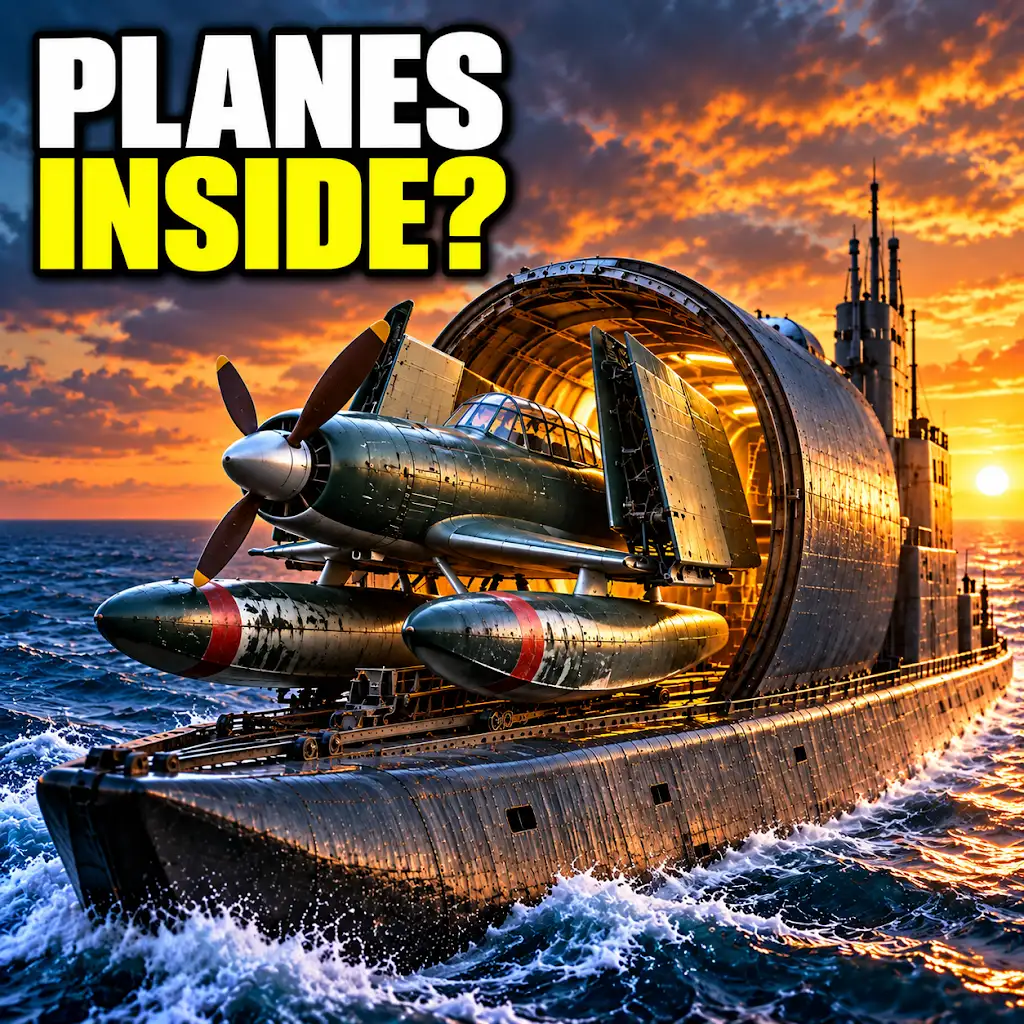
Japan Built a Submarine That Could Launch Three Planes
FAQs
What is Japan’s secret weapon submarine aircraft carrier?
Japan’s secret weapon submarine aircraft carrier is a concept that involves modifying a conventional submarine to carry and launch aircraft.
How does Japan’s secret weapon submarine aircraft carrier work?
The submarine aircraft carrier would surface to launch its aircraft, which would then carry out their missions before returning to the submarine for recovery.
Why is Japan considering developing a submarine aircraft carrier?
Japan is considering developing a submarine aircraft carrier as a way to enhance its maritime capabilities and deter potential threats in the region.
What are the potential advantages of a submarine aircraft carrier?
A submarine aircraft carrier could provide Japan with a stealthy platform for launching air operations, allowing for greater flexibility and surprise in military operations.
Are there any challenges or limitations to developing a submarine aircraft carrier?
Developing a submarine aircraft carrier would pose technical challenges, such as the need for specialized aircraft and infrastructure, as well as operational limitations due to the submarine’s size and capabilities.