Early Encounters and Technological Seeds
The story of Japanese submarine design’s impact on the United States Navy is not one of immediate, cataclysmic revelation, but rather a slow burn, a gradual accumulation of lessons learned and adaptations made. Before the Pearl Harbor attack, the U.S. Navy, while possessing a capable submarine force, had not fully grasped the strategic potential and evolving technological prowess of its Japanese counterpart. The Imperial Japanese Navy (IJN), conversely, had invested heavily in submarine technology and doctrine, viewing their submarines as a crucial component of their ambitious naval expansion.
The IJN’s initial submarine designs were influenced by a mix of foreign technologies, particularly from Britain and the United States, but they soon began to forge their own path. Early Japanese submarines, such as the Type Kois, were relatively small and intended for coastal defense. However, as the IJN’s ambitions grew, so did the size and capability of their submarine fleet. By the late 1930s, they were developing submarines that were larger, faster, and possessed longer operational ranges than many of their contemporaries. This focus on long-range patrols and offensive operations was a key differentiator that would eventually force the U.S. Navy to re-evaluate its own submarine doctrine and design philosophy.
The U.S. Navy, prior to World War II, was primarily focused on submarines as defensive weapons, tools for scouting and interdicting enemy fleets, or as “boats of opportunity” for reconnaissance. The idea of submarines operating as a true commerce raiders, inflicting devastating economic damage, was not as central to American naval thinking. This was partly due to a perceived lack of urgency and a focus on the surface fleet. However, the sheer scale and operational effectiveness of the IJN’s submarine force during the early stages of the war began to challenge these assumptions. While Japanese submarines did not achieve the same level of success as their German U-boat counterparts in terms of tonnage sunk, their presence and their ability to operate effectively in the vast Pacific theater began to highlight potential vulnerabilities in American naval logistics and sea lanes.
The initial encounters, while not always resulting in significant U.S. losses to submarines, served as early warnings. The IJN’s ability to deploy submarines to distant waters, including the Hawaiian Islands, demonstrated a reach and strategic intent that the U.S. Navy had perhaps underestimated. This growing awareness, coupled with the direct threat posed by a more aggressive and technologically advancing Japanese submarine force, laid the groundwork for the significant design and doctrinal shifts that would follow. The seeds of impact were sown not through a single dramatic event, but through a growing understanding of the IJN’s capabilities and their implications for American naval strategy in the Pacific.
Japanese submarine design has had a significant influence on the development of modern U.S. Navy submarines, particularly in terms of stealth technology and advanced materials. An insightful article that delves into this topic can be found on In The War Room, which explores how the innovative features of Japanese submarines have inspired U.S. naval strategies and designs. For more information, you can read the article here: Japanese Submarine Design and Its Influence on the U.S. Navy.
The Pacific Theater’s Submarine Challenge
The opening months of World War II in the Pacific presented the United States Navy with a stark and unforgiving reality: their submarines, while numerous, were often outmatched by their Japanese counterparts in crucial areas. The sheer expanse of the Pacific Ocean, coupled with the IJN’s strategic objective of severing Allied supply lines, placed a tremendous burden on the U.S. submarine force. Japanese submarine designs, though varied, often showcased a commitment to range, speed, and a surprising degree of sophistication for their time.
Early Encounters and U.S. Submarine Limitations
At the outset of the war, the U.S. Navy operated a considerable number of submarines, but many were of older designs, lacking the speed, diving capabilities, and torpedo systems that would prove decisive. The IJN, by contrast, possessed a number of newer, more advanced submarines. Notable among these were the Kō-hyōteki (Type J) midget submarines, which, despite their limited success, demonstrated an innovative and audacious approach to submarine warfare. While the larger fleet submarines of the IJN, such as the I-class, were not necessarily superior in every metric, their strategic deployment and operational effectiveness were a constant concern.
The IJN’s doctrine emphasized the submarine as a tool for reconnaissance and for engaging enemy capital ships. While they didn’t achieve the same level of success in commerce raiding as the German U-boats, their submarines were still a significant threat. They operated in the vast Pacific, often far from their bases, conducting patrols and launching attacks. This operational reach directly challenged the U.S. Navy’s logistical networks. Ships carrying vital supplies, troops, and aircraft were vulnerable, and the presence of Japanese submarines forced the U.S. to divert resources to convoy protection, resources that could have been used elsewhere.
Japanese Submarine Capabilities and U.S. Responses
The IJN’s submarine designs often incorporated features that were ahead of some U.S. contemporaries. For instance, many Japanese submarines were designed with a focus on high surface speed, enabling them to maneuver into advantageous positions or to escape pursuit. Their torpedoes, while not always the most advanced, were employed with a tactical acumen that sometimes caught U.S. vessels off guard. The IJN also had a higher operational tempo for some of its submarine units, particularly in the early war years, projecting a persistent threat across vast stretches of ocean.
The impact on the U.S. Navy was multifaceted. Firstly, it exposed weaknesses in U.S. submarine design and operational doctrine. American submarines often struggled with reliable torpedoes and had limitations in their diving speed and depth. The IJN’s more aggressive patrol patterns and their ability to conduct operations far from home highlighted the need for U.S. submarines to do the same. This led to a demand for submarines that were not just capable of operating defensively, but also offensively, with the range and reliability to hunt enemy shipping and warships deep within Japanese-controlled waters.
Secondly, the threat of Japanese submarines forced a re-evaluation of U.S. naval strategy. The reliance on large, decisive surface battles began to be supplemented by a greater appreciation for the critical importance of controlling sea lanes. The vulnerability of American supply lines became a paramount concern, and this directly influenced the U.S. Navy’s commitment to submarine warfare and, by extension, the design and development of submarines that could effectively counter the Japanese threat. The early war period, therefore, served as a crucial crucible, forging the need for change and adaptation in the face of a formidable and strategically adept adversary.
The Evolution of U.S. Submarine Design
The relentless pressure exerted by the Imperial Japanese Navy’s submarine force during the early years of World War II served as a powerful catalyst for innovation within the United States Navy’s submarine design programs. The initial perceived parity, and in some areas, superiority of Japanese designs, coupled with their effective operational deployment, forced a critical self-assessment and a significant acceleration of development. The U.S. Navy, recognizing the strategic imperative, embarked on a series of design improvements and the development of entirely new classes of submarines that would ultimately become the scourge of Japanese shipping.
Adapting to the Pacific Battlefield
The U.S. Navy’s submarines at the start of the war, while numerous, often suffered from deficiencies that became starkly apparent in the vast and challenging environment of the Pacific. The most pressing issue was the unreliability of their Mark 14 torpedoes, a critical component of submarine warfare. Reports of torpedoes running too deep, running in circles, or failing to detonate plagued early patrols, leading to missed opportunities and frustrated crews. The Japanese submarine torpedoes, while not without their own issues, were generally perceived as more reliable, contributing to a psychological as well as a tactical disadvantage for American submariners.
Furthermore, Japanese submarines often boasted greater submerged endurance and a more efficient hull design that facilitated quieter operation. Their larger patrol submarines were capable of extended voyages, projecting power across thousands of miles of ocean. This forced the U.S. Navy to recognize the need for submarines with greater range, speed, and the ability to operate independently for extended periods. The lessons learned from these encounters directly influenced the design priorities for future U.S. submarine classes.
The Rise of the Fleet Submarine and Key Innovations
In response to these challenges, the U.S. Navy accelerated the development and deployment of its fleet submarines, most notably the Gato, Balao, and Tench classes. These submarines represented a significant leap forward in design and capability, directly addressing the shortcomings identified during early engagements.
One of the most crucial improvements was the refinement and eventual reliable performance of the Mark 14 torpedo, a testament to intensive research and development spurred by the urgent need for effective armament. Beyond torpedoes, the new classes of submarines featured enhanced dive speeds, greater operational depths, and improved habitability for their crews, crucial for prolonged patrols. Their displacement increased significantly, allowing for more fuel, stores, and armament.
The hull design also underwent substantial improvements, with a focus on streamlining and reducing acoustic signature to enhance stealth. While the IJN had demonstrated a capacity for sophisticated submarine construction, the U.S. Navy’s mass production capabilities, coupled with focused design improvements, allowed them to field an overwhelming number of highly capable submarines. The “Tench” class, for example, was an evolution of the “Balao” class, incorporating lessons learned from wartime experience and further improving upon dive capabilities and structural integrity.
The U.S. Navy also began to place a greater emphasis on submarine training and tactics. The realization that submarines could be employed not just for reconnaissance, but as potent offensive weapons capable of crippling enemy logistics, led to the development of aggressive anti-shipping doctrines. This doctrinal shift was intrinsically linked to the design evolution, as the new submarines were built with the capabilities to execute these more ambitious offensive missions effectively. The impact of Japanese submarine design, therefore, was not just in forcing technological upgrades, but in fundamentally reshaping the U.S. Navy’s strategic thinking about the role and potential of its submarine force.
Doctrinal Shifts and Strategic Realignment
The impact of Japanese submarine design and deployment extended far beyond the drawing boards of naval architects; it precipitated a profound shift in the United States Navy’s strategic thinking and operational doctrines. Initially, the U.S. submarine force was largely envisioned as a tool for scouting and for engaging enemy capital ships in the grand fleet actions that characterized traditional naval warfare. However, the persistent threat and surprising operational reach of the IJN’s submarines began to expose a critical vulnerability: the vast and largely unprotected sea lanes upon which American power projection depended.
From Fleet Warfare to Commerce Interdiction
Before World War II, the U.S. Navy’s submarine doctrine leaned heavily on the concept of supporting the main battle fleet. Their role was seen as one of reconnaissance, screening, and attacking enemy warships that posed a direct threat to the carrier battle groups or battleships. The idea of submarines operating as an independent, fleet-footed force to systematically interdict enemy supply lines was not as central to American naval strategy. This was partly a reflection of a doctrine still heavily influenced by Mahanian principles of fleet engagement.
The Imperial Japanese Navy, however, by its very actions, demonstrated the devastating potential of submarine commerce raiding. While the IJN’s success in sinking Allied shipping never reached the stratospheric levels of the German U-boats, their submarines were a constant thorn in the side of Allied logistics. They operated in the vast Pacific, appearing in unexpected locations, disrupting the flow of vital resources, and forcing the U.S. Navy to dedicate significant resources to convoy protection. This constant pressure, observed and analyzed by U.S. naval intelligence and strategists, began to erode the traditional doctrines.
The realization dawned that while sinking enemy warships was important, strangling the enemy’s ability to wage war by cutting off their supplies and reinforcements was an equally, if not more, decisive objective. This shift in perspective was directly influenced by the need to counter the very threat that Japanese submarines posed. The U.S. Navy began to actively encourage and support submarine operations aimed at commerce raiding, transforming its submarine force into a vital instrument of economic warfare.
The Emergence of the “Wolf Pack” Tactic and its Adaptations
While the term “wolf pack” is most famously associated with German U-boat tactics, the U.S. Navy, in its efforts to counter the IJN, began to adapt and employ similar coordinated attacks. The vastness of the Pacific, however, presented unique challenges and opportunities compared to the Atlantic. U.S. submarines often operated in more dispersed patrols, but the principle of coordinated attacks, where multiple submarines would converge on a target or a convoy, became increasingly important.
The success of this evolving doctrine was directly tied to the advancements in U.S. submarine design. The increased range, speed, and reliability of the Gato, Balao, and Tench classes allowed them to sustain prolonged patrols and to effectively hunt enemy shipping deep within Japanese-controlled waters. These submarines were not just tools for attack, but were designed for sustained operations that enabled them to carry out these new, more aggressive doctrines.
The IJN’s own submarine doctrine, which often emphasized reconnaissance and attacks on capital ships, did not fully embrace the concept of relentless commerce raiding to the same extent as the Germans. This strategic divergence, coupled with the U.S. Navy’s increasing proficiency in anti-shipping warfare, played a significant role in the eventual maritime strangulation of Japan. The impact of Japanese submarine design, therefore, was not just on the physical blueprints of U.S. submarines, but on the very strategic thinking that guided their deployment and employment, leading to a fundamental realignment of naval priorities in the Pacific.
Japanese submarine design has had a notable influence on the United States Navy, particularly in the development of advanced stealth technologies and operational strategies. This evolution can be traced through various studies and articles that explore the intricacies of submarine engineering. For a deeper understanding of how these designs have shaped modern naval capabilities, you can refer to a related article that discusses the historical context and technical advancements in this field. To learn more about this fascinating topic, visit this article.
Intelligence, Technology, and the U.S. Advantage
| Metric | Japanese Submarine Design Feature | Influence on US Navy Submarine Design | Impact |
|---|---|---|---|
| Hull Design | Streamlined hull for reduced underwater resistance | Adoption of teardrop-shaped hull in US submarines | Increased underwater speed and maneuverability |
| Propulsion | Use of advanced diesel-electric propulsion systems | Improved battery capacity and quieter electric motors | Extended submerged endurance and stealth |
| Sonar Technology | Early integration of passive sonar arrays | Development of enhanced sonar detection systems | Better target detection and tracking capabilities |
| Torpedo Systems | Innovative torpedo tube arrangements and reload mechanisms | Refined torpedo launch systems for faster reloads | Increased combat readiness and firing rate |
| Stealth Features | Use of sound-dampening materials and quieting techniques | Incorporation of noise reduction technologies | Reduced acoustic signature and improved survivability |
The
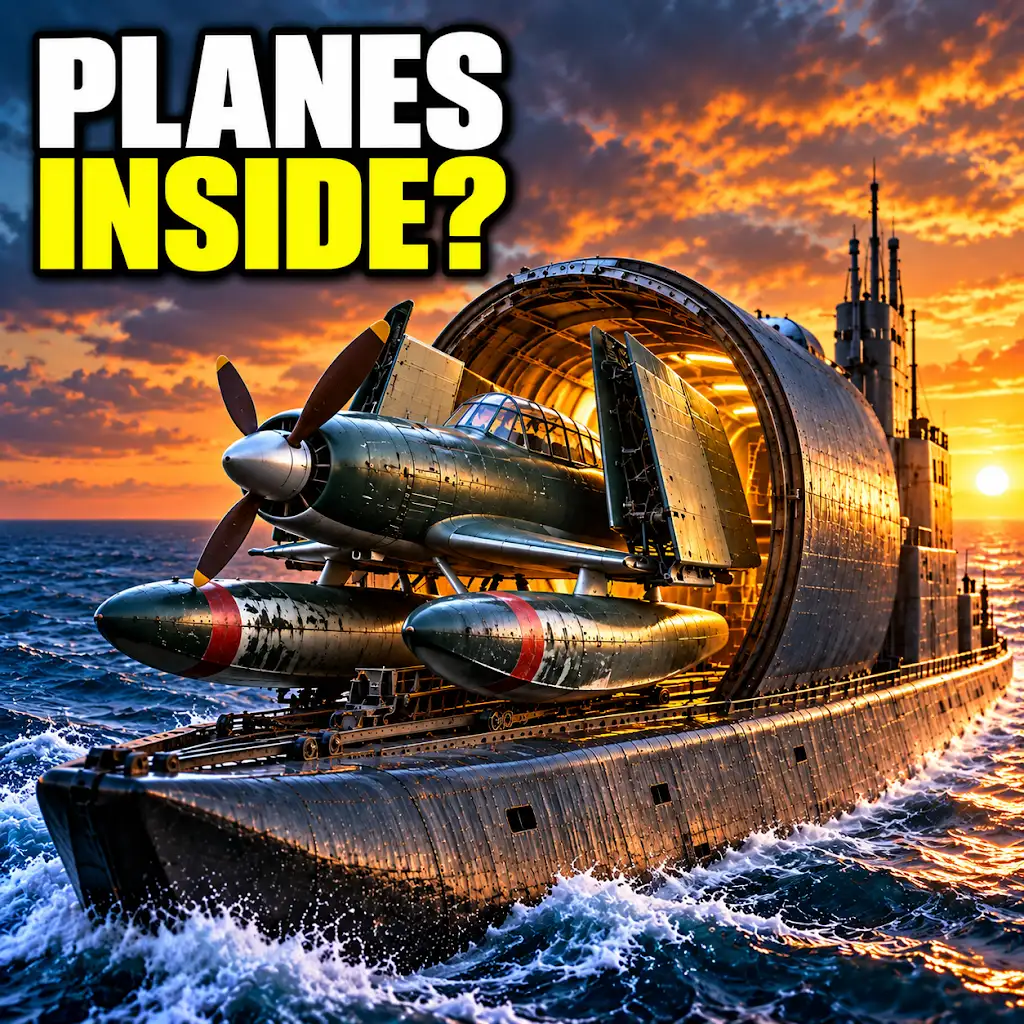
Japan Built a Submarine That Could Launch Three Planes
FAQs
What is the history of Japanese submarine design?
Japanese submarine design has a long history dating back to the early 20th century. Japan has been known for its innovative and advanced submarine technology, particularly during World War II.
How has Japanese submarine design influenced the US Navy?
Japanese submarine design has influenced the US Navy in various ways, including the adoption of certain technologies and design principles. The US Navy has studied Japanese submarines to learn from their strengths and weaknesses.
What specific features of Japanese submarines have impacted US Navy designs?
Some specific features of Japanese submarines that have impacted US Navy designs include their advanced propulsion systems, quiet operation, and efficient use of space for equipment and crew.
Are there any collaborations between Japan and the US in submarine technology?
Yes, Japan and the US have collaborated on submarine technology in the past. This collaboration has included joint research projects, information sharing, and technology exchanges to enhance the capabilities of both countries’ submarine fleets.
How do Japanese and US submarine designs differ?
While both Japanese and US submarine designs prioritize stealth, endurance, and firepower, there are differences in specific technologies and design philosophies. Japanese submarines are known for their compact size and advanced acoustic signature reduction techniques, while US submarines often prioritize larger size for increased payload capacity and endurance.