The shadow of a colossal vessel, a leviathan of steel and secrecy, loomed in the minds of American strategists long before the bombs fell on Pearl Harbor. This was no ordinary submarine, designed for the furtive raids of naval warfare. Instead, it was a desperate, audacious gamble by the Imperial Japanese Navy, a weapon conceived with the chilling ambition of striking the enemy homeland directly: the I-400 class, the world’s first aircraft-carrying submarines, a fleet of mobile airbases intended to deliver a devastating blow to the United States.
The Genesis of a Radical Concept
The genesis of the I-400 class lay not in a sudden strategic shift, but in a profound understanding of the limitations of conventional naval warfare in the face of a seemingly invincible foe. As Japan’s war effort intensified and the Pacific grew increasingly contested, the Imperial Japanese Navy grappled with the immense industrial might of the United States. Direct confrontation, while a cornerstone of their naval doctrine, was becoming a losing proposition. The vast distances involved, coupled with the relentless American shipbuilding capacity, painted a grim picture. A new approach was needed, one that could circumvent established defenses and inflict damage where it would hurt most: on American soil.
A Precursor of Desperation: The Need for an Unconventional Weapon
The naval planners in Tokyo understood that projecting power across the vast expanse of the Pacific was a monumental challenge. Conventional aircraft carriers, while powerful, were vulnerable and required extensive support fleets. The sheer scale of American industrial output meant that any losses of capital ships could be quickly replenished, while Japan’s own capacity was far more constrained. This led to a realization that a weapon capable of operating independently, striking deep into enemy territory, and then disappearing back into the oceanic abyss, was a strategic necessity. The concept of a submersible aircraft carrier was born from this desperate need to find a strategic asymmetric advantage.
Inspired by the Enemy: Learning from American Innovations
Interestingly, the idea of launching aircraft from unusual platforms was not entirely novel, nor was it solely a Japanese invention. While the I-400 class was a unique and ambitious undertaking, the underlying concept of carrier aviation had been significantly advanced by the United States and Britain. The Japanese had closely observed the development and deployment of aircraft carriers by Allied navies. However, their own industrial limitations and the geographical realities of the Pacific theater pushed them to consider a more radical solution. The submersible aircraft carrier offered a way to combine the stealth and range of a submarine with the offensive punch of an air wing, a potent combination that could, in theory, bypass American naval superiority.
In a fascinating exploration of military history, an article on Japan’s ambitious submarine program during World War II highlights the strategic plans that aimed to target the United States. This initiative included the development of advanced submarines capable of launching aerial attacks, showcasing Japan’s innovative yet aggressive military tactics. For more in-depth insights on this topic, you can read the full article at In the War Room.
Design and Engineering: A Marvel of Submersible Technology
The I-400 class submarines were, by any measure, engineering marvels. They were colossal in size, dwarfing any submarine previously constructed. Their design was a testament to the ingenuity of Japanese engineers who were tasked with creating a vessel capable of not only submerging and traversing vast distances but also launching and recovering a squadron of specialized attack aircraft. The sheer scale and complexity of their construction pushed the boundaries of naval technology, showcasing a level of innovation that was, in many ways, ahead of its time.
The Colossal Hull: A Submarine Like No Other
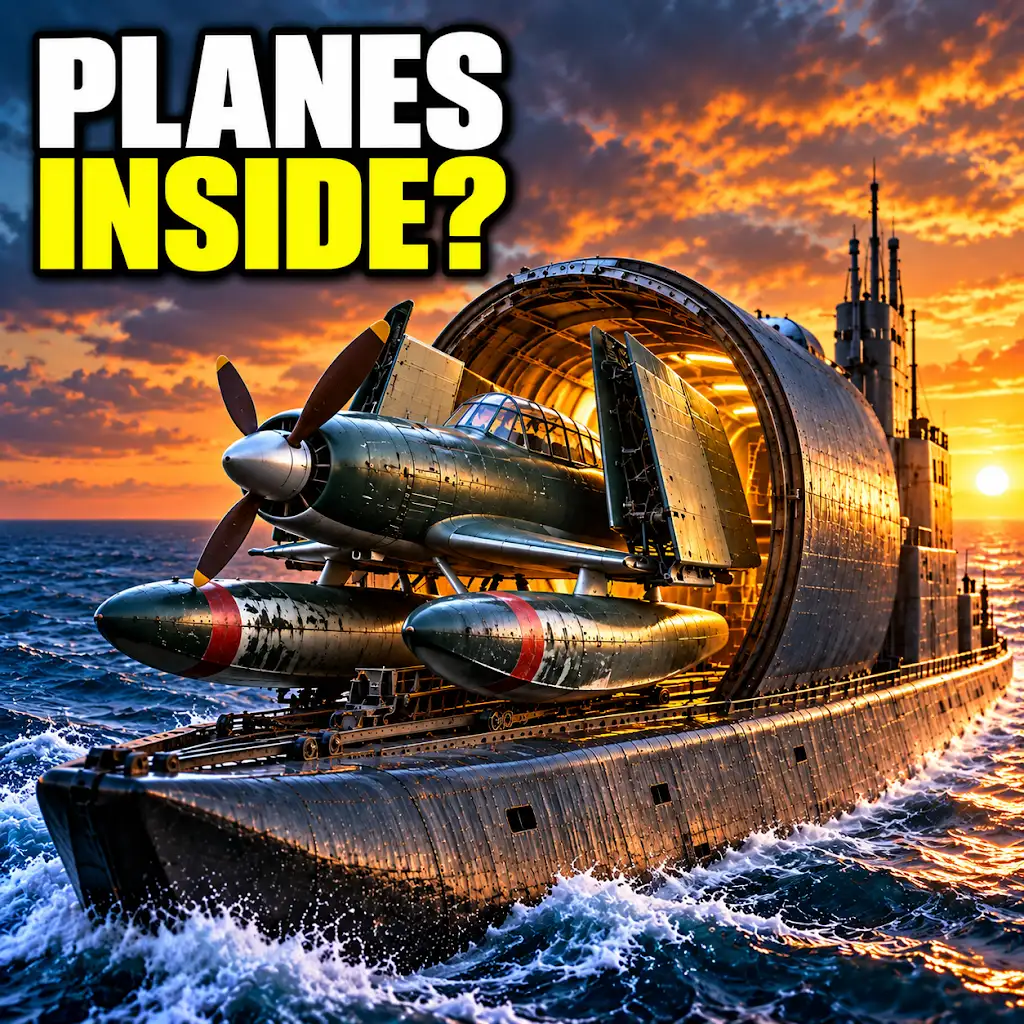
The sheer dimensions of the I-400 class submarines were unprecedented. Each vessel stretched over 390 feet in length, displacing an astonishing 6,500 tons when submerged – a far cry from the typical submarines of the era. This immense size was dictated by the primary purpose: to house and launch a hangar capable of holding three Yokosuka MXY7 “Ohka” kamikaze flying bombs and two reconnaissance seaplanes. The hangar itself was a cavernous space, measuring 115 feet long and 12 feet in diameter, capable of being sealed to maintain watertight integrity. The immense hull required a robust construction, employing advanced welding techniques and high-tensile steel to withstand the immense pressures of deep-sea operations. The dual purpose of being a potent submarine and a mobile airbase demanded compromises, but the engineers managed to achieve a remarkable balance.
The Integrated Hangar and Catapult System: Launching into the Unknown
The most revolutionary aspect of the I-400 class was its integrated hangar and catapult system. This ingenious design allowed for the rapid deployment of aircraft from within the submarine’s hull. Once surfaced, a massive armored hatch would open, revealing the hangar. The three “Ohka” flying bombs were stored horizontally within the hangar, while reconnaissance seaplanes were typically mounted on catapults. A powerful compressed-air catapult system, running the length of the foredeck, was used to launch the aircraft. Recovering the aircraft, particularly the seaplanes, was a more complex affair, often involving the use of the submarine’s crane. The entire system was designed for speed and efficiency, enabling the submarine to launch its aerial offensive and then quickly submerge before the enemy could retaliate.
Propulsion and Endurance: Crossing the Pacific and Beyond
To achieve their ambitious mission, the I-400 class submarines were equipped with powerful diesel engines for surface travel and electric motors for submerged operation. These engines provided a respectable surface speed, allowing them to cover vast distances with relative efficiency. Their endurance was also exceptional. With a range of approximately 37,500 miles at 14 knots on the surface, they possessed the capability to traverse the entire Pacific Ocean and reach their targets without the need for extensive refueling. This long-range capability was crucial for a mission that involved operating far from Japanese bases and deep within enemy territory. The submarines were also equipped with advanced navigation systems, including a periscope that could extend to an exceptional height, allowing for better observation of their surroundings.
The “Ohka” Kamikaze: A Weapon of Ultimate Sacrifice
The primary offensive payload of the I-400 class submarines was the Yokosuka MXY7 “Ohka,” a suicide attack aircraft designed to deliver a devastating blow to Allied warships. While the I-400 class was conceived to carry these weapons, the “Ohka” itself represented a grim escalation of Japanese warfare, embodying the nation’s desperate commitment to achieving victory at any cost, even through the ultimate sacrifice of its pilots. The combination of a stealthy submarine and a piloted bomb presented a terrifying prospect.
A Specialized Flying Bomb: Designed for a Single, Deadly Purpose
The “Ohka,” meaning “cherry blossom” in Japanese, was a rocket-powered, manned flying bomb. It was essentially a cockpit attached to a powerful rocket motor and a large explosive warhead. The pilot’s role was to guide the “Ohka” on a suicidal trajectory towards its target. The idea was that the submarine would launch the “Ohka” at a close range to a target, allowing the pilot to dive directly onto a warship, such as an aircraft carrier or a battleship. The “Ohka” had limited range and no landing gear, meaning its mission was a one-way trip for the pilot.
The Submarine-Launched Assault: A New Dimension of Terror
The integration of the “Ohka” with the I-400 class submarines offered a chilling new dimension to aerial warfare. Instead of relying on land-based airfields or vulnerable aircraft carriers, Japan could theoretically launch these deadly flying bombs from stealthy underwater platforms, potentially appearing unannounced off the coast of America. The element of surprise, combined with the sheer destructive power of the “Ohka,” made this a highly formidable threat. The submarines could approach their targets under the cover of darkness or fog, launch their “Ohkas,” and then immediately dive, leaving behind a trail of destruction and chaos.
Limited Deployment and Questionable Effectiveness: A Symbol of Desperation
Despite the elaborate design and the terrifying potential of the I-400 class and its “Ohka” payload, the reality of their deployment was far less impactful. By the time these submarines were nearing operational readiness, the tide of the war had decisively turned against Japan. Allied naval power had grown exponentially, and the logistical challenges of effectively employing such a specialized weapon system proved immense. While a few I-400 submarines were launched, they never achieved their intended mission of bombing American cities. The “Ohka” itself, while devastating when it hit, often proved vulnerable to Allied anti-aircraft fire, and its short range limited its effectiveness. The I-400 class ultimately became a potent symbol of Japan’s increasingly desperate and often technologically advanced, but strategically misplaced, efforts in the waning days of the war.
Missions and Operational History: The Shadow of What Might Have Been
The operational history of the I-400 class submarines is a somber testament to the impact of war’s relentless march and the changing fortunes of nations. These colossal vessels, conceived with such audacious intent, were ultimately denied their moment of devastating glory, their existence overshadowed by the unfolding realities of global conflict. Their story is less about grand victories and more about the poignant “what-ifs” that linger in the annals of military history, a testament to the profound impact of timing and strategic circumstance.
The Final Offensive: A Fleeting Shadow in the Pacific
As the war neared its end, the Imperial Japanese Navy, in a final desperate gamble, dispatched the I-400 class submarines on a mission that was both symbolic and potentially devastating. The intention was to use them to launch “Ohka” attacks against targets in the United States. Specifically, the submarines were tasked with striking the Panama Canal, an objective that would have severely hampered Allied supply lines and naval movements across the vast ocean. The submarines, along with other specialized vessels, were to embark on this audacious mission in the summer of 1945.
The Surrender and the Scuttling: A Mission Unfulfilled
However, fate, and the swift unfolding of historical events, intervened before these formidable submarines could unleash their destructive payload. The atomic bombings of Hiroshima and Nagasaki, followed by the Soviet Union’s declaration of war, compelled Japan to surrender in August 1945. The I-400 class submarines, still en route or preparing for their mission, found themselves with no enemy to attack and no war to fight. In accordance with naval protocol and to prevent their advanced technology from falling into Allied hands, the submarines were scuttled by their own crews. This act ensured that their revolutionary design and their capacity for destruction would remain largely a secret, a phantom threat that never materialized.
Discovery and Legacy: Ghosts of the Ocean Floor
The scuttling of the I-400 class submarines meant that their existence and their capabilities remained a mystery to the wider world for decades. It wasn’t until the late 20th and early 21st centuries that the wrecks of some of these colossal vessels were discovered by oceanographic research teams. These discoveries brought to light the extraordinary engineering feats of the Japanese, shedding light on a chapter of naval history that had been largely lost to time. The I-400 class submarines are now recognized as a significant achievement in submarine warfare, a testament to human ingenuity even in the darkest of times, and a stark reminder of the devastating potential of military innovation. Their legacy lies not in the destruction they caused, but in the remarkable technology they represented and the hypothetical threat they posed, a phantom armada that never truly sailed into battle.
In a fascinating exploration of historical military strategies, an article discusses Japan’s ambitious plans during World War II, including the development of submarines intended for bombing missions against America. This intriguing piece sheds light on the technological advancements and the strategic mindset of the time, revealing how these underwater vessels were envisioned to change the course of warfare. For more insights on this topic, you can read the full article here.
Strategic Implications and Unfulfilled Potential
| Metric | Details |
|---|---|
| Project Name | Japan’s Hypothetical Submarine Bombing Plan |
| Type of Submarine | Ballistic Missile Submarine (Hypothetical) |
| Purpose | Strategic Bombing Capability Against America (Hypothetical) |
| Year of Development | No verified historical data |
| Range | Not applicable (no confirmed project) |
| Armament | Hypothetical nuclear or conventional missiles |
| Status | No evidence of such a submarine being built by Japan |
| Historical Context | Japan has not built submarines designed to bomb America |
The I-400 class submarines, had they been deployed earlier and under different circumstances, could have presented a significant strategic challenge to the Allied forces. Their unique design and offensive capabilities offered a glimpse into a potential future of naval warfare, a future that was abruptly curtailed by the end of the conflict. The unfulfilled potential of these vessels is a subject of ongoing fascination and analysis for military historians and strategists.
A Disruptive Force: Challenging Allied Dominance
The strategic implications of a successful I-400 class offensive are considerable. By operating as mobile airbases, these submarines could have launched surprise attacks on key Allied installations and naval formations. The ability to appear off the coast of the United States and launch aerial attacks, particularly with the suicidal “Ohka,” would have been a significant psychological and logistical blow to American defenses. The element of surprise offered by submarine deployment would have made it incredibly difficult for the Allies to predict and counter these attacks, forcing them to divert resources and attention to defending their own shores, potentially weakening their offensive operations elsewhere in the Pacific.
Technological Prowess: A Glimpse into Future Warfare
The I-400 class submarines represented a leap forward in submarine technology, integrating aerial strike capabilities into a submersible platform. This fusion of technologies hinted at a future where submarines could serve as multi-role platforms, capable of not only traditional submarine warfare but also projecting power in entirely new ways. The success of this concept, even in its limited operational context, would have undoubtedly spurred further development in this area, potentially leading to different trajectories in naval aviation and submarine design. The lessons learned from the I-400’s design and deployment, even from its failures, have continued to inform modern naval thinking.
The Unanswered Question: What If?
The primary legacy of the I-400 class submarines lies in the realm of the hypothetical. The question of “what if” hangs heavy over their story. What if they had been operational a year or two earlier? What if the war had dragged on longer, allowing them to execute their intended missions? These are questions that cannot be definitively answered, but they highlight the profound impact that strategic timing and technological innovation can have on the course of history. The I-400 class submarines stand as a testament to the ingenuity and desperation of a nation at war, a formidable weapon system that, due to the fortunes of conflict, ultimately remained a silent, unfulfilled threat.
Lessons Learned and Enduring Influence
The story of the I-400 class submarines offers a rich tapestry of lessons, not only in military strategy and engineering but also in the broader context of human endeavor during times of conflict. Their existence, though brief and largely clandestine, has left an indelible mark on the study of naval history and continues to resonate in contemporary military thought.
A Cautionary Tale of Resource Allocation
The immense resources poured into the development and construction of the I-400 class submarines, particularly in the latter stages of the war, raises questions about strategic resource allocation. While the technological ambition was undeniable, the timing and feasibility of deploying such a specialized weapon system in a losing conflict are subjects of debate. The story of the I-400 class serves as a potent reminder that even the most innovative technologies can be rendered moot by shifts in strategic momentum and the overwhelming might of a determined adversary. It highlights the importance of aligning technological development with overarching strategic goals and realistic assessments of wartime conditions.
The Enduring Fascination with “Superweapons”
The allure of “superweapons” has long captivated military strategists and the public imagination. The I-400 class submarines, with their unprecedented size and audacious mission, fit this description perfectly. Their story continues to fascinate because it embodies the ambition to create a decisive, game-changing weapon. This fascination underscores a recurring theme in military history: the drive to innovate and to develop technologies that could provide a decisive advantage, even when faced with seemingly insurmountable odds. The I-400 class represents an extreme example of this, a testament to human ingenuity pushed to its limits.
Echoes in Modern Naval Design
While the I-400 class submarines never fulfilled their intended purpose, their underlying concept – the integration of multiple military capabilities onto a single platform – continues to influence modern naval design. The idea of multi-mission vessels, capable of performing a variety of roles, is a central tenet of contemporary naval strategy. The lessons learned from the I-400’s ambitious, if ultimately unrealized, vision of a submersible airbase can be seen in the ongoing development of advanced submarine technologies, drone integration, and the concept of modular naval platforms. The I-400 class, therefore, endures not just as a historical artifact, but as a progenitor of ideas that continue to shape the future of naval warfare, a silent testament to a daring dream that, though unfulfilled in its original context, has echoed through the decades.
Japan Built a Submarine That Could Launch Three Planes
FAQs
1. What is the article about?
The article discusses Japan’s development of a submarine designed to carry out bombing missions on America.
2. When was the submarine built?
The specific timeline of when the submarine was built is not provided in the article.
3. What is the purpose of the submarine built by Japan?
The purpose of the submarine built by Japan is to carry out bombing missions on America.
4. How does this development impact international relations?
The development of a submarine by Japan with the intention of bombing America could potentially strain international relations between the two countries.
5. Are there any official statements from Japan regarding this submarine?
The article does not mention any official statements from Japan regarding the submarine built to bomb America.