The Six-Day War of 1967 marked a seismic shift in the geopolitical landscape of the Middle East and profoundly reshaped Israeli military doctrine. Prior to 1967, Israel, a young nation surrounded by hostile Arab states, grappled with existential threats and a constant need to develop a defense strategy that maximized its limited resources against numerically superior adversaries. The war’s decisive victory, however, did not lead to complacency. Instead, it served as a crucible, forging and refining a doctrine that prioritized preemptive action, rapid maneuver, and technological superiority, a doctrine that continued to evolve in the decades that followed. Understanding Israeli military doctrine in 1967 and its subsequent trajectory offers crucial insights into the enduring security challenges and strategic thinking of the Jewish state.
The Six-Day War was a watershed moment for Israel, not only in terms of territorial gains but also in solidifying its military doctrine. The preemptive strike against the Egyptian air force, executed with devastating efficiency, became a cornerstone of future Israeli strategy. This overwhelming success demonstrated the immense value of surprise, speed, and the neutralization of enemy airpower as a critical first step in any conflict. The swift ground offensives that followed, characterized by rapid encirclement and deep penetrations, showcased the importance of offensive operations and the ability to seize and hold territory. The war also highlighted the need for adaptability and improvisation in the face of unforeseen battlefield developments.
The Preemptive Strike: A Doctrine of Necessity
The decision to launch a preemptive strike on June 5, 1967, was not taken lightly, but it was born out of a deeply ingrained strategic imperative: survival. Israel perceived an imminent threat from its Arab neighbors, whose rhetoric and military build-up suggested an impending invasion.
The Strategic Context: A Looming Threat
Leading up to the war, a confluence of factors created an atmosphere of heightened tension. Egypt’s President Gamal Abdel Nasser engaged in aggressive rhetoric, expelled UN peacekeeping forces from the Sinai Peninsula, and began mobilizing his troops. Syria’s shelling of Israeli settlements from the Golan Heights further escalated the situation. This perceived existential threat led Israeli leadership to conclude that waiting for an attack would be strategically disastrous.
The Air Force as the Decisive Arm
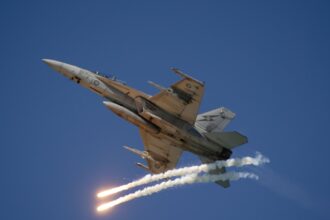
The doctrine that emerged from this situation emphasized the critical role of air superiority. The Israeli Air Force (IAF) was tasked with achieving complete dominance of the skies in the opening hours of any conflict. This was seen as the most effective way to neutralize enemy offensive capabilities and pave the way for ground operations.
Operation Focus: The Blueprint for Air Dominance
The success of Operation Focus, the IAF’s systematic destruction of Egyptian, Syrian, and Jordanian air forces on the ground within the first few hours of the war, became a textbook example of preemptive air power application. This operation was meticulously planned and executed with precision, demonstrating the IAF’s advanced training and technological edge. The doctrine evolved to prioritize intelligence gathering and the ability to project power rapidly and decisively in the air.
The Ground War: Maneuver and Encirclement
Beyond air power, the ground war of 1967 cemented the importance of rapid maneuver warfare and the strategic objective of encircling enemy forces. The speed and decisiveness of Israeli ground offensives surprised Arab armies, leading to significant territorial gains and the demoralization of enemy troops.
The Sinai Campaign: A Masterclass in Offensive Operations
The advance into the Sinai Peninsula was a prime example of this doctrine in action. Israeli armored divisions, employing speed and aggressive tactics, outmaneuvered and overwhelmed Egyptian forces. The focus was not just on engaging enemy formations but on cutting off their retreat, trapping them, and forcing their surrender.
The Importance of Combined Arms
The success of the ground offensives was also a testament to effective combined arms operations. Tanks, infantry, artillery, and air support worked in concert, creating a synergistic effect that maximized battlefield effectiveness. This integrated approach became a hallmark of Israeli military planning.
The Golan Heights: Securing the Northern Frontier
The capture of the Golan Heights from Syria was equally significant. This operation demonstrated the ability to conduct difficult mountain warfare with speed and determination, securing Israel’s northern border and neutralizing a persistent threat. The doctrine adapted to include tactics for offensive operations in varied and challenging terrain.
The Israeli military doctrine established in 1967 has been a pivotal aspect of the nation’s defense strategy, emphasizing preemptive strikes and rapid mobilization in response to perceived threats. For a deeper understanding of how this doctrine has evolved and its implications on regional security, you can refer to the related article available at this link. This resource provides valuable insights into the historical context and operational strategies that have shaped Israel’s military approach over the decades.
Evolution Beyond 1967: Adapting to New Threats and Technologies
The Six-Day War provided a solid foundation, but Israeli military doctrine was never static. The subsequent decades presented new challenges, including the Yom Kippur War of 1973, the rise of asymmetric warfare, and the relentless advancement of military technology. These factors necessitated continuous adaptation and refinement of the core principles established in 1967.
The Yom Kippur War: A Test of Resilience and Adaptation
The surprise attack by Egypt and Syria on Yom Kippur in 1973 served as a stark reminder that even a seemingly dominant military could face significant challenges. The initial stages of the war saw heavy Israeli casualties and territorial losses, forcing a brutal reassessment of preparedness and strategic assumptions.
Initial Setbacks and the Need for Recovery
The coordinated Arab offensive, utilizing new Soviet-supplied anti-tank and anti-aircraft missiles, inflicted considerable damage on Israeli armor and aircraft. This demonstrated a critical vulnerability that had not been fully appreciated in the aftermath of 1967. The doctrine had to evolve to incorporate lessons about enemy adaptation and the importance of robust defensive strategies.
TheIDF’s Resilience and Counteroffensive
Despite the initial shock, the Israel Defense Forces (IDF) displayed remarkable resilience. Through courageous fighting, improvisation, and effective counterattacks, Israel managed to regain the initiative, push back Arab forces, and ultimately achieve a strategic stalemate that paved the way for future peace negotiations. This demonstrated the underlying strength and adaptability of the IDF’s personnel and command structure.
The Importance of Intelligence and Warning
The Yom Kippur War underscored the absolute necessity of robust intelligence gathering and early warning systems. The intelligence failure to anticipate the attack led to significant unpreparedness. Subsequent doctrine emphasized the need for continuous intelligence collection, analysis, and dissemination to prevent future surprises.
Investing in Technological Superiority
In the wake of the Yom Kippur War, there was a renewed focus on maintaining and enhancing technological superiority. This included the development and procurement of advanced weaponry, electronic warfare capabilities, and sophisticated communication systems to counter emerging threats.
The Era of Asymmetric Warfare: A Paradigm Shift
As the geopolitical landscape shifted, Israel found itself increasingly engaged in conflicts against non-state actors and facing the challenges of asymmetric warfare. This type of warfare, characterized by irregular tactics, terrorism, and a blurring of civilian and combatant lines, demanded a fundamental reevaluation of traditional military doctrine.
Combating Terrorism: A Constant Struggle
The rise of Palestinian militant groups and the ongoing threat of terrorism became a central focus of Israeli security policy. This led to the development of specialized counter-terrorism units, sophisticated intelligence gathering techniques, and doctrines focused on disrupting terrorist networks, preventing attacks, and responding to hostage situations.
The Gaza Strip and Lebanon: Laboratories for Counter-Insurgency
Operations in the Gaza Strip and Lebanon against groups like Hezbollah and Hamas provided continuous real-world experience in counter-insurgency and counter-terrorism. These experiences informed doctrine regarding urban warfare, the importance of precision strikes, and the complex challenges of operating in densely populated civilian areas.
The Concept of “Deterrence by Uncertainty”
In the context of asymmetric warfare, the concept of deterrence evolved. Instead of relying solely on the threat of overwhelming conventional force, Israel developed a doctrine of “deterrence by uncertainty.” This meant creating a climate where adversaries could not be certain of the timing, nature, or scope of Israeli retaliation, thereby discouraging attacks.
The Use of Targeted Operations and Intelligence
Targeted assassinations of key terrorist leaders, pre-emptive strikes against militant infrastructure, and sophisticated cyber warfare operations became integral tools in this strategy. The doctrine emphasized the importance of precise and discriminate actions to minimize collateral damage while maximizing disruptive effects on enemy capabilities.
Technological Superiority: The Unwavering Pillar

Throughout its history, and particularly since 1967, technological superiority has been a consistent and defining element of Israeli military doctrine. Faced with numerical disadvantages, Israel has consistently invested in cutting-edge military technology to maintain a decisive edge over its adversaries.
The Dominance of the Air Force: Continuous Innovation
The IAF, a critical component of Israeli defense, has remained at the forefront of technological innovation. Its continued focus on advanced fighter jets, precision-guided munitions, and sophisticated surveillance capabilities ensures its ability to project power effectively and achieve air superiority in any conflict.
Maintaining a Qualitative Edge
The doctrine emphasizes not just possessing advanced technology but ensuring a qualitative edge that surpasses that of potential adversaries. This involves continuous research and development, adaptation of existing technologies, and strategic procurement of the most advanced systems available globally.
The F-35 Program: A Case Study in Advanced Airpower
Israel’s acquisition and integration of the F-35 “Adir” stealth fighter jet exemplifies this commitment to technological superiority. The F-35’s advanced capabilities in stealth, networked warfare, and sensor fusion provide the IAF with an unprecedented advantage, shaping future air combat doctrines.
Cyber Warfare and Electronic Dominance
In the modern era, technological superiority extends beyond traditional domains into cyberspace. Israel has developed formidable capabilities in cyber warfare, both offensive and defensive, recognizing its increasing importance in contemporary conflicts.
Protecting Critical Infrastructure
The doctrine acknowledges the vulnerability of critical national infrastructure to cyber attacks. Consequently, significant resources are dedicated to developing robust cyber defenses to protect power grids, financial systems, and communication networks.
The Offensive Cyber Dimension
Simultaneously, Israel has cultivated offensive cyber capabilities. These capabilities are employed for intelligence gathering, disruption of enemy command and control, and the neutralization of cyber threats before they can materialize.
Unmanned Aerial Vehicles (UAVs): The Eyes and Wings of the IDF
Unmanned Aerial Vehicles (UAVs), or drones, have become indispensable assets for the IDF. Their ability to provide persistent surveillance, conduct reconnaissance, and even engage targets with precision has profoundly impacted battlefield tactics and intelligence gathering.
Surveillance and Reconnaissance Dominance
UAVs offer unparalleled capabilities for real-time intelligence, surveillance, and reconnaissance (ISR). They enable the IDF to maintain constant situational awareness, identify threats, and track enemy movements, significantly enhancing operational effectiveness.
Precision Strikes and Force Protection
The integration of armed UAVs allows for precise strikes against enemy targets, reducing the risk to ground forces. This contributes to both operational success and the protection of Israeli soldiers, a core tenet of the IDF’s ethical framework.
The Doctrine of “The Long War”: Maintaining Vigilance and Preparing for Protracted Conflict

In addition to immediate operational doctrines, Israeli military thinking has long been shaped by the concept of “The Long War.” This understanding acknowledges that the conflict with its neighbors and adversaries is not a series of isolated engagements but a protracted struggle for survival and security. This perspective influences long-term strategic planning, resource allocation, and societal resilience.
Strategic Depth and Defense Lines
The territorial gains of 1967, while significant, also created new strategic challenges. The doctrine developed to address these included the establishment of sophisticated defense lines, the integration of early warning systems, and the strategic importance of maintaining buffer zones.
The Sinai and the Golan: Fortifications and Intelligence Networks
The defense of the Sinai Peninsula and the Golan Heights involved extensive fortifications, minefields, and integrated intelligence networks. These measures were designed to slow down and attrle any potential invasion, allowing time for reserves to mobilize and for the IDF to mount a decisive counteroffensive.
The Importance of Depth and Multiple Defensive Layers
The doctrine emphasizes the creation of depth in defense, meaning multiple layers of security and engagement zones. This prevents a single breakthrough from being decisive and allows for flexibility in responding to enemy advances.
The Concept of “Mowing the Grass”: Managing Low-Intensity Conflict
The ongoing conflict, particularly in the Palestinian territories, has led to the development of doctrines for managing low-intensity conflict and what is sometimes colloquially referred to as “mowing the grass.” This approach aims to periodically disrupt and degrade enemy capabilities without engaging in full-scale wars.
Targeted Operations and Disruption
This involves a continuous cycle of intelligence gathering, targeted operations, and the disruption of terrorist cells and infrastructure. The goal is to prevent the escalation of threats while maintaining a degree of control over volatile situations.
The Ethical and Strategic Dilemma
The application of these doctrines presents significant ethical and strategic dilemmas, particularly regarding civilian casualties and the long-term impact on regional stability. The doctrine grapples with balancing security imperatives with the need to avoid unnecessary escalation and maintain a degree of international legitimacy.
Societal Resilience and Reserve Mobilization
A crucial element of “The Long War” doctrine is the emphasis on societal resilience and the rapid mobilization of reserves. Israel’s society is structured to be prepared for conflict, with a highly trained reserve force that can be quickly integrated into operational units.
The Citizen Soldier: A Cornerstone of Defense
The concept of the citizen soldier is deeply ingrained in Israeli society. Mandatory military service for men and women ensures a large pool of trained personnel who can be called upon in times of crisis.
Preparedness and Public Awareness
The doctrine extends to public awareness and preparedness. Civil defense measures, emergency protocols, and a general understanding of the security landscape are fostered to ensure the nation can withstand prolonged periods of tension and conflict.
The Israeli military doctrine established in 1967 has been a subject of extensive analysis and discussion, particularly in the context of its impact on regional security dynamics. A related article that delves into the nuances of this doctrine and its implications for modern military strategies can be found on In The War Room. This resource provides valuable insights into how the principles developed during that pivotal year continue to shape Israel’s defense posture today. For more information, you can read the article here.
The Future of Israeli Military Doctrine: Adapting to an Unpredictable World
| Aspect | Details |
|---|---|
| Preemptive Strikes | Israeli military doctrine in 1967 emphasized preemptive strikes to neutralize potential threats. |
| Air Superiority | The doctrine focused on achieving and maintaining air superiority to gain a strategic advantage. |
| Mobility | Emphasis was placed on rapid mobilization and maneuverability of forces for quick and decisive action. |
| Combined Arms | Integration of infantry, armor, artillery, and air support for coordinated and effective operations. |
| Defense | Strategic defensive positions were established to protect key territories and assets. |
The landscape of global security is constantly evolving, and Israeli military doctrine must continue to adapt. Emerging threats, technological advancements, and shifting geopolitical alliances will undoubtedly shape the future strategic thinking of the IDF.
The Rise of Artificial Intelligence and Autonomous Systems
The integration of artificial intelligence (AI) and autonomous systems into military operations is poised to revolutionize warfare. Israeli doctrine is actively exploring how these technologies can enhance ISR capabilities, improve decision-making, and enable more precise and efficient operations.
AI-Driven Intelligence and Command
AI’s ability to process vast amounts of data and identify patterns can significantly enhance intelligence analysis and provide commanders with more actionable insights. Autonomous systems may also be deployed for reconnaissance, logistics, and even combat roles, albeit with significant ethical and control considerations.
The Human-Machine Teaming Imperative
The future doctrine will likely focus on effective human-machine teaming, ensuring that AI and autonomous systems augment, rather than replace, human judgment and decision-making, particularly in complex ethical situations.
The Evolving Nature of Deterrence in a Nuclear Age
While Israel maintains a policy of nuclear ambiguity, the proliferation of nuclear weapons and the changing dynamics of deterrence remain a critical consideration for its military doctrine. The IDF must continually assess how to deter potential adversaries in a multi-polar nuclear environment.
Maintaining a Credible Deterrent Posture
This involves ensuring the credibility of Israel’s deterrent capabilities, which include a combination of conventional and unconventional means, to dissuade any state or non-state actor from contemplating an existential attack.
Addressing the Threat of Rogue States and Non-State Actors
The doctrine will need to address the increasing challenge posed by rogue states and sophisticated non-state actors who may seek to acquire or utilize weapons of mass destruction, requiring specialized strategies and capabilities.
The Importance of Diplomacy and Information Warfare
In an increasingly interconnected world, military doctrine cannot exist in a vacuum. The interplay between military strength, diplomatic maneuvering, and information warfare will be crucial for Israel’s long-term security.
The Integration of Military and Diplomatic Objectives
The IDF’s actions are often intertwined with diplomatic efforts. The doctrine must reflect an understanding of how military operations can support or hinder broader foreign policy goals.
Combating Disinformation and Shaping Narratives
Information warfare, including countering disinformation campaigns and shaping international narratives, has become a vital component of modern conflict. Israeli military doctrine will likely incorporate more sophisticated strategies for engaging in this domain.
In conclusion, Israeli military doctrine, forged in the crucible of 1967, has demonstrated a remarkable capacity for evolution and adaptation. From the preemptive strikes of the Six-Day War to the complex challenges of asymmetric warfare and the integration of cutting-edge technologies, the IDF has consistently prioritized survival, technological superiority, and strategic foresight. As the global security environment continues to transform, the ongoing refinement of this doctrine will remain paramount to Israel’s enduring security and its ability to navigate the multifaceted threats of the future.

The Intelligence System That Won the Six-Day War Before It Began
FAQs
What is the Israeli military doctrine of 1967?
The Israeli military doctrine of 1967, also known as the “Six-Day War” doctrine, was a strategy developed by the Israeli Defense Forces (IDF) in response to the growing threat of neighboring Arab countries. It emphasized preemptive strikes, swift and decisive offensive action, and the use of air power to achieve victory.
What were the key principles of the Israeli military doctrine of 1967?
The key principles of the Israeli military doctrine of 1967 included the importance of air superiority, the use of surprise and deception, the rapid mobilization of reserves, and the coordination of ground, air, and naval forces to achieve quick and decisive victories.
How did the Israeli military doctrine of 1967 influence the outcome of the Six-Day War?
The Israeli military doctrine of 1967 played a crucial role in the outcome of the Six-Day War. By implementing preemptive strikes and utilizing their air power effectively, the IDF was able to neutralize the air forces of Egypt, Jordan, and Syria, gaining air superiority and paving the way for their swift and decisive victories on the ground.
What impact did the Israeli military doctrine of 1967 have on subsequent military strategies?
The success of the Israeli military doctrine of 1967 had a significant impact on subsequent military strategies around the world. It demonstrated the effectiveness of preemptive strikes, air power, and rapid offensive action, influencing the development of military doctrines in other countries.
How does the Israeli military doctrine of 1967 continue to influence the IDF today?
The Israeli military doctrine of 1967 continues to influence the IDF today by emphasizing the importance of air superiority, rapid mobilization, and the integration of ground, air, and naval forces. While the specific threats and challenges facing Israel have evolved, the core principles of the 1967 doctrine continue to inform the IDF’s approach to military strategy and operations.