
The Gulf War, a conflict etched into the annals of modern military history, was a stark demonstration of how superior command and communications could decisively shape the outcome of warfare. For Iraq, the nation under siege, its command and communications systems, a critical element for coordinating its vast but ultimately ill-prepared forces, proved to be a significant vulnerability. This article will delve into the intricacies of Iraq’s command and communications infrastructure during the Gulf War, examining its strengths, weaknesses, and the profound impact these had on the battlefield.
Centralized Control and its Drawbacks
At the apex of Iraq’s military command structure sat Saddam Hussein, the President of Iraq and Commander-in-Chief of its armed forces. His word was law, and strategic decisions, down to tactical deployments, often filtered through his direct involvement. This centralized model, while potentially offering unwavering loyalty and a unified vision in theory, proved to be a significant impediment in the face of a technologically advanced and rapidly evolving conflict. The sheer volume of information and the speed at which decisions needed to be made during the Gulf War overwhelmed this top-down approach. Information bottlenecks were inevitable, leading to delays in communication and a lack of agility in responding to enemy movements. Commanders at lower echelons often lacked the autonomy to react to immediate battlefield realities, waiting for directives that might arrive too late or be based on outdated intelligence.
The Role of the Military High Command
Beneath Saddam Hussein, the Iraqi General Staff and the Ministries of Defense and Interior constituted the operational command. This body was responsible for translating the President’s broad strategic objectives into actionable plans. However, the influence of political considerations and personal loyalty often overshadowed purely military expertise within these ranks. Promotions were frequently based on patronage rather than merit, leading to commanders who were hesitant to challenge superiors or present unfavorable assessments. This created an environment where initiative was discouraged and a culture of fear pervaded, further hindering effective decision-making and the flow of honest feedback up the chain of command.
The Presidential Palace Guard and its Influence
An often-overlooked aspect of Iraqi command was the significant role played by the Presidential Palace Guard and other elite Republican Guard units. These formations, directly loyal to Saddam Hussein, were often prioritized for equipment, personnel, and even strategic positioning. While intended as a force to protect the regime, their privileged status could also disrupt the cohesive functioning of the broader military. Resources that might have been better allocated to regular army units were diverted, and their deployment could sometimes be influenced by political motivations rather than purely operational necessity.
The command and communications strategies employed during the Gulf War were pivotal in shaping the outcome of military operations in Iraq. For a deeper understanding of these strategies and their implications, you can read a related article that explores the technological advancements and tactical innovations of that era. This article provides valuable insights into how effective communication systems contributed to coalition forces’ success. To learn more, visit the following link: here.
Iraqi Communications Networks: A Fragile Backbone
Reliance on Analog and Older Technologies
The Iraqi military’s communications infrastructure was largely characterized by its reliance on analog systems and older technologies. While some newer Soviet-era equipment was present, a significant portion of their radio and telephone networks were not designed to withstand the sophisticated electronic warfare capabilities of the Coalition. This meant that their communications were more susceptible to jamming, interception, and disruption. The limited bandwidth of these systems also constrained the volume and complexity of the information that could be transmitted, impacting intelligence sharing and coordination.
Limited Redundancy and Vulnerability to Interdiction
A critical weakness in Iraq’s communication network was its lack of redundancy. Key nodes and communication lines were often concentrated, making them prime targets for Coalition air interdiction and electronic warfare. Once a primary communication link was severed, restoring it was often a slow and difficult process, leaving units isolated and unable to receive orders or report their status. This vulnerability was exploited effectively by the Coalition, which systematically targeted Iraqi communication hubs, contributing to the chaos and disarray within Iraqi ranks.
Challenges with Secure Communication
Secure communication was another area where Iraq struggled. While some encryption capabilities existed, they were not as advanced or widely deployed as those utilized by the Coalition. This meant that sensitive operational details, troop movements, and strategic plans were at a higher risk of being intercepted and exploited by Coalition intelligence. The lack of secure voice and data transmission severely hampered their ability to maintain operational security and surprise.
The Impact of Terrain and Infrastructure
The vast and often rugged terrain of Iraq, coupled with the aging and dispersed nature of its civilian infrastructure, further complicated the establishment and maintenance of robust communication networks. Extending reliable communication lines across these distances, especially in contested areas, presented significant logistical challenges. Furthermore, the Coalition’s strategic bombing campaign deliberately targeted infrastructure, including power grids and transportation networks, which indirectly degraded Iraq’s ability to maintain and repair its communication systems.
Command and Control in Operation Desert Storm

The Coalition’s Information Dominance
From the outset of Operation Desert Storm, the Coalition enjoyed overwhelming superiority in command and communications. Their integrated systems allowed for real-time situational awareness, rapid dissemination of intelligence, and seamless coordination between air, land, and naval forces. This was achieved through a combination of advanced technologies, including satellite communications, secure digital networks, and sophisticated command and control software. The ability of Coalition commanders to see and react to the battlefield in near real-time stood in stark contrast to the fragmented and delayed information flow experienced by their Iraqi counterparts.
Exploiting Iraqi Communication Weaknesses
The Coalition’s intelligence gathering and electronic warfare capabilities were specifically designed to exploit the vulnerabilities of Iraq’s communication systems. Through signals intelligence (SIGINT) and electronic intelligence (ELINT), they were able to intercept Iraqi communications, identify key communication nodes, and jam or disrupt their transmissions. This created an information asymmetry that proved decisive. Iraqi units often found themselves cut off from command, operating on outdated orders, or unable to communicate their urgent needs.
The “Scud Hunt” and Communications Interdiction
The persistent threat of Iraqi Scud missile launches posed a unique challenge. The Coalition’s response, including the dedicated “Scud hunts,” involved not only tactical air sorties but also a significant effort to locate and neutralize Scud launch sites through intelligence derived from various sources, including communications intercepts. The ability to pinpoint the location of Scud launches and track their movement relied heavily on rapid communication and analysis of intercepted signals.
The Ground War and Communication Breakdown
As the ground war commenced, the breakdown in Iraqi command and communications became even more pronounced. The rapid advance of Coalition ground forces, coupled with continuous air strikes and electronic warfare, overwhelmed any remaining Iraqi command structures. Units found themselves surrounded, cut off, and without clear orders. This led to widespread surrenders and a collapse of organized resistance in many sectors. The inability of Iraqi commanders to effectively communicate with and direct their dispersed units contributed directly to the swift and decisive victory of the Coalition.
Impact on Iraqi Military Performance
Disorientation and Loss of Cohesion
The pervasive communication failures had a devastating impact on the cohesion and operational effectiveness of the Iraqi military. Units were frequently unaware of their surrounding situation, the disposition of enemy forces, or the overall strategic objectives. This disorientation led to a loss of initiative and a passive response to Coalition operations. Instead of fighting as an integrated force, Iraqi units often found themselves acting in isolation, making them easier targets.
Inability to Respond to Evolving Threats
The delay in information flow meant that Iraqi commanders were often reacting to past events rather than anticipating future threats. Their inability to quickly assess and respond to Coalition maneuvers, such as the flanking movements during the ground war, led to critical tactical disadvantages. This reactive posture, dictated by communication limitations, prevented them from effectively redeploying forces or mounting coordinated counterattacks.
Erosion of Morale and Discipline
The constant state of confusion, isolation, and lack of direction undoubtedly eroded the morale and discipline of Iraqi soldiers. Facing a technologically superior enemy with overwhelming firepower, and without clear communication or support from their command, many soldiers likely felt abandoned and demoralized. This psychological impact, exacerbated by the physical hardships of war, contributed to the rapid disintegration of many Iraqi units.
Ineffective Use of Resources
Even when Iraq possessed capable equipment or large formations, the lack of effective command and communications meant that these resources could not be deployed or utilized efficiently. Units might have been in the right place geographically but were unable to receive orders to engage or defend effectively. This resulted in a squandering of potential strength and a failure to capitalize on any inherent advantages they might have possessed.
The command and communications strategies employed during the Gulf War were pivotal in shaping the outcome of military operations in Iraq. For a deeper understanding of these strategies and their implications, you can explore a related article that delves into the intricacies of military communication systems and their evolution over time. This insightful piece can be found at In the War Room, where it discusses how advancements in technology influenced command effectiveness during the conflict.
Lessons Learned and Long-Term Implications
| Metrics | Data |
|---|---|
| Command Structure | Centralized command under Saddam Hussein |
| Communications | Relied on landline and radio communications |
| Intelligence Gathering | Used human intelligence and limited satellite imagery |
| Coordination with Allies | Limited coordination with other Arab countries |
The Primacy of Information Warfare
The Gulf War served as a potent lesson in the increasing importance of information warfare. The Coalition’s ability to dominate the electromagnetic spectrum and control the flow of information proved as critical as its conventional military might. For future conflicts, any nation aspiring to military effectiveness would need to invest heavily in secure, resilient, and advanced command and communication systems, alongside robust electronic warfare capabilities.
The Evolution of Command and Control Theory
The challenges faced by Iraq highlighted the limitations of rigid, centralized command structures in the face of modern warfare. The Coalition’s success underscored the benefits of more decentralized and adaptive command and control (C2) frameworks, where empowered subordinates could make decisions rapidly based on real-time information. This led to further development in C2 theory and the integration of technology to support such frameworks.
The Technological Divide
The Gulf War starkly illuminated the widening technological divide between developed and developing nations in military capabilities. Iraq’s reliance on older technologies meant it was fundamentally outmatched in the critical domains of communication and intelligence. This underscored the need for continuous investment in technological modernization for any military to remain competitive.
The Enduring Importance of Interoperability
While not directly an Iraqi issue, the success of the Coalition also emphasized the vital importance of interoperability between different branches of service and allied forces. Seamless communication and data sharing were essential for the integrated approach that characterized the Coalition’s operations. This principle continues to drive efforts to standardize communication protocols and systems across modern militaries.
In conclusion, Iraq’s command and communications infrastructure during the Gulf War was a critical Achilles’ heel. Its reliance on outdated technologies, centralized decision-making, and a lack of redundancy rendered it highly vulnerable to the sophisticated capabilities of the Coalition. The ensuing communication breakdown led to disorientation, a loss of cohesion, and ultimately, the swift and decisive defeat of Iraqi forces. The lessons learned from this aspect of the conflict continue to shape military doctrine and technological development, emphasizing the indispensable role of robust and agile command and communications in modern warfare.
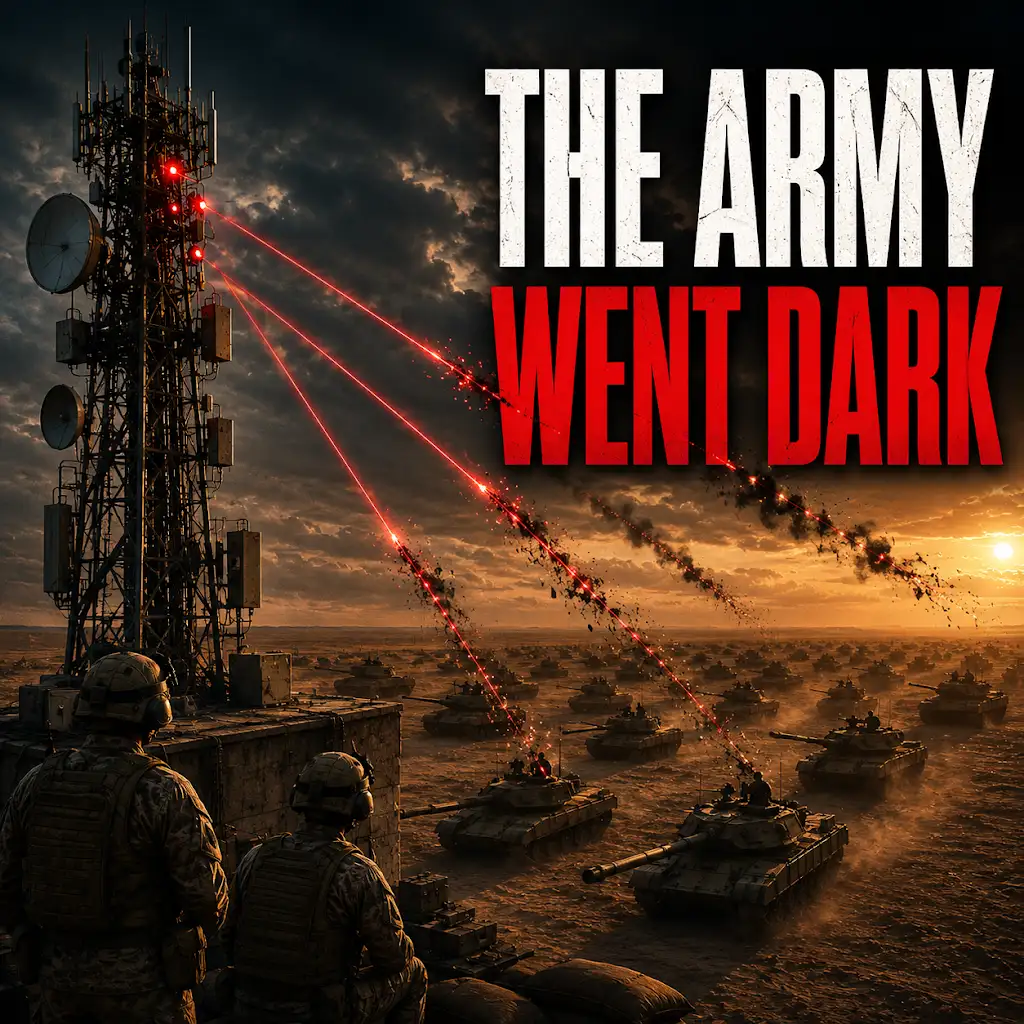
The Invisible Attack That Crippled Iraq’s Army | Desert Storm Documentary
FAQs
What was the role of command and communications in the Gulf War in Iraq?
Command and communications played a crucial role in the Gulf War in Iraq, as they were essential for coordinating military operations, issuing orders, and maintaining situational awareness on the battlefield.
How did Iraq’s command and communications infrastructure compare to that of the coalition forces?
Iraq’s command and communications infrastructure was less advanced and less integrated compared to that of the coalition forces. This technological disadvantage hindered their ability to effectively coordinate and communicate during the war.
What challenges did Iraq face in maintaining command and communications during the Gulf War?
Iraq faced numerous challenges in maintaining command and communications during the Gulf War, including limited resources, outdated equipment, and the disruption caused by coalition airstrikes targeting their infrastructure.
Did Iraq make any attempts to improve their command and communications capabilities during the Gulf War?
Iraq attempted to improve their command and communications capabilities during the Gulf War by utilizing alternative communication methods, such as satellite phones and couriers, to compensate for the damage to their infrastructure.
How did the effectiveness of Iraq’s command and communications impact the outcome of the Gulf War?
The effectiveness of Iraq’s command and communications significantly impacted the outcome of the Gulf War, as their technological limitations and disrupted infrastructure contributed to their inability to effectively coordinate and respond to the coalition forces, ultimately leading to their defeat.