So, you’re wondering about Ingo Swann and his claims about a Moon base? It’s a pretty wild topic, and the short answer is: no, there’s no credible evidence to suggest Ingo Swann personally discovered or visited a base on the Moon. He was a fascinating figure who talked a lot about remote viewing and claimed some pretty extraordinary things, including that he’d seen evidence of alien activity on the Moon.
But where did these claims come from, and why do they still pop up? Let’s dive into the story of Ingo Swann, his remote viewing abilities, and the persistent rumors about a lunar outpost. It’s a story that blends psychic exploration with a healthy dose of skepticism.
Ingo Swann was a name that became synonymous with the field of remote viewing. He wasn’t just someone who dabbled; he was a pivotal figure, often credited with co-developing and pioneering many of the techniques and methodologies associated with it. Born in 1933, Swann’s life took him through various experiences that he later claimed informed his psychic abilities.
Early Life and the Genesis of Remote Viewing
Swann’s early life wasn’t particularly marked by public displays of psychic phenomena. However, he often spoke of a natural predisposition towards sensing things beyond the ordinary. It wasn’t until his adult life, and particularly his interactions with researchers interested in parapsychology, that his abilities began to be systematically explored and, by some, scientifically documented.
The CIA and the Stargate Project
Perhaps the most significant chapter in Swann’s public life involved his participation in government-funded research into psychic phenomena. The U.S. government, particularly the CIA and DIA, was involved in what eventually became known as the Stargate Project. This was a multi-year, multi-million-dollar initiative to investigate the potential military applications of parapsychology, including remote viewing. Swann was a key participant in many of these experiments.
What is Remote Viewing?
Remote viewing, at its core, is the claimed ability to perceive information about a distant or unseen target using extrasensory perception (ESP). This “target” could be anything: a location, an object, a person, or even a concept. The remote viewer would then describe their perceptions, which could include visual imagery, auditory sensations, tactile feelings, or even emotional impressions. The goal was to see if these descriptions matched the actual target, often under controlled, blind conditions.
Swann’s Role in Stargate
Swann’s involvement in Stargate was crucial. He was not only a subject but also a key contributor to the development of the protocols and methodologies used. He often claimed to be able to “view” targets with remarkable accuracy, sometimes providing details that were later confirmed. These successes, within the context of the Stargate Project, lent a degree of credibility to the concept of remote viewing, at least within the circles that funded and studied it.
Beyond Government Work: Swann’s Independent Pursuits
While the Stargate Project provided a framework for his abilities, Swann continued his work independently. He wrote books, gave lectures, and continued to explore the limits of consciousness and perception. It was during these later stages of his career, and in his own writings and interviews, that the more sensational claims, including those about the Moon base, began to emerge.
Ingo Swann, a prominent figure in the field of remote viewing, made intriguing claims about a potential moon base, suggesting that extraterrestrial life may be involved in its operation. For those interested in exploring more about the implications of such claims and the broader context of extraterrestrial research, a related article can be found at this link. This article delves into various theories surrounding extraterrestrial presence and technology, providing a comprehensive overview of the ongoing discussions in this fascinating area of study.
The Moon Base Claims: What Did Swann Say?
Ingo Swann’s claims about a Moon base were not a minor footnote in his career; they were a significant part of his more extraordinary pronouncements. He didn’t just hint at things; he described them with a surprising level of detail, often attributing them to his remote viewing sessions.
The “Alien” Observation Posts
Swann’s core assertion was that he, through remote viewing, had perceived evidence of artificial structures on the Moon. He described these as observation posts or bases, suggesting they were not of human origin. He often spoke of seeing “lights” or “structures” that didn’t fit with natural geological formations.
Describing the “Structures”
According to Swann, these supposed lunar bases were not elaborate cities but more functional, perhaps even utilitarian, structures. He described them as being located in specific regions of the Moon, often mentioning shadowed areas or craters where they would be less visible from Earth. The details he provided were sometimes vague, as is common with remote viewing descriptions, but he was consistent in his belief that they represented alien presence.
The “Intelligence” Behind the Bases
A key aspect of Swann’s claims was that these bases were not abandoned relics but were actively being used, or at least monitored, by some form of intelligent extraterrestrial life. He suggested that these entities were aware of human activity and were observing us. This element of active observation added a layer of intrigue and, for some, a sense of unease to his claims.
The “Secret” Government Knowledge
Swann also suggested that certain individuals or agencies within the U.S. government were aware of these lunar bases and were actively concealing this information from the public. This is a common trope in conspiracy theories, and Swann’s claims fed into this narrative, suggesting a deep, hidden truth about our relationship with extraterrestrial visitors.
Why the Secrecy?
The reasons for this alleged government cover-up, according to Swann’s narrative, were varied. One possibility he alluded to was national security, fearing public panic or a disruption of societal order if the truth were revealed. Another was the potential for technological advancement or leverage that might be gained from understanding or interacting with these alien bases.
Swann’s Own Interpretation of His Findings
It’s important to note that Swann presented these claims as the direct result of his remote viewing experiences. He believed his ability allowed him to perceive these hidden realities. He wasn’t presenting scientific data or photographic evidence; he was sharing the output of his psychic perceptions, which he trusted implicitly.
Examining the Evidence: What’s the Verdict?
This is where things get tricky. When we talk about evidence for Ingo Swann’s Moon base claims, we’re not dealing with the kind of hard, empirical data that typically supports scientific assertions. The “evidence” he presented was his own subjective experience.
The Nature of Remote Viewing Evidence
Remote viewing, by its very nature, is difficult to quantify and verify in a conventional scientific sense. While experiments were conducted to try and validate it, the results were often debated. The descriptions produced by remote viewers can be open to interpretation, and without independent, objective confirmation, it’s hard to draw definitive conclusions.
Subjectivity vs. Objectivity
The primary challenge with Swann’s claims is the gap between subjective experience and objective reality. Swann experienced seeing a Moon base through remote viewing. However, for the rest of the world to accept this, there needs to be something more concrete.
The Problem of “Blind” Experiments
In Stargate and other remote viewing experiments, efforts were made to conduct “blind” sessions, where the viewer didn’t know the target. This was to prevent researcher bias or the viewer subconsciously picking up clues. While this helped improve the rigor of the experiments, it didn’t eliminate the fundamental issue of interpreting the results.
The Lack of Corroborating Physical Evidence
Crucially, there is no physical evidence that supports Ingo Swann’s claims.
Lunar Missions and Observations
We have sent numerous probes and orbiters to the Moon, including detailed mapping missions. The Apollo astronauts walked on the Moon and brought back samples. None of these missions, nor the vast archives of photographs and data they produced, have ever revealed any artificial structures or signs of alien bases.
The Resolution of Lunar Imagery
Modern lunar reconnaissance missions, like NASA’s Lunar Reconnaissance Orbiter (LRO), provide incredibly high-resolution imagery of the lunar surface. If there were artificial structures, even ancient or abandoned ones, they would likely be detectable at this resolution. To date, no such discoveries have been made.
The Skeptical Viewpoint
From a skeptical perspective, Swann’s claims are explained by a combination of factors:
- Misinterpretation of natural features: The Moon’s surface is filled with intriguing geological formations. Shadows, unusual rock shapes, and craters can be easily misinterpreted, especially when viewed through the lens of a pre-existing belief in alien presence.
- Psychological phenomena: The power of suggestion, pareidolia (seeing patterns in random stimuli), and the human tendency to find meaning can all contribute to remote viewing experiences.
- Wishful thinking and narrative construction: For individuals deeply invested in the idea of extraterrestrial life, it’s easy to weave narratives that fit those beliefs, even if they aren’t grounded in verifiable fact.
Why Do These Claims Persist?
Despite the lack of concrete evidence, Ingo Swann’s Moon base claims continue to circulate. There are several reasons for this persistent interest.
The Allure of the Unknown and the Forbidden
Human beings are naturally drawn to mysteries, especially those that touch on the unknown and the potentially world-altering. The idea of hidden alien bases on our closest celestial neighbor taps into a deep-seated curiosity and a sense of wonder.
The Appeal of Conspiracy
Conspiracy theories, by their nature, offer explanations for events that might otherwise seem random or inexplicable. The idea that governments are hiding monumental truths about alien life is a powerful narrative that resonates with many who feel distrustful of authority or believe there are deeper realities at play.
The “What If?” Factor
The question “What if it’s true?” is a powerful driver. Even without proof, the possibility, however remote, keeps the idea alive in popular culture and fringe discussions.
The Legacy of Remote Viewing
Ingo Swann’s significant role in the development of remote viewing means his claims are often linked to the broader discourse around psychic abilities. For believers in ESP and other paranormal phenomena, Swann’s pronouncements are seen as further evidence of the potential of these abilities, even if the specific claims are unsubstantiated.
The Intertwining of Personal Experience and Public Narrative
Swann’s personal conviction and the detailed nature of his descriptions, even if subjective, lend a certain weight to his story for those who are receptive to it. His personal narrative became intertwined with the public’s imagination.
The Internet and Information Dissemination
The internet has been a double-edged sword for information. While it allows for rapid access to verifiable facts, it also provides a fertile ground for the spread of unsubstantiated claims and theories. Ingo Swann’s Moon base claims have found a ready audience online, where they can be shared and discussed without the same level of scrutiny found in traditional media or academic circles.
Echo Chambers and Confirmation Bias
Online communities can become echo chambers where like-minded individuals reinforce each other’s beliefs. This can lead to confirmation bias, where people actively seek out and accept information that supports their existing views, while dismissing contradictory evidence.
Ingo Swann’s claims about a moon base have sparked considerable interest and debate within the realms of both science and conspiracy theories. His assertions suggest that there may be extraterrestrial structures on the lunar surface, which has led to various interpretations and investigations. For those looking to explore more about the implications of such claims, a related article can be found at In the War Room, where the intersection of space exploration and speculative theories is examined in depth. This ongoing discussion highlights the fascination with what lies beyond our planet and the mysteries that continue to captivate the human imagination.
Conclusion: A Fascinating Figure, Unproven Claims
| Claim | Evidence |
|---|---|
| Moon Base Existence | Swann claimed to have remote viewed a moon base on the far side of the moon |
| Verification | No independent verification or evidence has been presented to support the claim |
| Controversy | The claim is highly controversial and is not supported by mainstream science |
Ingo Swann was undoubtedly a remarkable individual, a pioneer in the exploration of consciousness and remote viewing. His participation in government projects and his development of new methodologies solidified his place in the history of parapsychology.
The Boundary Between Psychic Insight and Empirical Proof
Swann’s claims about a Moon base represent a point where the boundaries between personal psychic experience and empirical scientific proof become blurred. While he believed he was perceiving truth, the wider scientific community and the available physical evidence do not support his assertions.
The Importance of Critical Thinking
The story of Ingo Swann and his Moon base claims serves as a compelling reminder of the importance of critical thinking. It highlights how compelling personal narratives, coupled with a desire to believe, can lead to extraordinary claims that lack verifiable substance.
A Legacy of Questions, Not Answers
Ultimately, Ingo Swann’s Moon base claims remain in the realm of speculation and unsubstantiated assertion. They don’t offer concrete answers about alien life or hidden lunar outposts. Instead, they leave us with questions about the nature of perception, the limits of human consciousness, and the enduring human fascination with the mysteries of the cosmos. While his contributions to remote viewing are recognized, his more sensational claims about the Moon base stand as a testament to the power of belief and the persistent allure of the unknown, rather than as a factual discovery.
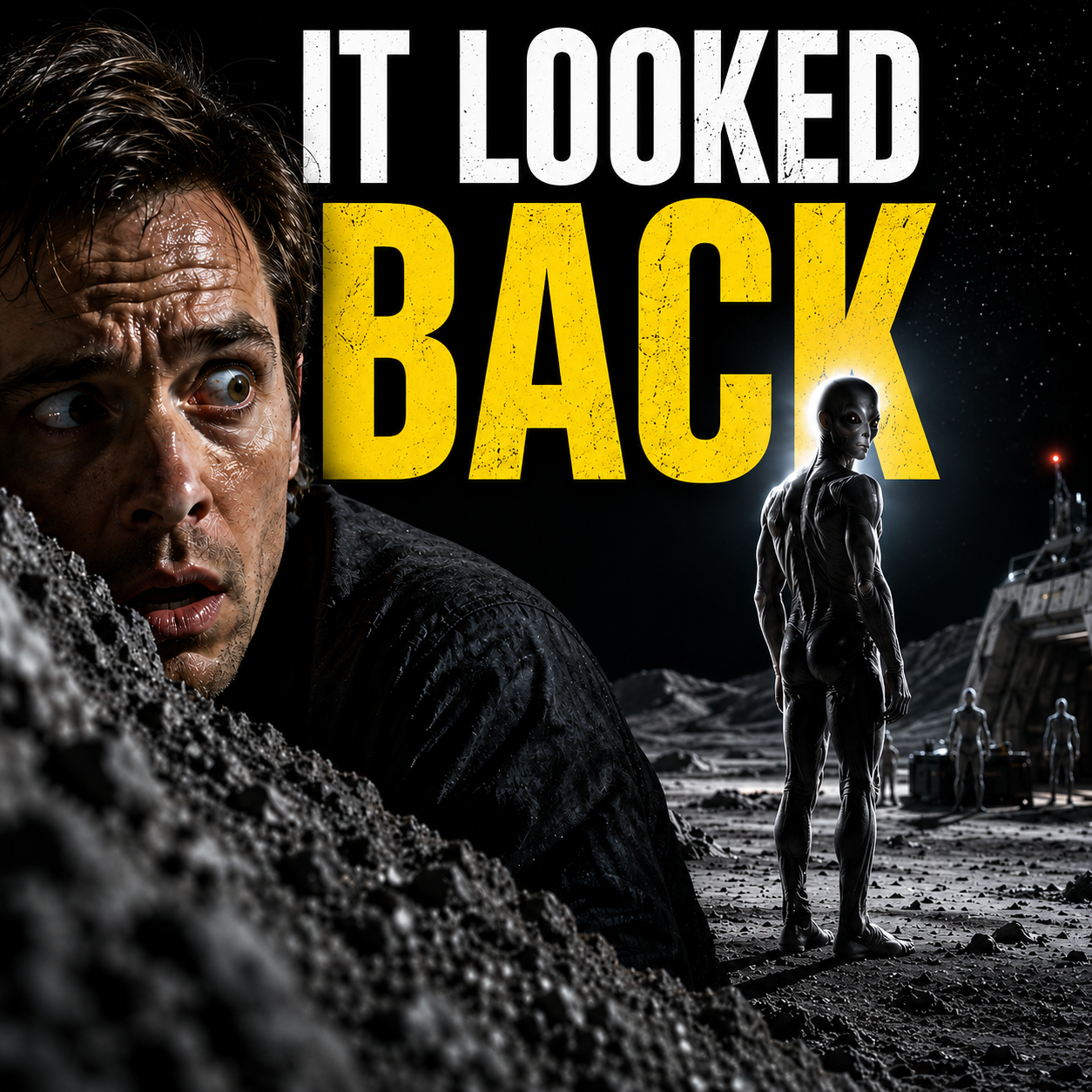
He Remote Viewed the Moon. Then Something Saw Him.
FAQs
What are Ingo Swann’s claims about a moon base?
Ingo Swann, a well-known psychic and remote viewer, claimed to have remote viewed a secret moon base on the far side of the moon. He described the base as being inhabited by extraterrestrial beings and being used for various scientific and military purposes.
Is there any evidence to support Ingo Swann’s claims?
There is no concrete evidence to support Ingo Swann’s claims about a moon base on the far side of the moon. His claims are largely based on his own remote viewing experiences, which are difficult to verify or substantiate.
What is remote viewing?
Remote viewing is the practice of seeking impressions about a distant or unseen target using paranormal means, such as extrasensory perception (ESP) or “sensing” with the mind. It is often associated with psychic abilities and has been the subject of scientific research and controversy.
Has anyone else claimed to have seen a moon base through remote viewing?
There have been other individuals who have claimed to have remote viewed a moon base or extraterrestrial activity on the moon. However, these claims are also difficult to verify and are often met with skepticism from the scientific and mainstream communities.
What is the scientific consensus on Ingo Swann’s claims?
The scientific consensus is that Ingo Swann’s claims about a moon base and extraterrestrial activity are not supported by empirical evidence and are considered to be speculative and unverifiable. As such, they are not widely accepted within the scientific community.