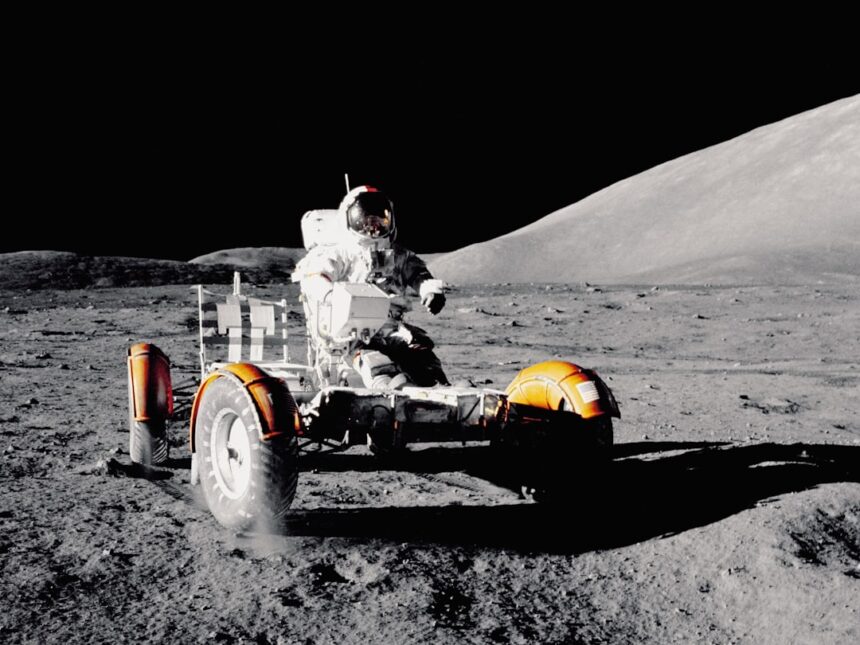
Ever wondered if your mind could actually do more than just think? Like, what if it could see things far away, even other planets? That’s where Ingo Swann comes in. He was a guy who claimed to have psychic abilities and, get this, he was actually involved in some pretty hush-hush government projects. The idea of a “psychic spy” might sound like something out of a sci-fi movie, but for a while, it was a very real, if unconventional, part of American intelligence. Swann’s story is a fascinating dive into the intersection of consciousness, espionage, and a very ambitious, albeit strange, ambition: to get psychic eyes on the Moon.
The Genesis of a “Psychic Spy”
Ingo Swann wasn’t your average recruit. He wasn’t plucked from West Point or a top university for his strategic genius or combat prowess. Instead, his unique talents, or claims thereof, made him a candidate for something entirely different. His journey into the world of government-sponsored psychic research wasn’t a career move he planned; it was more like a door that opened unexpectedly, revealing a shadowy world where the unexplained was being actively investigated.
Early Life and Unusual Abilities
Swann’s childhood was marked by experiences that he and others later pointed to as early indicators of his extraordinary perception. He described moments of precognition and an unusual sensitivity to his surroundings. While many people have fleeting moments of intuition, Swann’s experiences were often more vivid and impactful, leading him to believe he possessed abilities beyond the norm. These weren’t just gut feelings; they were detailed impressions, sometimes unsettling, that he couldn’t easily dismiss. He grew up with a sense that there was more to reality than what met the eye, a feeling that would later be validated, in a peculiar way, by his government involvement.
Connecting with the Scientists
His entry into the formal study of psychic phenomena wasn’t through self-promotion. Instead, it was through a series of chance encounters and introductions that brought him to the attention of researchers working on the fringes of parapsychology. These weren’t the kind of scientists you’d find in mainstream university labs; they were often funded by private organizations or, as it turned out, government agencies looking for an edge. Swann’s ability to produce consistent and detailed psychic impressions made him stand out from the anecdotal evidence that often characterized early parapsychology. He wasn’t just saying he could do it; he was demonstrating it under controlled conditions, which, for the curious minds at the time, was a significant distinction.
Ingo Swann, renowned for his groundbreaking work in remote viewing, played a pivotal role in the controversial psychic spy program during the Cold War, which included his intriguing claims of a Moon mission. For those interested in exploring the intersection of psychic phenomena and military intelligence, a related article can be found at In the War Room, where the complexities of such unconventional methods are examined in greater detail.
Project Stargate and the Remote Viewing Program
The U.S. government’s interest in psychic abilities wasn’t born overnight. It was a gradual development, spurred by Cold War anxieties and a desire to explore all potential avenues for intelligence gathering. Project Stargate, a blanket term for various government programs investigating psychic phenomena, became the umbrella under which Swann’s abilities were put to the test. This was a period of intense research, where the boundaries of conventional science were being stretched to accommodate the seemingly impossible.
The Cold War Catalyst
The arms race wasn’t just about building bigger bombs; it was also about a race for information. The Soviet Union was known to be investing heavily in psychic research, and the U.S. government, not wanting to be left behind, initiated its own investigations. The fear was that if the Soviets could develop and weaponize psychic abilities, it could provide them with a significant strategic advantage. This competitive spirit fueled the funding and expansion of programs like Stargate, turning what might have been fringe scientific curiosity into a matter of national security.
The Birth of Remote Viewing
Within Project Stargate, a specific discipline emerged: remote viewing. This was the practice of using psychic abilities to perceive information about a distant or unseen target. Ingo Swann became one of the most prominent and successful remote viewers. The idea was simple, in theory: if you could mentally “see” what was happening in a target location, you could gain intelligence without risking agents or expensive surveillance equipment. It was a tantalizing prospect for intelligence agencies.
Swann’s Role as a Pioneer
Swann didn’t just participate in remote viewing; he helped define it. He developed techniques and protocols that became standard for other remote viewers. He claimed to be able to access information about targets that were deliberately chosen to be difficult or impossible to know through conventional means, further strengthening the belief in his abilities. His contributions were crucial in moving remote viewing from a speculative concept to a more structured practice, even if its effectiveness remained debated within the scientific community.
The Moon Mission: A Psychic Expedition
The most ambitious and perhaps most intriguing aspect of Ingo Swann’s involvement was the idea of using remote viewing to gather information about the Moon. This wasn’t about sending a probe; it was about sending a psychic’s mind. The concept was audacious, pushing the boundaries of what even believers in psychic phenomena thought was possible.
The Unseen Lunar Landscape
For centuries, the Moon had been a subject of fascination and speculation. While telescopes offered glimpses, much of its surface remained a mystery. The idea of using remote viewing to explore this celestial body was a bold leap, fueled by the belief that psychic perception was not limited by physical distance. It was about extending the reach of human consciousness to places no physical being had yet tread.
Setting the Target: A Hypothetical Lunar Anomaly
The specifics of the “Moon mission” are often shrouded in the secrecy that characterized these programs. However, the general concept involved Swann attempting to psychically perceive details about specific locations on the Moon. This might have involved trying to identify unusual geological formations, potential hidden structures, or even signs of past or present activity. The targets were often chosen to be obscure, making conventional verification impossible, thus relying on the perceived accuracy of Swann’s psychic descriptions.
Challenges and Limitations
Even for a skilled remote viewer, the Moon presented unique challenges. The absence of Earthly sensory cues, the vastness of space, and the potential for psychological projection were all significant hurdles. Swann himself acknowledged the difficulty, but his continued willingness to attempt these ambitious targets underscored his conviction and the government’s persistent interest in exploring these capabilities.
The “Remote Viewing of Jupiter’s Rings” and Beyond
While the “Moon mission” often captures the imagination, Swann’s remote viewing activities extended to other celestial targets, demonstrating the program’s expansive aspirations. These endeavors, though less publicized than terrestrial espionage, further illustrated the government’s willingness to explore the outer limits of psychic capabilities.
Beyond Earth’s Orbit
Swann’s claims often went beyond just terrestrial targets. He spoke of psychically exploring other planets and even distant galaxies. While these experiences are even harder to verify, they highlight the unbounded ambition of the remote viewing concept when applied to the cosmos. The idea was to see what no telescope could, to glean information from the deepest reaches of space through the power of the mind.
The Jupiter Rings Incident
One of the more famous examples often cited in discussions of Swann’s work is his alleged remote viewing of Jupiter’s rings. The story goes that he was tasked with describing details about Jupiter’s rings, a subject that was not well-understood at the time. His descriptions, if accurate, would have provided valuable, albeit unconventional, scientific data. This particular instance is often used by proponents of remote viewing to showcase its potential for scientific discovery, not just intelligence gathering.
The Search for Evidence
The ongoing debate surrounding the validity of remote viewing often centers on the verification of these psychic impressions. For the Moon and Jupiter missions, this meant cross-referencing Swann’s descriptions with later scientific observations and space missions. While some correlations have been pointed to, definitive, undeniable proof remains elusive, a common characteristic of research in this field.
Ingo Swann, known for his groundbreaking work in remote viewing and psychic espionage, played a pivotal role in the controversial Moon mission that aimed to explore the potential of psychic abilities in intelligence gathering. His experiences and insights into this unique field of study have sparked interest in various related topics, including the implications of psychic phenomena in military operations. For those looking to delve deeper into this fascinating subject, a related article can be found here, which explores the intersection of psychic research and national security.
Legacy and Controversy
Ingo Swann’s story is far from simple. It’s a tale laced with intrigue, ambition, and a significant amount of controversy. His work within government programs cast a long shadow, sparking debates that continue to this day. Was he a genuine psychic, or a remarkably convincing performer? The answer, as with many things in the world of espionage and the unexplained, is likely complex and remains open to interpretation.
The Unveiling of the Programs
After years of secrecy, many of the government’s psychic research programs, including those involving remote viewing, were declassified. This allowed for a more public examination of the research, the methodologies, and the results. Ingo Swann’s name became prominently associated with these revelations, bringing his extraordinary claims to a wider audience. The declassification offered a chance to look behind the curtain, albeit one that was still largely opaque.
Skepticism and Scientific Scrutiny
The scientific community has largely remained skeptical of remote viewing. Critics point to the lack of reproducible results, potential for cueing and fraud, and the subjective nature of interpreting psychic impressions. They argue that any perceived successes can be explained by chance, confirmation bias, or even unintentional leakage of information. The “Moon mission” and similar endeavors are often held up as examples of the fantastical claims made by proponents, which lack rigorous scientific backing.
Swann’s Continued Advocacy
Despite the skepticism, Ingo Swann remained a staunch advocate for his abilities and the potential of psychic phenomena. He continued to share his experiences and theories, often with a blend of scientific curiosity and a touch of mystique. His legacy is one of pushing boundaries, questioning the established order, and advocating for the exploration of consciousness in ways that most people would deem impossible. He left behind a narrative that, for better or worse, continues to fascinate and provoke discussion.

He Remote Viewed the Moon. Then Something Saw Him.
FAQs
1. Who is Ingo Swann?
Ingo Swann was an American artist, author, and psychic known for his involvement in the government’s remote viewing program.
2. What is the psychic spy Moon mission?
The psychic spy Moon mission refers to Ingo Swann’s alleged remote viewing of the Moon’s surface as part of a classified government project in the 1970s.
3. What is remote viewing?
Remote viewing is the practice of seeking impressions about a distant or unseen target using paranormal means, such as extrasensory perception (ESP) or “sensing” with the mind.
4. Was Ingo Swann involved in any other government projects?
In addition to the Moon mission, Ingo Swann was involved in the government’s remote viewing program, which aimed to use psychic abilities for intelligence gathering purposes.
5. What is the significance of Ingo Swann’s involvement in the Moon mission?
Ingo Swann’s alleged remote viewing of the Moon’s surface has sparked interest and debate among those interested in psychic phenomena, government secrecy, and space exploration.