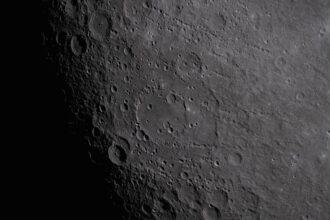
So, you’re curious about Ingo Swann and his claims about beings on the Moon. It’s a fascinating topic that often pops up in discussions about remote viewing and the stranger corners of ufology. The short answer is: Ingo Swann, a pioneer in remote viewing, claimed to have psychically perceived sentient beings and structures on the Moon during his experiments. However, it’s crucial to understand that these are his personal perceptions and claims, not scientifically validated facts.
The Genesis of Remote Viewing
Before diving into the Moon claims, it’s helpful to understand what remote viewing is, or at least what Swann and others involved in its development said it was. The idea is that certain individuals can, with training, gather information about distant or hidden targets using their minds, without any conventional sensory input.
What is Remote Viewing?
Remote viewing emerged from research funded by US intelligence agencies in the latter half of the 20th century. The goal was to see if individuals could “see” or “sense” remote locations, objects, or even events. It wasn’t about ESP in the way you might see it in movies; it was more about developing protocols and techniques to elicit and record seemingly psychic impressions in a structured way.
Ingo Swann’s Role
Ingo Swann was a central figure in this field. He was one of the most prominent and prolific remote viewers, and he also played a significant role in shaping the methodologies and theories behind remote viewing. He wasn’t just a subject; he was also an experimenter and a theoretician. His personal experiences and interpretations heavily influenced how remote viewing developed and how its findings were discussed.
Ingo Swann, a renowned psychic and artist, is often associated with the intriguing claims of his experiences on the Moon during secret government projects. For those interested in exploring more about the intersection of psychic phenomena and space exploration, a related article can be found at this link: In the War Room. This article delves into the broader implications of Swann’s work and its impact on our understanding of consciousness and extraterrestrial life.
Swann’s Lunar Perceptions
Swann’s most talked-about claims involve his experiences with the Moon. These weren’t just fleeting images; he described detailed observations that went far beyond what was visible through telescopes at the time.
The “Moon-Gate” Experiment
One of the most famous instances relates to an experiment where Swann was asked to remote view the Moon. He reported seeing not just barren landscapes, but evidence of artificial structures and even life. He described openings or “gates” on the lunar surface, hinting at hidden installations.
Describing Lunar Structures
Swann’s descriptions were often quite specific. He spoke of vast, underground complexes, artificial lighting, and even moving objects that he interpreted as vehicles or beings. He claimed to sense an atmosphere and other conditions that contradicted the prevailing scientific understanding of the Moon at the time.
The Nature of the Beings
When discussing beings, Swann’s descriptions were less concrete than for structures, but he still conveyed a sense of intelligence and presence. He suggested these were not necessarily biological in a way we’d recognize, but rather entities adapted to a different environment, perhaps existing within or connected to the lunar infrastructure.
The Scientific Context and Skepticism
It’s vital to place Swann’s claims within their proper context. While he was convinced of his perceptions, the scientific community generally remains highly skeptical.
The Lack of Corroboration
The primary challenge for Swann’s Moon claims is the lack of independent, verifiable evidence. Despite decades of lunar exploration by both unmanned probes and manned missions, no physical evidence has ever been found that supports the existence of artificial structures or sentient beings on the Moon, as described by Swann.
Photographic and Observational Evidence
Lunar probes like the Lunar Reconnaissance Orbiter have provided incredibly detailed imagery of the Moon’s surface. These images have been scrutinized extensively, and while they reveal geological features, craters, and evidence of past volcanic activity, they do not show any of the large-scale artificial structures or “gates” that Swann reported.
The Scientific Consensus
The established scientific understanding of the Moon is that it is a geologically dead body with no atmosphere, no liquid water, and no known indigenous life. This consensus is based on a vast amount of data collected over many years through various scientific instruments and observational methods.
The Nature of Remote Viewing Claims
Remote viewing, by its very nature, is difficult to prove or disprove definitively. The subjective experience of the viewer is central, and interpreting those subjective experiences as objective reality is a significant leap.
Subjectivity and Interpretation
Critics argue that remote viewing results are highly prone to subjective interpretation. What one person perceives as a “gate” might be interpreted by another as a shadow, a geological formation, or simply a blank spot in their perception. The descriptive language used can be ambiguous.
The “File Drawer Problem”
One of the challenges in assessing psychic phenomena is the “file drawer problem.” This refers to the tendency to only publish positive results and to ignore or suppress negative or inconclusive ones. It can be difficult to know how many remote viewing attempts failed or produced unclear results.
Swann’s Own Explanations and Beliefs
Swann himself had theories about what he was perceiving and why it wasn’t accessible to conventional science. He didn’t shy away from the implications of his findings.
The “Veil” of Perception
Swann often spoke of a “veil” or a form of camouflage that might be in place, obscuring the evidence from conventional observation. He suggested that the beings or the technology he perceived might operate on a different plane or in a way that our current scientific instruments are not designed to detect.
Non-Physical or Advanced Technologies
He posited that what he saw might not be physical in the same way that rocks and mountains are. It could involve advanced technologies that interact with reality in ways we don’t yet understand, or perhaps entities that exist in a non-corporeal form.
The Galactic Federation and Lunar Bases
Swann’s lunar claims were often connected to a broader worldview that included the idea of a Galactic Federation and extraterrestrial involvement with Earth and its solar system. He believed that the Moon served as a strategic outpost or a base for these advanced civilizations.
Lunar Activity as Observation Posts
He suggested that the activities he perceived on the Moon were related to observation, research, or perhaps even management of activities on Earth. This placed the Moon in a role far more active and significant than just a natural satellite.
Ingo Swann, a renowned figure in the field of remote viewing, made headlines with his claims about visiting the Moon through his psychic abilities. His experiences have sparked interest in various aspects of space exploration and consciousness. For those curious about the intersection of psychic phenomena and space, a related article can be found at In the War Room, which delves into the implications of such extraordinary claims and their impact on our understanding of reality.
The Legacy and Continued Interest
Despite the lack of scientific validation, Ingo Swann’s claims about the Moon continue to fascinate a segment of the public and the ufology community.
Influence on Remote Viewing Literature
Swann’s book, “Penetration: The Mysterious World of Perception,” is a key text that details his lunar experiences. It has influenced many who are interested in remote viewing and alleged extraterrestrial phenomena. His narrative style and the vividness of his descriptions have made his work particularly memorable.
The Appeal of the Unknown
The idea of hidden life and advanced civilizations on celestial bodies like the Moon taps into a deep human curiosity about the unknown. Swann’s claims offer a narrative that fills that void, suggesting that secrets are waiting to be uncovered, even in our closest celestial neighbor.
Ongoing Debates and Interpretations
The debate surrounding Swann’s Moon claims continues. Some see him as a genuine psychic who saw what others could not. Others view his perceptions as elaborate constructions, perhaps influenced by his own imagination, subconscious desires, or the speculative nature of the experiments themselves.
The Challenge of Proof
Ultimately, the core of the issue is the challenge of proof. For Swann’s claims to be accepted by a wider audience, they would require empirical evidence that is currently absent. Until then, they remain intriguing accounts from a controversial figure in the history of psychic research. His work serves as a reminder of the enduring allure of mysteries, both within and beyond our world.
He Remote Viewed the Moon. Then Something Saw Him.
FAQs
What is the article “Ingo Swann beings on the Moon” about?
The article “Ingo Swann beings on the Moon” discusses the claims made by Ingo Swann, a well-known psychic and remote viewer, about his alleged encounters with non-human beings on the Moon.
Who is Ingo Swann?
Ingo Swann was a parapsychology researcher, artist, and author who gained fame for his work in remote viewing, a practice that involves using extrasensory perception to gather information about a distant or unseen target.
What are the claims made by Ingo Swann about beings on the Moon?
Ingo Swann claimed that during a remote viewing session in 1975, he perceived the presence of non-human beings on the Moon. He described these beings as tall, thin, and androgynous, and claimed that they were involved in some kind of mining activity.
Is there any evidence to support Ingo Swann’s claims?
There is no scientific evidence to support Ingo Swann’s claims about encountering beings on the Moon. Remote viewing is a controversial practice and is not considered a reliable method for gathering factual information.
What is the general consensus on Ingo Swann’s claims about beings on the Moon?
Ingo Swann’s claims about encountering beings on the Moon are widely regarded as pseudoscientific and lacking in credibility. They have not been substantiated by any independent sources or scientific research.