The Pacific Ocean, a vast expanse where the drums of war once beat with relentless fury, holds countless stories of valor, ingenuity, and sometimes, tragic loss. Among these narratives, a peculiar and often overlooked episode involves an American submarine, a captured Japanese vessel, and a clandestine operation that culminated in the sinking of the very prize the United States had sought to dissect. This is the untold story of how America, in its relentless pursuit of knowledge and tactical advantage, ultimately sent a captured Japanese submarine to the bottom of the ocean, a sacrifice made for the greater good of understanding the enemy.
The Prize of War: A Japanese Submarine Falls into American Hands
The year is 1942. The early days of the Pacific War were a period of intense struggle for the United States. The attack on Pearl Harbor had crippled the Pacific Fleet, and the Japanese navy, a formidable force, seemed to hold the upper hand. In this desperate climate, every piece of intelligence was crucial. Capturing enemy materiel, especially advanced technology, offered a tantalizing glimpse into the enemy’s capabilities and potential vulnerabilities. It was within this context that the unexpected happened: a Japanese submarine, a marvel of naval engineering for its time, found itself at the mercy of American forces.
The I-169: A Ghost of the Deep
The submarine in question was the Imperial Japanese Navy’s I-169, a Type B1 submarine. These vessels were among the most sophisticated in the Japanese arsenal, designed for long-range patrols and capable of carrying a floatplane for reconnaissance. The I-169, however, met an ignominious end not in a glorious battle, but through a series of unfortunate events. While operating in the vicinity of the Hawaiian Islands, it suffered damage that forced it to surface. This presented an unprecedented opportunity for the US Navy. Under the veil of darkness and through daring maneuvers, American forces managed to board and secure the crippled vessel. The capture of a functioning enemy submarine was a prize beyond measure. It was a potential Rosetta Stone, promising to unlock secrets of Japanese naval technology, sonar capabilities, torpedo designs, and operational doctrines. The implications for American naval strategy were immense.
The Strategic Imperative: Understanding the Enemy’s Technology
The capture of the I-169 was not merely a trophy; it was a strategic imperative. The US Navy was engaged in a desperate arms race against Japan. Understanding the intricacies of Japanese submarines was paramount to developing effective countermeasures and improving their own submarine designs. The I-169 offered a tangible, hands-on opportunity to do just that. Intelligence officers and naval engineers were eager to pore over every detail, from the welding techniques used in its hull to the baffling complexities of its engine systems. The potential for reverse-engineering, for identifying weaknesses, and for replicating strengths was immense. This was a treasure trove of information that could directly influence the outcome of battles yet to be fought.
The Operation: From Capture to Examination
Once secured, the I-169 was towed to a clandestine location, away from prying eyes and potential Japanese raids. The location was chosen for its security and its proximity to facilities capable of supporting such a sensitive operation. A specialized team of American naval personnel, including engineers, submariners, and intelligence experts, was assembled. Their mission was to meticulously examine the captured submarine, to understand its every function, and to extract as much intelligence as possible. This was a painstaking process, requiring immense patience and a deep understanding of naval architecture and engineering. Every compartment was opened, every piece of equipment documented, and every operational manual, if any could be found, was translated. The hope was to gain a comprehensive understanding of Japanese submarine technology, from their propulsion systems and weaponry to their navigation and communication equipment.
The decision by America to sink Japan’s captured submarine during World War II was influenced by various strategic considerations, including the desire to prevent advanced technology from falling into enemy hands. For a deeper understanding of the motivations behind this action, you can read a related article that explores the broader context of naval warfare and intelligence during the war. For more information, visit this article.
Unlocking the Secrets: The Examination of the I-169
The days and weeks following the capture of the I-169 were a hive of activity. The submarine, once a silent predator of the deep, was now a dissected puzzle on dry land. The American team worked tirelessly, their focus absolute. This was not just about understanding a single vessel; it was about unraveling the broader capabilities of the Imperial Japanese Navy’s submarine force.
The Technical Deep Dive: What the Americans Discovered
The examination revealed a great deal about Japanese submarine design and technology. The I-169, like other Type B1 submarines, was a testament to Japanese engineering prowess. Its hull construction, its diving planes, and its torpedo tube systems were all studied in detail. The Americans were particularly interested in the Type 95 oxygen torpedoes, a formidable weapon, and the sophisticated fire control systems that guided them. The Japanese were also known for their innovative use of diesel-electric propulsion, allowing for both long-range cruising on the surface and stealthy submerged operations. The I-169’s engines and battery systems were thoroughly analyzed to understand their efficiency and performance. Beyond the hardware, the examination also offered insights into operational procedures and training methods. Any logs or documents found, however rudimentary, were scrutinized for clues about patrol routes, tactical deployments, and the overall strategy of the Japanese submarine service.
The Intelligence Harvest: Tactical and Strategic Implications
The intelligence gathered from the I-169 was invaluable. It allowed the US Navy to refine its anti-submarine warfare tactics. Knowing the operational range, submerged endurance, and typical patrol patterns of Japanese submarines helped American forces anticipate enemy movements and set up ambushes. The understanding of their torpedo capabilities informed the development of countermeasures, such as improved depth charges and sonar-jamming techniques. Furthermore, the information gleaned from the I-169 contributed to a broader picture of Japan’s naval capacity and strategic intent. It helped the US understand the threat posed by Japan’s submarine fleet and how to best counter it. This information was not confined to the submarine community; it was disseminated throughout the Allied forces, influencing decisions at the highest levels of command.
The Limits of Knowledge: Unanswered Questions and Future Pursuits
Despite the extensive examination, the I-169 could not reveal everything. Some aspects of Japanese technology remained elusive. The full extent of their radar capabilities, for instance, might not have been fully ascertainable from a single vessel. Moreover, the captured submarine represented a snapshot in time. The Japanese were continually innovating, and new designs and technologies were likely in development. The capture of the I-169 was a significant victory, but it was also a catalyst for further intelligence gathering. The need to stay ahead of the enemy meant that the pursuit of knowledge about Japanese naval capabilities had to be a continuous effort. The I-169, while yielding its secrets, also highlighted the areas where further investigation was required.
The Inevitable End: A Secret Too Dangerous to Keep
The examination of the I-169 was a success, a triumph of intelligence gathering. However, the very nature of the information contained within its hull presented a unique and ultimately insurmountable problem. The knowledge gleaned from the captured submarine was so sensitive, so strategically vital, that its continued existence, even in a controlled environment, posed an unacceptable risk.
The Security Dilemma: The Risk of Discovery
The location where the I-169 was being studied was a heavily guarded secret. However, in the chaos of wartime, the possibility of discovery, however remote, could never be entirely eliminated. If the Japanese were to learn that one of their submarines had been captured and its secrets laid bare, the consequences could be dire. They might change their designs, accelerate new projects, or even shift their entire naval strategy. The existence of the I-169, even as a source of intelligence, became a potential liability. The very act of studying it, with the need for personnel, equipment, and facilities, increased the risk of a leak. Every person involved in the operation was bound by strict oaths of secrecy, but the larger the circle of knowledge, the greater the potential for an accidental disclosure or an enemy infiltration.
The Strategic Imperative for Secrecy: Why the World Could Not Know
The information contained within the I-169 was not just about tactical advantages; it was about the broader picture of Allied naval superiority. Revealing that the US had successfully captured and dissected a Japanese submarine would be a propaganda coup for the Allies, but it would also provide the Japanese with concrete proof that their technology was being compromised. This could lead to a cascade of defensive measures, negating the hard-won intelligence. The goal was not to boast about capturing a submarine, but to use the knowledge gained to win the war. Maintaining absolute secrecy about the I-169’s fate and its examination was therefore paramount to ensuring the long-term effectiveness of the intelligence gathered. The world could not know about this particular prize, lest the enemy adapt too quickly.
The Difficult Decision: A Sacrifice for Security
Faced with this precarious situation, a difficult decision had to be made. The captured I-169, with all its valuable secrets, could not be allowed to fall back into Japanese hands, nor could its existence remain a potential vulnerability. The only viable option was to eliminate it, to ensure that the knowledge it contained remained exclusively in American possession and that its capture never became known to the enemy. This was a strategic sacrifice, a decision made not out of malice or waste, but out of a cold, calculated assessment of risk and reward in the crucible of total war. The submarine that had offered so much insight was now, paradoxically, a threat to the very security of that insight.
The Final Act: Sinking the Prize
The decision to sink the I-169 was not taken lightly. It represented the end of a unique opportunity, the scuttling of a tangible symbol of American ingenuity and the intelligence it had yielded. Yet, the logic was undeniable. The risks associated with its continued existence far outweighed the benefits. The execution of this final act was carried out with the same clandestine precision that had surrounded its capture and examination.
The Chosen Method: A Controlled Demise
The sinking of the I-169 was not to be a haphazard affair. It was to be a deliberate and controlled event, ensuring that the submarine would not be recovered by the Japanese or accidentally discovered by neutral parties. The exact method employed is shrouded in the secrecy that permeated the entire operation. However, it is likely that the submarine was scuttled by scuttling charges, designed to breach its hull and flood its compartments, sending it to the seabed. Alternatively, it may have been deliberately torpedoed or shelled by an American vessel, ensuring its complete destruction. The key was to make its demise permanent and untraceable, leaving no evidence of its capture or its subsequent examination. The location of its sinking would have also been carefully chosen, likely in deep water where it would remain undisturbed.
The Silence of the Deep: A Secret Buried
Once sunk, the I-169 became another silent inhabitant of the ocean floor. Its remains, once a source of groundbreaking intelligence, were now a tomb for secrets. The operation was meticulously scrubbed of all traces. Personnel involved were debriefed and reminded of their oaths. All documentation related to the I-169’s capture, examination, and sinking was classified at the highest levels. The story of the I-169, from its fateful encounter with American forces to its deliberate descent into the depths, was to remain an untold chapter of the war. The knowledge gained, however, lived on, integrated into the fabric of American naval strategy and contributing to the eventual Allied victory.
The Legacy of the I-169: A Contribution to Victory
While the I-169 itself was lost, its contribution to the war effort was significant. The intelligence gathered from its examination undoubtedly played a role in numerous anti-submarine operations and the development of new technologies. The US Navy’s growing success in countering the Japanese submarine threat in the later stages of the war can, in part, be attributed to the detailed understanding of the enemy that was gained through such clandestine operations. The story of the I-169 is a testament to the often-unseen sacrifices made in wartime, where even a captured prize must be sacrificed for the greater good of victory and the protection of hard-won knowledge. It is a reminder that in the complex calculus of war, sometimes the greatest victories are won not by preserving, but by destroying, for the sake of future success.
The decision by America to sink Japan’s captured submarine during World War II was a strategic move aimed at preventing advanced technology from falling into enemy hands. This action not only showcased the importance of maintaining military superiority but also highlighted the lengths to which nations would go to protect their interests. For a deeper understanding of the implications of this event, you can read more in this insightful article on the topic at In the War Room.
The Shadow of Secrecy: Echoes of an Untold Story
| Metric | Data/Value | Explanation |
|---|---|---|
| Submarine Name | I-52 | Japanese submarine captured by the US during WWII |
| Date of Sinking | June 24, 1944 | Date when the submarine was sunk by US forces |
| Reason for Sinking | Prevent intelligence and technology transfer | US aimed to stop Japan from gaining advanced technology and intelligence |
| Location | Atlantic Ocean near the Azores | Area where the submarine was intercepted and sunk |
| US Forces Involved | USS Bogue Task Group | US Navy task group responsible for the sinking |
| Submarine Cargo | Gold and advanced technology | Valuable cargo intended for Germany, targeted to prevent transfer |
| Outcome | Submarine sunk, cargo lost | Successful US operation to disrupt Axis supply lines |
The tale of the I-169’s capture and subsequent sinking remains largely in the shadows, a testament to the power and necessity of wartime secrecy. While the broad strokes of naval warfare are well-documented, the intricate details of intelligence operations, particularly those involving captured enemy materiel, are often relegated to classified archives, becoming the whispered legends of those who were there.
The Importance of Unearthing Hidden Histories
The story of the I-169 highlights the importance of unearthing these hidden histories. By piecing together fragments of declassified documents, memoirs, and naval records, historians can illuminate crucial aspects of conflict that might otherwise be lost to time. The operational details of the I-169’s capture, the ingenuity of the examination process, and the strategic rationale behind its destruction offer valuable insights into the complexities of intelligence gathering and its direct impact on military strategy. These untold stories provide a more nuanced understanding of the war, moving beyond the grand narratives of battles and campaigns to reveal the critical, often clandestine, efforts that underpinned them.
The Ethical Tightrope of Wartime Intelligence
The decision to sink the I-169 also brings to the forefront the ethical considerations inherent in wartime intelligence operations. The pursuit of knowledge, while essential for survival and victory, can sometimes necessitate actions that seem counterintuitive or even wasteful from a peacetime perspective. The sacrifice of a valuable captured asset, simply to deny its potential recovery to the enemy and preserve the secrecy of its exploitation, is a stark example of this. It underscores the difficult ethical tightrope that military and intelligence leaders must walk during times of conflict, where the lives of soldiers and the fate of nations can depend on choices that are both pragmatic and morally complex.
A Legacy of Silent Contributions
The legacy of the I-169 is not etched in public monuments or celebrated in ticker-tape parades. Instead, it lies in the countless submarines that were hunted and sunk, the naval battles that were won, and the overall trajectory of the war that was subtly, yet significantly, influenced. The submarine that was captured, studied, and ultimately sunk, contributed to the Allied victory in a way that remains largely unknown to the public. It is a silent contribution, a testament to the often-invisible threads of intelligence and strategic foresight that weave through the tapestry of human conflict. The story of how America sank Japan’s captured submarine is a powerful reminder that history is often richer and more complex than what meets the eye, buried in the silent depths and guarded by the enduring power of secrecy.
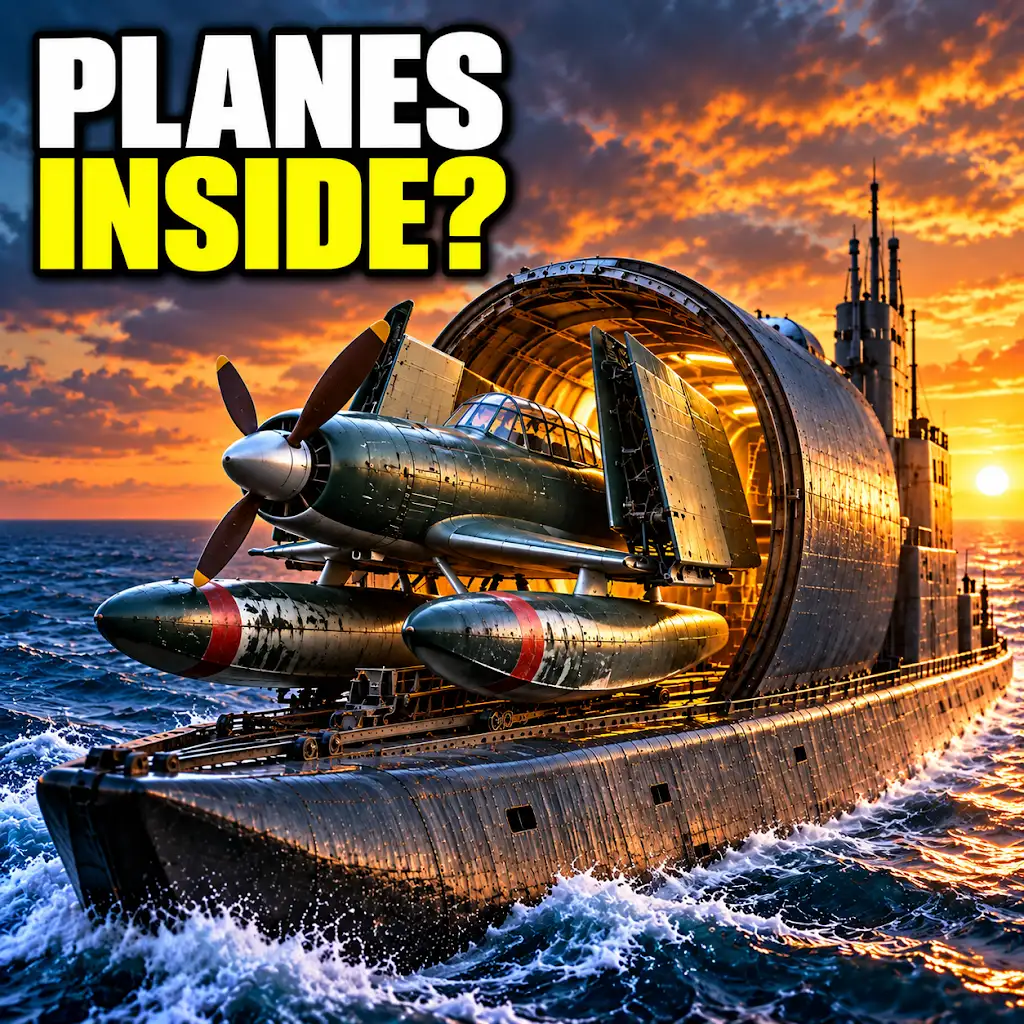
Japan Built a Submarine That Could Launch Three Planes
FAQs
1. Why did America sink Japan’s captured submarine?
America sank Japan’s captured submarine to prevent the enemy from gaining any strategic advantage or intelligence from the vessel.
2. How did America sink Japan’s captured submarine?
America sank Japan’s captured submarine by using explosives to destroy the vessel and ensure it could not be salvaged or used by the enemy.
3. Was sinking Japan’s captured submarine a common practice during wartime?
Yes, sinking captured enemy submarines was a common practice during wartime to prevent the enemy from retrieving valuable technology, intelligence, or equipment.
4. What were the implications of sinking Japan’s captured submarine?
Sinking Japan’s captured submarine helped to maintain the strategic advantage of the Allied forces and prevent the enemy from using the vessel against them.
5. Did sinking Japan’s captured submarine have any impact on the outcome of the war?
While sinking Japan’s captured submarine may not have directly impacted the outcome of the war, it was a strategic move to ensure the safety and security of Allied forces and prevent the enemy from gaining any advantage.