The Shadow of Doubt: Unraveling Germany’s Miscalculations on D-Day
The morning of June 6, 1944, dawned with a deceptive calm for much of the German high command. While Allied bombers had pounded strategic targets across France for weeks, the true scale and nature of the impending invasion remained shrouded in uncertainty, a potent testament to a campaign of deception skillfully orchestrated by the Allies and arguably underestimated by their adversaries. The German response, or rather the lack thereof in critical moments, was not solely a product of strategic blunders but also of a deeply ingrained belief system, a reliance on flawed intelligence, and a profound misreading of the enemy’s intentions and capabilities. This article delves into the multifaceted German deception on D-Day, exploring the intelligence failures, the impact of Allied ruses, and the psychological factors that contributed to Germany’s stunned reaction to the Normandy landings.
In the context of World War II, the deception tactics employed by the Allies during D-Day played a crucial role in the success of the operation, leaving Germany unaware of the true invasion plans. For a deeper understanding of how these strategies misled German intelligence, you can read a related article that explores the intricacies of the Allied deception campaign. This article can be found at In the War Room, where it delves into the psychological and strategic maneuvers that contributed to the surprise of the Normandy landings.
The Illusion of Invincibility: German Defenses Before the Storm

The German Wehrmacht, hardened by years of swift victories across Europe, entered the summer of 1944 with a degree of self-assurance that bordered on complacency. The Atlantic Wall, a formidable network of coastal defenses stretching from Norway to the Spanish border, was seen as an almost impenetrable barrier. However, the reality on the ground was far less robust than the propaganda suggested, and the German command structure, already strained by the war on the Eastern Front, was ill-equipped to anticipate the precise nature of the Allied assault.
The Myth of the Atlantic Wall
The Atlantic Wall was a monumental undertaking, incorporating concrete bunkers, minefields, anti-tank obstacles, and gun emplacements. Its sheer scale was intended to deter any amphibious invasion. However, significant portions of the wall, particularly in the Pas-de-Calais, were heavily fortified, while other sectors, notably the Normandy coast, were less developed. This uneven distribution of defenses was a direct consequence of German intelligence, which, influenced by Allied deception, incorrectly assumed the main invasion would target the shorter crossing distance between Britain and the Pas-de-Calais. Field Marshal Erwin Rommel, appointed Inspector of the Western Defenses, recognized these deficiencies and desperately pushed for a more proactive defense, advocating for the dispersal of Panzer divisions closer to the coast, a proposal that met with resistance from higher command. His vision was a defensive line that could actively repel an assault rather than merely absorb it.
The Strategic Dilemma of Panzer Divisions
The deployment of Germany’s elite Panzer divisions was a critical point of contention. Field Marshal Gerd von Rundstedt, the overall commander of German forces in the West, favored a strategic reserve of armored units, to be deployed only after the Allied landing site was confirmed. This approach was rooted in the traditional German doctrine of mobile warfare, aiming to concentrate overwhelming force against the enemy’s most vulnerable point once their intentions were clear. However, Rommel, with his firsthand understanding of the immense challenges of an amphibious assault, advocated for the immediate commitment of these divisions, believing that if the Allies established a beachhead, it would be almost impossible to dislodge them. The ensuing debate and indecision meant that when D-Day arrived, many of the most potent German armored formations were not positioned to react swiftly and decisively. This strategic paralysis, fueled by differing interpretations of intelligence and operational doctrine, proved to be a fatal flaw.
The Ebbing Tide of Intelligence
German intelligence, while possessing considerable resources, was significantly hampered by the overwhelming success of Allied deception operations. The Abwehr, the German military intelligence agency, was notoriously fragmented and often at odds with other intelligence branches. Furthermore, it was a prime target for Allied counter-intelligence, which skillfully fed it disinformation. The presence of double agents and the systematic dissemination of false information created a distorted picture of Allied intentions and capabilities, leading the German high command to focus their defensive preparations on the wrong location and underestimate the sheer scale and audacity of the D-Day operation.
The Ghost Army and the Mirage of Calais: Allied Deception at its Zenith

The success of the Allied landings was inextricably linked to their mastery of deception, a sophisticated campaign designed to convince the Germans that the main invasion would occur elsewhere. This elaborate charade, codenamed Operation Fortitude, employed a variety of tactics, from dummy armies to radio deception, all aimed at diverting German resources and attention away from Normandy.
Operation Bodyguard: The Grand Deception
Operation Bodyguard was the overarching Allied deception plan that encompassed numerous smaller operations. Its primary objective was to convince the Germans that the invasion of Europe would occur not once, but multiple times, and in different locations. The most critical component of Bodyguard was Operation Fortitude, which focused on creating the illusion of an imminent invasion of the Pas-de-Calais. This was achieved through a combination of strategic bombing, naval feints, and the creation of entirely fabricated armies.
Fortitude North and Fortitude South: The Twin Pillars
Fortitude North aimed to deceive the Germans into believing that an invasion would also be launched from Scotland into Norway. This involved the creation of dummy armies, the broadcasting of fictitious radio traffic, and even the use of inflatable tanks and aircraft in remote areas. While less impactful than Fortitude South, it served to tie down German forces in Norway, preventing their redeployment to the Western Front.
Fortitude South, however, was the linchpin of the entire deception. Its focus was the Pas-de-Calais, the shortest sea crossing from Britain. The Allies meticulously constructed a phantom army, the First U.S. Army Group (FUSAG), under the command of the highly visible and respected General George S. Patton. This fictitious army was composed of an elaborate network of camp sites, dummy tanks, landing craft, and extensive radio traffic designed to simulate a large-scale buildup. The Germans monitored this activity, and their intelligence increasingly pointed towards the Pas-de-Calais as the primary landing zone. The meticulous staging of troop movements, the construction of fake naval fleets, and the careful crafting of radio communications all contributed to the overwhelming conviction within the German high command that Calais was the target.
The ‘Ghost Army’: A Masterclass in Illusion
The “Ghost Army,” officially known as the 23rd Headquarters Special Troops, was a unique and highly effective unit tasked with creating illusions on the battlefield. Composed of artists, engineers, and sound technicians, they utilized inflatable tanks, jeeps, and artillery pieces, along with sound trucks emitting the noise of thousands of vehicles and troops, to create the impression of much larger forces than actually existed. They were deployed strategically along the British coast, particularly opposite the Pas-de-Calais, to bolster the illusion of FUSAG. Their success lay in their ability to mimic the visual and auditory signatures of a massive military presence, effectively deceiving German reconnaissance efforts. The sheer scale and detail of these fabricated forces were so convincing that they played a pivotal role in diverting crucial German reserves away from Normandy.
The Night of Missed Opportunities: German Reactions on D-Day
As the Allied airborne divisions began to descend into Normandy in the pre-dawn hours of June 6, 1944, and the naval bombardment commenced, the German response was characterized by confusion, disbelief, and a critical delay in recognizing the true scale of the invasion. Several key factors contributed to this delayed and often ineffective reaction, highlighting the extent to which Allied deception had taken root.
The Fog of War and the Absent Commanders
One of the most significant German failures on D-Day was the absence of key commanders from their posts at crucial moments. Field Marshal Rommel, convinced that June 6 was an unlikely day for an invasion due to poor weather forecasts, had traveled to Germany to attend a conference with Hitler and visit his family. Similarly, many other senior officers were away from their commands, attending training exercises or on leave. This decentralization of leadership meant that when the initial reports of airborne landings and naval bombardments began to filter in, there was no single, authoritative figure to immediately assess the situation and issue decisive orders. The “fog of war” was further compounded by the fact that communications lines were disrupted by Allied sabotage and aerial attacks, further hindering the flow of accurate information.
The Ambiguity of Airborne Landings
The initial Allied airborne landings in Normandy were met with considerable confusion on the German side. The paratroopers landed scattered and often behind enemy lines, leading to fragmented reports of their presence. German commanders on the ground struggled to ascertain the size and objective of these airborne units. Some initially dismissed them as merely a diversionary tactic, a prelude to the main assault on Calais. This underestimation of the airborne threat allowed the Allied paratroopers, despite suffering heavy casualties, to secure crucial bridges and road junctions, thus paving the way for the seaborne landings. The Germans’ inability to rapidly identify and neutralize these dispersed airborne units contributed significantly to the Allies gaining a foothold on the continent.
The Long Shadow of Calais: Misplaced Priorities
The overwhelming focus on the Pas-de-Calais, meticulously cultivated by Allied deception, meant that when the landings in Normandy began, the German response was hesitant and ill-coordinated. Even as reports of substantial landings in Normandy became undeniable, the belief that Calais remained the primary threat persisted. This resulted in the crucial delay in releasing the strategic Panzer reserves, which were held back, waiting for confirmation of the main invasion point. The longer these reserves remained static, the more entrenched the Allied beachhead became, transforming an initial crisis for the Germans into an almost insurmountable strategic disadvantage. The psychological impact of the Calais deception was so profound that it overshadowed the unfolding reality on the Normandy beaches for critical hours.
In the lead-up to D-Day, Germany was misled by a series of clever deception tactics employed by the Allies, which ultimately played a crucial role in the success of the invasion. The elaborate Operation Fortitude aimed to convince the Germans that the main assault would occur at Pas de Calais rather than Normandy. This strategic misinformation is explored in detail in a related article that delves into the psychological warfare tactics used during World War II. For more insights on this fascinating aspect of military strategy, you can read the article here.
The Aftermath: Acknowledging the Strategic Miscalculation
| Aspect | Details | Impact on German Forces |
|---|---|---|
| Operation Fortitude | Allied deception plan to mislead Germans about the invasion location, suggesting Pas de Calais instead of Normandy. | German High Command kept significant forces at Pas de Calais, delaying reinforcement of Normandy defenses. |
| Fake Radio Traffic | Simulated communications created to suggest a large army group in southeast England preparing to invade Pas de Calais. | German intelligence was misled, reinforcing belief in a Pas de Calais invasion. |
| Dummy Equipment | Inflatable tanks, fake landing craft, and aircraft placed in southeast England to simulate invasion preparations. | German reconnaissance reported large forces, reinforcing deception. |
| Double Agents | Allied-controlled spies fed false information to German intelligence about invasion plans. | German command trusted these sources, further misdirecting their defensive deployments. |
| Timing of German Response | German armored divisions were held back for 48 hours after D-Day, awaiting confirmation of invasion location. | Delayed counterattacks allowed Allies to establish a beachhead in Normandy. |
In the days and weeks following D-Day, the German command grappled with the stark reality of their strategic miscalculation. The immense success of the Allied invasion, coupled with the devastating impact of their deception campaign, exposed the vulnerabilities within the German war machine and its intelligence apparatus.
The Unraveling of the Atlantic Wall
The Normandy landings, though fiercely contested, ultimately breached the formidable Atlantic Wall. The success of the Allied amphibious assault, coupled with the effective neutralization of many German strongpoints by airborne troops and commando raids, demonstrated that the Wall was not the impenetrable barrier it was designed to be. The Allied air superiority, which had allowed for extensive reconnaissance and the disruption of German reinforcement efforts, also played a critical role. The German inability to mount a swift and effective counter-offensive meant that the Allied foothold in Normandy rapidly expanded, initiating the liberation of France and the eventual defeat of Nazi Germany.
The Price of Deception: A Pyrrhic Victory for the Allies
While the Allied deception campaign was a resounding success, it came at a considerable cost. The elaborate nature of Operation Fortitude required immense resources, manpower, and meticulous planning. The creation of phantom armies, the dissemination of false intelligence, and the constant maintenance of the illusion demanded a significant diversion of effort. However, in the grand scheme of the war, the price paid for this strategic deception was a mere fraction of the potential cost in lives and materiel that a direct assault on the heavily fortified Pas-de-Calais would have entailed. The Allies essentially traded tactical risks for strategic certainty, a gamble that paid off handsomely.
Lessons Learned: A Post-War Analysis
The events of D-Day offered profound lessons for military strategists and intelligence analysts alike. The critical importance of accurate intelligence, the power of deception in warfare, and the need for flexible and decisive leadership in times of crisis were all starkly illuminated. The German failure to anticipate the true scale and location of the D-Day landings serves as a timeless case study in the dangers of overconfidence, flawed intelligence, and the catastrophic consequences of misjudging an adversary’s ingenuity and resolve. The shadow of doubt cast by Allied deception on D-Day lingered long after the war, a testament to the enduring power of strategic misdirection.
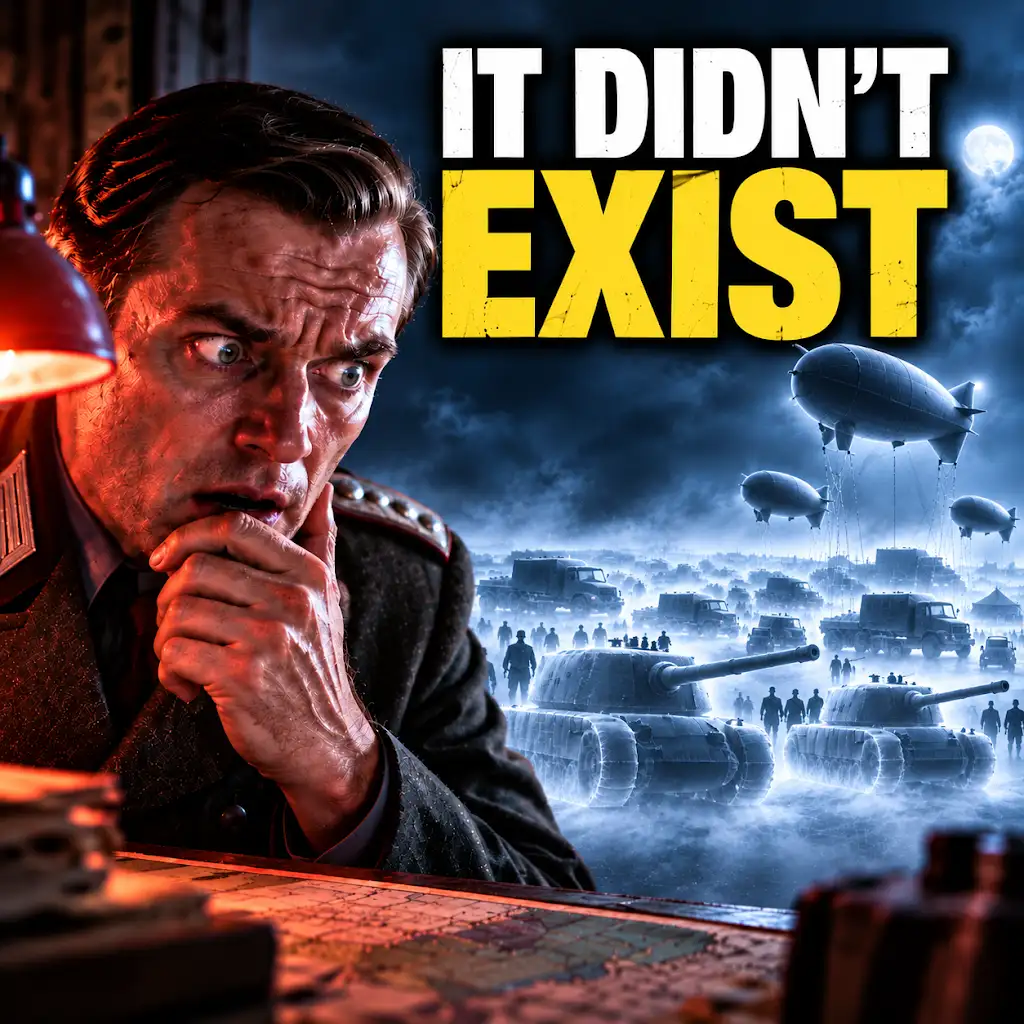
How the Allies Built an Army for Germany to Discover
FAQs
What was D-Day?
D-Day, also known as the Normandy landings, was the Allied invasion of Normandy, France on June 6, 1944 during World War II.
How was Germany deceived about D-Day?
The Allies conducted a massive deception campaign, known as Operation Bodyguard, to mislead the Germans about the location and timing of the D-Day invasion.
What were some tactics used to deceive Germany about D-Day?
Tactics used to deceive Germany about D-Day included creating fake army units, using double agents to spread false information, and conducting fake radio transmissions.
Why was deceiving Germany about D-Day important?
Deceiving Germany about D-Day was crucial to the success of the invasion, as it helped to confuse and mislead the German forces, allowing the Allies to gain a strategic advantage.
What was the outcome of the deception campaign for D-Day?
The deception campaign for D-Day was successful in keeping the Germans off guard and unaware of the true location and timing of the invasion, ultimately contributing to the Allied victory on D-Day.