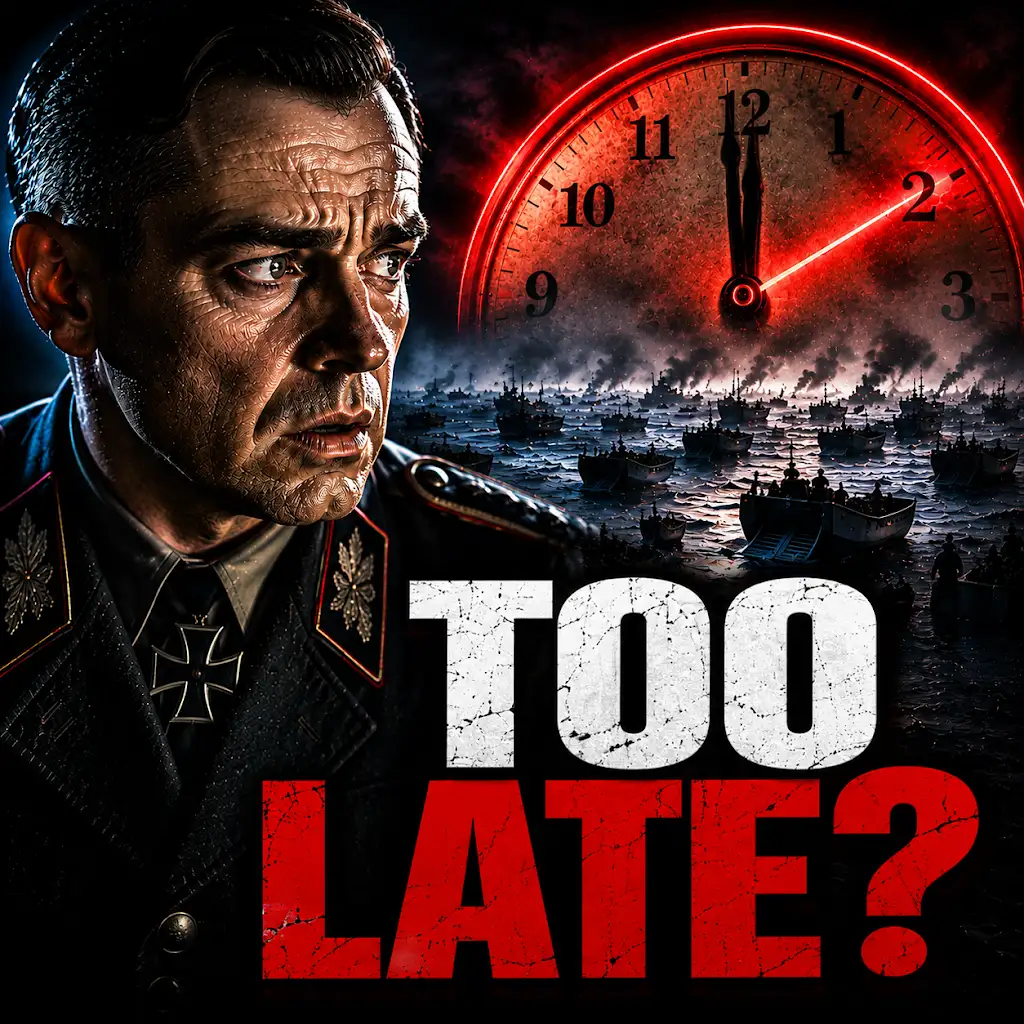
The vast expanse of the English Channel, a cold and grey expanse under an overcast sky, was the stage set for a monumental clash. On June 6th, 1944, the Allied forces launched Operation Overlord, the D-Day landings, a pivotal moment that would irrevocably shift the tide of World War II. But what if Germany’s best chance to stop this invasion, to rewrite history, lay not in the heavily defended Atlantic Wall, but in a more subtle, yet equally critical, series of strategic decisions made long before the first landing craft touched sand? This article delves into those critical junctures, exploring the missed opportunities and strategic missteps that ultimately allowed the Allied behemoth to land and begin its inexorable push towards Berlin.
The Germans, under the iron grip of Adolf Hitler, had spent years constructing the Atlantic Wall, a formidable line of coastal defenses stretching from Norway to the Spanish border. This colossal undertaking, a testament to German engineering and manpower, was intended to be an impenetrable barrier, a deterrent that would quash any Allied hopes of a cross-channel invasion. However, the very strength of this perceived defense became a deceptive shield, fostering an overconfidence that blinded German strategists to more nuanced vulnerabilities.
The Myth of Invincibility: Propaganda Versus Reality
The propaganda machine of the Third Reich had done its job exceptionally well. The Atlantic Wall was trumpeted as an impregnable fortress, a testament to German resolve and military might. This narrative, however, created a dangerous disconnect between perception and reality. While individual bunkers and fortifications were indeed formidable, the overall defensive strategy suffered from critical flaws that were largely ignored or downplayed by those in power. The sheer length of the Wall meant that resources, while vast, were inevitably stretched thin.
Static Defenses Against a Dynamic Enemy
The Allies, under the astute leadership of Generals Eisenhower and Montgomery, understood that the Atlantic Wall, while a significant obstacle, was ultimately a static defense. Their strategy was not to batter their way through every concrete emplacement, but to exploit weaknesses, deceive the enemy, and overwhelm specific landing zones with concentrated force. The German reliance on fixed defenses failed to account for the Allied emphasis on mobility, air superiority, and sophisticated deception tactics.
The “Hitler’s Westwall Complex”: Centralized Control and Bureaucracy
A significant, though often overlooked, impediment to effective German defense was the highly centralized and often contradictory command structure. Hitler, with his penchant for micromanagement, frequently overruled his experienced generals, issuing directives that were sometimes strategically unsound or based on incomplete information. This “Westwall complex,” as it could be termed, stifled initiative, delayed crucial decisions, and prevented a cohesive and adaptive defensive response. The bureaucracy surrounding military operations also contributed to a sluggish and inefficient response to evolving threats.
Missed Opportunities in Intelligence and Counter-Intelligence
The adage “know your enemy and know yourself” was a principle that the German high command struggled to fully embrace, particularly in the lead-up to D-Day. While German intelligence was not entirely lacking, its effectiveness was hampered by internal rivalries, a reluctance to accept unwelcome truths, and a susceptibility to Allied deception.
The Double-Edged Sword of Espionage: Ineffective Agents and Misinformation
German intelligence agencies, such as the Abwehr, did possess agents operating within Allied territories. However, many of these agents were either compromised, poorly trained, or provided information that was either outdated or deliberately misleading. The Allies, through their sophisticated counter-intelligence operations, including the double-cross system, were adept at feeding false information to German sources, further sowing confusion and misdirection.
Underestimating the Power of Codebreaking: The Enigma Enigma
While the Enigma machine was famously cracked by the Allies, providing invaluable insights into German military plans, the Germans themselves underestimated the capabilities of their adversaries in this regard. They continued to rely on Enigma for sensitive communications, believing it to be unbreachable. This overconfidence in their cryptography proved to be a colossal strategic blunder, allowing the Allies to “listen in” on German intentions, troop movements, and defensive preparations with alarming accuracy.
The Deception Campaigns: Operation Fortitude and the Phantom Army
The most significant intelligence failure on the German side was the success of Allied deception operations, most notably Operation Fortitude. This elaborate campaign aimed to convince the Germans that the main Allied invasion would take place at the Pas-de-Calais, the shortest crossing point of the English Channel, rather than Normandy.
The Ghost Army: Deceiving with Mirrors and Smoke
Part of Operation Fortitude involved the creation of a fictional “First U.S. Army Group” (FUSAG), commanded by the highly respected General George S. Patton. This phantom army was “demonstrated” through inflatable tanks, dummy aircraft, fake radio transmissions, and even staged troop movements. The Germans fell for this elaborate charade hook, line, and sinker, diverting crucial resources and attention away from the actual landing beaches in Normandy.
Tactical Diversions: Bombing Raids and False Troop Concentrations
Beyond the strategic deception of Operation Fortitude, the Allies also employed tactical diversions. Carefully timed bombing raids on infrastructure in the Pas-de-Calais and the creation of apparent troop concentrations in that region further cemented the German belief that this was the primary invasion point. The German high command, obsessed with the perceived threat at Calais, was therefore caught off guard by the actual landings further west.
The Strategic Misallocation of Panzers: Holding Back the Hammer
Perhaps the most critical strategic error Germany made in its efforts to thwart D-Day was the misallocation of its most potent armored forces, the Panzer divisions. The German doctrine emphasized the swift and decisive use of these mobile reserves to counter any Allied beachhead. However, on June 6th, 1944, many of these vital units were not in their optimal positions, either due to Hitler’s indecision, Allied deception, or strategic misjudgment.
The Führer’s Hesitation: The Dilemma of Panzer Deployment
Adolf Hitler’s personal involvement in the deployment of Panzer divisions created a bottleneck. He was notoriously reluctant to commit these elite units without absolute certainty of the invasion’s location and scale. This indecisiveness meant that crucial hours were lost, during which Allied forces could consolidate their positions and establish a firm foothold.
The Myth of Calais and Panzer Deployment
The success of Operation Fortitude directly impacted Panzer deployment. Believing the main invasion was at Pas-de-Calais, German commanders held back significant armored reserves in that area, leaving the Normandy sector relatively less reinforced by mobile striking forces. When the landings in Normandy began, these reserves were too far away to be deployed effectively in the crucial initial hours.
The “Second Line” of Defense: Underestimating the Normandy Beachhead
The German strategy for Normandy relied heavily on the initial coastal defenses and then on reserves that would be brought forward. What they failed to fully appreciate was the resilience and determination of the Allied forces once they had established a beachhead. The Allies were prepared for a tough fight, but they were also prepared to dig in and repel counter-attacks, a scenario the Germans, with their misplaced armor, were ill-equipped to handle in the early stages.
The Weakness of the Luftwaffe: Grounded and Outnumbered
The Luftwaffe, once the pride of the German military, had been systematically weakened throughout the war. By 1944, it was a shadow of its former self, and its inability to effectively contest Allied air superiority over the invasion beaches was a critical factor in the Allied success and a missed opportunity for Germany to inflict significant damage.
The Industrial and Resource Drain: A War on Multiple Fronts
The sustained bombing campaigns by the Allies had devastated German industrial capacity and depleted its resources, including aircraft production and fuel supplies. Furthermore, the Luftwaffe was fighting a war on multiple fronts, with significant forces engaged in the East and in defending German skies against Allied bombers.
The Loss of Air Superiority: A Precursor to Disaster
The inability of the Luftwaffe to challenge Allied air power over Normandy meant that the invading forces enjoyed near-total freedom of movement. Allied aircraft could provide close air support for ground troops, interdict German reinforcements, and conduct reconnaissance missions without significant interference. This overwhelming air superiority was a decisive factor in the Allies’ ability to land and expand their beachhead.
Ineffective Coastal Air Defenses: A Scattered and Insufficient Force
While Germany had some airfields and anti-aircraft units near the coast, they were generally insufficient in number and often poorly positioned to effectively counter the massive Allied air assault on D-Day. The Luftwaffe’s limited ability to launch coordinated attacks against the invasion fleet or the landing forces meant that the Allies faced minimal aerial opposition.
The Allied Air Superiority: A Silent Guardian of the Invasion
The converse of the Luftwaffe’s weakness was the overwhelming strength of the Allied air forces. From the Royal Air Force to the United States Army Air Forces, the Allies commanded a vast array of aircraft, from fighter planes to heavy bombers, and their dominance in the skies proved to be a silent, yet crucial, guardian of the D-Day landings.
The Tactical Bombing Campaign: Crippling Infrastructure
In the weeks and months leading up to D-Day, the Allies engaged in a sustained bombing campaign targeting German infrastructure, including transportation networks, airfields, and radar installations. This strategic bombing aimed to disrupt German reinforcement capabilities and communication lines, thereby isolating the invasion beaches.
Close Air Support: A Lifeline for the Ground Troops
Once the landings began, Allied aircraft provided invaluable close air support for the ground troops. Fighter-bombers attacked German defenses, provided suppressing fire, and interdicted any attempts by German reserves to reach the front lines. This constant aerial presence significantly boosted Allied morale and provided a critical advantage in the brutal fighting on the beaches.
Reconnaissance and Intelligence: Eyes in the Sky
Allied air power also played a vital role in intelligence gathering. Reconnaissance aircraft provided crucial information about German troop movements, defensive positions, and the effectiveness of Allied bombing raids. This constant flow of information allowed Allied commanders to adapt their strategies and exploit emerging opportunities.
In conclusion, Germany’s best chance to stop D-Day was not a single, heroic last stand, but rather a series of critical strategic failures and missed opportunities. The overconfidence in the Atlantic Wall, the miscalculations in intelligence and counter-intelligence, the flawed deployment of its vital Panzer divisions, and the decisive weakness of its Luftwaffe all contributed to allowing the Allied invasion to succeed. While the Atlantic Wall was a formidable physical barrier, it was the strategic and intellectual fortifications that ultimately crumbled, paving the way for the liberation of Europe. The lessons of D-Day, therefore, extend beyond military tactics and delve into the realms of intelligence, leadership, and the crucial importance of adaptability in the face of a determined and well-prepared adversary.