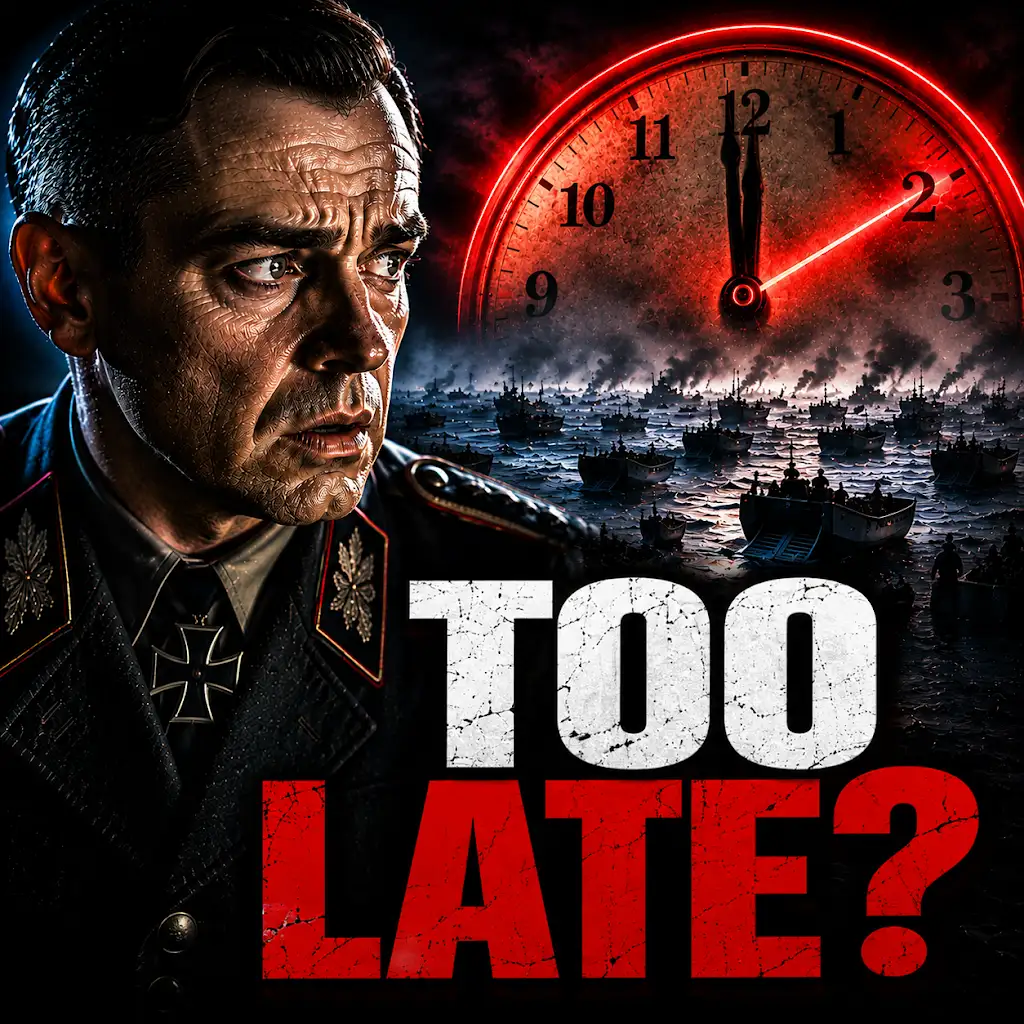
The morning of June 6, 1944, dawned with a fury that would forever be etched into the annals of history. For the Allied forces, it was the beginning of the end for Nazi Germany, a daring amphibious invasion known as Operation Overlord. Yet, as the waves crashed against the beaches of Normandy, a formidable adversary stood ready to repel them: the German panzer divisions. These metal behemoths, the pride of the Wehrmacht, represented a significant challenge that the Allied landings had to overcome. Understanding the role and capabilities of German tanks on D-Day is crucial to appreciating the ferocity of the fighting and the sheer bravery of the soldiers who faced them.
The German military doctrine placed immense importance on the panzer divisions, formations designed for rapid, deep penetrations and encirclement of enemy forces. By 1944, while the tide of war had undeniably turned against Germany, their panzer units remained a potent and feared weapon. They were equipped with some of the most advanced and feared armored fighting vehicles of the era, capable of inflicting heavy casualties on Allied infantry and armor alike.
Evolution of German Armor
The German tank design philosophy evolved throughout the war, driven by combat experience and the constant need to counter superior Allied numbers with technological superiority. Early war successes had been built on the Panzers III and IV, workhorse tanks that formed the backbone of the panzer divisions. However, as the war progressed, the Germans introduced heavier and more powerful tanks, designed to dominate the battlefield.
The Panzer IV: The Reliable Workhorse
Despite the introduction of more advanced designs, the Panzerkampfwagen IV (Pz.Kpfw. IV) remained the most numerous German tank in service on D-Day. It had undergone numerous upgrades throughout the war, evolving from its initial role as an infantry support vehicle to a capable tank destroyer. By 1944, the late-production variants, particularly the Ausf. H and J, featured improved armor and a more powerful long-barreled 7.5 cm KwK 40 L/48 gun, capable of engaging most Allied tanks at reasonable ranges. While not as heavily armored or armed as its heavier brethren, the sheer numbers of Panzer IVs meant they posed a significant threat, especially when deployed in defensive positions or as part of mobile counter-attacks. Their reliability and relative ease of production made them a constant presence on the battlefield, and their crews were often experienced veterans.
The Panther: The Battlefield Dominator
The Panther (Pz.Kpfw. V Panther) was arguably the most feared German tank of World War II, and it was present in significant numbers in Normandy on D-Day. Designed as a response to the Soviet T-34, the Panther combined excellent firepower, good mobility, and sloped frontal armor that made it exceptionally difficult for Allied tanks to penetrate from the front. Its long-barreled 7.5 cm KwK 42 L/70 gun was capable of destroying any Allied tank it encountered at long range. The sloped armor, a revolutionary design feature, significantly increased its effective thickness, making it a formidable opponent. While initially plagued by mechanical issues, by D-Day, many of these problems had been addressed, making the Panther a truly terrifying weapon. Its presence on the battlefield often forced Allied armor to seek alternative tactics, relying on flanking maneuvers or overwhelming firepower to overcome its formidable defenses.
The Tiger: The King of the Battlefield
The Tiger I (Pz.Kpfw. VI Tiger Ausf. E) was the embodiment of German armored might. Its immense 8.8 cm KwK 36 L/56 gun was capable of destroying any Allied tank from extreme ranges, and its thick frontal and side armor made it virtually impervious to most Allied anti-tank weapons. While not as numerous as the Panzer IV or Panther, the Tigers were deployed strategically, often in small numbers, to create “kill zones” and inflict maximum casualties. Their psychological impact was immense; the mere rumor of a Tiger’s presence could send shivers down the spines of Allied tank crews. Despite their fearsome reputation, Tigers were complex and expensive to produce and maintain, and their mechanical reliability was often a concern, especially in the rough terrain of Normandy. Their weight also limited their mobility and made them susceptible to minefields and artillery.
Deployment and Strategic Considerations
The German high command understood the critical importance of holding the Western Front. However, strategic decisions made earlier in the war, particularly on the Eastern Front, had depleted the pool of available panzer divisions. Furthermore, Allied air superiority meant that large formations of tanks could not be moved freely without risking devastating attacks.
Strategic Reserve vs. Beach Defense
A crucial point of contention regarding German tank deployment on D-Day was their strategic positioning. Many of the panzer divisions best equipped and trained were held in reserve, further inland, away from the immediate invasion beaches. This was a calculated risk, intended to allow them to be deployed to reinforce threatened sectors once the Allied assault was fully understood. However, it meant that the initial landings were met by less heavily armored units and infantry. The presence of more potent panzer units directly on the coast could have significantly blunted the initial Allied assaults.
Obstacles to Rapid Deployment
Several factors hampered the rapid deployment of German panzer reserves to the front lines. Allied air power was a constant threat, interdicting railway lines, bridges, and road networks. This forced German armored columns to move at night or under cover, significantly slowing their progress. The breakdown of communication also played a role, as commanders struggled to receive accurate intelligence about the scope and locations of the Allied landings. The intense fighting on the Eastern Front also meant that Germany lacked the reserves of troops and equipment to effectively respond to a major Western offensive.
The Face of the Enemy: Tanks on the Beaches
While the initial Allied landings encountered less heavily armored opposition, the threat of panzer counter-attacks loomed large. As the beachheads were consolidated, the battle for Normandy devolved into a brutal attritional struggle, with German tanks playing a central role.
Early Encounters and Their Impact
The first German armored units to engage the Allied forces were typically elements of Panzer IV equipped units, supported by anti-tank guns. These early encounters, though often outnumbered, demonstrated the resilience and firepower of German armor.
Initial Resistance
On beaches like Omaha, where the terrain offered some concealment and defensive advantages, German armor, even in limited numbers, proved to be a significant obstacle. The interlocking fields of fire from their tanks and anti-tank guns, coupled with machine-gun nests and artillery, inflicted horrific casualties on the advancing American infantry. The lack of effective Allied anti-tank support in the initial stages, coupled with the formidable capabilities of the German tanks, created scenes of desperate struggle and heavy losses.
The Psychological Factor
Beyond their destructive capabilities, the presence of German tanks had a profound psychological impact on Allied soldiers. The iconic silhouette of a Tiger or Panther, coupled with the thunderous roar of its main gun, was a terrifying sight. For infantry facing these machines with only rifles and machine guns, the fear was palpable. This psychological pressure often added to the already immense stress of combat, making every advance a daunting proposition.
The Battle for the Bocage
The hedgerow country of Normandy, known as the bocage, proved to be a nightmarish battleground for both sides, but particularly for armored forces. The dense, overgrown hedgerows, often several feet high and several feet wide, severely restricted visibility and maneuverability.
Navigating the Hedgerows
For Allied tanks, the bocage meant that they could not see enemy armor until they were often too close for comfort, negating the advantages of their superior optics and longer-range guns. German tanks, with their lower profiles and crews more accustomed to fighting in such terrain, often had a tactical advantage. They could lie in ambush behind the hedgerows, waiting for Allied armor to get too close before unleashing devastating fire.
The Role of Specialized Tactics
To overcome the challenges of the bocage, Allied forces developed specialized tactics. Sherman tanks were fitted with “hedgerow cutters” – essentially sharpened steel blades – bolted to their front hulls. These allowed them to cut through the hedgerows, creating lanes of advance. However, this also exposed the tanks to the risk of mines and anti-tank ambushes. The use of close air support and artillery became increasingly crucial to dislodge German armor dug in behind the hedgerows.
Countering the Steel Giants: Allied Armor and Anti-Tank Efforts
The Allied forces were not without their own armored capabilities, and they had to devise strategies and deploy their own weapons to counter the German panzers. The fight was not one-sided, and the ingenuity and bravery of Allied soldiers played a crucial role in overcoming the formidable German tanks.
The Sherman’s Fight
The American M4 Sherman tank, while not as heavily armed or armored as its German counterparts, was produced in vast numbers and was a crucial element of the Allied armored force. Its reliability, speed, and adaptability made it a formidable opponent, especially when employed effectively.
Strengths and Weaknesses of the Sherman
The Sherman’s primary strength lay in its numbers and its reliability. Its 75mm gun could engage most German tanks at closer ranges, and later variants with the 76mm gun offered improved performance. However, the Sherman’s relatively thin armor was a significant vulnerability, especially against the long-barreled guns of the Panther and Tiger. This often led to high casualty rates for Sherman crews when they encountered heavier German armor.
Innovations and Adaptations
Allied engineers and tank crews were constantly innovating to improve the Sherman’s effectiveness. The introduction of the T72 gun (later designated the 76mm M1 gun) significantly improved its anti-tank capabilities. Furthermore, tactics like “firefly” Shermans, armed with the British 17-pounder gun, were developed to give Allied tanks a chance to penetrate the armor of the heaviest German tanks. The use of tactics like the “hull-down” position, where only the turret of the tank was exposed, also helped to minimize casualties.
Anti-Tank Guns and Tank Destroyers
Beyond tanks, the Allies relied heavily on towed anti-tank guns and dedicated tank destroyer vehicles to neutralize German armor. These units, though often operating under extreme duress, were vital in blunting German armored assaults.
The 6-Pounder and 17-Pounder
British and American forces deployed a variety of anti-tank guns. The British 6-pounder gun, while effective against earlier German tanks, struggled against the frontal armor of the Panther and Tiger. The more powerful British 17-pounder gun, however, was a game-changer, capable of penetrating the armor of most German tanks at range. It was often mounted on Sherman Firefly tanks, providing a much-needed counter to the Tiger and Panther.
The M10, M36, and other Tank Destroyers
American tank destroyer units, equipped with vehicles like the M10 Wolverine, M18 Hellcat, and M36 Jackson, played a critical role. These vehicles were typically fast and heavily armed, designed to hunt down and destroy enemy armor. The M10, with its 76mm gun, was effective against many German tanks, while the M36, armed with the 90mm gun, offered superior firepower against the heaviest German panzers. The M18 Hellcat, with its impressive speed, was designed for hit-and-run tactics, overwhelming enemy armor through maneuverability.
The High Cost of War: Casualties and Losses
The engagement between Allied and German tanks in Normandy was a brutal and costly affair. Both sides suffered heavy losses, and the battle for dominance of the armored battlefield took a tremendous toll on personnel and equipment.
Tank vs. Tank Engagements
Direct tank-on-tank battles were often decisive and brutal. The superior firepower and armor of German tanks, particularly the Panther and Tiger, could inflict devastating losses on Allied tank crews. However, Allied tactics, superior numbers, and the development of more potent anti-tank weapons gradually began to tip the scales.
The Statistics of Destruction
While exact figures are difficult to ascertain, the losses on both sides were significant. German tank production, while impressive, could not keep pace with the attrition rate, especially given the strain on their industrial capacity and resource shortages. Allied tank losses were also high, particularly in the early stages of the campaign and in the hedgerow country. The effectiveness of German anti-tank guns and ambushes often resulted in high casualty rates for Allied armor.
The Human Element
Beyond the statistics, it is essential to remember the human cost of these battles. Young men, in their metal machines, faced each other with the intent to destroy. The bravery of tank crews on both sides was extraordinary, as they navigated a battlefield filled with death and destruction. The psychological toll of constant combat, the loss of comrades, and the sheer violence of tank warfare left indelible marks on those who survived.
Legacy of the Panzer Divisions on D-Day
The German panzer divisions, despite their eventual defeat in Normandy, left an indelible mark on the D-Day campaign and the broader narrative of World War II. Their technological prowess and their tactical deployment, while ultimately insufficient to prevent the Allied victory, highlight the formidable challenge the Allies faced.
Lessons Learned and Future Development
The experiences of D-Day informed future tank development and armored warfare doctrine for both sides. The effectiveness of sloped armor on the Panther, for instance, influenced future tank designs. The challenges of fighting in confined terrain, as seen in the bocage, led to a greater emphasis on combined arms operations and specialized armored vehicles.
The Evolution of Armored Warfare
The tank battles of Normandy served as a crucible for the evolution of armored warfare. The need for tanks to operate effectively in conjunction with infantry, artillery, and air support became more apparent than ever. The development of tactics like fire support, maneuver warfare, and combined arms operations were crucial in overcoming the individual strengths of enemy armored units.
The Enduring Image of German Tanks
The image of the German Panther and Tiger tanks remains a powerful symbol of World War II. They represent a peak of German engineering and a testament to the devastating potential of armored warfare. While the Allied victory was assured through a combination of strategic planning, overwhelming industrial might, and the sheer bravery of their soldiers, the German panzer divisions stand as a formidable and unforgettable adversary on the beaches of Normandy. Their presence on D-Day was a stark reminder of the brutal and unforgiving nature of the conflict, a conflict that would ultimately reshape the world.