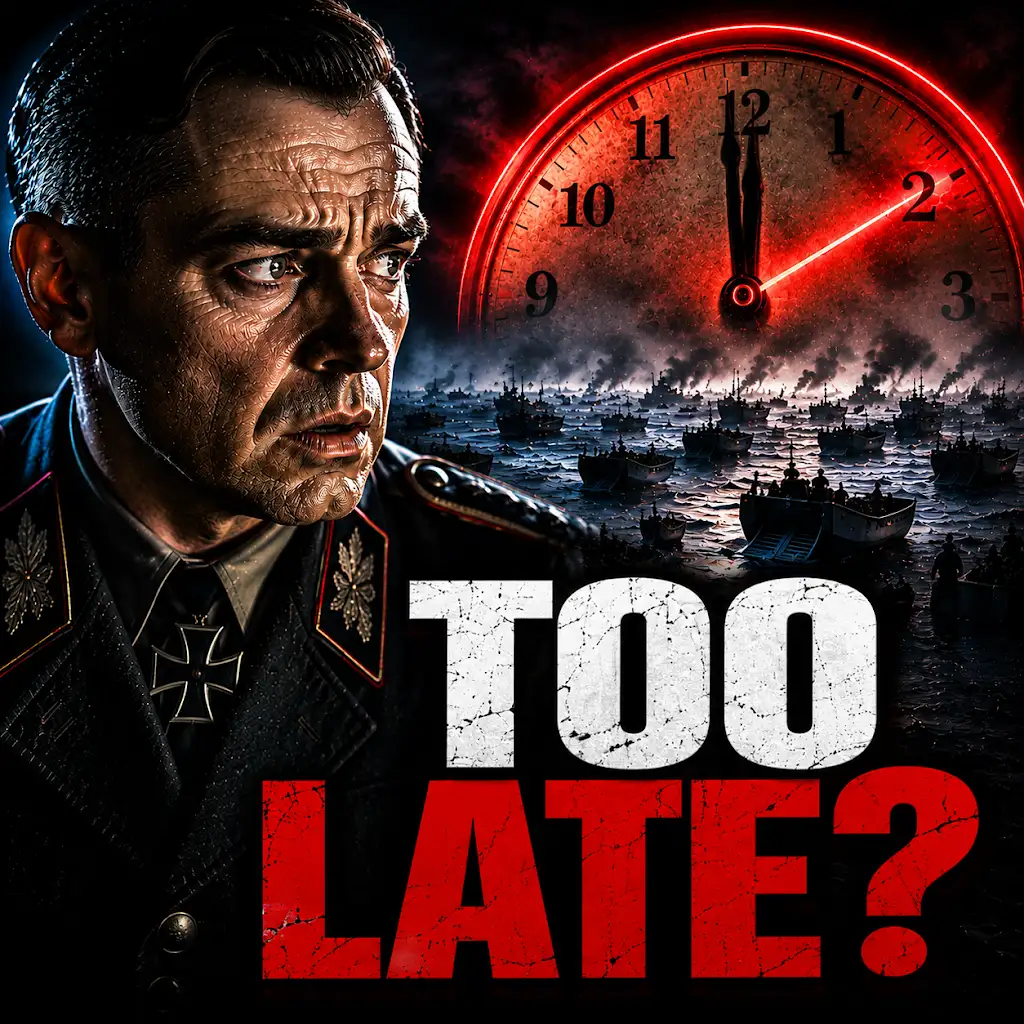
The German military and political leadership faced a watershed moment on June 6, 1944, with the Allied landings in Normandy. The sheer scale and audacity of Operation Overlord, code-named “Unternehmen Neptun” by the Germans, caught many by surprise, despite years of intelligence gathering and defensive preparations. The initial response was a complex mix of disbelief, underestimation, and a desperate scramble to understand the true nature of the threat.
Underestimating the Allied Threat
A significant factor contributing to the initial German reaction was a deep-seated underestimation of Allied capabilities and resolve.
The Illusion of Deception
For weeks leading up to D-Day, German intelligence had been bombarded with information, much of it deliberately misleading, pointing towards an invasion in the Pas-de-Calais. This elaborate deception, orchestrated by the Allies, played a crucial role in diverting German attention.
- Fortress Europe’s Strength: Many within the German High Command genuinely believed that the Atlantic Wall, a formidable network of coastal defenses, was insurmountable. They were confident that any Allied attempt to breach it would be repulsed with heavy losses.
- The “Phoney War” Mentality: The long period of relative inactivity on the Western Front following the fall of France had fostered a sense of complacency. Some German strategists believed the Allies lacked the will and capacity for a large-scale amphibious assault.
- Focus on the Eastern Front: The relentless and brutal fighting on the Eastern Front against the Soviet Union consumed the vast majority of German military resources and attention. The Western Front, while still a concern, was often viewed as a secondary theater.
The Importance of the Pas-de-Calais
The Allied deception campaign was highly effective in convincing the German high command that the main invasion would occur at the Pas-de-Calais. This misconception had profound implications for the deployment of German forces.
Operation Fortitude and its Success
The Allied deception, codenamed Operation Fortitude, was a masterclass in psychological warfare and misinformation.
- Phantom Armies: The Allies created the illusion of large armies, including the fictional First U.S. Army Group (FUSAG) under General George S. Patton, stationed in southeastern England, poised to invade the Pas-de-Calais.
- Radio Traffic and Double Agents: Sophisticated radio traffic analysis, coupled with controlled leaks of information through double agents, reinforced the impression of an imminent attack in the north.
- Naval and Air Activity: Simulated troop movements, feints of naval activity, and bomber sorties in the direction of Pas-de-Calais further cemented the deception.
The Role of Rommel’s Concerns
Field Marshal Erwin Rommel, tasked with inspecting the Atlantic Wall’s defenses, harbored significant doubts about their effectiveness and the likelihood of a successful defense.
Rommel’s Strategic Vision
Rommel, a highly respected tank commander known for his innovative tactics, recognized the inherent weaknesses in the German defenses and the critical importance of decisive action.
- “The sooner we break their backs, the better”: Rommel famously stated that he wanted to engage the Allies as soon as they landed, believing that the longer they remained in their beachheads, the stronger they would become.
- Inadequate Defenses: He found the Atlantic Wall to be far less formidable than Hitler and others believed. He noted gaps in the defenses, insufficient mines, and a lack of effective anti-tank obstacles in many areas.
- Urgent Need for Reinforcements: Rommel repeatedly stressed the urgent need for armored divisions to be positioned closer to the coast, arguing that they would be crucial in launching immediate counterattacks and preventing the Allies from establishing firm footholds.
Hitler’s Hesitation and Divided Command
Adolf Hitler’s personal involvement and his often-conflicting directives significantly hampered the German response to the invasion.
The Führer’s Strategic Blind Spots
Hitler’s leadership style, characterized by a micromanagement of military affairs and a disregard for the advice of his experienced generals, proved detrimental.
- Belief in Deception: Hitler, too, was a victim of the Allied deception. He firmly believed the Normandy landings were a feint, a diversion to draw German forces away from the true invasion point at Pas-de-Calais.
- “Second Front” Theory: He adhered to his long-held theory that the Normandy landings were not the main Allied effort, but rather a preliminary attack designed to weaken German defenses before the main assault in the north.
- Reluctance to Release Panzer Divisions: This belief led to his crucial hesitation in releasing the strategic Panzer reserves, which were held back from the front lines, waiting for confirmation of the “main” invasion. This delay proved to be a critical strategic error.
- Conflicting Orders: Orders were often contradictory, with some commanders being instructed to hold their ground at all costs, while others were given more flexibility. This created confusion and hindered coordinated responses.
The Immediate Battlefield Response
Once the scale of the invasion became undeniable, the German military machinery began to react, but its initial efforts were hampered by a lack of preparedness, confused command, and the sheer ferocity of the Allied assault.
Initial German Dispositions
The German forces stationed in Normandy were a mixed bag of units, some well-trained and equipped, others less so, and all critically lacking in reserves.
Scattered and Understrength Units
The German units defending the Normandy coast were not positioned to effectively counter a coordinated, multi-pronged assault.
- Infantry Divisions: The primary defenders were infantry divisions, tasked with holding the coastline. While many were experienced, they were often understrength and lacked the heavy weaponry needed to repel an amphibious assault.
- Panzer Divisions Out of Position: The highly mobile and crucial Panzer divisions, the backbone of German offensive and defensive capabilities, were largely stationed further inland. This was a direct consequence of the deception campaign and Hitler’s reluctance to commit them.
- Lack of Reserves: The critical shortage of reserves meant that once a sector was breached, there was little immediate capacity to plug the gap.
The Struggle for Communication and Coordination
The chaos of the initial landings and the constant Allied air superiority made effective communication and coordination incredibly difficult for the German forces.
Disrupted Command and Control
The Allies understood the importance of disrupting German command and control from the outset.
- Targeted Bombing: Allied bombers systematically targeted German communication lines, artillery positions, and command centers in the days and weeks leading up to D-Day.
- Air Superiority: The overwhelming superiority of Allied air power meant that German troop movements, resupply efforts, and communication by land were constantly under threat, making it extremely difficult to move reinforcements or gather accurate intelligence.
- Fragmented Information: Commanders on the ground often received fragmented and delayed information, leading to hesitant and uncoordinated responses. The lack of real-time intelligence meant that German commanders were often fighting battles blind.
Early Counterattacks and Their Failures
Despite the overwhelming odds, German units launched a series of counterattacks in the early hours and days of the invasion, attempting to push the Allies back into the sea.
The Battle for the Beachheads
The initial German counterattacks were characterized by bravery but ultimately lacked the strategic advantage and overwhelming force needed for success.
- Localized Efforts: These were largely localized efforts, often carried out by units cut off from their command and without proper artillery support.
- Limited Panzer Engagement: While some Panzer units did engage, they were often too far from the landing zones to be effective in the critical initial hours.
- Against Allied Air Dominance: These counterattacks were launched into a maelstrom of Allied air power, which inflicted heavy casualties and significantly hampered their progress. The Allies had achieved air supremacy over the invasion beaches, meaning German armor was a prime target for Allied fighter-bombers.
- Lack of Reserves: The absence of significant reserves meant that even successful local counterattacks could not be sustained or exploited.
The Battle for Normandy: A Strategic Stalemate
The initial German response, while reactive, quickly evolved into a desperate struggle to contain and ultimately repel the Allied invasion. The subsequent weeks saw fierce fighting across the Normandy countryside, a grim testament to the tenacity of both sides.
The German Defensive Strategy
The German strategy in Normandy became increasingly defensive as the Allies consolidated their gains and poured in reinforcements.
The Defense of the Atlantic Wall
While the initial landings bypassed many of the heavily fortified sectors, the Atlantic Wall still played a role in the broader defense.
- Securing Coastal Flanks: German forces in fortified coastal positions, particularly those bypassed by the initial landings, continued to offer resistance, tying down Allied troops.
- Artillery Support: Coastal artillery batteries, though often outranged, could still inflict damage on Allied shipping and landing craft, contributing to the fierce fighting.
- Psychological Impact: The formidable reputation of the Atlantic Wall, even in its weakened state, still had a psychological impact, making commanders cautious.
The Importance of Caen
The city of Caen became a focal point of the battle for Normandy, representing a key strategic objective for the Allies and a heavily defended strongpoint for the Germans.
A Symbol of Resistance
The German defense of Caen was characterized by determined resistance and the deployment of elite Panzer units.
- Holding the Flanks: The German forces, particularly the II SS Panzer Corps, fought ferociously to prevent the Allies from capturing Caen quickly.
- Urban Warfare: The fighting in and around Caen devolved into brutal urban warfare, with both sides suffering heavy casualties.
- Strategic Delay: The German defense, while ultimately unsuccessful in preventing the city’s capture, significantly delayed the Allied advance and allowed for the reinforcement and redeployment of German forces.
The Role of Panzer Divisions in Counterattacks
The German Panzer divisions, once they were able to be deployed, became the spearhead of German counterattacks aimed at disrupting Allied advances and preventing them from breaking out of their beachhead.
Desperate Attempts to Contain the Allies
These counterattacks, though often brave, were increasingly fighting against overwhelming odds.
- Schwere Panzerabteilungen: Elite units equipped with Tiger and Panther tanks, such as the s.SS-Panzer-Abteilungen 101 and 102, played a crucial role. These tanks were technologically superior to most Allied armor at the time, but their numbers were limited.
- Fierce but Unsustainable: While these units could inflict significant damage on Allied armor and infantry, they were often unsupported by adequate air cover or artillery and suffered heavy losses due to Allied air superiority and anti-tank weaponry.
- “Fire Brigade” Tactics: The German Panzer divisions were increasingly employed in a “fire brigade” role, rushed to wherever the Allied threat was most severe, attempting to stem the tide of the invasion.
The Long Retreat and the Falaise Pocket
As the Allied forces gained momentum and began to outmaneuver German defenses, the battle for Normandy entered its final, desperate phase, culminating in the encirclement of German forces and a devastating defeat.
The Strategic Importance of the Breakout
The Allied breakout from the Normandy beachhead marked a turning point in the battle, signaling the collapse of German defenses in the region.
Operation Cobra and its Success
The successful Allied breakout, particularly Operation Cobra, shattered the German lines and opened up the path to Paris.
- Massive Bombardment: The breakout was preceded by a devastating aerial bombardment that pulverized German defenses, creating a path for Allied armor.
- Overwhelming Force: Allied forces, with their superior numbers, air power, and logistical support, were able to exploit the gaps in the German lines.
- German Disarray: The German command structure, already strained, was further thrown into disarray by the rapid Allied advance.
The Encirclement at Falaise
The relentless Allied advance from both the west and the east led to the encirclement of large German forces in the Falaise Pocket.
The “Killing Ground”
The Falaise Pocket became a notorious symbol of German defeat in Normandy, a trap from which few could escape.
- Allied Pincer Movement: Allied forces from the west (British and Canadian) and the east (American) closed the gap, trapping numerous German divisions.
- Desperate Fighting for Escape: German soldiers fought fiercely to escape the pocket, often under constant artillery and aerial bombardment.
- Heavy Losses: The pocket became a “killing ground,” with hundreds of thousands of German soldiers killed, wounded, or captured. The material losses were immense, including thousands of tanks, artillery pieces, and vehicles.
The Collapse of the Western Front
The defeat in Normandy and the subsequent collapse of the Western Front had profound implications for the remainder of the war.
A Strategic Catastrophe
The loss of Normandy was a devastating blow to Germany’s military capacity and morale.
- Loss of Manpower and Equipment: The Falaise Pocket represented an irreplaceable loss of experienced troops and vital military equipment.
- Opening the Path to Germany: The liberation of France and Belgium paved the way for the Allied advance into Germany itself.
- Shifting the Balance of Power: The balance of power in the war decisively shifted in favor of the Allies.
The Aftermath and German Reckoning
The defeat in Normandy was not merely a tactical setback; it was a strategic catastrophe that fundamentally altered the course of the war. The German response, from initial miscalculations to desperate defensive battles, ultimately proved insufficient against the overwhelming might of the Allied forces.
The Impact on German Morale
The news of the landings and the subsequent defeats had a demoralizing effect on the German populace and military.
Shattered Illusions of Victory
The reality of the invasion and the subsequent losses shattered the carefully constructed propaganda narrative of German invincibility.
- Public Awareness: The constant Allied air raids and the eventual fall of major cities brought the war home to the German people in a visceral way.
- Loss of Confidence: The inability of the Wehrmacht to effectively repel the invasion or even contain it led to a decline in confidence in the leadership and the war effort.
- Growing Dissatisfaction: Whispers of dissent and dissatisfaction, previously suppressed, began to grow louder, contributing to the climate that would eventually lead to the July 20th plot to assassinate Hitler.
The Reorganization of German Defenses
Following the disaster in Normandy, the German military leadership attempted to reorganize and shore up its defenses, but the damage was too extensive.
A Desperate Attempt to Stabilize
The remaining German forces were hastily redeployed, but they lacked the resources and manpower to effectively counter the Allied advance.
- Focus on the Siegfried Line: The primary focus shifted to defending the Siegfried Line, Germany’s western defensive fortifications.
- Scraping the Barrel: The Germans were forced to draw on every available resource, including hastily trained and poorly equipped Volksgrenadier divisions, to bolster their defenses.
- Limited Reserves: The critical shortage of strategic reserves meant that any defensive gains were difficult to sustain.
The Long-Term Consequences for the War
The German response to the Normandy invasion and the subsequent battle for France had profound and lasting consequences for the remainder of World War II.
The Road to Defeat
Normandy was the beginning of the end for Nazi Germany on the Western Front.
- Unstoppable Momentum: The Allied momentum from Normandy was relentless, leading to the liberation of France and Belgium and the eventual invasion of Germany.
- Two-Front War Intensifies: The opening of a strong Western Front placed an immense strain on Germany’s already depleted resources, intensifying the already brutal two-front war.
- Erosion of Military Strength: The catastrophic losses in Normandy significantly eroded Germany’s military strength, making a prolonged resistance increasingly untenable. The inability to effectively counter the Allied invasion marked a decisive turning point, signaling the beginning of the end for the Third Reich.