The Digital Scaffolding of Kinship: Building Family Trees from DNA Matches
The quest for ancestral roots has long been a pursuit driven by dusty documents, faded photographs, and whispered family anecdotes. However, in the 21st century, a powerful new tool has emerged, transforming the landscape of genealogical research: autosomal DNA testing. For individuals seeking to unravel the intricate tapestry of their family history, DNA match trees have become an indispensable scaffold, providing a digital framework upon which to hang the threads of kinship. These trees, generated by genetic genealogy companies, offer a dynamic and interactive way to visualize potential relatives, revealing connections that might otherwise remain hidden for generations. By analyzing shared segments of DNA, these platforms can identify individuals who are likely to be cousins, aunts, uncles, or even closer relations, thereby unlocking doors to previously unexplored branches of the family tree.
The fundamental principle behind DNA match trees lies in the way our DNA is inherited. Autosomal DNA, which constitutes the vast majority of our genetic makeup, is passed down from both parents in a shuffled manner. This means that siblings will share a significant percentage of their DNA, while cousins will share smaller, yet identifiable, amounts. Genetic genealogy services compare a user’s DNA with others in their database, flagging individuals with whom they share a statistically significant amount of DNA. These shared segments are then used to estimate the relationship, ranging from parent/child and full sibling down to more distant connections like third or fourth cousins. The resulting list of matches, often accompanied by estimated centimorgans (cM) – a unit of genetic distance – forms the raw material for constructing a DNA match tree. While the raw data is presented in lists and charts, it is through the process of building and analyzing the associated trees that the true power of these matches is unleashed, allowing researchers to move beyond mere identification to understand the complex web of relationships.
For those interested in exploring the fascinating world of DNA match family tree research, a related article that provides valuable insights can be found at In the War Room. This resource delves into the methodologies and tools available for constructing family trees using DNA matches, offering tips on how to effectively trace lineage and uncover ancestral connections. Whether you’re a seasoned genealogist or just starting your journey, this article is a great starting point for understanding the intersection of genetics and family history.
Navigating the Data Landscape: Interpreting DNA Matches and Centimorgans

The initial deluge of DNA matches can be both exhilarating and overwhelming. Understanding how to interpret the data presented by genetic genealogy companies is crucial for building an accurate and meaningful family tree. The cornerstone of this interpretation lies in understanding centimorgans (cM) and their relationship to estimated shared ancestry. Centimorgans are not a measure of physical distance, but rather a unit representing the length of DNA shared between two individuals. The total amount of DNA shared between any two people is approximately 3,700 centimorgans. However, because of the random shuffling of DNA during inheritance, the amount of shared DNA between relatives varies. For instance, a parent and child will share approximately 50% of their DNA, which translates to around 3,700 cM. Full siblings also share around 50% of their DNA, but the exact number of cM can vary more widely, typically ranging from 2,300 to 3,700 cM.
As the genealogical distance increases, the amount of shared DNA decreases, and the range of possible cM values widens considerably. For example, first cousins share, on average, about 12.5% of their DNA, equating to roughly 850-1,400 cM. Second cousins share, on average, 6.25% of their DNA, or about 425-700 cM. Third cousins share, on average, 3.125% of their DNA, typically between 210-350 cM. These figures are averages, and it’s important to remember that the actual amount of shared DNA can fluctuate due to the probabilistic nature of inheritance. Therefore, relying solely on a single cM value can be misleading. Genetic genealogy companies provide an estimated relationship range based on these shared cM values, but it is through further investigation and triangulation that more precise conclusions can be drawn. The sheer volume of data can be daunting, but with a systematic approach to understanding these quantitative measures, the path to uncovering family connections becomes clearer.
The Significance of Shared Centimorgan Counts
The number of centimorgans shared between two individuals is the primary indicator of their genealogical relationship. A higher cM count generally signifies a closer relationship. For example, if a user finds a match with 1,800 cM, it is highly probable they are a sibling or a parent/child. Conversely, a match with 50 cM suggests a more distant relationship, perhaps a fourth or fifth cousin. Genetic genealogy companies utilize extensive databases and statistical models to provide estimated relationship probabilities based on these cM values. These estimations are invaluable starting points, helping researchers prioritize their efforts and focus on the most promising matches. However, it is crucial to approach these estimates with a degree of healthy skepticism and to cross-reference them with other genealogical evidence. A match that falls within the range for a first cousin might, in reality, be a half-sibling or a double first cousin, depending on the specific genealogical context. Therefore, while cM counts are the initial gatekeepers of information, they are not the final word.
Beyond the Number: Understanding Shared DNA Segments
While the total number of shared centimorgans is important, the distribution and size of the individual shared DNA segments also provide crucial clues. DNA is inherited in segments, or blocks. The larger the shared segments, the more likely they are to represent a recent common ancestor. For instance, a single, large shared segment of 100 cM is a stronger indicator of a close relationship than multiple small segments totaling 100 cM. Genetic genealogy platforms often display these segments, allowing users to see where on their chromosomes they match their relatives. This level of detail can be particularly helpful in distinguishing between different types of relationships. For example, if two individuals share DNA on the same segment from both sides of their families, it could indicate a double cousin relationship, a more complex connection where individuals share ancestors through multiple family lines. Analyzing these segments can help researchers identify specific ancestral lines to focus on and can even help resolve ambiguities in traditional genealogical research.
Triangulation: The Cornerstone of DNA Match Tree Construction

The true power of DNA matches for family tree building is realized through a technique known as triangulation. Triangulation is the process of identifying a shared DNA match between three or more individuals who are all related to the original DNA tester. This means that Person A (the tester) matches Person B, and Person A also matches Person C, and crucially, Person B and Person C also match each other. When this occurs, it indicates that Person B and Person C share a common ancestor with Person A through the same ancestral line. Without triangulation, it’s possible to have multiple matches that appear to be related, but without knowing how they connect to each other, their positions on the family tree remain uncertain.
Consider this scenario: a DNA tester has two matches, both indicating they are likely second cousins. One match might be a second cousin through the tester’s paternal grandmother’s family, while the other might be a second cousin through the tester’s maternal grandfather’s family. Individually, these matches are valuable. However, if the tester can get the first match (Person B) to also test their DNA and find that they also match the second match (Person C), then it is confirmed that Person B and Person C are related to each other through the same common ancestor they share with Person A. This shared connection between Person B and Person C, along with their shared DNA with Person A, effectively “triangulates” their position on the family tree, pinpointing the specific branch of the family from which they descend. This methodical approach is what allows for the accurate placement of individuals within the larger ancestral narrative.
Identifying Common Ancestors with Triangulation
The primary goal of triangulation is to identify the specific common ancestor(s) that link the tester to their matches. When three individuals – the tester, Match A, and Match B – all share DNA with each other, it implies they inherited that DNA from a shared ancestor. The key is to then work backward from the known family trees of the tester, Match A, and Match B to pinpoint that specific ancestor or couple. This often involves a collaborative effort. Genetic genealogists will create trees for their matches, and then compare these trees to their own. When a cluster of matches shares DNA and their trees show a potential common ancestor, it becomes a strong hypothesis. Further research, including examining traditional genealogical records for that suspected ancestor, can then confirm the connection. For example, if Match A and Match B both have grandparents who are siblings, and these grandparents are also ancestors of the DNA tester, then triangulation has successfully identified a common ancestral couple. This process of elimination and confirmation is what builds the robust structure of a DNA-derived family tree.
Building and Populating the DNA Match Tree
Once a group of individuals has been triangulated, they can be placed on the ancestral tree. This involves assigning each match to a specific branch, based on the identified common ancestor. The process is iterative. As more matches are identified and triangulated, they are added to their respective branches, gradually filling out the family tree. Genetic genealogy platforms often provide tools to visually represent these trees, allowing users to drag and drop matches, assign them to specific parental lines, and attach notes or research findings. This visual representation is what makes the concept of a “DNA match tree” so powerful. It transforms abstract DNA data into a tangible, navigable representation of kinship. The ultimate goal is to create a comprehensive tree that not only shows who is related but also how they are related, tracing each connection back to its ancestral origins.
Strategies for Expanding and Verifying Your Ancestral Map
The initial DNA matches and the subsequent construction of a preliminary tree are just the beginning of the genealogical journey. To truly unlock the depth of family history, researchers must employ strategies to expand their ancestral map and rigorously verify the connections they uncover. This involves not only identifying new potential relatives but also confirming the accuracy of existing ones through a combination of genetic evidence and traditional genealogical research. The dynamic nature of DNA match trees means that they are constantly evolving as new matches are found and existing relationships are clarified. Proactive engagement with these tools and a commitment to thorough verification are paramount for building a reliable and comprehensive family history.
Collaborating with Genetic Relatives
One of the most effective strategies for expanding a DNA match tree is active collaboration with genetic relatives. Many individuals who have tested their DNA are eager to learn more about their family history and are willing to share their research. Reaching out to matches, particularly those who have a public family tree or have shared contact information, can be incredibly fruitful. By sharing information, researchers can compare notes, identify shared ancestral lines, and even discover previously unknown relatives. This collaborative approach is particularly valuable when dealing with distant matches, where the amount of shared DNA is small and the potential for ambiguity is higher. Often, a match may have already researched a particular branch of the family that the tester is struggling with, and vice-versa. This exchange of knowledge and DNA data can accelerate the process of tree building and verification significantly. Many genetic genealogy platforms facilitate this communication, allowing users to send messages and share tree information directly.
Utilizing Traditional Genealogical Research
While DNA provides powerful clues, it is rarely sufficient on its own to definitively prove genealogical connections. Traditional genealogical research, which involves the examination of historical records, remains an indispensable component of family history research. Once a potential common ancestor is identified through DNA triangulation, researchers should then seek out records that can corroborate this connection. This includes vital records (birth, marriage, death certificates), census records, immigration documents, wills, land records, and family Bibles. For instance, if DNA suggests a common ancestor couple from the 19th century, searching for their marriage record, the birth certificates of their children, and census records where they appear as a family unit can provide solid evidence to support the genealogical hypothesis. Combining the genetic evidence from DNA matches with the documentary evidence from historical records creates a robust and verifiable ancestral map.
DNA match family tree research has become an invaluable tool for genealogists and those looking to uncover their ancestral roots. By analyzing genetic connections, individuals can trace their lineage and discover relatives they never knew existed. For those interested in exploring this fascinating topic further, a related article can be found at this link, which delves into the methodologies and technologies behind DNA testing and family tree construction. This resource offers insights that can enhance your understanding of how DNA matches can reveal hidden family histories.
The Evolving Landscape of DNA Match Trees and Future Prospects
| Metric | Description | Typical Value/Range | Importance in DNA Match Family Tree Research |
|---|---|---|---|
| Centimorgans (cM) | Measure of shared DNA between two individuals | 0 – 3500 cM | Higher cM indicates closer genetic relationship |
| Number of Shared Segments | Count of DNA segments shared between matches | 1 – 50+ | More segments can indicate stronger or multiple relationships |
| Segment Size (Minimum cM) | Minimum length of shared DNA segment considered | Typically 7 cM or higher | Filters out false positives in matches |
| Relationship Prediction | Estimated familial relationship based on shared DNA | Parent/Child, Sibling, Cousin, etc. | Helps build accurate family trees |
| Match Confidence Score | Algorithmic score indicating reliability of match | 0 – 100% | Higher score means more reliable match |
| Ethnicity Estimate Accuracy | Precision of ethnicity breakdown from DNA | Varies by database and reference populations | Supports contextual family history research |
| Number of Matches | Total DNA matches found in database | Hundreds to thousands | More matches increase chances of finding relatives |
| Shared Ancestor Hints | Suggested common ancestors based on DNA and tree data | Varies by platform | Facilitates connecting family trees |
The field of genetic genealogy is in a perpetual state of evolution. Advancements in DNA analysis technology, coupled with the ever-growing databases of genetic information, are continually refining the accuracy and scope of DNA match trees. As more individuals submit their DNA for testing, the potential for uncovering new connections and resolving existing genealogical mysteries increases exponentially. The insights gleaned from these digital scaffolds are not only enriching the lives of individuals seeking their heritage but are also contributing to broader scientific understanding of human migration patterns and genetic diversity. The future promises even more sophisticated tools and analyses, further blurring the lines between the digital and the ancestral, and making the pursuit of family history more accessible and rewarding than ever before.
Bridging the Gap Between Genetic and Documentary Evidence
The ongoing challenge in genetic genealogy lies in effectively bridging the gap between raw genetic data and documented historical evidence. While DNA can identify potential relationships, it is the painstaking work of genealogical research that provides the proof. As DNA databases grow, the ability to identify individuals who share DNA with you, even if they have not yet built a comprehensive family tree, becomes increasingly feasible. This opens up avenues for collaborative research where individuals who have done extensive traditional genealogy can connect with DNA matches who may have stumbled upon their genetic connection unexpectedly. The integration of sophisticated algorithms that can predict potential ancestors based on shared DNA and available public records is a promising area of development. Furthermore, the development of standardized methods for reporting and interpreting DNA matches across different platforms will enhance the interoperability of data, allowing for a more cohesive and comprehensive understanding of ancestral lineages.
The Ethical and Practical Considerations of DNA Ancestry
As the practice of genetic genealogy becomes more mainstream, it is crucial to address the ethical and practical considerations that accompany it. Privacy is a paramount concern, as DNA data is inherently personal and can reveal sensitive information about an individual’s health predispositions and ancestral origins. Genetic genealogy companies must maintain robust data security measures and transparent privacy policies. Users, in turn, must be mindful of the information they share and with whom they share it. Beyond privacy, there are practical aspects to consider. DNA testing can sometimes uncover unexpected or sensitive family secrets, such as unknown siblings, adoptions, or extramarital affairs. Individuals embarking on this journey should be prepared for the possibility of encountering such revelations and approach them with emotional maturity and respect for all involved. The ethical use of DNA match trees requires a commitment to truth-telling, empathy, and responsible data stewardship, ensuring that this powerful tool for connection does not inadvertently cause harm.
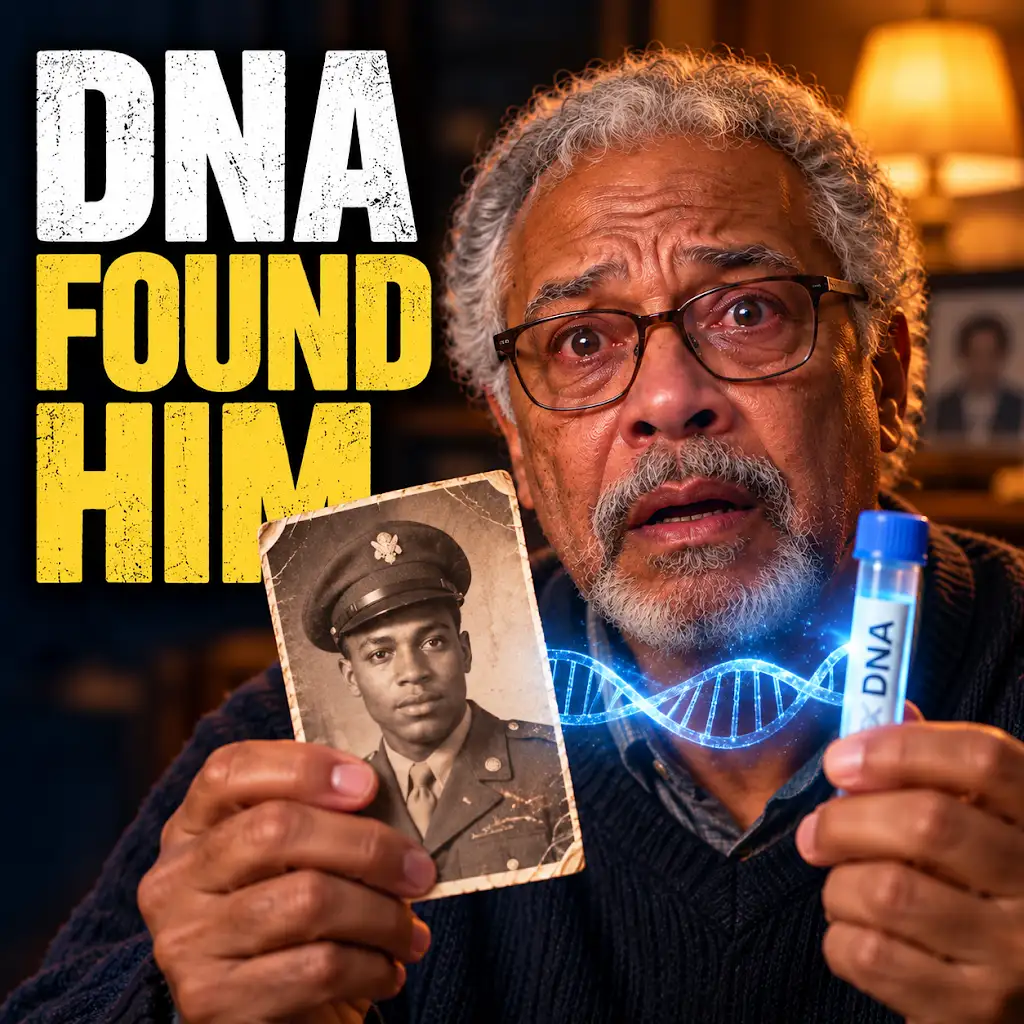
His WWII GI Father Was a Mystery for Nearly 80 Years
FAQs
What is DNA match family tree research?
DNA match family tree research is a method of using DNA testing results to identify and connect with relatives who share common ancestors. By comparing DNA matches and building family trees, individuals can discover new family connections and learn more about their genealogy.
How does DNA match family tree research work?
DNA match family tree research works by analyzing the shared segments of DNA between individuals to determine the degree of relatedness. By comparing DNA matches with known family members and building family trees based on shared ancestors, researchers can identify new relatives and expand their family tree.
What are the benefits of DNA match family tree research?
The benefits of DNA match family tree research include discovering new relatives, confirming existing family connections, breaking through genealogical brick walls, and uncovering unknown family history. It can also help individuals connect with biological family members in cases of adoption or unknown parentage.
What DNA testing companies offer tools for DNA match family tree research?
Several DNA testing companies offer tools for DNA match family tree research, including AncestryDNA, 23andMe, MyHeritage DNA, and FamilyTreeDNA. These companies provide DNA matching services, family tree building tools, and genetic genealogy resources to help individuals explore their family history.
Is DNA match family tree research accurate?
DNA match family tree research is generally considered to be accurate, but it is important to interpret the results with caution and verify the information through traditional genealogical research. While DNA testing can provide valuable clues and connections, it is not a substitute for thorough genealogical research and documentation.