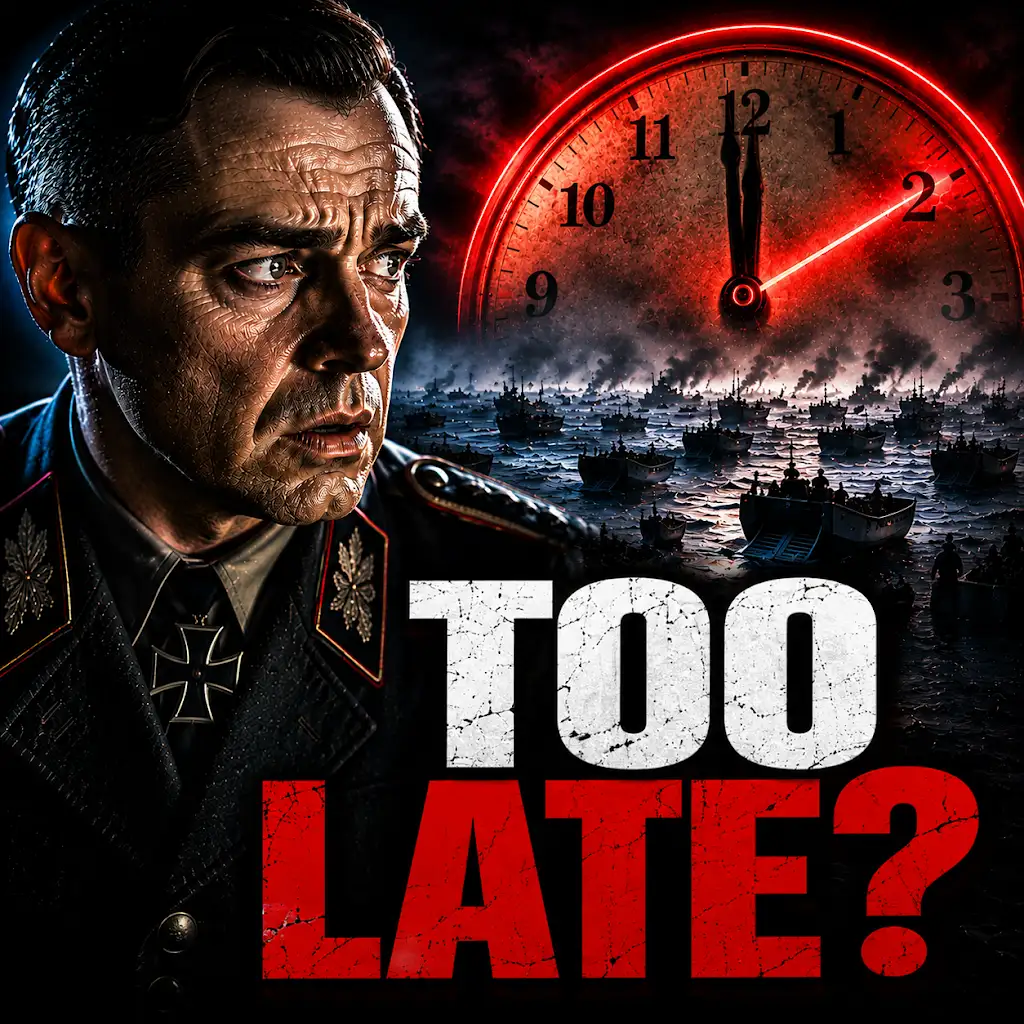
The rumble of approaching thunder was a familiar sound on the Eastern Front, but on the Western Front, in the summer of 1944, it carried a far more ominous portent. For months, the German High Command had been meticulously planning for the inevitable Allied invasion. Central to these preparations was the strategic positioning and deployment of their formidable Panzer reserves, particularly in the crucial theatre of Normandy. The German Panzer forces, the spearhead of the Wehrmacht’s offensive power, were envisioned as the ultimate counter-attack instrument, designed to hurl the invaders back into the sea. However, the reality of their deployment and subsequent effectiveness in Normandy would prove to be a complex and ultimately tragic chapter in the history of World War II.
The Evolution of Blitzkrieg and the Role of Armor
The success of the Blitzkrieg doctrine in the early years of the war had cemented the Panzer division as the linchpin of German military strategy. The concept, emphasizing speed, surprise, and concentrated armored thrusts, had shattered French defenses and humbled the Soviet Union. The Panzer divisions, with their formidable tanks, motorized infantry, and artillery, were designed for rapid exploitation of breakthroughs and deep penetration into enemy territory. Their mobility and firepower made them the ideal tool for offensive operations. Following the disastrous setbacks on the Eastern Front, the strategic emphasis shifted. With large swathes of territory lost, the remaining Panzer formations became even more precious, forming the core of Germany’s strategic reserves. Their deployment in Normandy was not merely about reinforcing existing lines; it was about a desperate gamble to regain the initiative and deny the Allies a foothold on the continent.
The Dilemma of Deployment: East vs. West
One of the most significant challenges facing the German leadership was the allocation of their finite Panzer strength. The Eastern Front, a seemingly inexhaustible meat grinder, continued to demand vast quantities of armor to stem the relentless Soviet offensives. Every Panzer division that was sent to the West was a division that could not be used to shore up crumbling defenses in the East. This strategic dilemma created a constant tension within the OKW (Oberkommando der Wehrmacht), with differing opinions on where the decisive battle would truly be fought. Field Marshal Gerd von Rundstedt, the commander of the Western Front, argued vociferously for the immediate deployment of his Panzer reserves to counter any landings. However, Hitler, influenced by his experiences on the Eastern Front and perhaps by a lingering belief that the primary Allied effort would be elsewhere (such as Pas-de-Calais), hesitated, clinging to his elite Panzer divisions as a strategic reserve that could be deployed with maximum impact. This indecision, born out of conflicting priorities and a reluctance to commit his most potent forces prematurely, would have profound consequences.
The Panzer Divisions Designated for Normandy
The Elite Formations: I SS Panzer Corps and II SS Panzer Corps
The backbone of the German Panzer reserves in the West, and particularly those intended for Normandy, comprised the elite SS Panzer Corps. These formations were renowned for their fanatical loyalty, high-quality equipment, and experienced leadership.
I SS Panzer Corps (Leibstandarte SS Adolf Hitler and Waffen-SS Panzergrenadier Division “Totenkopf”)
The I SS Panzer Corps, initially comprised of the Leibstandarte SS Adolf Hitler (LSSAH) and the Waffen-SS Panzergrenadier Division “Totenkopf,” represented the pinnacle of German armored might. These units had been blooded in countless campaigns and were equipped with the latest Tiger and Panther tanks. Their presence in the West was a testament to their perceived importance in any major confrontation. However, by the eve of D-Day, their strength had been significantly depleted by relentless fighting on the Eastern Front. While still formidable, they were not the fresh, unbloodied behemoths of earlier years. Their deployment to Normandy was not immediate, caught in the web of Hitler’s strategic indecision.
II SS Panzer Corps (Das Reich and Waffen-SS Panzergrenadier Division “Götz von Berlichingen”)
Similarly, the II SS Panzer Corps, composed of the Das Reich and the Waffen-SS Panzergrenadier Division “Götz von Berlichingen,” was a highly capable formation. Like its counterpart, it had seen extensive combat in the East. The “Das Reich” division, in particular, was considered one of the best armored formations in the Wehrmacht. The “Götz von Berlichingen” division, while also a Panzergrenadier unit, was less heavily armored than the other SS divisions. The II SS Panzer Corps also faced delays in its movement to Normandy, caught in the logistical quagmire and the strategic hesitations of the High Command.
Heer Panzer Divisions: The Backbone of the Reserve
While the SS Panzer Corps often garnered the most attention, the regular Army (Heer) also contributed significant Panzer and Panzergrenadier divisions to the Western Front reserves. These formations, though sometimes perceived as less ideologically driven than their SS counterparts, were nonetheless highly professional and effective fighting units.
12. SS-Panzer-Division “Hitlerjugend”
The 12. SS-Panzer-Division “Hitlerjugend” (Hitler Youth) was a unique and potent formation. Comprised primarily of young men born in 1926, they had undergone rigorous Waffen-SS training and were imbued with a strong sense of nationalism and ideological fervor. This division was notable for its relatively high proportion of experienced NCOs and junior officers drawn from veteran units. Their Panther tanks formed a significant portion of the armored strength available in Normandy. Their deployment was quicker than some other reserve formations, making them one of the first major armored counter-attack forces to engage the Allies.
Panzer-Lehr-Division
The Panzer-Lehr-Division was a unique formation in the German army, created as a training and demonstration unit. This meant it was equipped with a large proportion of new and experimental equipment, including many Panther tanks. Its purpose was to “teach” and “demonstrate” the latest armored warfare techniques. While this made it a cutting-edge formation, it also meant it was still working out its operational kinks and that its personnel, while well-trained, had less combat experience than veterans of the Eastern Front. Its deployment to Normandy was delayed due to a complex mix of operational needs and the Allied deception operations.
The Impact of Allied Deception and Intelligence Failures
Operation Fortitude and the Misdirection of Reserves
The Allied deception campaign, codenamed “Operation Fortitude,” played a crucial role in shaping the German deployment of Panzer reserves. The Allies masterfully created the illusion of a massive buildup in Pas-de-Calais, directly opposite the narrowest point of the English Channel. This was achieved through a variety of means, including the use of dummy landing craft, inflatable tanks, radio traffic, and double agents. The goal was to convince the German High Command that the main invasion would occur in Pas-de-Calais, thereby drawing their reserves away from Normandy.
The “Ghost Army” and Fake Invasions
The creation of phantom armies, such as the First U.S. Army Group (FUSAG) under the fictional command of General George S. Patton, was a key element of Operation Fortitude. This “ghost army” was projected to be stationed in southeast England, poised for an invasion of Pas-de-Calais. The extensive use of dummy equipment and radio transmissions simulated the presence of a massive force, effectively convincing German intelligence that this was the true Allied objective. This deception was so successful that many German Panzer units that might otherwise have been deployed to Normandy remained in the Pas-de-Calais region, awaiting an invasion that never came.
Radio Intercepts and the Underestimation of Normandy
German intelligence had access to Allied radio communications through monitoring and intercept stations. However, their analysis of this intelligence was often flawed. The sheer volume of radio traffic, coupled with the Allies’ sophisticated encryption and jamming techniques, made accurate interpretation difficult. Furthermore, the strategic misdirection of Operation Fortitude meant that radio traffic related to the Normandy invasion was often downplayed or misinterpreted as secondary feints. The Allies also deliberately limited the amount of radio traffic originating from Normandy in the lead-up to D-Day, further contributing to the German underestimation of the true invasion site.
The Delayed Commitment and Its Ramifications
Hitler’s Hesitation and the “Panzer Reserve Question”
The most significant factor contributing to the delayed commitment of German Panzer reserves to Normandy was the personal indecision of Adolf Hitler. He was the ultimate arbiter of where these elite formations would be deployed, and his “Panzer reserve question” – whether to commit them immediately or hold them back for a decisive counter-stroke – plagued the German High Command. Rommel, on the ground in Normandy, recognized the existential threat posed by an Allied landing and repeatedly urged for the immediate release of the Panzer divisions to repel the invasion before it could gain a firm foothold. However, Hitler, influenced by his intelligence assessments and a desire to maintain a strategic reserve for a decisive blow, hesitated. This hesitation, measured in hours and then days, proved to be fatal.
Rommel’s Plea and the Absence of Hitler
Field Marshal Erwin Rommel, the commander of Army Group B, was acutely aware of the precarious situation. He understood that without immediate armored reinforcement, the beaches would be lost. He pleaded with Hitler and the OKW to release the Panzer reserves, but his pleas were met with bureaucratic inertia and strategic indecision. Hitler was not on the Western Front at the time of the invasion, and key decision-makers were unable to reach him quickly. This distance, both geographical and bureaucratic, further exacerbated the delay in releasing the crucial Panzer formations.
The Slow March to the Front
When the order to move finally came, it was too late for many of the Panzer divisions. The journey from their holding areas, often hundreds of kilometers away, was arduous and fraught with peril. Allied air superiority meant that any movement by road or rail during daylight hours was an invitation to disaster. Panzer units were forced to travel by night, often covering only short distances before the dawn broke. They were also subjected to relentless attacks by Allied fighter-bombers and partisan activity.
Allied Air Superiority and Interdiction
The overwhelming dominance of Allied air power was a decisive factor in hindering the deployment of German Panzer reserves. Every convoy, every train, every formation attempting to move towards the front lines became a target. Allied fighter-bombers, armed with rockets and cannons, inflicted heavy casualties and severely disrupted German logistical efforts. This constant threat forced German units to move under the cover of darkness, significantly slowing their progress and making them vulnerable to ambushes.
The Importance of Rail and Road Networks
The German reliance on rail and road networks for the movement of their heavy armor was a critical vulnerability. Allied air attacks targeted these vital arteries of supply and reinforcement. Bridges were destroyed, railway lines were bombed, and road convoys were ambushed. This meant that even when the orders were given, the physical movement of the Panzer divisions was severely hampered by the destroyed infrastructure and the constant threat of aerial attack.
The Battle for Normandy: Panzer Reserves in Action
The Initial Encounters: Fighting a Losing Battle
Despite the delays and the overwhelming odds, the German Panzer divisions that did eventually arrive in Normandy fought with tenacity and skill. However, they were invariably outnumbered, outgunned in many respects, and often committed piecemeal to the battle.
I SS Panzer Corps’ Entry into the Fray
The I SS Panzer Corps, particularly the Leibstandarte SS Adolf Hitler, was among the first SS Panzer divisions to arrive in Normandy in significant strength. They were thrown into the desperate struggle to contain the Allied bridgehead, engaging in fierce armored clashes with Allied forces, primarily American and British. Their Panther tanks proved superior to most Allied tanks in terms of firepower and armor at medium ranges, but their numbers were insufficient to achieve a decisive impact.
II SS Panzer Corps’ Arrival and Impact
The II SS Panzer Corps arrived later and faced similar challenges. They were deployed to various sectors of the front, engaging in costly battles of attrition. The “Das Reich” division, in particular, played a significant role in attempts to push back Allied advances in the Caen sector. However, the relentless Allied pressure, coupled with a constant stream of reinforcements, meant that their efforts, while inflicting heavy casualties on the Allies, ultimately failed to achieve their strategic objectives.
The Tiger and Panther: Formidable but Insufficient
The German Panther and Tiger tanks were iconic symbols of Nazi Germany’s armored might. In Normandy, they proved to be formidable opponents on the battlefield. Their superior firepower and armor could inflict devastating losses on Allied tanks when encountered in favorable conditions. However, several factors mitigated their effectiveness.
Technological Superiority vs. Quantity
While technologically advanced, the German Panzer force in Normandy was simply outnumbered by the Allies. The Allied production lines churned out vast numbers of Sherman tanks, and even though they were outmatched individually by Tigers and Panthers, their sheer quantity, coupled with effective tactics and battlefield support, allowed them to overcome this technological disparity. The Allies also possessed superior anti-tank capabilities through tank destroyers and artillery.
Operational and Logistical Limitations
Beyond the battlefield, the German Panzer divisions faced significant operational and logistical challenges. Fuel shortages were a constant problem, limiting the operational range of their tanks. Ammunition was also scarce, and spare parts for repairs were difficult to obtain. The constant strain of combat operations, coupled with the inability to adequately resupply and maintain their armored formations, took a heavy toll.
The Aftermath and Legacy of Normandy’s Panzer Reserves
The Destruction of German Armor in the West
The Battle of Normandy was a catastrophic defeat for the German military, and their Panzer reserves bore the brunt of this disaster. The elite formations that had been so carefully guarded were decimated. Many of their tanks were destroyed in combat, abandoned due to lack of fuel, or captured by the advancing Allies. The strategic reserve that was meant to be Germany’s last hope for victory had been broken.
The Falaise Pocket: A Graveyard of Armor
The Falaise Pocket, a massive encirclement of German forces by the Allies in August 1944, represented the final nail in the coffin for many of Normandy’s Panzer reserves. Thousands of German soldiers and hundreds of tanks were trapped and destroyed or captured. This was a brutal and decisive victory for the Allies, effectively ending any significant German offensive capability in the West.
The Long Road to Defeat
The failure to effectively deploy and utilize their Panzer reserves in Normandy was a critical turning point in the war. It signaled the end of Germany’s ability to launch major offensive operations and paved the way for the Allied liberation of Western Europe. The subsequent campaigns, including the Battle of the Bulge (which saw a desperate but ultimately futile attempt by the remaining German armor to regain the initiative), were characterized by a piecemeal and increasingly desperate defense.
Lessons Learned and Unlearned
The strategic blunders and logistical failures surrounding the deployment of German Panzer reserves in Normandy provided stark lessons about the importance of timely decision-making, effective intelligence analysis, and robust logistical support in modern warfare. While the German forces fought with courage and determination, their ultimate defeat was a consequence of strategic miscalculations, a failure to adapt to the changing nature of warfare, and the overwhelming might of the Allied war machine. The legend of the German Panzer, forged in earlier victories, was ultimately tarnished in the bloody fields of Normandy.